
Common Theater Genres at Local Venues: What to Expect

Local theater seasons typically include nine core genres you'll encounter at community and small regional houses: drama, comedy and farce, musical theatre, tragedy and tragicomedy, melodrama, experimental and absurdist work, documentary/verbatim and devised theatre, improv/variety/cabaret, and children's/youth theatre. Here's a quick-reference list so you can recognize any of them on a season listing:
- Drama — serious storytelling grounded in realistic conflict (Death of a Salesman, The Glass Menagerie)
- Comedy/Farce — character-driven laughs or physical, plot-spinning chaos (Noises Off, The Odd Couple)
- Musical theatre — story told through song, dance, and dialogue (Annie, Into the Woods)
- Tragedy/Tragicomedy — downfall or bittersweet resolution (Hamlet, Waiting for Godot)
- Melodrama — heightened emotion and clear moral stakes (Gaslight, holiday spectacles)
- Experimental/Absurdist — convention-breaking form, often in black-box spaces (Endgame, devised pieces)
- Documentary/Verbatim & Devised — real stories or community-created scripts (The Laramie Project)
- Improv/Variety/Cabaret — spontaneous or short-format shows with audience interaction
- Children's/Youth theatre — shorter, interactive productions for young audiences (Charlotte's Web, Willy Wonka Jr.)
According to the AACT 2026 Season Survey, roughly two-thirds of community theatres say audience familiarity with a title is their top programming consideration, which is exactly why you'll see recognizable names from this list on most local season brochures. Platforms like Experiencebylocals make it easy to browse these genres across Colorado's local arts scene in one place.
Table of Contents
- 2. Drama, tragedy, and tragicomedy — what they are and what to expect
- 3. Comedy and farce — the types of laughs you'll find and how they differ
- 4. Musical theatre — why musicals are a staple at local venues and what to look for on listings
- 5. Melodrama and period entertainments — what they are and why they persist
- 6. Experimental, avant-garde, and Theatre of the Absurd — spotting nontraditional work at local venues
- 7. Documentary and devised theatre — why local venues program community-made work
- 8. Improv, variety, cabaret, and small-format shows — what to expect from a flexible night out
- 9. Children's and family theatre — what parents and guardians should check before booking
- 10. How local venues actually pick their seasons
- 11. How to choose which local show to see
- Find Your Next Local Show with Experiencebylocals
- Key Takeaways
- What programmers actually weigh when they build a season
- Useful sources and where to learn more
2. Drama, tragedy, and tragicomedy — what they are and what to expect
Straight plays — drama, tragedy, and tragicomedy — form the backbone of most local seasons because they require no orchestra, modest sets, and a flexible cast, making them accessible for community companies of every size.
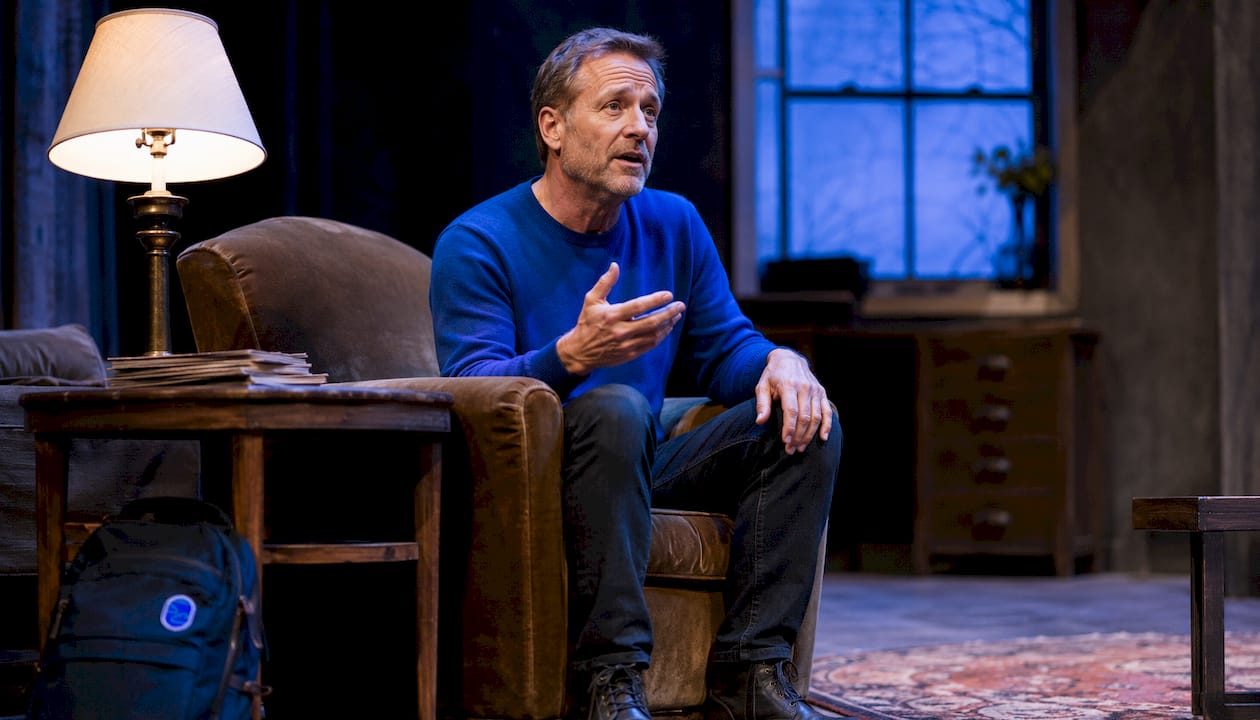
Drama is realistic storytelling focused on human conflict and emotional truth. Think naturalistic dialogue, believable characters, and situations that feel close to real life. Arthur Miller's Death of a Salesman and Tennessee Williams's The Glass Menagerie are the kinds of titles you'll see on a community stage regularly. Classical tragedy follows a protagonist whose fatal flaw drives them toward ruin — Hamlet and Macbeth are the most commonly produced Shakespeare tragedies at local venues. Tragicomedy blends both registers: the story holds genuine pain but resolves with ambiguity or a thread of hope. Samuel Beckett's Waiting for Godot is the most famous example, though local companies also produce works like The Curious Incident of the Dog in the Night-Time.
What you can expect at a local production:
- Running times of 2–3 hours, usually with one intermission
- Modest, suggestive sets rather than elaborate scenery
- Cast sizes ranging from 2 to 15 actors
- Content that may include mature themes — check listings for age guidance
- Ticket prices that tend to be lower than regional professional houses
Pro Tip: If a listing says "straight play" with no genre label, it's almost always drama or tragicomedy. Look for a content advisory in the program notes if you're bringing teens.
Staging for these genres typically uses naturalistic sets and dialogue to ground the audience in a believable world, which is why community productions can pull them off beautifully even on a tight budget.
3. Comedy and farce — the types of laughs you'll find and how they differ
Comedy is one of the most reliable crowd-pleasers in local programming, and for good reason: it fills seats, brings in first-time theatergoers, and rewards ensemble casts that community companies often have in abundance.
The main subtypes you'll encounter:
- Character comedy — humor rooted in personality quirks and relationships (The Odd Couple, Barefoot in the Park)
- Situation comedy (sitcom-style) — comic misunderstandings and escalating plot complications (Rumors by Neil Simon)
- Farce — rapid-fire physical comedy, mistaken identities, and doors slamming at exactly the wrong moment (Noises Off is the gold standard)
- Dark/black comedy — laughs that arrive alongside uncomfortable truths (The Lieutenant of Inishmore, Arsenic and Old Lace)
Farce demands precision timing and physical agility from the cast, so a well-executed local production is genuinely impressive to watch. Character comedy tends to feel warmer and more intimate, especially in smaller venues. Dark comedy carries a maturity warning worth checking before you bring younger guests — the laughs are real, but the subject matter often isn't light. Most comedies run 90 minutes to 2 hours and work well for a casual night out.

4. Musical theatre — why musicals are a staple at local venues and what to look for on listings
Musicals are the single most ticketable genre in community programming. They draw families, first-timers, and loyal subscribers in one shot, and they generate the fundraising revenue that helps venues sustain the rest of their season.
Musical theatre tells a story through the combination of song, dance, and spoken dialogue — the three elements working together to carry emotion and plot. Season brochures show musicals scheduled regularly alongside comedies and dramas, with holiday-themed family shows often reappearing year after year because they reliably sell out.
Production notes that matter for local venues:
- Licensing windows — rights open and close on a rolling basis; a hot Broadway title may be unavailable for years after its tour
- Orchestra vs. recorded tracks — smaller venues often use a pre-recorded music track rather than a live pit band; listings usually note which
- Choreography and stage size — large-cast dance numbers need room; a black-box stage may limit the spectacle
- Budget impact — costumes, wigs, and set pieces for musicals cost significantly more than a straight play
Titles commonly produced at local venues include Annie, Into the Woods, The Addams Family, Mamma Mia!, Grease, and Little Women. Youth-friendly musicals like Willy Wonka Jr. and The Little Mermaid Jr. appear frequently in family-season slots.
Pro Tip: Check the listing for three things before you book: age guidance (some musicals carry PG-13 content), whether the production uses a live band or tracks, and whether there's a family matinée with a shorter runtime or sensory-friendly accommodations.
5. Melodrama and period entertainments — what they are and why they persist
Melodrama is theater with the emotional dial turned all the way up. Characters are clearly good or evil, stakes are life-and-death, and the audience is meant to feel every beat viscerally. It is a style rooted in 19th-century theatrical tradition, but it never really left local stages.
What makes melodrama distinct:
- Heightened emotion — characters express feelings in broad, declarative terms rather than subtext
- Moral clarity — virtue is rewarded, villainy is punished (or at least exposed)
- Spectacle — dramatic lighting, music swells, and physical confrontations are common
- Period settings — Victorian drawing rooms, frontier towns, and gothic mansions are recurring backdrops
Venues program melodramas and period entertainments because they're reliable seasonal anchors. Holiday mystery shows, ghost-story productions in October, and classic whodunits (The Mousetrap, Wait Until Dark) fill the calendar at predictable, high-demand times of year. Pacing tends to be brisk and theatrical, with clear scene breaks that make them accessible for mixed-age audiences. Most are family-friendly, though gothic or thriller-adjacent titles may carry a mild content note.
6. Experimental, avant-garde, and Theatre of the Absurd — spotting nontraditional work at local venues
Experimental theatre breaks the rules that every other genre follows, and that's the point. If you see a listing that mentions a "studio series," a "black-box production," or a "fringe slot," you're likely looking at this category.
Key terms explained plainly:
- Theatre of the Absurd — plays that use illogical situations and circular dialogue to reflect the meaninglessness of modern life (Waiting for Godot, Endgame, Rhinoceros)
- Physical theatre — storytelling driven by movement and the body rather than text; minimal dialogue, maximum physicality
- Devised experimental work — created collaboratively by the cast and director, often without a pre-written script
- Multimedia theatre — integrates video projection, soundscapes, or digital elements alongside live performance
Local venues tend to schedule experimental pieces in smaller, flexible studio spaces rather than their main stage, which keeps financial risk low while giving adventurous audiences something genuinely different. Runs are often shorter — a weekend or two rather than a full month. If you want to find this kind of work locally, look for late-night slots, fringe festivals, or a venue's dedicated studio series. Content warnings are common; post-show discussions are frequent.
7. Documentary and devised theatre — why local venues program community-made work
These genres often connect most directly to the community sitting in the seats, which is exactly why local houses program them even when they're harder to sell.
Verbatim/documentary theatre builds scripts from real interviews, court transcripts, news reports, or oral histories. The Laramie Project — created from interviews with residents of Laramie, Wyoming after the murder of Matthew Shepard — is the most widely produced example at community venues. Devised theatre is created collaboratively by the company itself, often without a pre-existing script, and frequently responds to local social or cultural issues. As Wikipedia's community theatre entry notes, productions may be created or adapted by the community rather than being standard licensed scripts.
Why venues choose this work:
- Lower or no licensing costs compared to Broadway titles
- Direct relevance to local stories and audiences
- Flexible cast sizes that can accommodate large community casts
- Strong community engagement and press attention
The AACT 2026 Season Survey found that many community theatres produce new and original works, and a notable share reported financial success for at least some of those productions when paired with a stronger commercial title in the same season.
Pro Tip: Check listings for content advisories before attending documentary or devised work — these productions often address sensitive real-world topics. Many also include a post-show talkback with the cast or creative team, which can be one of the most rewarding parts of the evening.
8. Improv, variety, cabaret, and small-format shows — what to expect from a flexible night out
These formats thrive in smaller venues and offer something the scripted stage rarely can: genuine spontaneity and direct audience connection. They're also some of the most accessible entry points for people who've never been to a theater before.
- Short-form improv — fast, game-based scenes created on the spot from audience suggestions; think Whose Line Is It Anyway? as a live show
- Long-form improv — a sustained, unscripted narrative built from a single audience prompt; runs 45–75 minutes with no intermission
- Stand-up comedy nights — curated lineups of comedians, often rotating; more concert than theater, but frequently hosted in black-box or cabaret spaces
- Cabaret — a hybrid of music, comedy, and storytelling performed in an intimate room, often with tables and drinks rather than fixed rows
- Variety/tribute acts — mixed-bill evenings featuring multiple performers across genres; tribute bands, sketch comedy, and spoken word often share the same bill
Practical notes: cabaret-style seating fills up fast, so arriving early matters. Improv shows often start later in the evening (8 PM or later) and run shorter than a full play. Ticket prices are usually lower than main-stage productions. For small-format open-mic and variety programming, consistency in scheduling is what builds the loyal audience that keeps these nights alive. First-timers: expect to be called on in improv — it's part of the fun, and you can always say no.
9. Children's and family theatre — what parents and guardians should check before booking
Family and youth productions are built specifically for younger audiences, with shorter run times, brighter visuals, and interactive moments that keep kids engaged from the first scene to the last bow.
Two distinct categories appear on most local season listings:
- Children's theatre — professional or semi-professional productions performed for young audiences; adults are welcome but kids are the primary guests
- Youth theatre — productions performed by young people (ages 8–18), often as part of a training program or youth company
What to check before you book:
- Run time — most children's productions run 60–90 minutes with no intermission, ideal for younger attention spans
- Age recommendations — listings typically note a suggested minimum age (e.g., "ages 4 and up")
- Group rates — many venues offer school or group discounts; call the box office directly
- Matinée availability — weekend afternoon performances are standard for family shows
Commonly staged titles include Charlotte's Web, James and the Giant Peach, Willy Wonka Jr., The Wizard of Oz, Cinderella, and Annie Jr. These shows tend to carry clear moral themes, bright costumes, and music that kids recognize. For a first theater outing with young guests, a children's musical is almost always the right call. You can find family-friendly theater listings across Colorado through Experiencebylocals.
10. How local venues actually pick their seasons
Venues balance audience familiarity, licensing availability, production budget, and community fit when building a season. The AACT 2026 Season Survey puts hard numbers behind what most theatergoers sense intuitively.
Primary programming drivers:
- Title recognition — roughly two-thirds of community theatres cite audience familiarity as their top consideration; known titles sell faster
- Licensing windows — rights availability is non-negotiable; a title you want may simply be unavailable during your season window
- Production cost — musicals cost more (costumes, rights, potential orchestra); straight plays cost less; budget shapes genre mix
- Cast and volunteer availability — community theatres rely on volunteer pools varying widely in size, and a show requiring 30 actors may not be feasible for a smaller company
- Season balance — most venues aim for one musical, one comedy, one drama, and one wildcard (devised, experimental, or holiday show)
A typical community theatre season might look like this: a crowd-pleasing musical (Mamma Mia!) anchors the spring, a classic comedy (Rumors) fills the fall, and a devised or documentary piece (The Laramie Project) runs in the studio series for two weekends. The musical funds the season; the comedy builds the subscriber base; the studio piece fulfills the artistic mission.
| Programming Factor | What It Means for You |
|---|---|
| Title recognition (about two-thirds priority) | Expect familiar titles on the main stage most seasons |
| Licensing windows | A hot title may disappear from local listings for years post-tour |
| Production budget | Musicals = higher ticket prices; straight plays = lower |
| Volunteer/cast pool (varies widely) | Smaller companies avoid large-cast shows |
| Season balance goal | Most seasons mix at least 2–3 genres deliberately |
Smaller or non-traditional spaces let companies program edgier work in studio slots while keeping the main stage commercially safe. That's why the experimental piece you're curious about is often in the 80-seat black box, not the 400-seat main house.
11. How to choose which local show to see
Picking the right show comes down to four quick questions: Who are you going with? What mood are you in? How much time do you have? What does the listing actually say?
- Identify your occasion — date night, family outing, group of friends, solo evening?
- Match mood to genre — want to laugh? Look for comedy or farce. Want to feel something? Drama or tragicomedy. Want something light and musical? Musical theatre. Want the unexpected? Studio series or experimental listing.
- Check the run time — anything over 2.5 hours with an intermission is a commitment; 90-minute no-intermission shows are easier for casual nights
- Read the age guidance — listed in the program or on the ticketing page; dark comedy and drama often carry a "16+" or "mature themes" note
- Look for the live band note — if music matters to you, check whether the production uses a live orchestra or recorded tracks
- Scan for content advisories — documentary and devised work especially may address sensitive topics
- Check for talkbacks — if you want to engage with the artists after, some shows include a free post-show discussion
- Compare ticket tiers — most venues offer student, senior, and group rates; cabaret and improv nights are often the most affordable option
Two quick examples:
- Family Saturday afternoon → Children's musical like Charlotte's Web or Annie Jr. at a community house; 75-minute run, no intermission, group rate available
- Thoughtful date night → Documentary theatre like The Laramie Project or a tragicomedy in a studio series; plan for a post-show talkback and dinner after
For a broader look at what's on locally, the community theater show guide from Experiencebylocals walks you through the full first-timer experience.
Find Your Next Local Show with Experiencebylocals
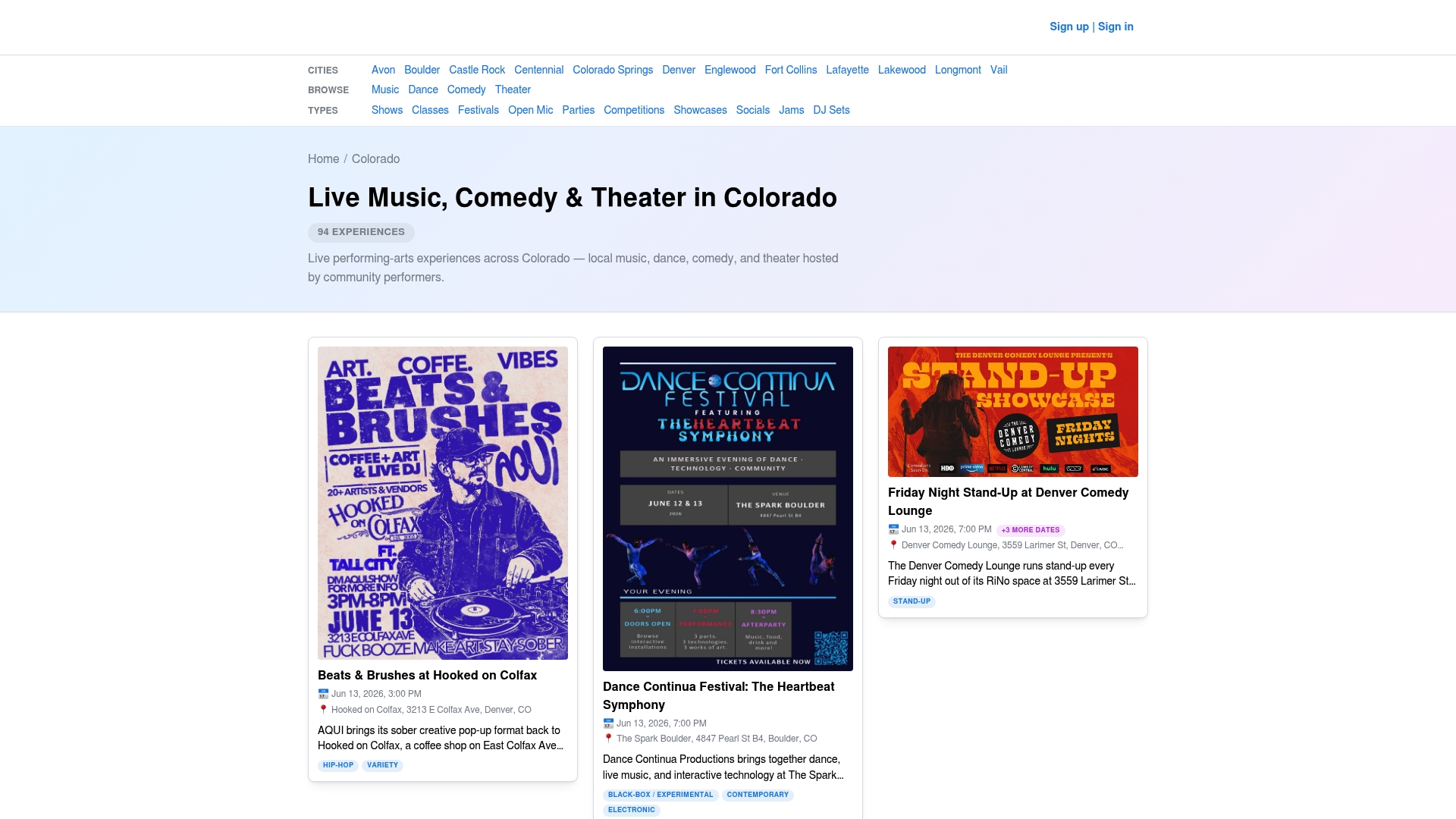
Whether you're drawn to a big musical, a sharp comedy, or an intimate devised piece, Experiencebylocals connects you with authentic local performances happening right in your community. We spotlight grassroots creators across Colorado — the kind of shows that reflect the real cultural heartbeat of a place, not just the tourist-friendly surface.
Browse theater shows in Colorado or explore the full range of live events across Colorado — music, dance, comedy, and theater all in one place. Your next great night out is already listed.
Key Takeaways
Local theater seasons are built around a deliberate mix of familiar, ticketable titles and riskier artistic choices, with roughly two-thirds of community theatres prioritizing audience familiarity when selecting shows.
| Point | Details |
|---|---|
| Nine core genres | Drama, comedy/farce, musical theatre, tragedy/tragicomedy, melodrama, experimental, documentary/devised, improv/cabaret, and children's theatre cover most local seasons. |
| Title familiarity drives programming | Roughly two-thirds of community theatres rank audience familiarity as their top season-selection factor, per the AACT 2026 Season Survey. |
| Venue space shapes genre | Main stages favor musicals and comedies; studio/black-box spaces host experimental and devised work to manage financial risk. |
| Check listings carefully | Look for run time, age guidance, live band vs. tracks, and talkback info before booking any show. |
| Experiencebylocals for local listings | Browse Colorado theater, comedy, and music events at Experiencebylocals to find community productions near you. |
What programmers actually weigh when they build a season
Most theatergoers assume venues pick shows based on what the artistic director loves. The reality is more collaborative and more constrained. The AACT survey data makes it clear: title recognition wins, not because programmers lack ambition, but because a season that doesn't sell doesn't fund the next one.
What I find genuinely interesting is the spatial strategy many venues use. Lighter, high-ticketability musicals go on the main stage; edgier dramas and devised pieces land in the studio. That split lets a company serve two audiences simultaneously without overextending its budget. The volunteer pool constraint is just as real — a company with 40 reliable cast members simply cannot produce a show that needs 60. Genre choice follows from that math as much as from artistic vision. The adventurous piece in the studio series isn't an afterthought; it's often where the most honest, community-specific work happens. If you want to understand a local theater company's actual values, the studio series is where to look.
Useful sources and where to learn more
These are the primary sources behind this article, each worth bookmarking if you want to go deeper:
- AACT 2026 Season Survey — the most current data on how U.S. community theatres choose titles, manage budgets, and balance seasons; essential reading for anyone curious about programming decisions
- ️ Community theatre — Wikipedia — a solid overview of community theatre history, devised work, and the distinction between community theatre and community plays
- Types of Plays Explained — StudioBinder — a clear, educator-friendly breakdown of core theatre genres with definitions and examples; good reference for genre terminology
- Sunset Playhouse 2026/2027 Season Brochure — a real community venue's season in action; shows how musicals, comedies, and studio pieces coexist in a single season calendar
- Open Mic Search — performance curation insights — useful background on small-format and open-mic programming for venues running improv and variety nights
Practical listings tip: When you open any show page or season brochure, look for four things in this order: run time, age guidance, whether the production uses a live band or recorded tracks, and whether a post-show talkback is scheduled. Those four details tell you almost everything you need to decide whether a show fits your evening.