
Jam Night: Where Musicians Meet and Play Together
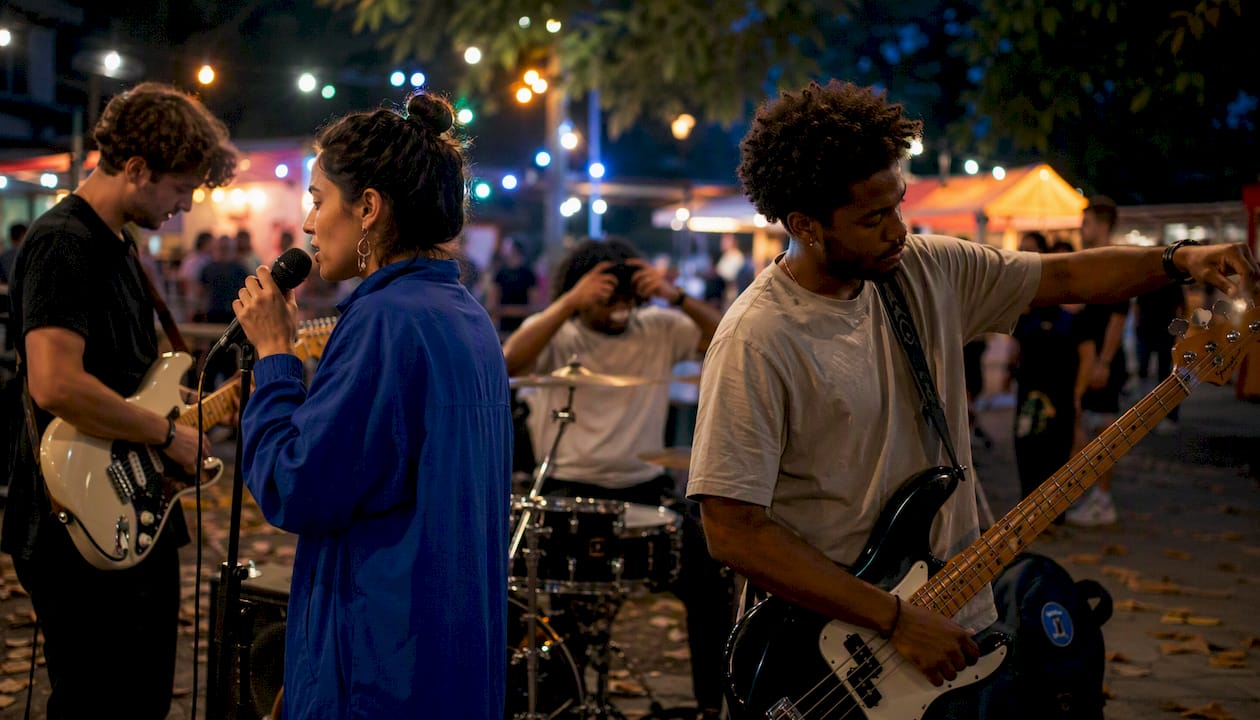
A jam night is an informal live-music event where musicians of all skill levels take turns on stage, playing together in a spirit of improvisation and collaboration. Think of it as an open invitation: you show up, you play, and you connect. To join one tonight, here's what to do:
- Arrive early (30–60 minutes before sign-ups open) to secure your spot on the board.
- Bring your instrument and any personal accessories you need to play.
- Sign up with the host or at the sign-up board, listing your name, instrument, and the song or key you want to play.
The vibe is casual and supportive. Nobody expects a polished set. What matters is showing up, listening, and being present with the music.
Table of Contents
- What exactly is a jam night, and how does it differ from an open mic?
- How a jam night typically works: formats, flow, and roles
- Who can join a jam night, and how do beginners fit in?
- Jam night etiquette and house rules every player should know
- What to bring to a jam night: gear and preparation
- Where to find jam nights near you in the U.S.
- How to join your first jam night: a step-by-step walkthrough
- What to expect: schedule, costs, and audience policies
- Key Takeaways
- Why jam nights matter more than most musicians realize
- Find your next jam night on Experiencebylocals
- Useful sources and further reading
What exactly is a jam night, and how does it differ from an open mic?
Jam sessions are informal events where musicians play improvised solos and vamp over songs or progressions, and a jam night is simply that concept given a recurring home at a local venue. The emphasis is on spontaneity and collaboration, not rehearsed performance.
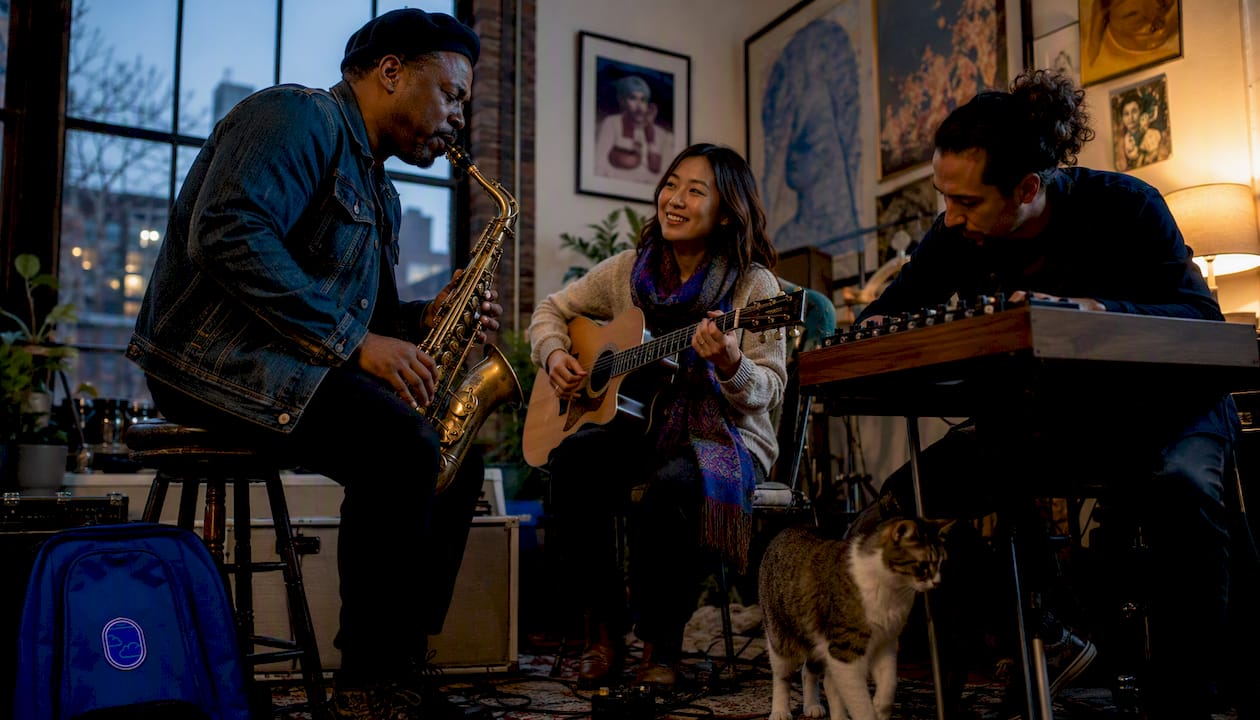
The format shows up across nearly every genre: jazz and blues have the longest tradition of it, but rock, folk, acoustic singer-songwriter, and even hip-hop cyphers all have their own versions. The Jazz Kitchen in Indianapolis, for example, has run a Monday night jazz jam for years, drawing both seasoned players and curious newcomers into the same room.
Where people get confused is the difference between a jam night, an open mic, and a concert. Here's the short version:
| Format | Who performs | Structure | Audience role |
|---|---|---|---|
| Jam night | Musicians who sign up and collaborate | Informal, rotating, improvisational | Listeners who may also join |
| Open mic | Solo or group acts performing prepared material | Structured set order, timed slots | Seated audience |
| Concert | Booked headliner(s) | Ticketed, scripted setlist | Passive audience |
An open mic night is closer to a mini-showcase: you perform your prepared songs, the audience listens, and you leave the stage. A jam night invites you to stay, swap, and play alongside people you may have never met before. A concert is a one-way experience. The jam is a conversation.
How a jam night typically works: formats, flow, and roles
Most jam nights follow one of a few recognizable formats, and knowing which one you're walking into makes everything easier.
Common formats:
- Host-led with a house band: A house band or rhythm section anchors the night, backing each visiting player who signs up. This is the most common format and the most beginner-friendly.
- Everything Jam / free-for-all: Musicians who have never met play together with no predetermined structure, creating one-of-a-kind sets. These nights attract experimental players and listeners who love spontaneity.
- Theme nights: A genre or era is announced in advance (blues only, 1970s rock, jazz standards), and players prepare accordingly.
- Open-mic hybrid: Prepared acts alternate with collaborative jam slots, giving the night variety and pacing.
Typical flow of a jam night:
| Time | What happens |
|---|---|
| Doors open | Venue opens, gear is set up, house band does a sound check |
| Sign-ups open | Sign-up board fills quickly; arrive early to guarantee a slot |
| Opening sets | House band or featured players warm up the room |
| Rotating sets | Signed-up musicians take the stage in order, often 1–2 songs each |
| Late-night run | Looser, longer jams as the night winds down |
The host or MC manages the flow, calls names from the board, and keeps things moving. The house band backs incoming players and provides continuity between acts. Featured players might get a longer slot. Everyone else gets their turn in the rotation.
Pro Tip: Ask the sound tech on arrival whether the venue provides a full backline (drums, amps, mics). Most venues supply a PA and backline, but you're expected to bring your own instrument and personal accessories.
Who can join a jam night, and how do beginners fit in?
Jam nights commonly welcome all skill levels, and that's not just marketing language. The community model depends on it. Experienced players need fresh ears and new ideas; beginners need mentorship and a low-stakes stage. Both get what they came for.
Organizers describe jam nights as social ecosystems as valuable for networking and mentorship as for performing. A seasoned guitarist might spend half the night backing a nervous first-timer, and that's considered a good night's work. Hosts often intentionally pair beginners with experienced players to build confidence and keep the music moving.
If you're new, your job is simpler than you think. Focus on listening more than playing. Stick to a familiar song or a standard you know cold. Play simple comping parts rather than soloing over everything. When in doubt, lay out (stop playing) and let the room breathe. Hosts and house bands are used to guiding new players through a set, and most will cue you when to come in or wrap up. The goal isn't to impress anyone; it's to participate.
Jam night etiquette and house rules every player should know
Getting the etiquette right is what separates a player people want to see again from one who makes the host's night harder. These rules aren't written on the wall at most venues, but they're understood by everyone who's been around.
Do:
- Sign up early and be present when your name is called.
- Keep your setup fast. A long soundcheck while the audience waits is the fastest way to lose the room.
- Listen to the other players and respond to what they're doing, not just what's in your head.
- Keep your volume balanced with the band. Dynamic contrast matters: a room where everyone plays at full volume sounds like noise.
- Respect the time limit. If the host signals you to wrap up, wrap up.
Don't:
- Hog the stage. One or two songs is the norm on a busy night.
- Play over other soloists. If someone else is taking a lead, back off.
- Tune loudly on stage. Tune before you go up.
- Ignore the host's cues. They're managing a whole night, not just your set.
When you arrive, ask the host or sound tech a few quick questions: Is there a house backline? What's the time limit per act? Is there a set order, or is it first-come-first-served? Are there age restrictions or a cover charge? Two minutes of conversation saves a lot of awkward moments later.
What to bring to a jam night: gear and preparation
Showing up stage-ready is a sign of respect for the host, the house band, and everyone waiting their turn. Here's what to pack:
Core items:
- Your instrument (guitar, bass, horn, violin, whatever you play)
- Cables, picks, drumsticks, capo, or strap as needed
- A clip-on or pedal tuner
- A short set list or chord charts for 3–5 songs you know well
Optional but useful:
- A small pedalboard if your tone depends on it
- In-ear monitors if the stage mix tends to be loud
- Printed lyric sheets or chord charts for songs you might call on the fly
Pro Tip: Paper charts beat phone screens on a busy stage. Phones lock, dim, or get knocked over. A laminated chord chart stays put and doesn't need a password.
Music transitions between songs matter more than most beginners expect. Knowing how to call a key, count in a tempo, and end a song cleanly will make you a player the house band actually enjoys backing.
Where to find jam nights near you in the U.S.
Jam nights happen in more places than most people realize. Jazz clubs, neighborhood bars, community centers, music schools, and coffeehouses all host them regularly. The challenge is knowing where to look.
Venue types to check first:
- Jazz clubs and blues bars (often weekly, sometimes Monday or Tuesday nights)
- Local bars and music venues with a stage and a sound system
- Community centers and libraries (some host free, all-ages jams)
- Music schools and rehearsal studios
- Coffeehouses and arts spaces
Search tactics that work:
Try these phrases in Google or a local events app: "jam night [your city]," "open jam [genre] [neighborhood]," "house jam [city]," or "weekly jam session [venue name]." Local Facebook groups for musicians in your area are also a reliable source, since hosts often post there before updating their venue website.
Always check the venue's event page for the latest sign-up times, door times, and any policy changes. Schedules shift, and a quick check saves a wasted trip.
For Colorado-based players and music fans, Experiencebylocals lists local live music events, open mics, and jam nights hosted by community artists. You can browse jam nights in Colorado by city, genre, or event type, and find grassroots events that don't always show up on the big ticketing platforms.
How to join your first jam night: a step-by-step walkthrough
First times are always a little nerve-wracking. Here's a sequence that takes the guesswork out of it.
- Research the night before you go. Look up the venue, confirm the start time and sign-up window, and check whether it's genre-specific or open to all styles.
- Arrive 30–60 minutes early. Sign-up boards fill fast, and late arrivals often wait the whole night without playing.
- Introduce yourself to the host or house band. Tell them your instrument, your experience level, and what you're thinking of playing. They'll point you in the right direction.
- Write your name on the board. Include your instrument and the song or key you want to play. Keep it simple: one or two songs you know cold.
- Watch a few sets before yours. Get a feel for the tempo, the volume, and how the house band communicates with players on stage.
- Set up fast when your name is called. Plug in, tune quietly, and be ready to count in within 30 seconds of hitting the stage.
- Play one or two songs, then clear the stage. A tight, confident short set leaves a better impression than an overstayed welcome.
- After your set, stay and connect. Introduce yourself to the players you just shared the stage with. Ask for contact info. Find out when they're playing next. This is where jam nights as networking hubs actually pay off.
What to expect: schedule, costs, and audience policies
Most jam nights run on a predictable schedule. Doors open around 7:00 PM, sign-ups start shortly after, and the first sets begin by 8:00 PM. The night usually runs until midnight or later, with the loosest, longest jams happening in the final hour. Individual sets are typically 10–20 minutes, sometimes shorter on busy nights when the board is full.
Cost varies widely. Many jam nights are free to play and free to watch, especially at community venues or music schools. Bars and clubs often charge a small cover ($5–$10 is common) or ask for a drink minimum. Some ticketed special events run higher. Check the event listing before you go so there are no surprises at the door.
Age policies differ by venue. Bars with a liquor license typically require players and audience members to be 21+, or at minimum 18+ with a wristband system. Community centers and music schools often run all-ages nights. Caffè Lena's open mic, for example, is explicitly all-ages and all-styles. When in doubt, call the venue or check their event page directly.
Key Takeaways
Jam nights are the most accessible live-music format available: free or low-cost, open to all skill levels, and built around community rather than competition.
| Point | Details |
|---|---|
| All skill levels are welcome | Hosts and house bands actively support beginners; listening and simple parts are enough to start. |
| Arrive early and sign up in person | Sign-up boards fill 30–60 minutes before the night begins; late arrivals often miss their slot. |
| Bring your own instrument and charts | Venues usually supply a PA and backline, but personal gear and paper chord charts are your responsibility. |
| Respect time limits and stage etiquette | One or two songs per set, fast setup, and balanced volume keep the night running smoothly for everyone. |
| Experiencebylocals helps you find local jams | Browse live music in Colorado to discover jam nights, open mics, and grassroots events near you. |
Why jam nights matter more than most musicians realize
Here's what I think gets undersold about the jam-night format: it's one of the few places in music where the social contract genuinely favors the beginner. A concert puts the burden on the performer to be ready. A recording session puts the burden on the clock. A jam night puts the burden on the community to hold space for whoever shows up.
That's rare. And it's worth protecting.
What I've noticed is that experienced players who stop going to jams tend to get comfortable in a way that stalls their growth. The jam forces you to respond in real time, to a room full of people you didn't rehearse with, playing songs you may only half-know. That pressure is the point. It's where you find out what you actually know versus what you think you know.
For hosts, the operational challenge is keeping the night friendly without letting it run long or get chaotic. The best hosts I've seen do one thing consistently: they mentor from the stage. They call beginners up early in the night when the room is warm and forgiving, pair them with patient house band members, and give them a clean exit when the set is done. That one structural choice changes the whole culture of a night.
If you're thinking about hosting your own jam, start with a reliable house band, a clear sign-up process, and a firm but friendly time limit. Everything else follows from those three things.
Find your next jam night on Experiencebylocals
Searching for a local jam night shouldn't take longer than the set itself. Experiencebylocals is the fastest way to find authentic, community-hosted live music events in Colorado, including recurring jam nights, open mics, and grassroots shows that don't always surface on major ticketing platforms.
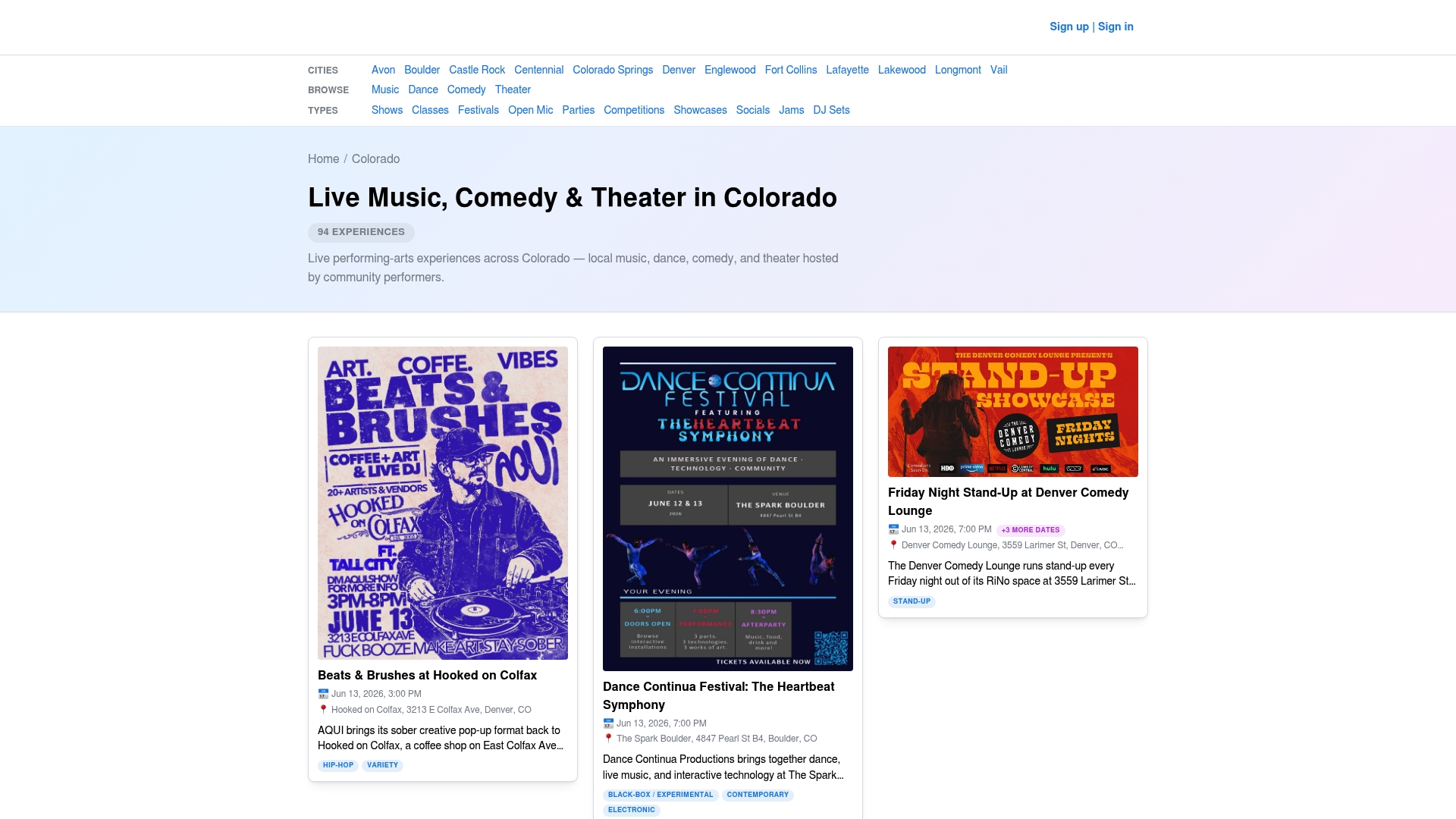
Browse by city, filter by genre or event type, and see exactly what's happening near you this week. Whether you're a first-time player looking for a low-key entry point or an experienced musician hunting for a new regular night, the platform connects you directly with local hosts and creators who are building real scenes.
Hosts and organizers can list their jam nights directly on the platform, reaching an audience of music fans and players actively looking for exactly what you're offering. Browse live music events in Colorado today, or add your event and start building your community.
Useful sources and further reading
- Jam session overview — Wikipedia: authoritative definition and history of the jam session format across genres.
- Open Mic and Jam Night — Multnomah County Library: a community-center example showing how libraries and public spaces host free, accessible jam nights.
- KRFC Open Mic Night at Magic Rat — Experiencebylocals: a recurring Colorado listing showing how local open mics and jams appear on the platform.
A note on schedules and policies: Venue schedules, cover charges, and age policies change frequently. Always confirm the latest details directly with the venue or on their event page before you go.