
Pick the Right Denver Storytelling Night with Experience By Locals
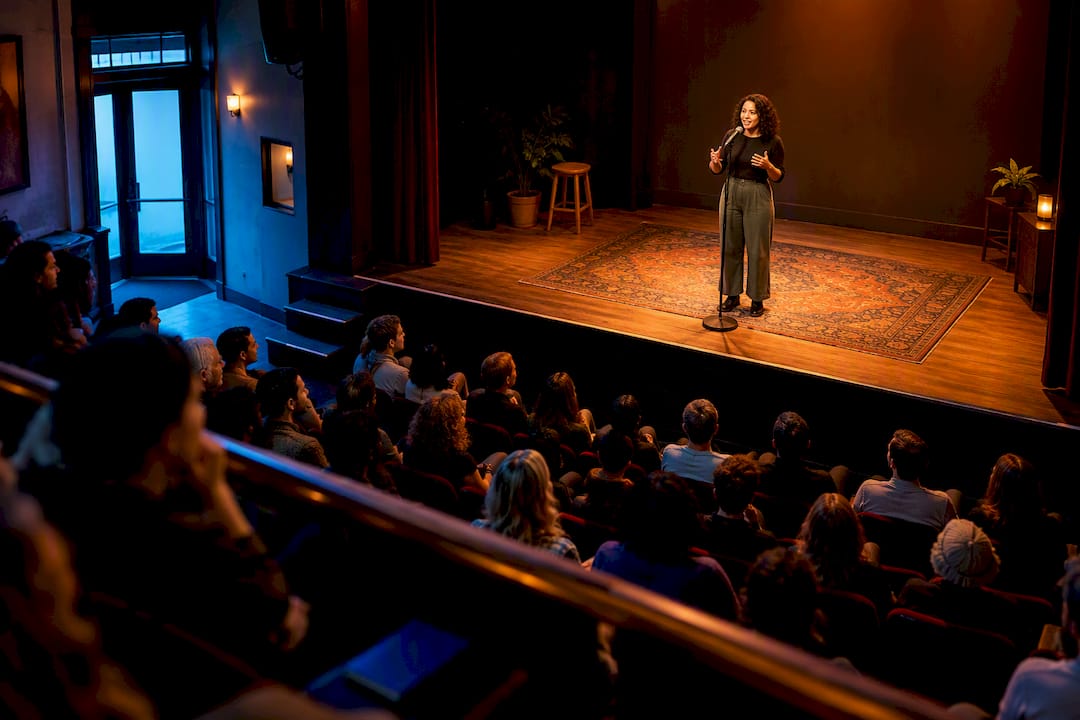
The fastest way to find and join live storytelling in Denver is to check local venue calendars, community arts pages, and Experience By Locals for monthly shows, story slams, and workshops. Most open-mic slams take sign-ups at the door, while themed showcases and library workshops usually want you to register ahead of time. Either way, you can be sitting in a Denver storytelling audience, or standing at the mic yourself, within a few weeks.
TL;DR:
- Most storytelling shows in Denver are monthly and can be found through producer websites, community calendars, and Experience By Locals for reliable updates.
- Entry-level options like StorySLAMs only require arriving early to sign up, while shows like The Narrators and GrandSLAMs are better suited for spectators or experienced tellers.
- Community showcases and library workshops offer low-cost or free opportunities to learn storytelling before performing publicly or attending competitive events.
- Checking event pages directly ensures accurate sign-up procedures, ticketing details, and schedule changes, which are often updated more reliably than aggregator sites.
- It is best to layer multiple sources—producer pages, community calendars, and listing platforms—to discover the full range of storytelling events across Denver and Colorado.
Table of Contents
- Storytelling Events Denver Residents Actually Attend (And Which One Fits You)
- How Do You Find Current Denver Storytelling Nights?
- How Do You Attend or Sign Up to Perform?
- Tips for First-Time Storytelling Attendees and Tellers
- What Denver Gets Wrong About Storytelling Nights
- Find Storytelling and Live Events Across Denver With Experience By Locals
- Authoritative Local Pages to Check Now
- Sources
- FAQ
Storytelling Events Denver Residents Actually Attend (And Which One Fits You)
Denver's storytelling scene runs on a handful of recurring formats, and picking the right one saves you from showing up to a competitive slam when you really wanted a quiet evening of listening.
Themed ensemble shows curate a lineup around a monthly theme, with tellers usually chosen or invited ahead of time. The Narrators is Denver's best-known example, running a monthly show at Buntport Theater built around a rotating theme and a related podcast. These shows suit people who want a polished, produced night out rather than an open floor.
StorySLAMs are open-mic competitions where anyone can put their name in a hat for a shot at telling a five-minute true story. They're the entry point for first-time tellers because the bar to enter is low: show up, sign up, hope your name gets pulled.
GrandSLAMs flip the format. The Moth's Denver GrandSLAM Championship brings back the winners from earlier StorySLAMs to compete again, which makes it a spectator event more than a participation one. If you want to watch skilled tellers at their sharpest, this is the show to catch.
Community showcases blend storytelling with poetry and live music, often organized by local nonprofits rather than theater producers. Gather, presented by the Delores Project at the Bug Theatre, centers on belonging and features writers, poets, and musicians sharing original work in a noncompetitive setting.
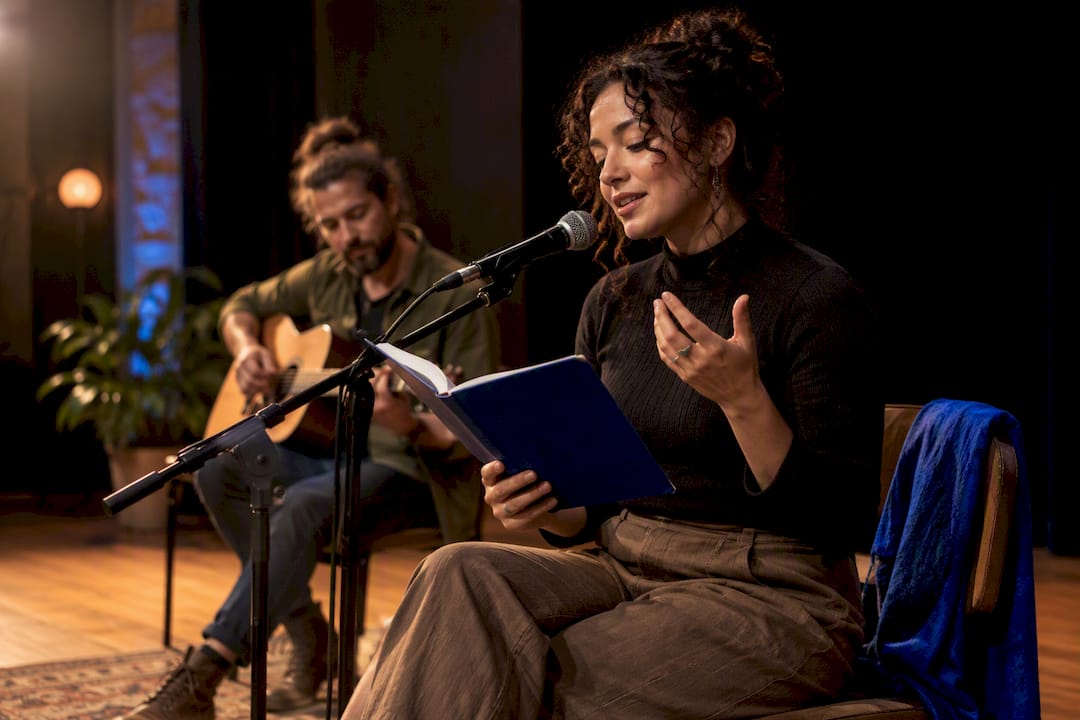
Workshops and labs teach the craft itself rather than putting you on stage that night. Anythink Libraries runs public storytelling and creative-writing programs across the Denver area, aimed squarely at people who want to build skill before they perform.
A quick way to sort these by what you're after:
- Want a curated night out with no pressure to participate? Try a themed ensemble show like The Narrators.
- Want to try telling a story yourself with low stakes? Look for a StorySLAM near you.
- Want to watch the best tellers compete? A GrandSLAM is the spectator pick.
- Want community and mixed art forms over competition? A showcase like Gather fits.
- Want to learn the craft before you commit to a stage? Start with a library or community workshop.
How Do You Find Current Denver Storytelling Nights?
Event listings go stale fast, especially for a scene built on monthly recurring shows and one-off community nights. Here's the order worth checking, from most reliable to most general:
- Producer and venue pages first. The Narrators' own site and Buntport Theater's calendar carry the most accurate dates, doors times, and ticket rules, since they come straight from the people running the show.
- Community arts organization pages. Groups like the Delores Project post Gather and similar showcases well ahead of the date, often with more context on the theme than a general listings site would give you.
- Library and community program calendars. Anythink Libraries publishes its storytelling and creative-writing workshops months out, which makes it a solid source if you're planning around a busy schedule.
- A curated local platform. Experience By Locals aggregates live storytelling, comedy, music, and theater listings across Colorado, letting you filter by city and category instead of jumping between a dozen individual venue sites.
The difference between a producer page and an aggregator matters more than it sounds. Producer pages are the source of truth for sign-up rules and last-minute changes. Aggregators like Experience By Locals are better for discovery, comparison, and setting up an evening around more than one event.
Once you find a source you trust, filter by date and category, then set a calendar reminder or sign up for the venue's email list. Monthly shows especially reward this: The Narrators runs on a predictable schedule, so a standing reminder beats checking back every few weeks.
Pro Tip: Before trusting any event page, confirm it lists a clear date, venue, and start time, plus explicit ticket or sign-up instructions. If a page mentions a "call for submissions" but gives no deadline or contact email, treat it as unconfirmed and check the venue's own calendar instead.
How Do You Attend or Sign Up to Perform?
Getting through the door, whether as an audience member or a first-time teller, follows a pattern once you know what to look for.
- Check the event page for ticketing type. Some shows sell tickets in advance with assigned seating; others use pay-what-you-can or general admission at the door. The Narrators' shows typically note a doors time around 7:30 p.m. with an 8:00 p.m. start, and ticketing terms that vary by show, so read the specific event listing rather than assuming.
- Arrive early if you want to tell a story. Most StorySLAMs fill their sign-up hat before the show starts, so getting there 20 to 30 minutes ahead gives you a real shot at being called.
- Pre-register for workshops. Programs at Anythink Libraries often require signing up online in advance, since seats are limited and the format is more class than open floor.
- Budget realistically. Community showcases and library workshops often run free or low-cost, while ticketed theater shows land in a modest range depending on the venue. Check the event page for the exact figure rather than guessing.
Bring a photo ID if the venue checks at the door, cash or a card for at-the-door tickets, and, if you're planning to tell a story, a timer on your phone to practice your five minutes beforehand.
Tips for First-Time Storytelling Attendees and Tellers
Walking into your first Denver storytelling night is easier when you know the unwritten rules.
- Arrive at least 15 minutes before doors open, especially for sign-up-based slams where seating and the storyteller list both fill up fast.
- Assume photography and recording are limited unless the venue says otherwise. Many storytellers share deeply personal material, and it's a form of respect to ask before pulling out a phone.
- If you're telling, build your story around one clear moment rather than trying to cover your whole life. Judges and audiences respond to a single, well-shaped arc more than a highlight reel.
- Practice out loud against a timer. Five minutes goes faster on stage than it feels in your head.
- Put your name in early if the slam uses a hat or sign-up sheet. Waiting until the last minute often means you don't get picked.
Pro Tip: Library workshops and community open mics double as informal networking. If you want feedback on a story before performing it publicly, a workshop like the one at Anythink Libraries is a lower-pressure place to test material than a competitive slam.
What Denver Gets Wrong About Storytelling Nights
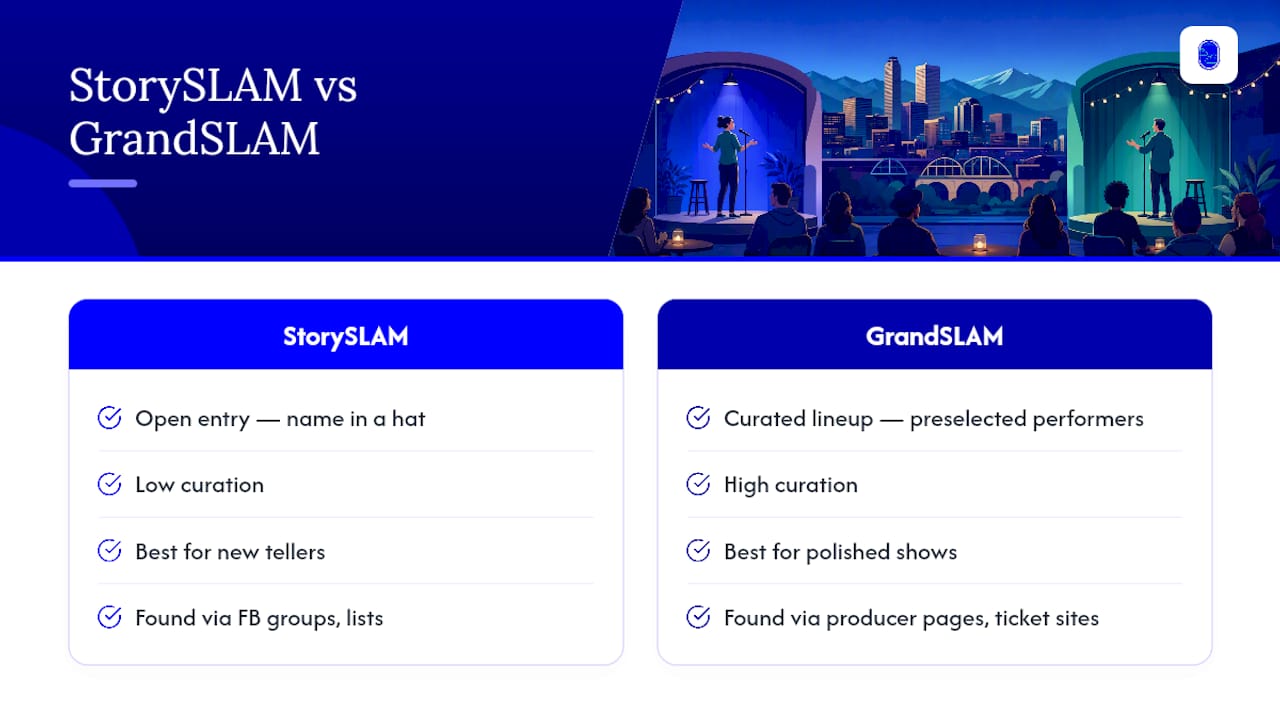
Most guides to this scene treat every storytelling event as interchangeable, as if a StorySLAM and a GrandSLAM offer the same experience with different names. They don't. One is built for anyone willing to put their name in a hat. The other is a curated championship where the performing has mostly already been decided before you buy a ticket. Conflating the two sends first-time tellers to the wrong room and spectators to a show that isn't the one they actually wanted.
The bigger gap I see is in how people search for these events. They default to a single Facebook group or one venue's mailing list and assume that's the whole scene. Denver's storytelling community is spread across small theater producers, library systems, and neighborhood nonprofits, and no single source covers all of it. The smarter approach is layering sources: a producer page for accuracy, a community arts calendar for discovery, and a platform like Experience By Locals for comparing what's happening across the city on a given weekend. Start with what kind of night you want, not with whichever event happens to be easiest to find.
— DJ
Find Storytelling and Live Events Across Denver With Experience By Locals
There are alternatives to chasing a dozen separate venue calendars for storytelling events in Denver. Instead of bookmarking individual theater sites and hoping their listings stay current, you filter one searchable platform by city, date, and category to see what's actually happening this month.
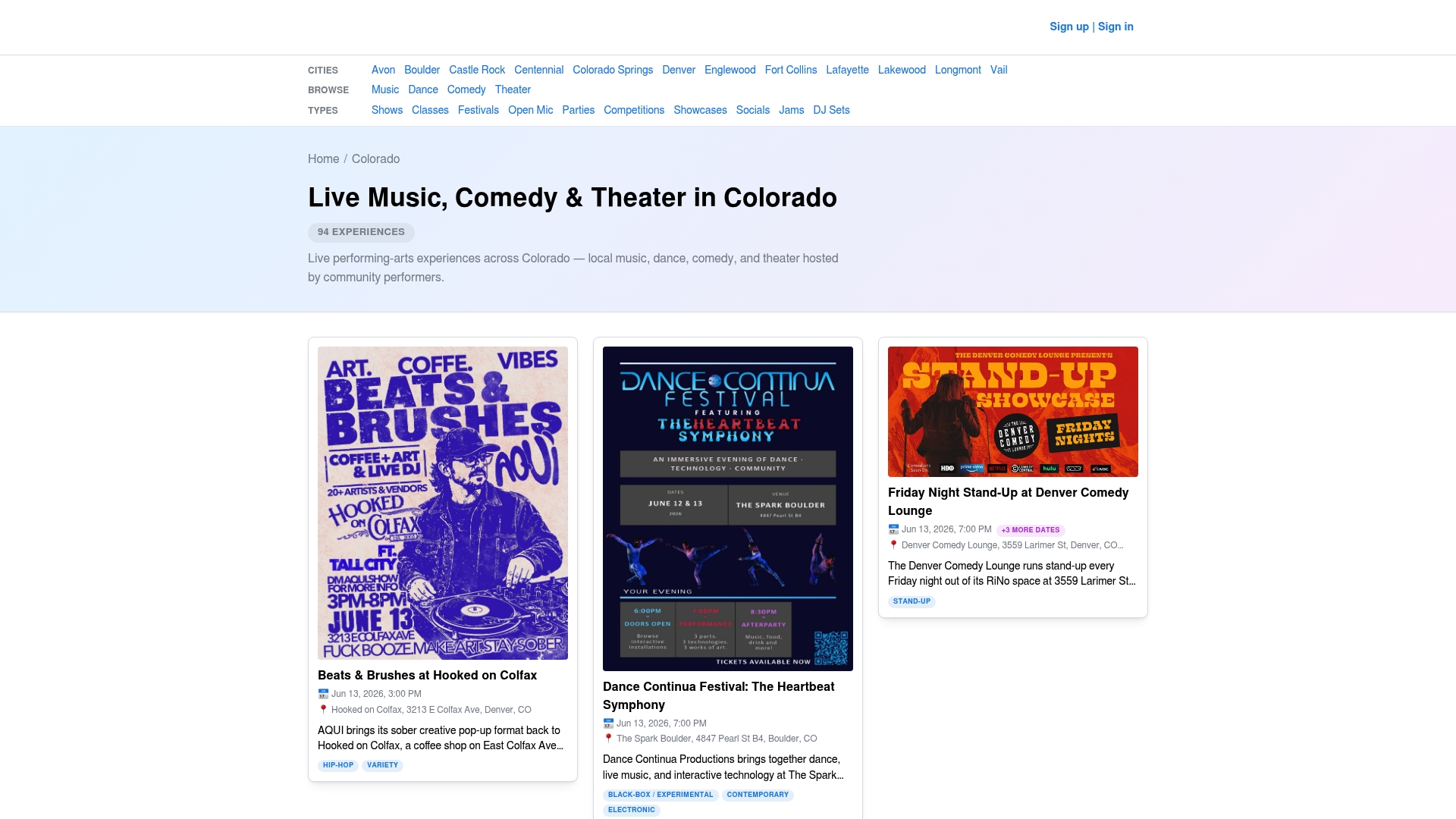
There are platforms that list live music, comedy, dance, and theater hosted by community artists across Colorado, with storytelling nights among these local, grassroots offerings. Attendees can browse by category and date, compare shows, and book directly with hosts instead of piecing together information from multiple sources. Event organizers and hosts can list their storytelling events on platforms to reach audiences interested in grassroots performances.
Start by browsing live events in Denver to see what's coming up this month, or check theater shows across Colorado if you want to widen your search beyond the storytelling stage.
Authoritative Local Pages to Check Now
These are the pages worth bookmarking if you want current, first-hand event information rather than a secondhand summary:
- The Narrators: Monthly themed storytelling show at Buntport Theater, with ticketing details and a companion podcast.
- Gather at the Bug Theatre: Community showcase blending storytelling, poetry, and music, hosted by the Delores Project.
- The Moth's Denver GrandSLAM Championship: Spectator championship featuring past StorySLAM winners.
- Anythink Libraries storytelling workshops: Public programs for building storytelling and creative-writing skills.
- Open mic listings in Colorado: Broader open-mic formats related to first-time storytelling and performance.
Sources
- Gather 2026 — The Delores Project
- The Narrators – Live storytelling from Denver, Colorado
- Denver GrandSLAM Championship | GrandSLAM | The Moth
- The Art of Storytelling - Anythink Libraries
FAQ
How much do Denver storytelling events cost?
Prices vary widely by format: community showcases and library workshops are often free or low-cost, while ticketed theater shows like The Narrators charge a modest admission that changes show to show. Always check the specific event page for the current price rather than assuming a flat rate across the scene.
How do I sign up to tell a story at a Denver StorySLAM?
Most StorySLAMs use an at-the-door sign-up, often a hat or sheet where anyone can enter their name for a chance to be called. Arriving 20 to 30 minutes before the show starts gives you the best odds, since sign-ups typically close once the room fills.
Are Denver storytelling events good for kids or families?
It depends entirely on the show. Community showcases and library programs like those at Anythink Libraries tend to be family-friendly, while StorySLAMs and adult-themed showcases often deal with mature personal material and skew toward adult audiences.
What's the difference between a StorySLAM and a GrandSLAM?
A StorySLAM is an open-mic competition anyone can enter by signing up that night. A GrandSLAM, run by The Moth, brings back previous StorySLAM winners to compete again and functions mainly as a spectator event rather than an open floor.
Where can I browse storytelling and other live events happening in Denver right now?
Experience By Locals lists live storytelling, comedy, music, and theater events across Colorado, filterable by city and date on its Denver events page. It's a practical starting point when you want to compare several storytelling and performance options in one place instead of checking separate venue sites.