
Benefits of Learning Dance in Group Settings
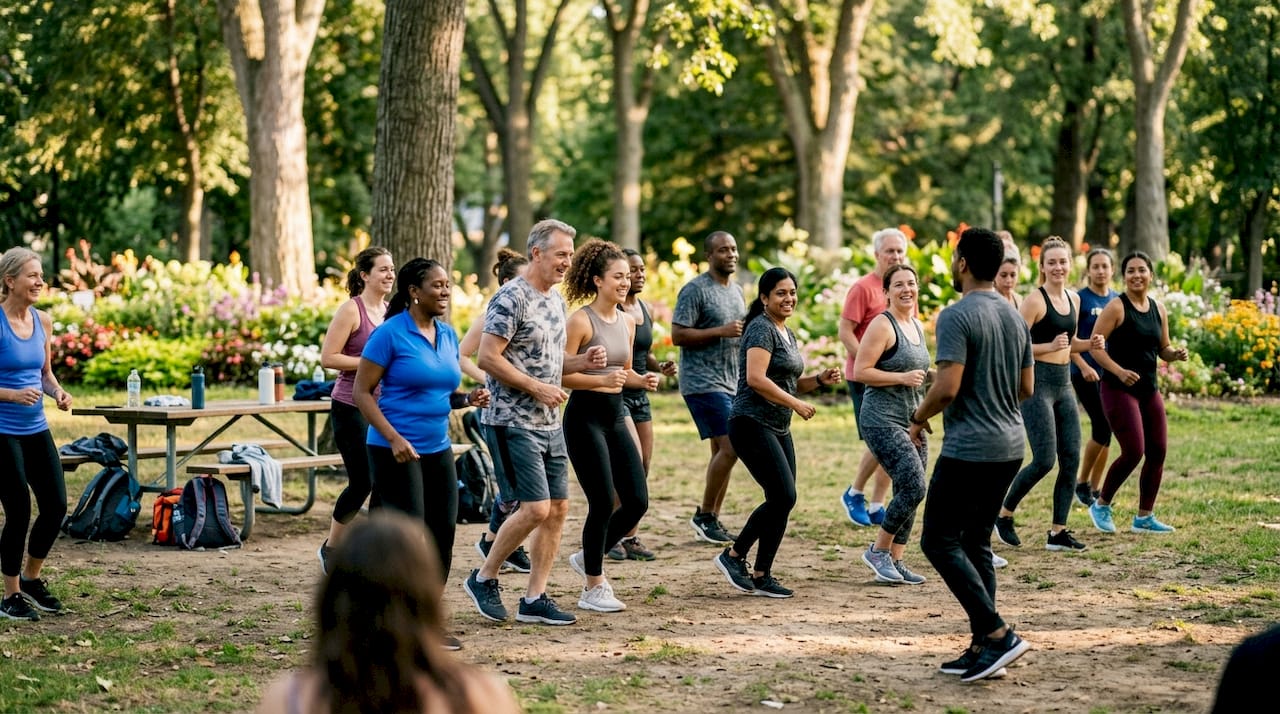
Group dance is defined as a structured physical activity where participants move together, synchronize with others, and build social bonds through shared rhythm and choreography. The benefits of learning dance in group settings span three distinct domains: social connection, physical fitness, and mental well-being. Research from Nature Scientific Reports, ACM Digital Library, and Frontiers in Psychology confirms that group dance outperforms solo exercise on nearly every measure of human health. The combination of movement, music, and social engagement creates a uniquely powerful experience that no treadmill or solo workout can replicate.
1. What are the key social benefits of learning dance in group settings?
Group dance builds real social bonds, not just casual acquaintances. Synchronous movement in pairs or groups increases empathy, trust, and willingness to help others. That finding comes from a 2026 ACM study on movement synchrony and prosocial attitudes. It means that when you move in time with someone else, your brain registers them as an ally.
The social benefits of dance go deeper than just feeling good around people. A 12-week Latin dance and mindfulness intervention showed significant reductions in social anxiety in adolescents, with improvements lasting through a 6-week follow-up. That kind of sustained change does not happen from a single class. It builds over weeks of repeated social exposure in a low-pressure environment.
Partner rotation is one of the most underrated tools in group dance. When you switch partners regularly, you practice reading new people, adjusting your timing, and communicating without words. These are the same skills that make someone effective in a team meeting or a first conversation with a stranger.
- ✅ Increased empathy through movement synchrony
- ✅ Reduced social anxiety with sustained group participation
- ✅ Stronger sense of belonging through shared choreography
- ✅ Better nonverbal communication and cooperation skills
- ✅ Higher confidence from low-stakes group performance
Pro Tip: Choose classes that include structured partner rotation and group choreography tasks. These two features, more than any other, accelerate social bonding and reduce self-consciousness.
2. How does group dance improve physical fitness and health?
Dance delivers real, measurable physical results. A 2026 Associated Press report confirmed that dance improves strength, balance, mobility, and brain health in older adults at levels comparable to traditional exercise. That matters because most people associate fitness gains with gyms, not dance floors. The evidence says otherwise.
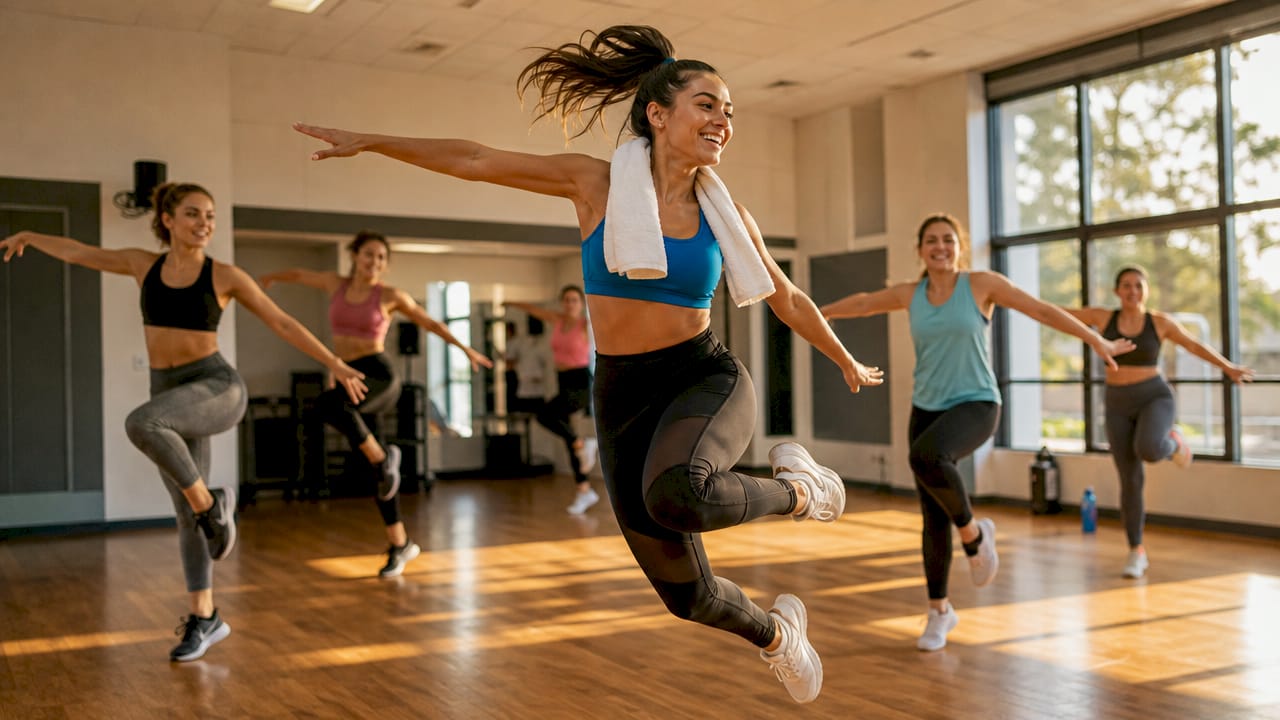
Balance and coordination improve because group dance demands constant spatial awareness. You track your own body, your partner, and the group simultaneously. That multi-layered attention trains the neuromuscular system in ways that standard cardio does not.
Physical gains also come from the variety built into group choreography. Consistent quality movement, including footwork, posture shifts, and rhythm changes, keeps the body engaged across different muscle groups. Classes that regularly introduce new choreography prevent the plateau that kills progress in repetitive workouts.
- ✅ Improved cardiovascular endurance through sustained movement
- ✅ Stronger core and leg muscles from posture and footwork demands
- ✅ Better balance and fall prevention, especially for older adults
- ✅ Increased flexibility from varied movement patterns
- ✅ Enhanced coordination through multi-directional choreography
Pro Tip: Attend classes that vary the choreography every few weeks. Variety keeps your cardiovascular and neuromuscular systems working at full capacity and prevents the adaptation plateau.
3. What mental health and cognitive benefits come from group dance participation?
Group dance is one of the most effective mind-body interventions available. Dancers show lower depression and stress levels, higher positive affect, and stronger cognitive performance compared to non-dancers. That 2026 ScienceDirect study measured emotional and cognitive outcomes together, which is rare. The results show that dance works on the brain and the mood at the same time.
Mindfulness combined with dance produces the strongest mental health outcomes. The Nature Scientific Reports trial found that combining movement with mindfulness yielded better emotional regulation than either practice alone. This pairing works because mindfulness anchors attention to the present moment while movement releases physical tension. Together, they break the cycle of anxious rumination.
Youth benefit significantly from group dance as a mental health tool. A 2026 Frontiers in Psychology meta-analysis across 24 studies found that mind-body physical activity interventions produce meaningful mental health improvements in children and adolescents, especially those at elevated psychological risk. Group dance fits this category precisely because it combines physical movement, social engagement, and emotional expression in one activity.
The cognitive gains are worth noting separately. Learning choreography requires memorization, sequencing, and real-time decision making. These demands build working memory and attention span over time. Regular group dance practice functions as a form of mental training that carries over into daily life.
Pro Tip: Look for classes that incorporate breath awareness or mindfulness cues from the instructor. Even brief moments of intentional focus during movement amplify the emotional regulation benefits significantly.
4. What practical class features maximize group dance benefits?
Not all group dance classes deliver the same results. The structure of the class matters as much as the style of dance. Partner rotation, group synchrony tasks, and low-stakes performances are the three features that most reliably build trust, confidence, and belonging. Classes that skip these elements produce weaker social outcomes.
Consistency over time is the other major factor. Six to 12 weeks of sustained group exposure is the typical timeline for measurable improvements in social confidence and anxiety reduction. Attending one or two classes and expecting transformation is unrealistic. The group dynamic needs time to mature, and so does your individual skill.
The table below shows which class features align with specific benefit categories.
| Class Feature | Social Benefit | Physical Benefit | Mental Benefit |
|---|---|---|---|
| Partner rotation | High | Moderate | Moderate |
| Group synchrony tasks | High | Moderate | High |
| Varied choreography | Low | High | Moderate |
| Mindfulness cues | Moderate | Low | High |
| Low-stakes group performance | High | Low | High |
| Weekly attendance over 6–12 weeks | High | High | High |
The multi-component nature of group dance is its greatest strength. Music, movement, cognition, and social connection all activate at once. No single-component exercise matches that combination for overall well-being.
Pro Tip: Commit to at least six consecutive weeks before evaluating your progress. The social and mental benefits follow a learning curve, and early dropouts miss the phase where the real gains appear.
5. Why group dance outperforms solo practice for long-term motivation
Solo exercise has a well-documented dropout problem. Group dance does not, and the reason is biological. Entrainment, the process where your body synchronizes to others' timing, increases trust and liking between participants. That social pull keeps people coming back in a way that a solo gym session cannot.
Dance adherence rates stay high because the social and emotional appeal reduces the barriers that typically derail exercise habits. People skip the gym when they are tired or unmotivated. They show up to dance class because someone they like is waiting for them. That social accountability is built into the format.
The group choreography advantage extends to skill development as well. Watching others, mirroring their movements, and receiving real-time feedback from partners accelerates learning in ways that solo practice cannot replicate. You correct errors faster because the group provides constant, immediate reference points.
Learning dance in teams also builds a shared language. Repeated exposure to the same choreography creates inside references, shared memories, and a sense of group identity. That identity becomes a reason to keep attending, which compounds the physical and mental benefits over time.
Key Takeaways
Group dance delivers social, physical, and mental benefits that compound with consistent weekly participation over 6–12 weeks.
| Point | Details |
|---|---|
| Social bonding through synchrony | Moving in time with others increases empathy, trust, and willingness to help. |
| Physical fitness gains are real | Group dance improves strength, balance, mobility, and cardiovascular health comparably to traditional exercise. |
| Mental health improves measurably | Dancers show lower depression, reduced stress, and stronger cognitive performance than non-dancers. |
| Class structure determines outcomes | Partner rotation, group tasks, and mindfulness cues produce the strongest social and mental results. |
| Consistency is non-negotiable | Six to 12 weeks of regular attendance is the minimum timeline for measurable social confidence gains. |
Why I think group dance is the most underrated wellness tool available
I have spent years watching people try to build fitness habits and social lives separately, as if those two goals have nothing to do with each other. Group dance collapses that false divide completely. You get the workout and the community in the same hour, and neither one feels like a compromise.
What surprises most people is how quickly the social piece takes over as the primary motivator. You stop thinking about calories or technique and start thinking about whether your partner will be there next Tuesday. That shift in motivation is not a distraction. It is the mechanism that makes group dance sustainable where solo exercise fails.
I have also noticed that the cognitive demands of learning choreography in a group create a kind of focused presence that is genuinely rare. You cannot scroll your phone or zone out when you are tracking eight counts, a partner's cue, and your own footwork simultaneously. That enforced presence is its own form of mental rest.
The research backs all of this up, but the research is catching up to what dancers have known for generations. Moving together changes how people feel about each other and about themselves. That is not a small thing. For anyone serious about personal growth, social connection, or physical health, group dance deserves a real look, not just a curious glance.
— DJ
Live group dance experiences worth trying
Ready to put these benefits into practice? Experiencebylocals connects you with authentic live dance events, workshops, and performances hosted by local artists across Colorado.

These are not tourist-facing showcases. They are real community events where you can participate, connect, and grow alongside local creators who genuinely love what they do. From K-pop choreography at artist-run spaces to community-driven cultural nights, Experiencebylocals curates experiences that reflect the actual heartbeat of the community. Find your next group dance event in Colorado and show up ready to move. Your people are already there.
FAQ
What are the main benefits of group dance classes?
Group dance improves social connection, physical fitness, and mental well-being simultaneously. Research confirms that synchronous movement builds empathy and trust while reducing depression and social anxiety.
How long does it take to see results from group dance?
Measurable improvements in social confidence and anxiety reduction typically appear after 6–12 weeks of consistent participation. Short-term attendance produces limited results because the social and cognitive benefits follow a learning curve.
Is group dance good for mental health?
Group dance reduces depression and stress while improving positive affect and cognitive performance. Combining dance with mindfulness cues produces the strongest emotional regulation outcomes, according to a 2026 Nature Scientific Reports trial.
Why is group dance more motivating than solo exercise?
The entrainment effect, where your body synchronizes to others' timing, increases social bonding and accountability. That social pull keeps attendance rates high in ways that solo gym workouts cannot replicate.
Can older adults benefit from group dance classes?
Group dance improves strength, balance, mobility, and brain health in older adults at levels comparable to traditional exercise. Fall risk reduction and improved coordination are among the most consistent physical outcomes reported in recent research.