
Colorado Bluegrass Jams: Check Front Range Listings Before You Go

Most Colorado bluegrass jams are posted on local calendars like the Colorado Bluegrass Music Society, and they run weekly at breweries, music shops, and community centers across the Front Range. The fastest way to join one? Arrive early, bring an instrument that's in tune, listen for a round before you jump in, and buy a drink or drop a few dollars in the donation jar.
TL;DR:
- Beginner and slow jams use reduced tempos and printed chord sheets, while advanced sessions move at full speed and expect familiarity with standard songs.
- Most sessions are free, but breweries and shops expect attendees to support the venue with a purchase or small cash donation.
- Before joining, listen through a full round, follow the leader’s solo cues, keep rhythm steady, and ask permission before recording.
- Confirm schedules directly with venues around holidays, since listings can change, and consider a coached Wernick Method class if you need help learning solo cues.
Table of Contents
- Where Recurring Jams Meet Across the Front Range
- What to Expect at Brewery, Shop, and Community-Center Jams
- Finding the Right Skill Level and Jam Format
- Jam Etiquette and What to Pack
- How to Find Updates and Connect With Other Players
- How We Keep Our Colorado Jam Listings Current
- Showing Up Is the Whole Point
- Find and Book Local Bluegrass Events on Experience By Locals
- FAQ
- Sources
Where Recurring Jams Meet Across the Front Range
Colorado's bluegrass scene is spread across small towns and bigger cities, and knowing where to look saves you a lot of guesswork. Here's how it breaks down by region:
- Denver metro: Breweries and music stores host frequent evening jams; check the CBMS listing and local venue pages for current nights, since schedules shift season to season. Our Denver bluegrass guide rounds up shows and jam nights happening around the city.
- Boulder and Nederland: The Boulder Bluegrass calendar tracks sessions in Boulder and nearby mountain towns, and it links out to CBMS jam pages so you're not juggling multiple sites.
- Golden and Lyons: Golden Music has hosted shop-based jams for pickers of various levels, and Lyons has a long-running brewery jam at Oskar Blues that's become a reliable weekly stop.
- Colorado Springs and the Pikes Peak region: The Black Rose Acoustic Society runs a tiered jam schedule, splitting beginner, intermediate, and festival-style sessions so players can find the right room.
- Fort Collins and the northern Front Range: Weekly jams pop up alongside festival season, often tied to local music shops or taprooms that rotate acoustic nights.
Checking a couple of these calendars before heading out is the simplest way to avoid showing up on the wrong week. Schedules move, especially around holidays and festival weekends, so a quick glance at the listing beats relying on memory.
What to Expect at Brewery, Shop, and Community-Center Jams
Bluegrass jams in Colorado tend to cluster around a handful of venue types, each with its own rhythm:
- Breweries and taprooms: These are the most common hosts, especially on weeknights, and they usually expect you to buy something while you pick.
- Music shops: Stores like Golden Music host jams tied to their retail hours, often in the early evening.
- Community centers: These spaces host monthly specialty jams, sometimes themed around a particular skill level or style.
- Festival campgrounds: During festival weekends, impromptu pick-up jams form around campsites and parking lots, often running late into the night.
Weekly jams usually land on a fixed weekday evening, while monthly sessions tend to rotate through a community calendar. Most are free to attend, but it's customary to patronize the venue, whether that means a pint, a sandwich, or a small donation, and many hosts post ground rules near the entrance or on their event page.
Finding the Right Skill Level and Jam Format
Not every jam is built for the same player, and Colorado hosts are generally good about labeling sessions so you know what you're walking into. Beginner and intermediate jams run slower, often using songbooks like the "Parking Lot Pickers" collection to keep everyone on the same page, while advanced or festival-style jams move fast and assume you already know the standards.
- Beginner or slow jams use reduced tempos and printed chord sheets, making them the easiest entry point for new players.
- Intermediate jams expect you to follow changes by ear but still welcome mistakes.
- Advanced and festival jams move at full speed with little explanation, so they suit players who already read the room.
If you're new to jamming altogether, a Wernick Method class or coached circle offers a controlled way to learn soloing cues and etiquette before stepping into an open session. Hosts usually name the skill level right in the event listing, so a quick read before you show up tells you exactly what you're getting into.
Jam Etiquette and What to Pack
Jam circles run on unwritten rules that experienced players pick up fast and newcomers appreciate having spelled out. The core idea, according to jam etiquette guidance from Martin Gilmore, is that a jam is about community music-making, not showing off.
- Listen for a full round before joining in, and watch the leader for nods or glances that signal who solos next.
- Keep your rhythm steady and support whoever is taking the lead rather than playing over them.
- Match the group's volume and tempo instead of pushing your own pace.
- Ask before recording, and check whether printed music is welcome or if the jam runs by ear.
Pro Tip: Pack a tuner, extra picks, a capo, spare strings, and a small notepad for chord changes, plus a few dollars in cash for a donation jar or a round at the bar.
How to Find Updates and Connect With Other Players
The easiest way to turn a one-time jam into a regular habit is to build a short list of go-to sources and check them before you head out.
- Bookmark the CBMS jam listing, the Boulder Bluegrass calendar, and the KGNU bluegrass calendar for a quick cross-check on Front Range sessions.
- Follow venue event pages directly, since breweries and shops often post last-minute changes there before anywhere else.
- Sign up for a host's email list, SMS group, or Meetup page if one's offered, and keep an eye on local Facebook groups built around Colorado bluegrass.
- Email the host ahead of time to confirm the schedule, especially around holidays.
Once you're there, introduce yourself early, offer to sit in on backup rhythm if you're unsure about soloing, and trade contact info with a couple of players before you leave. That's usually how a single jam turns into a standing invite.
How We Keep Our Colorado Jam Listings Current
We built our Colorado event pages by working directly with local hosts, venues, and the artists who run these sessions week to week, which means our listings reflect what's actually happening on the ground rather than a static directory. Our Colorado jam listings pull together recurring sessions alongside one-off shows, so you can browse by city without piecing together five different calendars yourself.

If you host a jam or know of one that deserves wider visibility, we welcome submissions through our platform so fellow pickers can find it too. Keeping listings current is a community effort, and we treat it that way.
Showing Up Is the Whole Point

Bluegrass jams work because nobody's performing for anybody, they're just playing together, and that's what makes Colorado's scene so welcoming to new faces. If you're nervous about your first circle, start with a beginner or slow jam rather than jumping into a festival-paced session; nobody will think less of you for it.
What I'd add is this: respect the venue that's hosting you. Buy the coffee, tip the bartender, follow the posted ground rules. These rooms stay open to musicians because the hosts trust the crowd to show up right.
— DJ
Find and Book Local Bluegrass Events on Experience By Locals
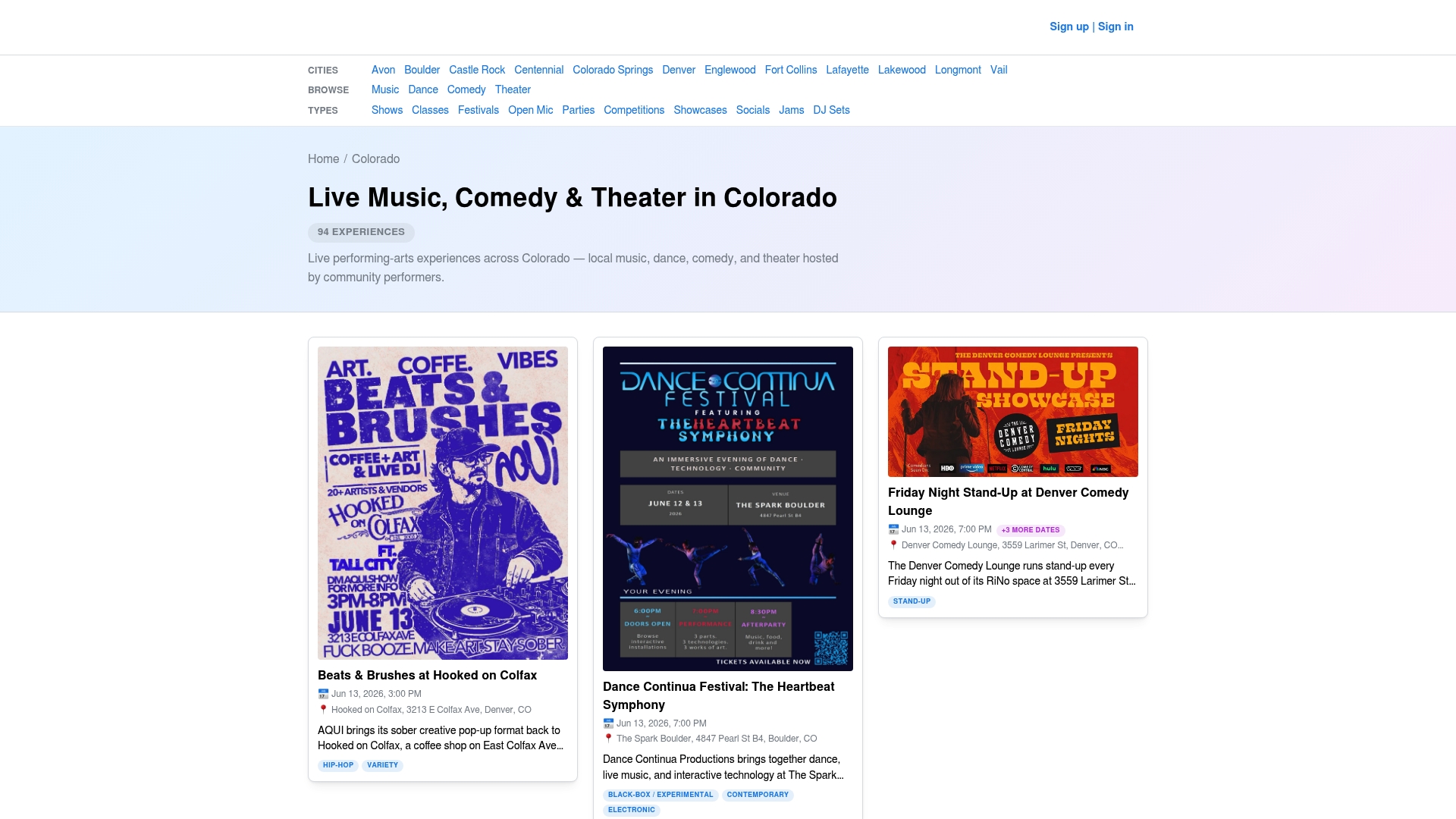
We list Colorado's live music scene the way locals actually experience it, including bluegrass jams, shows, and the smaller sessions that rarely make it onto big event sites. Our Colorado music listings let you filter by city and genre, so you can find a jam near Denver, Boulder, or Colorado Springs without digging through five separate calendars.
Before you head out, a quick session prep checklist from our partners at Twisby Records can help you get your instrument and ears ready, whether you're walking into a jam or a gig.
- Browse live music across Colorado to see what's happening this week.
- Check our Colorado landing page for music, dance, comedy, and theater listings in one place.
- Host a jam yourself? Submit it through our jam listing hub so other players can find you.
FAQ
Where should a beginner start with bluegrass jams in Colorado?
Start with a jam labeled "beginner" or "slow," since these use reduced tempos and printed songbooks to help new players follow along, per jam etiquette guidance. The Black Rose Acoustic Society in the Pikes Peak region runs tiered sessions specifically for this reason.
Do I need to pay to join a bluegrass jam?
Most jams are free to attend, but it's customary to support the host venue by buying food or a drink, or leaving a small donation, especially when the jam happens inside a brewery or shop. Check the event listing or contact the host directly to confirm what's expected.
What instruments are welcome at Colorado bluegrass jams?
Standard bluegrass instruments like guitar, banjo, mandolin, fiddle, upright bass, and dobro are all welcome, and most circles happily make room for whoever shows up ready to listen and play along. Beginners are generally encouraged as long as they follow basic jam etiquette and watch the leader's cues.
What's the difference between a slow jam and a Wernick Method class?
A slow jam is an open, informal session that runs at a reduced tempo so newer players can keep up, while a Wernick Method class is a structured, coached format specifically designed to teach jamming fundamentals and solo cues. Both are good entry points, but the Wernick format offers more direct guidance for complete beginners.
Sources
- Colorado Bluegrass Music Society
- Black Rose Acoustic Society — Jams
- Bluegrass jam etiquette — Martin Gilmore
- Boulder Bluegrass Calendar