
Music Jams: How to Find, Join, or Host One
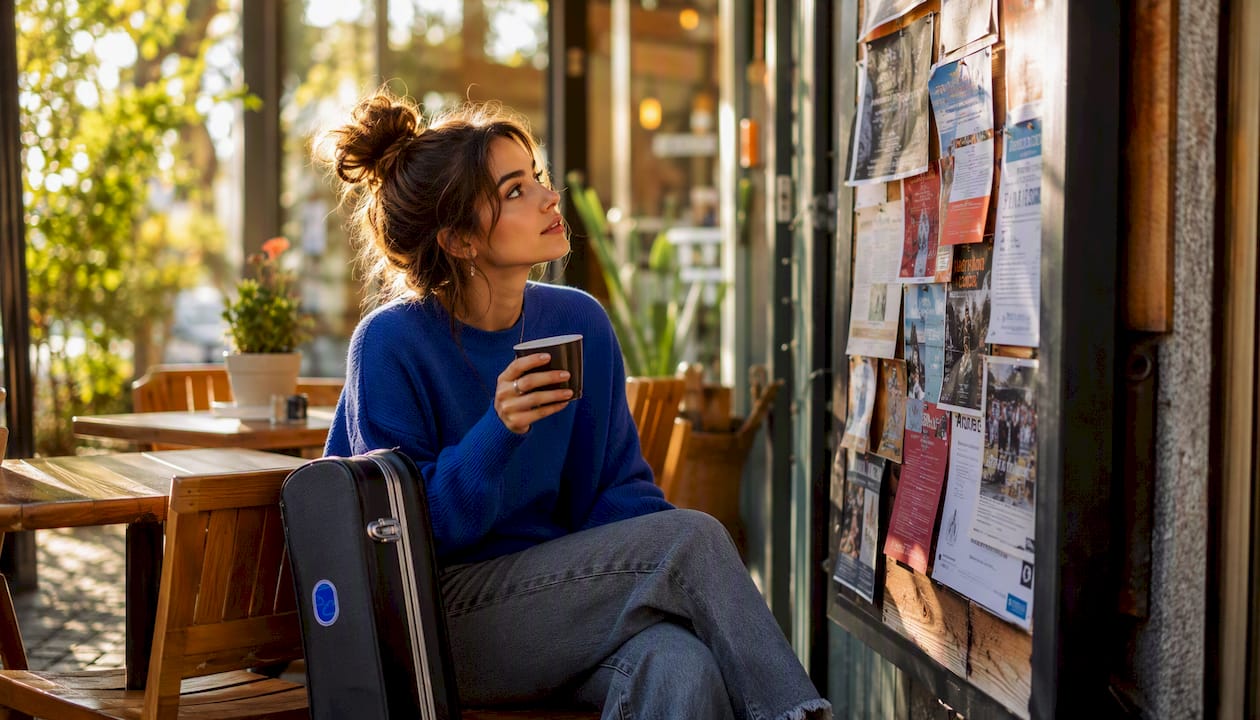
A jam session is an informal, collaborative music-making event where players improvise over chord progressions, grooves, or song structures without extensive prior rehearsal. The goal? Skill-building, creative exploration, and real musical connection. Whether you're stepping into your first open jam or planning to host a weekly session, here's where to start:
- Join a local weekly jam — search "open jam" + your city, or browse jams in Colorado on Experiencebylocals.
- Bring a simple progression — a 12-bar blues in A or G gets you through almost any first night.
- Host your own — prepare 5–10 starter songs, set ground rules, and remember Robbie Calvo's core advice: treat jamming as musical conversation, not a solo showcase.
Table of Contents
- What kinds of music jams are out there?
- How do you find a live jam session near you?
- How do you join a jam session for the first time?
- What songs and progressions work best at a jam?
- How do you host a successful jam session?
- Creative prompts that keep jams fresh
- Safety and logistics for in-person jams
- Real Colorado jams you can visit or use as a template
- Key Takeaways
- Why jams are worth more than most musicians realize
- Find your next jam on Experiencebylocals
What kinds of music jams are out there?
Jams span social gatherings, rehearsal-focused sessions, and professional recording contexts across virtually every genre. Knowing the format before you show up saves awkward surprises.
- Open jam: Any instrument, any skill level. A house band or rotating host keeps things moving. Expect a sign-up sheet and short rotation slots.
- Jazz/blues jam: More structured. Players are expected to know common standards or the 12-bar form. Charts are welcome; ear-playing is respected.
- Songwriter circle: Each player performs an original, then opens the floor for feedback or a quick collaborative pass. Low pressure, high creativity.
- Genre-themed party jam: Think hip-hop freestyle nights or funk grooves. Energy is high, the format is looser, and the vibe leans social.
- Beginner/slow jam: Deliberately paced. Hosts assign simple rhythm roles so newer players can participate without fear.
- Workshop-style jam: Skill-building is the explicit goal. Expect a host who pauses to demonstrate technique or explain a concept mid-session.
| Format | Best for | Typical pace | Gear usually present |
|---|---|---|---|
| Open jam | All levels | Medium | PA, house amp |
| Jazz/blues jam | Intermediate+ | Moderate | Piano, full backline |
| Songwriter circle | Singer-songwriters | Slow/relaxed | Acoustic, minimal PA |
| Genre party jam | Social players | Fast/high energy | DJ setup or full band |
| Beginner/slow jam | Newcomers | Slow | Basic PA, loaner gear |
| Workshop jam | Skill-builders | Varied | Depends on host |
How do you find a live jam session near you?
Start with venue calendars at local music stores, bars with live music rooms, and community arts centers. Facebook groups like "[City] Musicians" or "[Genre] Jam [City]" are goldmines. Meetup.com hosts recurring music groups in most mid-size cities. For Colorado players, Experiencebylocals lists community-hosted jams and live music sessions with filters for genre, skill level, and event type.
Useful listings include expected skill level, whether instruments or amplification are provided, whether there's a house band, and whether registration is required. When a listing is vague, send the host one quick message before you go. Ask: "Is this beginner-friendly?" and "Do I need to bring my own amp?" Two questions, two minutes, zero surprises.
Before attending any new jam, confirm:
- Venue capacity and parking
- Cover charge or suggested donation
- Whether gear (amps, drums, PA) is provided
- Noise curfew or volume rules
- Whether a sign-up sheet or pre-registration is needed
How do you join a jam session for the first time?
Arriving early is the single best move a first-timer can make. You get to meet the host, watch the room set up, and hear the vibe before it gets loud.
Step-by-step for your first jam:
- Arrive 20–30 minutes early. Introduce yourself to the host. Mention your instrument and approximate experience level.
- Listen through the first rotation. Watch how solos are called, how long players go, and what the energy is.
- Sign in if there's a sheet. Some hosts use a list; others call on players by hand signal.
- Warm up quietly off to the side. Don't noodle over someone else's solo.
- Wait for the host's call before jumping in. When it's your turn, confirm the key and form before you start.
- Keep your volume in context. Match the room, not your bedroom practice level.
Etiquette checklist:
- ✅ Listen more than you play, especially early on
- ✅ Don't change the agreed tempo or chord progression mid-solo
- ✅ Respect time limits — wrap up when the host signals
- ✅ Encourage other players, especially beginners
- ✅ Ask before plugging into the house amp or adjusting the PA
Packing list: spare strings or picks, a short instrument cable, a DI box or small amp if the venue doesn't provide one, a phone with a tuner app, and a cheat sheet of two or three progressions you know cold.
What songs and progressions work best at a jam?
For beginners, the 12-bar blues in a common key is the most effective icebreaker because it gives everyone a predictable framework and reduces performance anxiety. Here are 7 solid starters across genres:
- 12-bar blues in A (♩ = 80–100 bpm) — Works for all levels. Shuffle feel. Host call: "Blues in A, slow shuffle, I'll count it in."
- 12-bar blues in G (♩ = 90–110 bpm) — Guitar-friendly key. Great for mixed groups.
- ii-V-I in C (Dm7 – G7 – Cmaj7) (♩ = 120–140 bpm) — Jazz standard foundation. Advanced sessions love it.
- "Sweet Home Chicago" changes — Blues/rock crossover. Nearly universal recognition.
- I-IV-V in E (E – A – B) (♩ = 100–120 bpm) — Rock and country staple. Easy for newcomers to lock into.
- Minor pentatonic groove in Am (♩ = 85–95 bpm) — Works for funk, soul, and hip-hop-adjacent jams.
- I-V-vi-IV in G (G – D – Em – C) (♩ = 100–120 bpm) — Pop crossover. Recognizable to almost everyone in the room.
Pro Tip: For mixed-skill groups, start with the 12-bar blues or I-IV-V. Save the ii-V-I and modal progressions for sessions where most players have some jazz background.
How do you host a successful jam session?
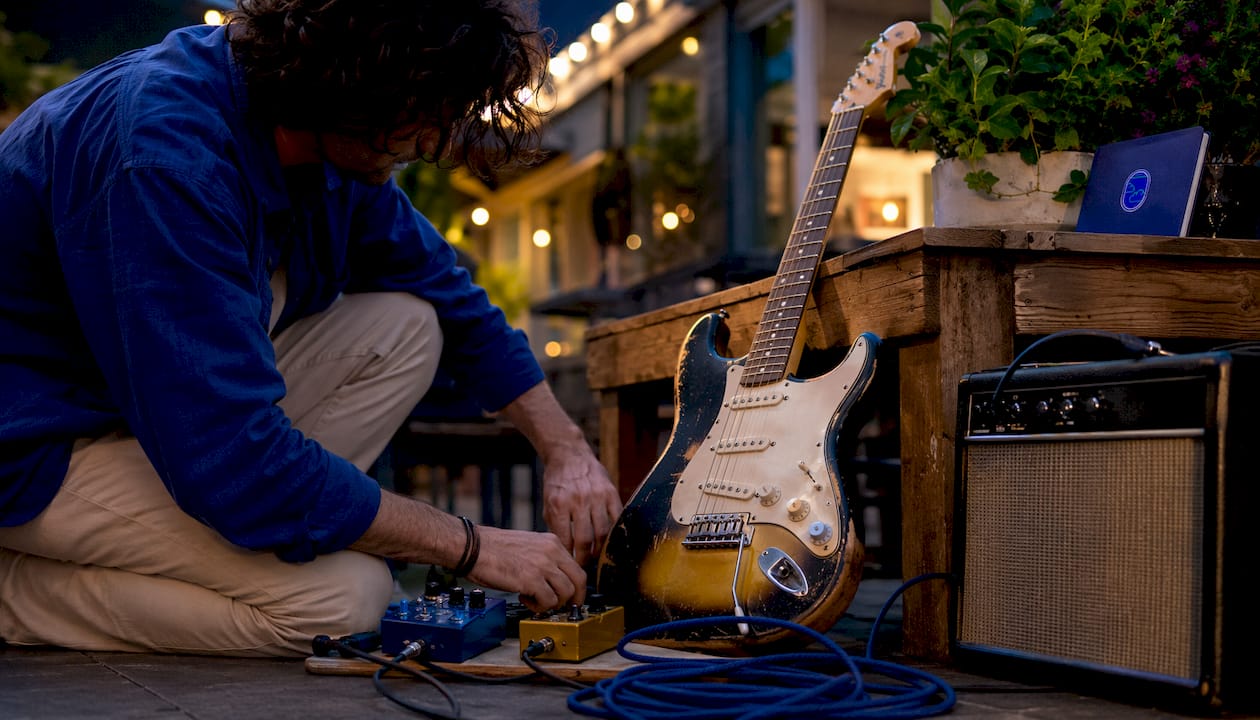
Hosts should set a shared key, agree on simple progressions, and establish ground rules like time limits per solo. Preparing 5–10 familiar standards reduces start-up hesitation and keeps energy high from the first note.
Setup checklist:
- ✅ PA with at least two vocal mics
- ✅ Stage layout that allows eye contact between players
- ✅ Dedicated power strips for amps and pedal boards
- ✅ A simple recording setup (even a phone on a stand) for review later
- ✅ Accessible seating for players waiting their turn
- ✅ Clear signage for parking, restrooms, and emergency exits
Running-order template:
| Time slot | Activity | Host action |
|---|---|---|
| — | Arrival and setup | Greet players, collect sign-ups |
| — | Warm-up jam | Call a simple groove, no solos yet |
| — | Main rotation | Call solos, manage time limits |
| — | Feature slot | Invite a prepared player or duo |
| 85–90 min | Wrap and social | Thank players, announce next session |
Ground rules to announce at the top:
- Solo time limit (2–3 minutes is standard)
- How songs are called (host announces key, tempo, and form)
- Volume expectations
- How to signal you want a turn
Pro Tip: Robbie Calvo puts it simply: treat every jam like a musical conversation. Prioritize group cohesion over individual showmanship. A host who models this from the first song sets the tone for everyone in the room.
Hosts should explicitly announce a song's key, tempo, and form, then play a short demonstrative vamp to orient unsure players before inviting solos. That 30-second vamp does more for inclusion than any ground-rules speech.
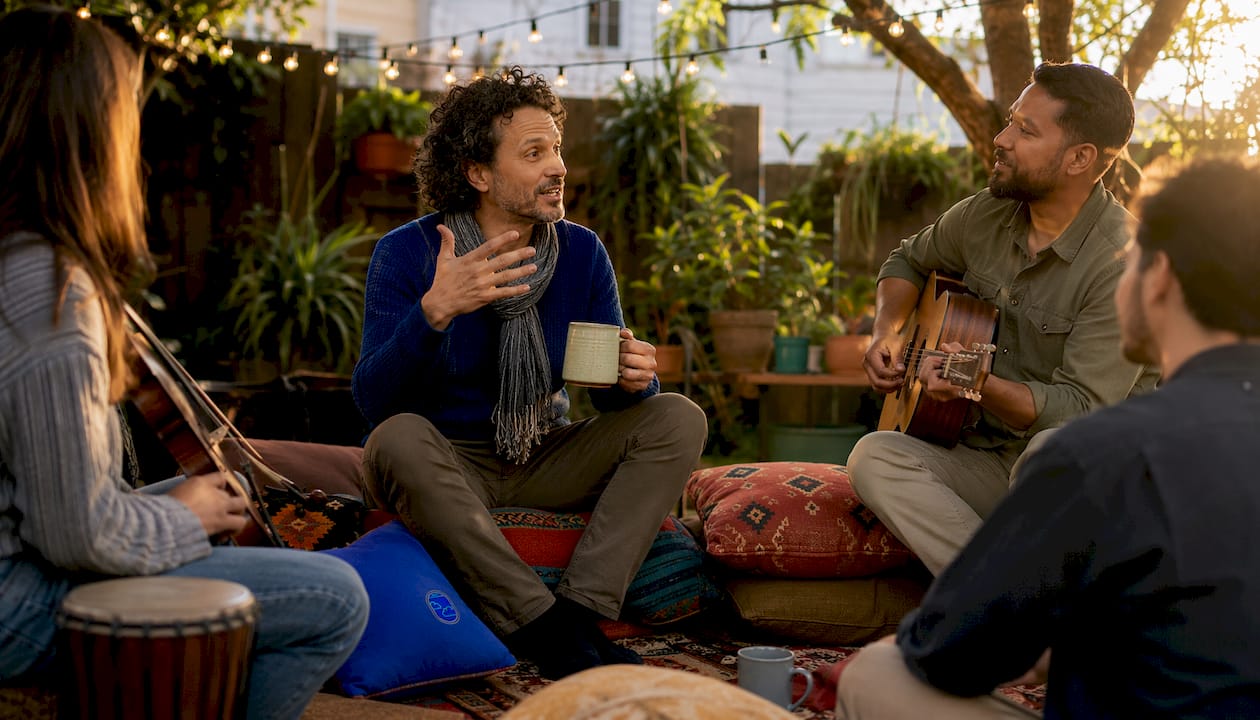
Creative prompts that keep jams fresh
Predictable jams lose players fast. These prompts work for hosts and players alike:
- Hybrid-genre swap: Play a jazz standard over a reggae groove. Blending unlikely genres forces deeper listening and often produces fresher ideas than staying in one lane.
- Call-and-response round: The host plays a 2-bar motif; the group answers. No solos, just conversation. Great warm-up for mixed-skill rooms.
- Odd-meter experiment: Take a familiar blues and play it in 5/4. The discomfort is the point.
- Instrument restriction: Drummers play brushes only; guitarists play rhythm only. Forces everyone to listen harder.
- Slow-tempo reharmonization: Take a fast standard and cut the tempo in half, then swap in substitute chords. Reveals gaps in everyone's harmonic vocabulary.
For a quick warm-up, try this: the host plays a single chord and a groove. Every player enters one at a time, adding one element. No one changes what they're playing until the host signals. It builds listening instincts in about five minutes. Cross-genre events like these also connect naturally to the mixed-art live events that Colorado's local scene does especially well.
Safety and logistics for in-person jams
Most jam problems are logistical, not musical. Check these before you book or attend:
- ✅ Confirm venue capacity and whether a permit is needed for amplified music
- ✅ Know the local noise curfew (most U.S. residential areas enforce quiet by 10 PM or 11 PM)
- ✅ Verify the venue carries basic liability insurance, or ask the host what their policy covers
- ✅ Locate emergency exits before the session starts
- ✅ Keep stage volume at a level where players can hear each other without monitors maxed out
- ✅ Talk to neighbors or venue management in advance if the space shares walls
Recording sessions helps participants review their playing and preserves creative ideas, but always ask for consent before recording or posting anyone's performance. A quick verbal check at the start of the session covers everyone.
For late-night events, plan your transport in advance. Rideshare apps like Uber or Lyft work well in most Colorado cities. The buddy system is still the smartest option when you're carrying gear after midnight.
Real Colorado jams you can visit or use as a template
Experiencebylocals lists several Colorado events that show exactly how different jam formats play out in practice.
- Adult Jam Session at the Muse Performance Space is a recurring community jam that welcomes adult players across skill levels. The listing specifies what to bring, the general format, and the host's approach, making it a solid model for anyone planning a similar weekly event.
- Hip Hop Party Jam with Ayla Satten at Streetside Dance at Streetside Dance Studio flips the format entirely. It's high-energy, genre-specific, and built around movement as much as music. The listing shows how a genre-themed jam attracts a very different crowd than an open-format session.
- Atom Jazz Fest 2026 represents the festival end of the spectrum, where jam activity happens across multiple stages and pickup sessions form organically between scheduled sets. Festival jams differ from weekly house jams in one key way: players rotate faster, the audience is larger, and the social networking value is significantly higher.
Browsing Experiencebylocals by genre and city lets you compare listing details side by side, which is the fastest way to find a session that matches your skill level and goals.
Key Takeaways
Jamming grows both your skills and your musical community faster than almost any other practice format.
| Point | Details |
|---|---|
| What a jam is | An informal, collaborative session where musicians improvise over shared progressions without prior rehearsal. |
| How to find one | Search venue calendars, Facebook groups, or filter by genre on Experiencebylocals for Colorado sessions. |
| What to bring | Spare strings or picks, a cable, a tuner app, and at least one progression you know cold. |
| Host's top priority | Announce key, tempo, and form before every song; model musical conversation over solo showmanship. |
| Experiencebylocals | Lists Colorado jams with skill-level filters so you can find or post the right session in minutes. |
Why jams are worth more than most musicians realize
Here's what I keep coming back to: most musicians treat jams as a warm-up for "real" gigs. That framing undersells them badly. The skills you build in a jam, listening under pressure, adjusting your phrasing to another player's energy, recovering gracefully from a wrong chord, are exactly the skills that separate competent players from genuinely compelling ones.
The conventional wisdom says practice alone, then perform publicly. But jams collapse that gap. You're practicing and performing at the same time, in front of real people, with real stakes. The feedback is immediate and honest. A Colorado host I know made one small change that transformed his weekly session: he stopped letting players self-select their solo length and started signaling a clear cutoff. The room got tighter, the energy stayed higher, and newer players stopped feeling like they were waiting forever for a turn. One structural tweak, and the whole community benefited.
If you've been hesitating to show up somewhere new, bring a 12-bar blues in G and introduce yourself to the host. That's genuinely all it takes to start.
Find your next jam on Experiencebylocals
Colorado's local music scene runs deeper than most visitors, and even many residents, ever discover. Experiencebylocals is the direct route to that scene: a searchable platform where community artists list real, bookable live music events in Colorado, including recurring jams, open sessions, and genre-specific nights that don't show up on mainstream ticketing sites.
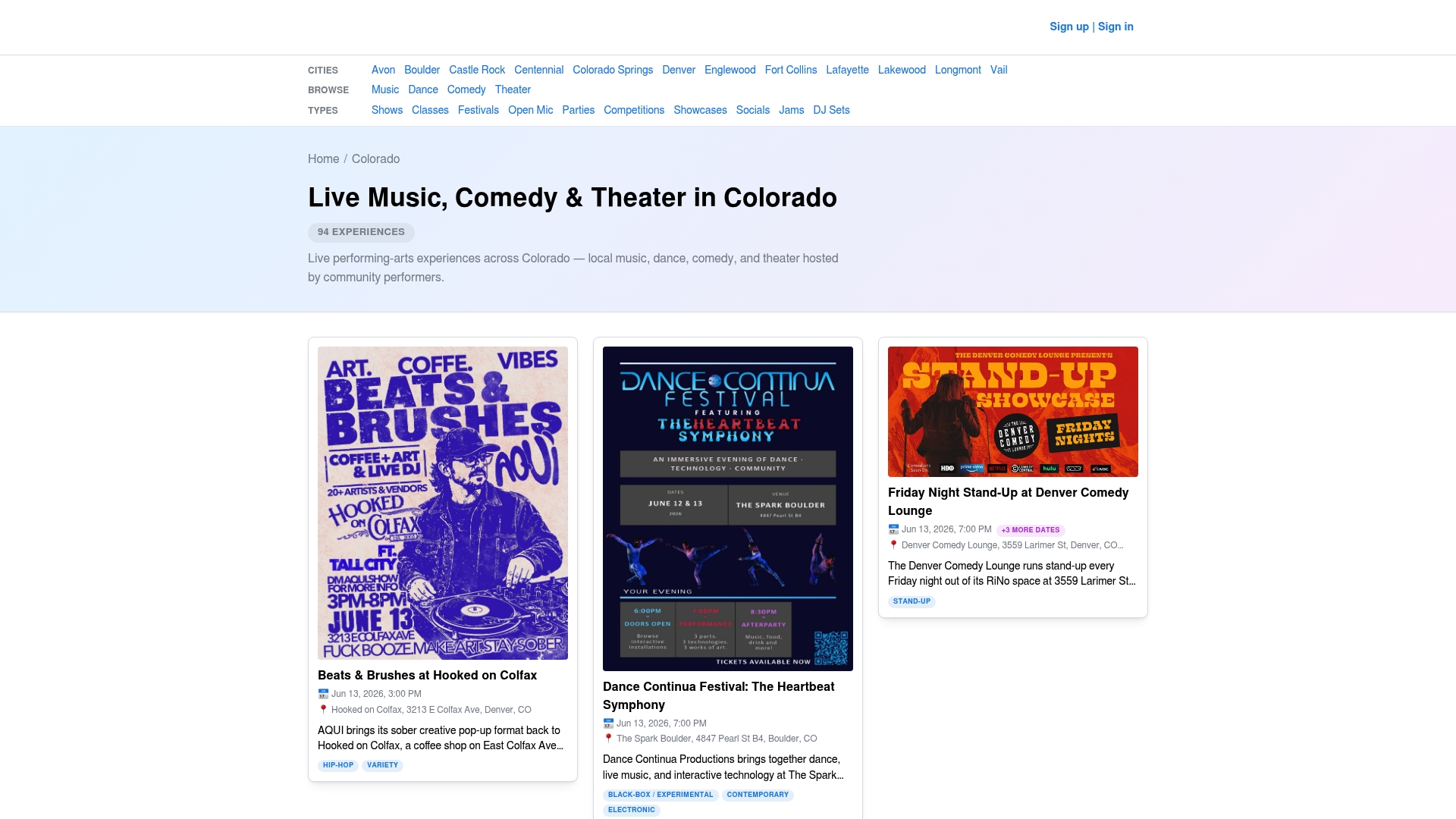
If you're a player, filter by "music" and your city to find sessions that match your skill level and schedule. If you're a host, listing your jam takes minutes. Include your skill-level tag, what instruments are provided, your starter song list, and whether registration is required. That detail is what attracts the right players and fills your room with people who actually show up prepared. Browse what's happening now and book your spot directly with the host.