
Mixed-Art Live Events: 8 Real Examples to Inspire You
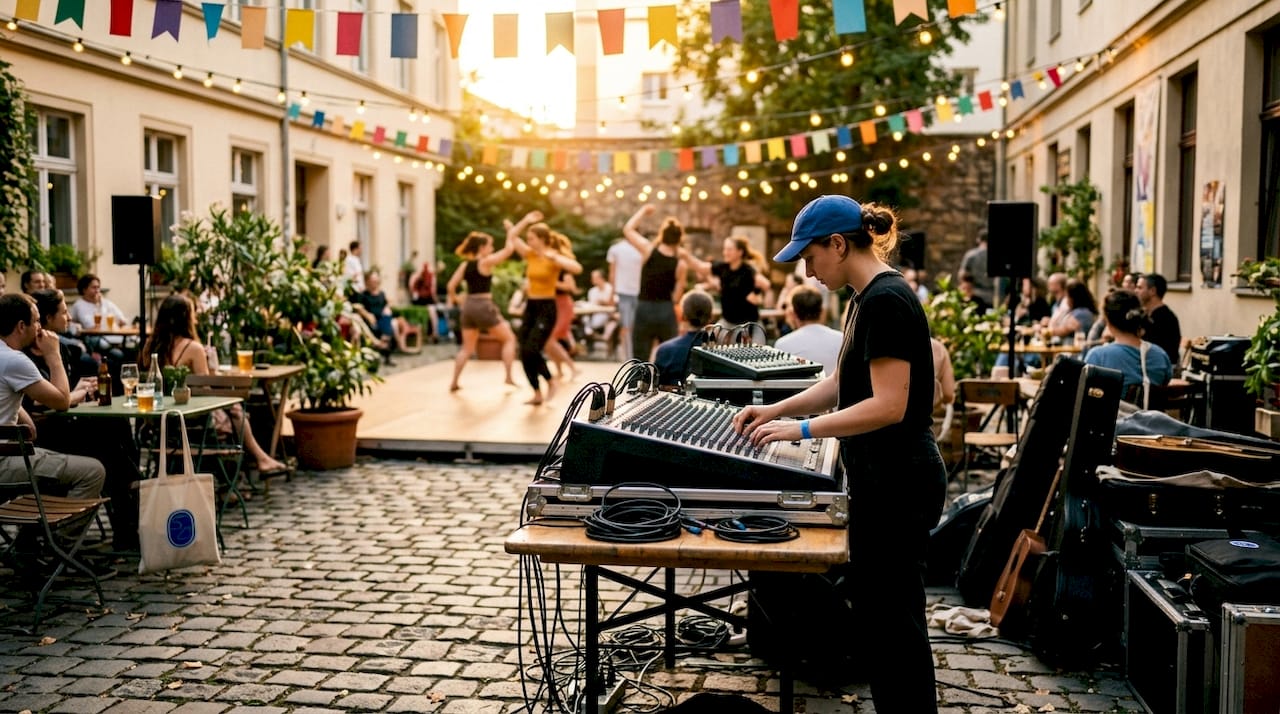
Mixed-art live events are performances where two or more artistic disciplines, such as music, dance, poetry, and visual technology, merge into a single live experience. The industry term for this format is interdisciplinary performance, and it covers everything from multimedia poetry shows to site-specific audiovisual concerts. These examples of mixed-art live events prove that the most memorable nights out happen when art forms stop competing and start collaborating. Experiencebylocals has seen this firsthand across Colorado, where local creators are building exactly these kinds of layered, community-rooted experiences.
1. What are standout examples of mixed-art live events with multimedia poetry?
Multimedia poetry performance is one of the most personal and technically demanding formats in interdisciplinary art. It fuses spoken word with real-time visual systems, turning language into a full-body sensory event.
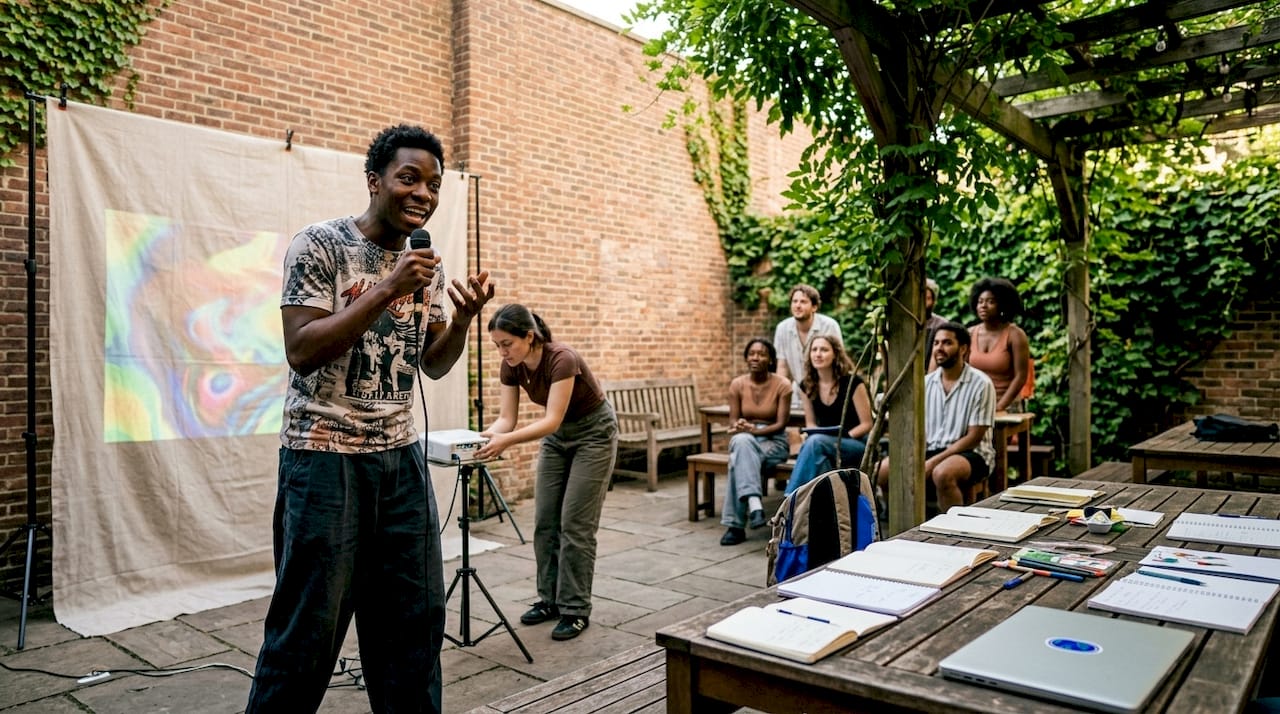
Anna Ren's Secret Mirrors is a clear benchmark. The show ran in SoHo and drew over 70 attendees in a 30–60 minute gallery format, combining live poetry with projection mapping and CG animation. That scale proves intimate venues can hold serious artistic weight. The audience did not just hear the poems. They watched them move.
What makes this format work is the unified system underneath it. Sound cues trigger visual shifts. Body movement shapes the projected image. The poem becomes architecture.
- Live poetry delivered in real time, not pre-recorded
- Projection mapping that responds to voice and movement
- CG animation layered with physical performance
- Gallery-scale venues that keep the experience close and personal
Pro Tip: If you are designing a multimedia poetry event, build your visual system to react to the performer, not just play alongside them. Reactive visuals create presence. Passive visuals create wallpaper.
2. How do live audiovisual performances exemplify mixed-media live art?
Live audiovisual performance is the format where music and moving image are generated together in real time, not edited in post-production. The result is a show that cannot be replicated, only experienced.
Noma Tongues by Yiou Wang is one of the clearest live art performance examples in this category. The 30-minute immersive format uses Unreal Engine for procedural animation, meaning the visuals are computed live based on musical input. That is not a video playing behind a musician. That is a machine listening and responding. The distinction matters enormously for how audiences feel inside the room.
Artist residencies at art and technology hubs like SAT in Montreal provide the technical infrastructure that makes this level of live synthesis possible. MUTEK Montréal has become a global reference point for this format, presenting artists who treat software as a live instrument.
Key elements that define strong audiovisual live art:
- Real-time computation: visuals generated from live audio data, not pre-rendered
- Procedural animation: movement and form that evolve unpredictably during the show
- 30-minute formats: long enough for immersion, short enough to sustain intensity
- Integrated sound design: music composed specifically for visual interaction
The 30-minute duration is not arbitrary. It reflects a deliberate choice to maintain peak audience attention without fatigue. Longer formats require intermission or structural variation to hold the same energy.
3. What role do collaborative mixed-media workshops play in live art events?
Collaborative workshops sit at the intersection of creation and performance. They are not passive entertainment. Participants make the art together, which means the event itself is the creative act.
The Side-by-Side workshop model is a well-documented example. These sessions run approximately 2.5 hours with capped groups of six pairs, priced around $80 per pair, with all materials and light hospitality included. That structure is intentional. Small groups create psychological safety. Shared snacks lower social barriers. Guided prompts replace the blank-page anxiety that stops most people from making art.
The design philosophy behind successful workshops follows a clear sequence:
- Welcome all experience levels explicitly. State it in the event description, not just at the door.
- Use guided prompts to give participants a starting point without dictating the outcome.
- Cap group size to maintain intimacy and allow facilitators to give real attention.
- Prioritize process over product. The goal is engagement, not a finished piece.
- Include materials and hospitality to signal that the event is fully resourced and welcoming.
Workshops that lower barriers and emphasize collaboration consistently produce more active participant engagement than open studio formats. The structure does the work that confidence cannot yet do on its own.
Pro Tip: Pair participants who do not know each other. Familiar pairs default to their existing dynamic. Strangers negotiate a shared creative language, which is where the interesting work happens.
You can see how choreography workshops are structured at Experiencebylocals for a practical comparison of how collaborative formats translate across disciplines.
4. How do interdisciplinary events blend music, dance, and visual arts?
Interdisciplinary live events combine distinct art forms so that each one amplifies the others. The goal is not a variety show. It is a unified experience where removing any one element would collapse the whole.
Artmixture's Braided Light is a strong reference point. The live event combined dance, piano, guitar, and percussion with video projections in an intimate venue setting. The choreography responded to the music. The projections responded to the movement. Nothing was decorative. Every element carried narrative weight.
| Art Form | Role in the Event | Effect on Audience |
|---|---|---|
| Dance | Embodied storytelling and spatial movement | Creates emotional and physical empathy |
| Live music | Real-time sonic atmosphere | Shapes pacing and emotional arc |
| Video projection | Visual context and abstract imagery | Expands the perceived space of the venue |
| Venue design | Frames and contains the experience | Determines intimacy and acoustic quality |
The venue is not a neutral container in these events. Ceiling height, wall texture, and room shape all affect how sound and light behave. Artists who treat the venue as a creative variable produce shows that feel site-specific, even when the content could theoretically travel.
Colorado festivals curated through Experiencebylocals regularly feature this kind of cross-genre programming, where local musicians, dancers, and visual artists share the same stage and the same creative brief.
5. What can live mixed-art events teach us about audience engagement and space?
The most sophisticated mixed-art performances treat the venue as a participant, not a backdrop. Space activation is the practice of designing a performance so that the room itself becomes part of the artistic system.
Fear of the Object, presented at the Kongsberg Jazz Festival, is a precise example. The project integrates percussion, video synthesis, and venue acoustics so that the architecture shapes what the audience hears and sees. Move to a different part of the room and you experience a different version of the same show. That is not a technical accident. It is a design choice.
"Venue architecture and acoustics are treated as active participants influencing every unique mixed-art performance. The space is not where the art happens. The space is part of the art." — Kongsberg Jazz Festival curators
Breaking the performer-audience boundary is the other lever. Participatory elements transform mixed-art shows from spectacles into communal encounters. When audiences can move, respond, or contribute, the event stops being something they watch and becomes something they are inside. That shift changes what people remember and how long they remember it.
Understanding the role of audience in dance events gives artists a practical framework for designing this kind of participatory engagement into their shows from the start.
6. How do site-specific and immersive formats push mixed-art further?
Site-specific performance is the format where the location is chosen because it adds meaning, not just because it is available. A show in a warehouse, a rooftop, or a historic building carries the weight of that place into every moment of the performance.
Immersive formats extend this logic by removing the traditional stage-and-seats arrangement entirely. Audiences move through the space. Performers appear in unexpected locations. The narrative unfolds around the guest rather than in front of them. This format demands a higher level of production coordination, but it produces a proportionally stronger audience response.
Mixed-art creators who design events as coherent existential experiences that blend technology and artistic expression dynamically report the strongest audience retention and word-of-mouth. The experience feels singular because it is. No recording captures what it felt like to be in that room at that moment.
The practical implication for local artists is significant. You do not need a major venue or a large budget to create a site-specific mixed-art event. You need a space with character, a clear artistic concept, and collaborators who understand that the location is a creative decision.
7. What makes a creative event concept work across different art forms?
A creative event concept works when every element serves the same central idea. The failure mode for most mixed-art events is addition without integration. A band plays. A dancer performs. A visual artist projects something on the wall. Each element is fine on its own. Together, they are just a busy room.
Integration requires a shared brief. Every collaborator needs to know the emotional or conceptual core of the event before they begin creating their contribution. When a musician knows the dancer is working with themes of fragmentation, the music can respond to that. When the visual artist knows the sonic palette, the imagery can extend it rather than compete with it.
Unified live art systems integrate technology and narrative so that sound cues affect visuals and vice versa. That principle applies equally to low-tech events. A lighting cue that responds to a musical phrase creates the same sense of coherence as a software-driven visual system. The technology is less important than the intentionality.
Local artists exploring this format can find real-world models at events like the Adult Jam Session at the Muse Performance Space, where small-capacity ticketed formats create the conditions for genuine artistic interplay.
8. How do performance art showcases support emerging mixed-art creators?
Performance art showcases give emerging artists a structured context for presenting interdisciplinary work to an audience that is already open to experimentation. They reduce the risk of presenting unusual work because the curatorial frame signals to the audience that unusual is the point.
The showcase format also creates community. Artists see each other's work. They identify potential collaborators. They learn what is possible within a given budget and venue type. That knowledge accelerates the development of the local mixed-art scene faster than any individual event can on its own.
Experiencebylocals functions as exactly this kind of curatorial frame for Colorado artists. Events like Contempo Narrative with Carolina Brizuela at Mi Chantli show how a platform built around local talent creates the conditions for mixed-art work to find its audience without requiring artists to navigate large institutional gatekeepers.
Key Takeaways
Mixed-art live events succeed when every discipline, space, and technology choice serves a single unified artistic concept rather than operating as separate layers stacked on top of each other.
| Point | Details |
|---|---|
| Integration over addition | Every art form in a mixed event must serve the same central concept to create coherence. |
| Space is a creative variable | Venue acoustics and architecture actively shape what audiences experience in site-specific formats. |
| Structure lowers barriers | Capped groups, guided prompts, and included materials make collaborative workshops more engaging for all levels. |
| Short formats sustain intensity | 30-minute immersive structures maintain peak audience attention without requiring intermission. |
| Participatory design builds memory | When audiences move or contribute, the event becomes a communal encounter rather than a spectacle. |
Why mixed-art events are the future of local arts scenes
I have watched local arts communities struggle with a specific problem for years. Individual disciplines, music, dance, theater, visual art, each build their own audience and rarely share it. Mixed-art events break that silo. When a dancer and a musician and a visual artist share a stage with a unified concept, they bring three audiences into the same room. Those audiences meet each other. They discover work they would never have sought out on their own.
The technology piece gets overemphasized in most conversations about interdisciplinary performance. Yes, Unreal Engine and projection mapping are powerful tools. But the most moving mixed-art events I have seen used very little technology and a great deal of intentionality. A percussionist whose rhythms were choreographed to a dancer's breath. A poet whose words appeared as handwritten projections that faded as she spoke them. The technology served the idea. The idea came first.
What local arts scenes need most is not bigger budgets or better equipment. They need artists who are willing to share creative control and audiences who are willing to be surprised. Both of those things are already present in most communities. They just need a structure that brings them together. That is exactly what platforms like Experiencebylocals are building, one curated event at a time.
— DJ
Live mixed-art events you can experience right now
Experiencebylocals curates authentic, locally rooted performances across Colorado that go well beyond standard entertainment.
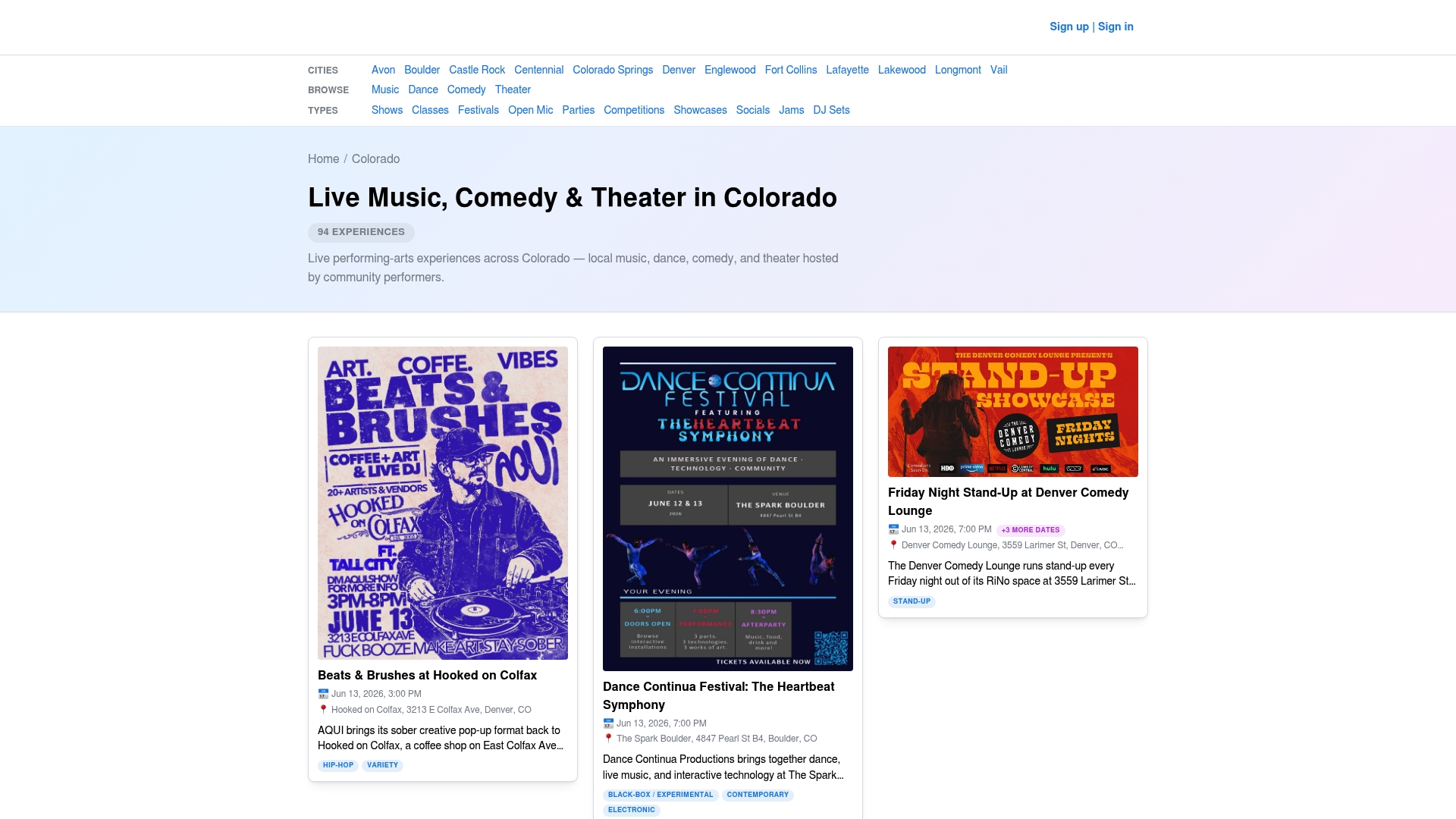
Whether you are looking for live music in Colorado that integrates visual art and movement, or dance performances in Colorado that push into interdisciplinary territory, the platform connects you directly with local creators who are doing this work right now. Every listing is artist-led and community-rooted. You will not find the same show twice. Browse current events, book your spot, and show up ready to be part of something that cannot be replicated on a screen.
FAQ
What are mixed-art live events?
Mixed-art live events are performances that combine two or more artistic disciplines, such as music, dance, poetry, and visual technology, into a single integrated live experience. The industry term for this format is interdisciplinary performance.
How long do mixed-art live events typically run?
Formats vary widely, but 30–60 minute immersive structures are common for gallery-scale events because they sustain peak audience attention without requiring intermission or structural breaks.
Do mixed-art workshops require prior experience?
Successful workshops explicitly welcome all experience levels and use guided prompts and small group sizes to create a safe environment for creative participation regardless of background.
What technology is used in live audiovisual performances?
Tools like Unreal Engine for procedural animation and video synthesis systems are common in professional audiovisual live art, allowing visuals to be generated in real time from live musical input.
Where can I find mixed-art live events in Colorado?
Experiencebylocals lists curated interdisciplinary performances across Colorado, including music, dance, theater, and collaborative events hosted by local artists at community venues.