
The Role of Audience in Dance Events Explained
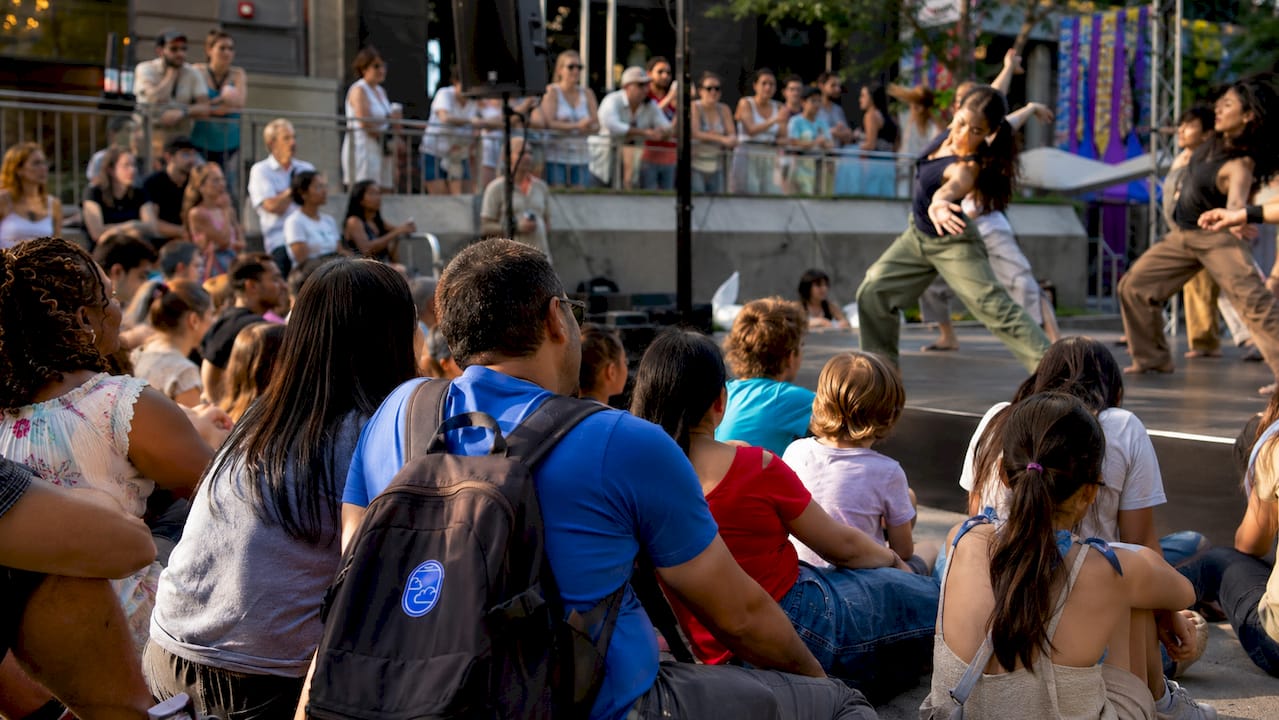
The role of audience in dance events is defined as an active, shaping force that transforms a performance from a solo act into a shared, living experience. Audiences do not simply watch. They contribute energy, emotional feedback, and even physical participation that changes what happens on stage. Research confirms that audience attitude affects performers more than audience size does. That finding alone reframes how we think about spectatorship. Whether you are a curious attendee, a community organizer, or a working dancer, understanding this dynamic makes every event richer.
How does the role of audience in dance events shape performance energy?
Spectator influence in dance goes far beyond applause. The energy in the room, the quality of attention, and the willingness to participate all feed directly into what performers do and how they feel doing it.
Silent, focused attention is one of the most powerful forces a crowd can generate. Experienced performers treat that attentive quiet as a tangible presence. They read it, respond to it, and adjust their pacing and intensity accordingly. A room full of people leaning forward in genuine curiosity pulls a different performance out of a dancer than a distracted or indifferent crowd does.
Physical participation raises the stakes even further. Some choreographers build audience movement directly into the structure of their work. Body percussion techniques like rhythmic clapping, stomping, and call-and-response patterns lower participation barriers by replacing complex choreography with accessible rhythmic cues. Guests who might never step onto a dance floor can still contribute to the collective energy of the room.
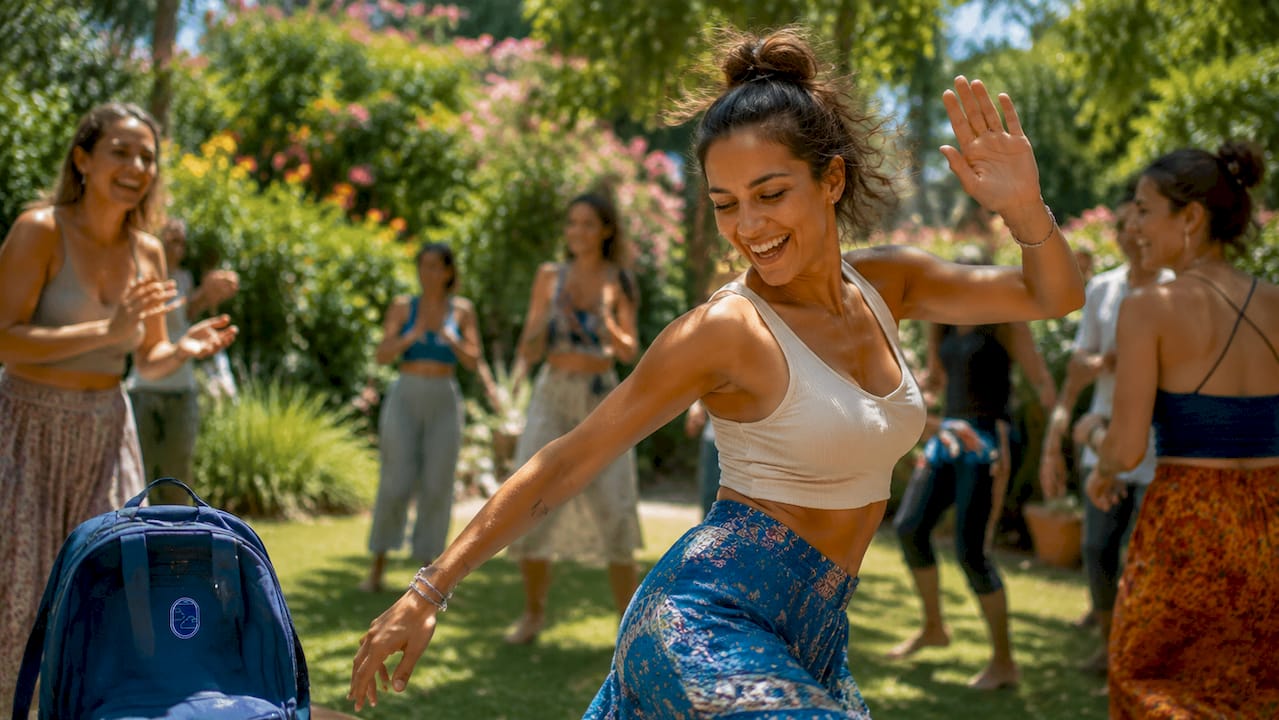
The clearest large-scale proof of this principle is Boris Charmatz's CERCLES, a project that integrated 150 participants aged 17 to 76 over three hours of continuous performance. The project deliberately prioritized collective effort over individual perfection. That choice made the audience the performance, not just its witness.
Here is what active audience engagement looks like across a spectrum of involvement:
- Attentive silence: Focused, quiet presence that performers read as a live signal
- Rhythmic participation: Clapping, stomping, or call-and-response that connects guests to the beat
- Movement tasks: Simple guided gestures or steps that invite physical involvement without requiring training
- Full integration: Community members dancing alongside professionals, as in CERCLES
Pro Tip: If you are a performer, scan the room before you begin. The quality of attention you feel from your crowd tells you whether to slow down, intensify, or invite more interaction. Treat that read as part of your preparation.
How does audience attitude affect performers psychologically?
Audience attitude shapes the performer's internal experience more than almost any other variable. A June 2026 study of 102 participants compared audience size versus attitude and found that whether a crowd was encouraging or critical mattered far more than whether it had two people or six. That result is counterintuitive. Most performers fear large crowds. The research says they should pay closer attention to the mood of the crowd instead.
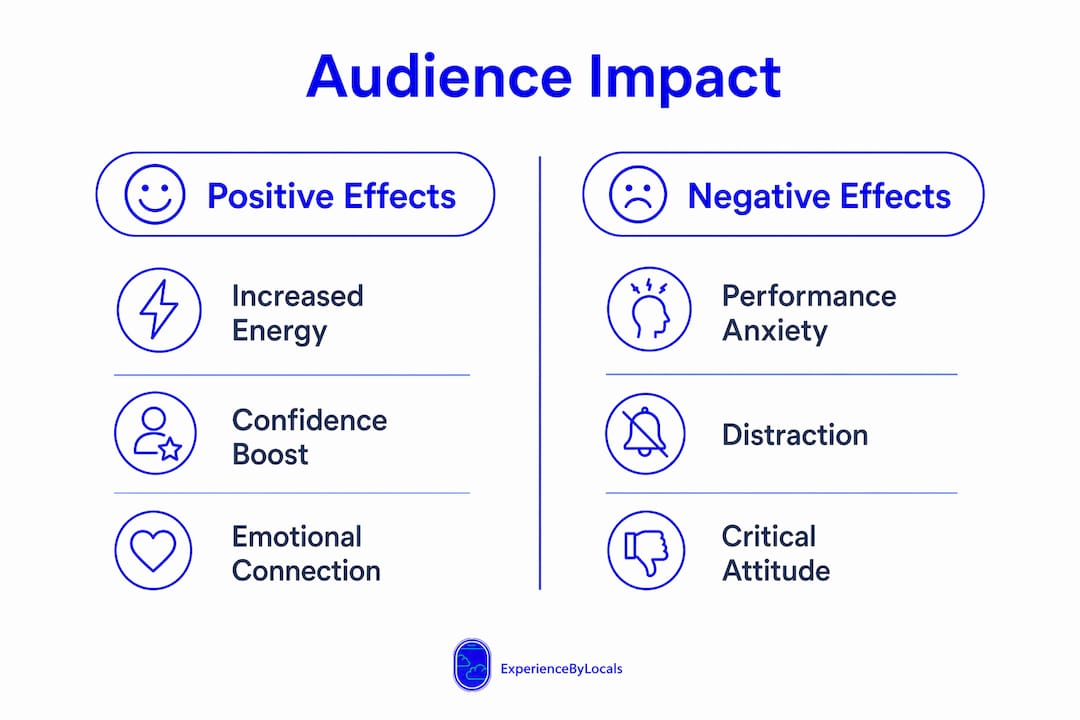
An encouraging audience reduces nervousness and supports a more fluid, confident performance. A critical or unsupportive crowd does the opposite. Research on speech and neural activity found that unsupportive audiences decrease speaking rate and produce measurable changes in brain state, specifically in the alpha-to-beta ratio, which signals heightened arousal and stress. The same neurological pattern applies to dancers, whose physical output is directly tied to their emotional state.
Digital visibility adds another layer. Online feedback and social media evaluation amplify performers' self-monitoring and emotional strain. A dancer who knows a performance is being filmed and shared faces a compound audience: the people in the room and the unknown crowd online. That awareness intensifies the psychological weight of every viewer reaction.
| Audience condition | Effect on performer |
|---|---|
| Encouraging attitude | Reduced anxiety, increased confidence and fluidity |
| Critical attitude | Heightened nervousness, disrupted performance rhythm |
| Attentive silence | Positive arousal, performers adjust pacing and intensity |
| Unsupportive presence | Decreased output rate, measurable neural stress response |
| Digital visibility | Amplified self-monitoring and emotional strain |
The takeaway for event organizers is clear. Creating a warm, welcoming atmosphere before a show begins is not a soft courtesy. It is a direct investment in the quality of the performance you are about to see.
Why is the shift from passive spectatorship to participation a new aesthetic?
The relationship between audience and performer has crossed a threshold. Spectatorship is no longer a fixed role. Researchers at Vrije Universiteit Brussel introduced a vocabulary to describe this shift, built around three concepts: attunement, misattunement, and disattunement. These terms describe the quality of connection between crowd and performer at any given moment.
Attunement is when audience and performer are genuinely in sync. The energy flows both ways, and the performance feels alive. Misattunement describes a partial or uneven connection, where some guests are engaged and others are not. Disattunement is a full break in that connection, which can happen when a performance demands too much from an unprepared crowd or when the performer loses the room entirely.
This framework matters because it gives us a way to evaluate participatory dance beyond "did people enjoy it." The aesthetic question becomes: how well did the performer manage the volatile interplay with the crowd? Participatory performances require performers to develop skills specifically for reading and shaping that interplay, not just executing choreography.
Here is how the shift from passive to participatory spectatorship changes the experience:
- Meaning becomes co-created. The presence of an audience transforms how value is perceived in a performance. Spectatorship modulates meaning without fixing it.
- The performer's skill set expands. Reading a crowd and adjusting in real time becomes as important as technical execution.
- The audience carries responsibility. Guests who understand their role as active contributors show up differently than passive ticket holders.
- Community becomes the medium. When audience members move, clap, or respond, the group dynamic itself becomes the artistic material.
Understanding dance's role in cultural expression deepens this further. Dance has always been a communal act. The participatory turn in contemporary performance is not a departure from tradition. It is a return to it.
What are practical ways to integrate audiences into dance events?
The most effective methods for audience integration share one quality: they lower the barrier to entry without lowering the quality of the experience. You do not need a trained audience to create a powerful participatory event. You need the right design.
Exposing the rehearsal process to guests is one of the most underused tools in community dance. The CERCLES project showed that sharing the unfolding process creates deeper connection than a polished final performance does. When guests see the work in progress, they invest in it. They stop being consumers and start being collaborators.
Body percussion is another entry point that works across age groups and skill levels. Techniques like rhythmic clapping patterns and call-and-response drumming give guests a physical role without requiring any dance training. The interaction becomes a bridge between the performer's world and the guest's comfort zone.
Community dance nights and inclusive workshops take this further by building participation into the event format itself. At community dance nights, the line between performer and guest blurs by design. Everyone is there to move, not just to watch.
Practical methods that work:
- Open rehearsals where guests observe and occasionally join the process
- Rhythm-based warm-ups that bring the whole room into a shared beat before the main performance
- Movement prompts that invite simple gestures without requiring coordination
- Post-show discussions that let guests process and reflect on what they experienced
Pro Tip: Performers, give your guests permission to be imperfect. A brief verbal invitation at the start of a participatory segment, something like "there is no wrong way to do this," removes the fear of embarrassment that keeps most people on the sidelines.
Key Takeaways
The audience is not a passive witness in dance. It is an active co-creator whose attitude, attention, and participation directly shape the quality and meaning of every performance.
| Point | Details |
|---|---|
| Attitude over size | Encouraging audiences reduce performer anxiety more than small crowd size does. |
| Silence is participation | Focused, attentive quiet is a tangible energy source that performers actively read and respond to. |
| Participation lowers barriers | Body percussion and movement prompts let guests contribute without dance training. |
| Rehearsal builds connection | Sharing the process with guests creates deeper investment than polished performances alone. |
| Attunement is the goal | The quality of audience-performer connection, not just enjoyment, defines participatory dance success. |
What I have learned watching audiences change the room
I have stood in a lot of rooms where the performance was technically strong but the energy felt flat. And I have stood in rooms where the dancing was rough around the edges but the crowd made it electric. The difference was never the choreography. It was the quality of attention in the room.
What surprises most people is how much performers know about you before they say a word. They feel whether you are leaning in or checking your phone. They sense whether the room is with them or waiting for it to be over. That feedback loop is invisible to most guests, but it is the engine of every live performance.
The participatory turn in contemporary dance is not a gimmick. It is an honest acknowledgment of what has always been true: the crowd is part of the art. Events that treat guests as collaborators, not consumers, produce something that neither side could create alone. That is the kind of experience worth seeking out and worth building.
The role of artist-run studios in nurturing this culture is real and underappreciated. The spaces that make participatory dance possible are usually small, community-rooted, and run by people who care more about connection than ticket sales.
— DJ
Live dance events worth experiencing in Colorado
If reading about audience participation has made you want to feel it firsthand, Experiencebylocals is the place to start. The platform connects you with real, community-rooted dance events across Colorado, hosted by local artists who build audience connection into every show.
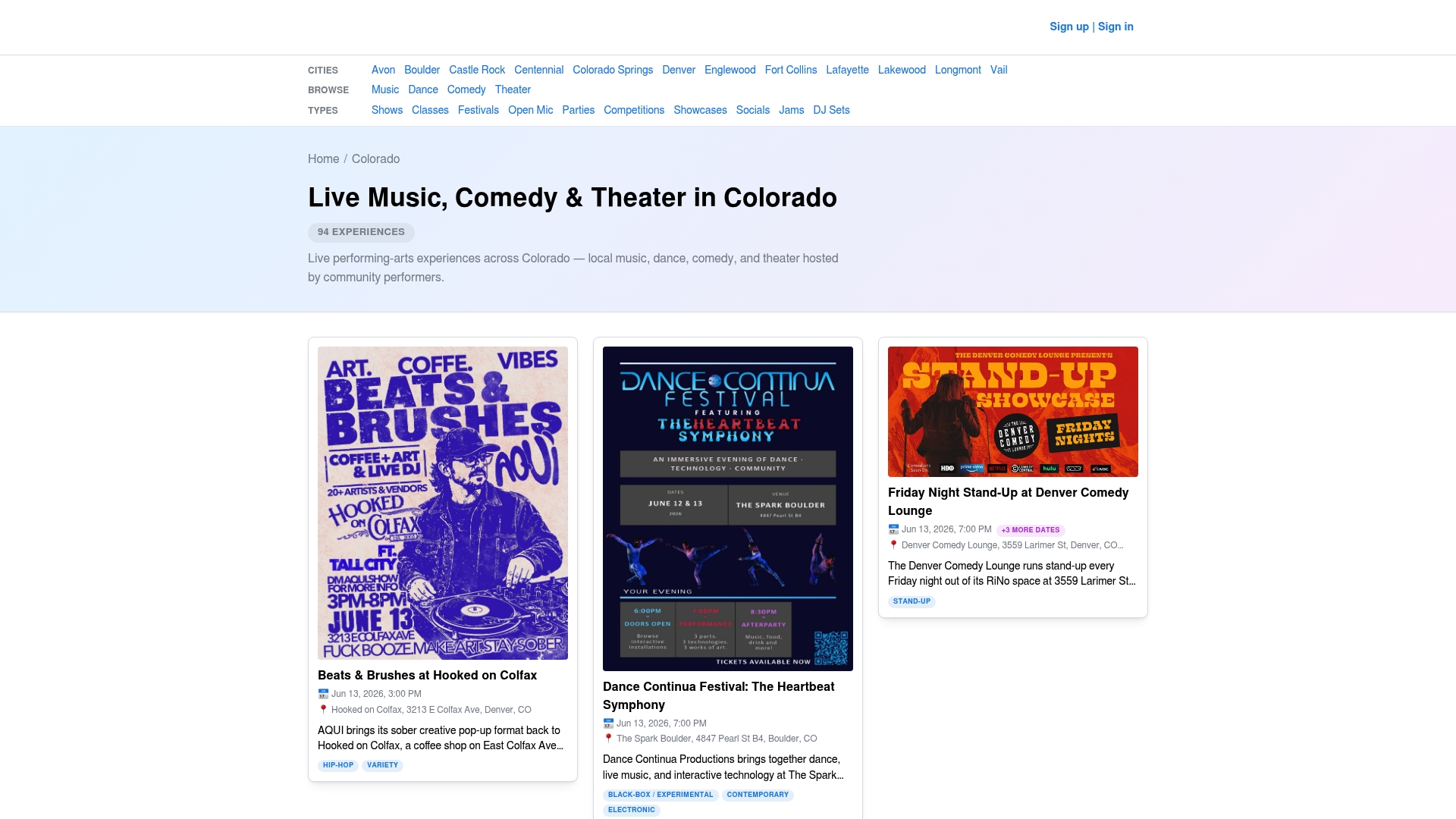
From African dance experiences that bring rhythm-based participation to life, to modern dance performances in intimate studio settings, Experiencebylocals curates events where the audience genuinely matters. You can browse the full lineup of dance performances in Colorado and find something that fits your curiosity, your schedule, and your comfort level. These are not tourist-facing shows. They are the real thing.
FAQ
What is the role of audience in dance events?
The audience is an active participant that shapes performance energy, emotional atmosphere, and meaning. Research confirms that audience attitude directly influences performer confidence and output.
Does audience size or attitude matter more to performers?
Attitude matters more than size. A June 2026 study found that encouraging crowds reduce performer anxiety more significantly than simply having a smaller audience does.
What is audience participation in dance?
Audience participation in dance includes any form of active engagement, from focused silent attention to physical movement, rhythmic clapping, or full integration into the choreography alongside performers.
How do audiences shape the meaning of a dance performance?
Spectatorship modulates how value is perceived in a performance without fixing its meaning. Researchers describe this as a fluid aesthetic where attunement between crowd and performer defines the experience.
How can event organizers improve audience engagement at dance shows?
Organizers can open rehearsals to guests, use body percussion warm-ups to build shared rhythm, and create welcoming atmospheres that signal to performers and guests alike that participation is safe and expected.