
How Local Dance Events Differ from Studios
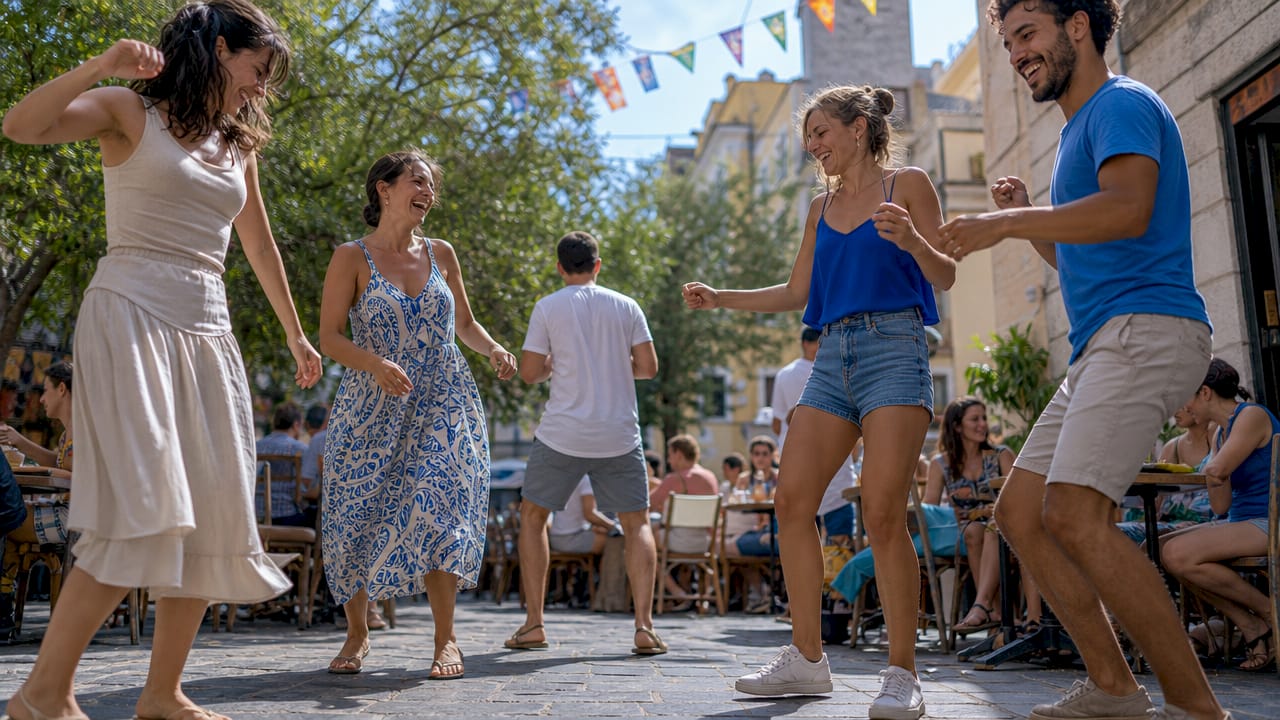
Local dance events are defined by their priority of social connection, accessibility, and immediate participation for people of all skill levels, while dance studios focus on structured technical training and long-term performance readiness. Understanding how local dance events differ from studios helps you choose the right setting for your goals, whether that means joining a community salsa social on a Friday night or committing to a weekly ballet curriculum. These two environments serve different but equally valuable purposes in dance culture. Knowing the distinction means you get more out of every experience you choose.
How local dance events differ from studios in program structure
Studios prioritize structured training, progression through skill levels, and performance readiness. Students follow a fixed weekly schedule, move through beginner to advanced levels, and work toward recitals or exams. That structure builds real technical depth over months and years.
Local community dance events work differently. They are typically drop-in sessions, one-night socials, weekend festivals, or short workshop series. There are no exams, no required attendance streaks, and no pressure to reach the next level. You show up, you move, and you connect.
Research on effective local dance programs shows that 4-week introductory cycles outperform fully open drop-in models at keeping community attendance steady. That finding matters because it reveals a middle path: local events work best when they offer some recurring structure without the rigid commitment of a studio curriculum.
- Studios: Fixed weekly schedule, progressive levels, performance goals, long-term enrollment
- Local events: Drop-in or short-cycle format, no prerequisite skill level, immediate participation
- Hybrid formats: 4-week intro series that welcome newcomers and build familiarity without locking anyone in
Pro Tip: If you are new to dance, look for a local event that runs a short introductory series rather than a fully open drop-in night. You will build confidence faster with a small group of familiar faces.
What do local dance events cost compared to studios?
Cost is one of the clearest practical differences between dance classes and community events. Studio enrollment typically involves monthly tuition, registration fees, and costume costs for recitals. The total annual investment can reach several hundred dollars per student.
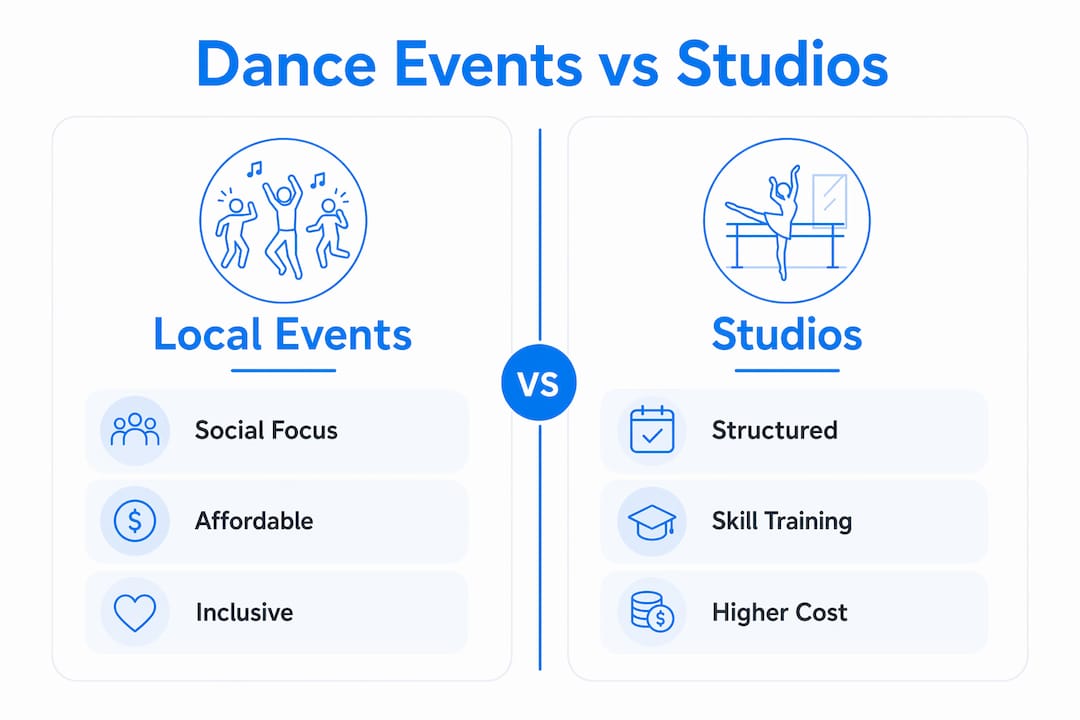
Local dance events price access much lower. Casual studio social parties typically run around $15 per person. Tickets for larger community showcases at professional venues range from $24 to $39. That pricing removes a major barrier for people who want to experience dance without a financial commitment.
| Setting | Typical cost | Commitment required |
|---|---|---|
| Dance studio enrollment | Monthly tuition + fees | Weekly, multi-month |
| Local social dance event | ~$15 per session | None |
| Community showcase ticket | $24–$39 per event | None |
| Short workshop series | Varies, often $20–$50 total | 2–4 weeks |
Accessibility goes beyond price. Local events tend to happen in community centers, parks, arts spaces, and artist-run venues rather than dedicated studio buildings. That shift in location makes them feel less intimidating and more welcoming to people who have never taken a formal class.
- No auditions or skill prerequisites at most community gatherings
- Casual dress codes lower the social barrier for first-timers
- Locations in familiar neighborhood spaces increase foot traffic and spontaneous attendance
Why do community dance gatherings carry cultural weight?
Local dance events function as social infrastructure that supports care, communication, and community resilience. That is a stronger claim than calling them entertainment. When people move together in a shared space, they reduce isolation and build real bonds.
Studios serve a different cultural role. They preserve and transmit specific dance traditions with technical precision. A flamenco studio in Denver teaches footwork, posture, and musicality with the same rigor as a conservatory. That depth keeps art forms alive across generations.
Large-scale cultural dance festivals generate economic returns more than double the initial investment through tourism, while building strong social bonds among tens of thousands of participants. That data shows community dance events are not just feel-good gatherings. They are economic and civic assets.
Community dance specialists are clear on this point:
"Local events are not lesser than studios. They are differently focused, serving broad community engagement for cultural and emotional wellness rather than deep linear skill development."
The cultural functions of each setting, ranked by primary purpose:
- Local dance events: Community connection, cultural celebration, heritage participation, emotional wellness
- Dance studios: Technical skill development, performance preparation, artistic discipline, tradition preservation
- Festivals and large gatherings: Heritage tourism, civic pride, economic activation, cross-cultural exchange
Experiencebylocals reflects this understanding by curating events that go beyond performance. Events like K-pop choreography nights at artist-run sanctuaries in Colorado are not studio classes. They are cultural gatherings where movement becomes a shared language.
How does the atmosphere differ between studios and local events?
Studios provide a controlled learning environment. Mirrors line the walls, the floor is sprung hardwood, and the instructor guides every session with a clear plan. That environment builds technical proficiency because it removes distraction and focuses attention on the body.
Local events prioritize a welcoming, inclusive atmosphere over technical control. Community dance facilitators intentionally shape relational and inclusive spaces rather than just teaching steps. The goal is for every person in the room to feel they belong, regardless of skill level.
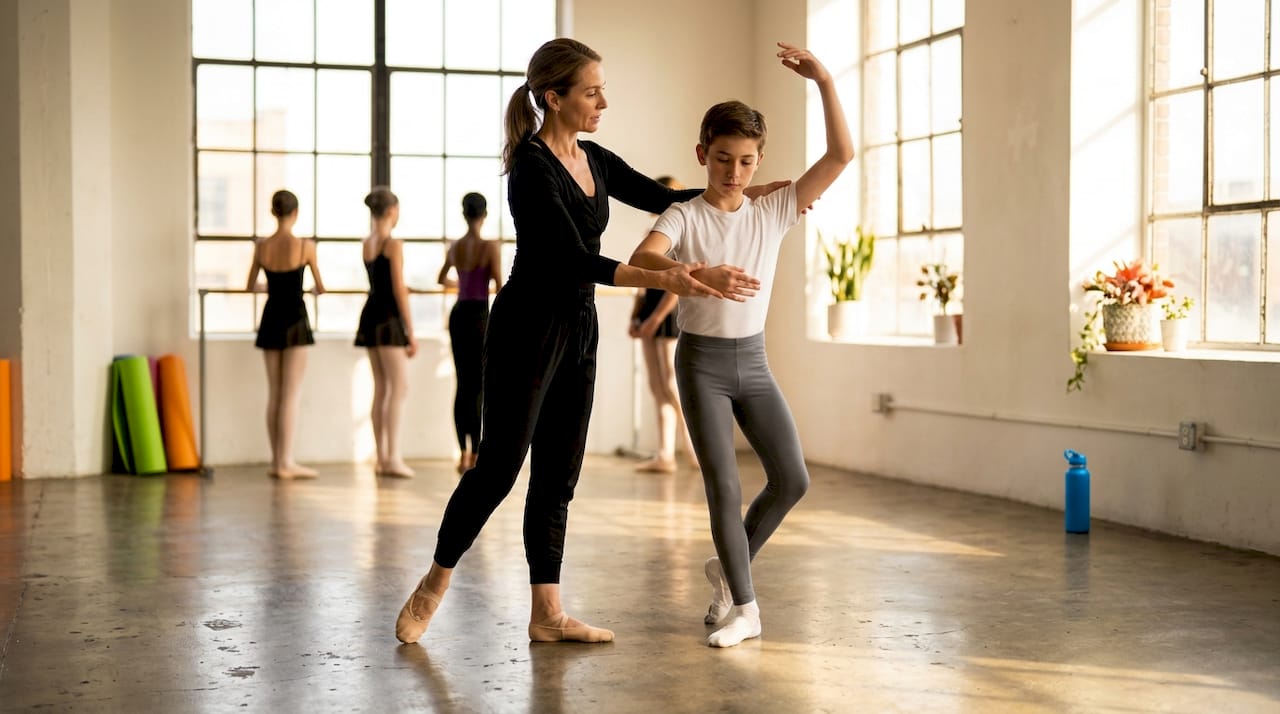
Studio-hosted socials tend to be more beginner-friendly than independent club nights because of better flooring, controlled music volume, and familiar social circles. That combination reduces the intimidation factor for newcomers entering the social dance scene for the first time.
Pro Tip: If you feel nervous about your first social dance event, look for one hosted by a local studio or arts organization rather than an independent club night. The environment will be more structured and the crowd more welcoming to beginners.
Key atmosphere differences at a glance:
- Music: Studios use curated playlists at controlled volumes; local events often feature live music or DJ sets at higher energy levels
- Flooring: Studios have sprung hardwood; community venues vary from gym floors to outdoor stages
- Social norms: Studios have clear student-teacher roles; local events encourage peer-to-peer connection and informal dancing
- Skill mix: Studios group by level; local events mix all abilities in the same space
The studio versus local event distinction in atmosphere shapes how people feel about dance itself. Studios can feel serious and goal-oriented. Local events feel celebratory and low-stakes. Both feelings are valid and serve different needs.
Key Takeaways
Local dance events and studios serve fundamentally different but complementary roles: events prioritize social connection and accessibility, while studios build technical depth through structured progression.
| Point | Details |
|---|---|
| Core purpose differs | Studios train technique; local events build community connection and cultural participation. |
| Cost and access | Local events typically cost $15–$39 per session with no long-term commitment required. |
| Program structure | Studios use fixed weekly curricula; local events use drop-in or short 4-week cycles. |
| Atmosphere and environment | Studios are controlled and technical; local events are inclusive, social, and celebratory. |
| Cultural value | Community dance gatherings function as social infrastructure, not just entertainment. |
Both settings deserve a place in your dance life
I have spent time in both worlds, and the honest truth is that treating studios and local events as competitors misses the point entirely. They answer different questions. A studio answers: "How do I get better?" A local dance event answers: "Where do I belong?"
The dancers I have seen thrive the most are the ones who do both. They take class to build confidence and vocabulary, then they bring that vocabulary to a community gathering where it actually means something. The studio gives you the tools. The event gives you the reason to use them.
What I find underrated is how much local events teach you that studios cannot. Reading a room, adjusting to a partner you have never met, responding to live music, feeling the energy of a crowd. None of that shows up in a curriculum. You only learn it by being there.
My advice is simple. If your goal is technical growth, commit to a studio. If your goal is connection, cultural experience, or just the joy of moving with other people, find your local events and show up consistently. And if you are not sure what your goal is yet, start with a local event. The barrier is low, the welcome is warm, and you might surprise yourself.
— DJ
Find your next local dance experience in Colorado
Knowing the difference between a studio and a community event is the first step. The next step is actually showing up somewhere.
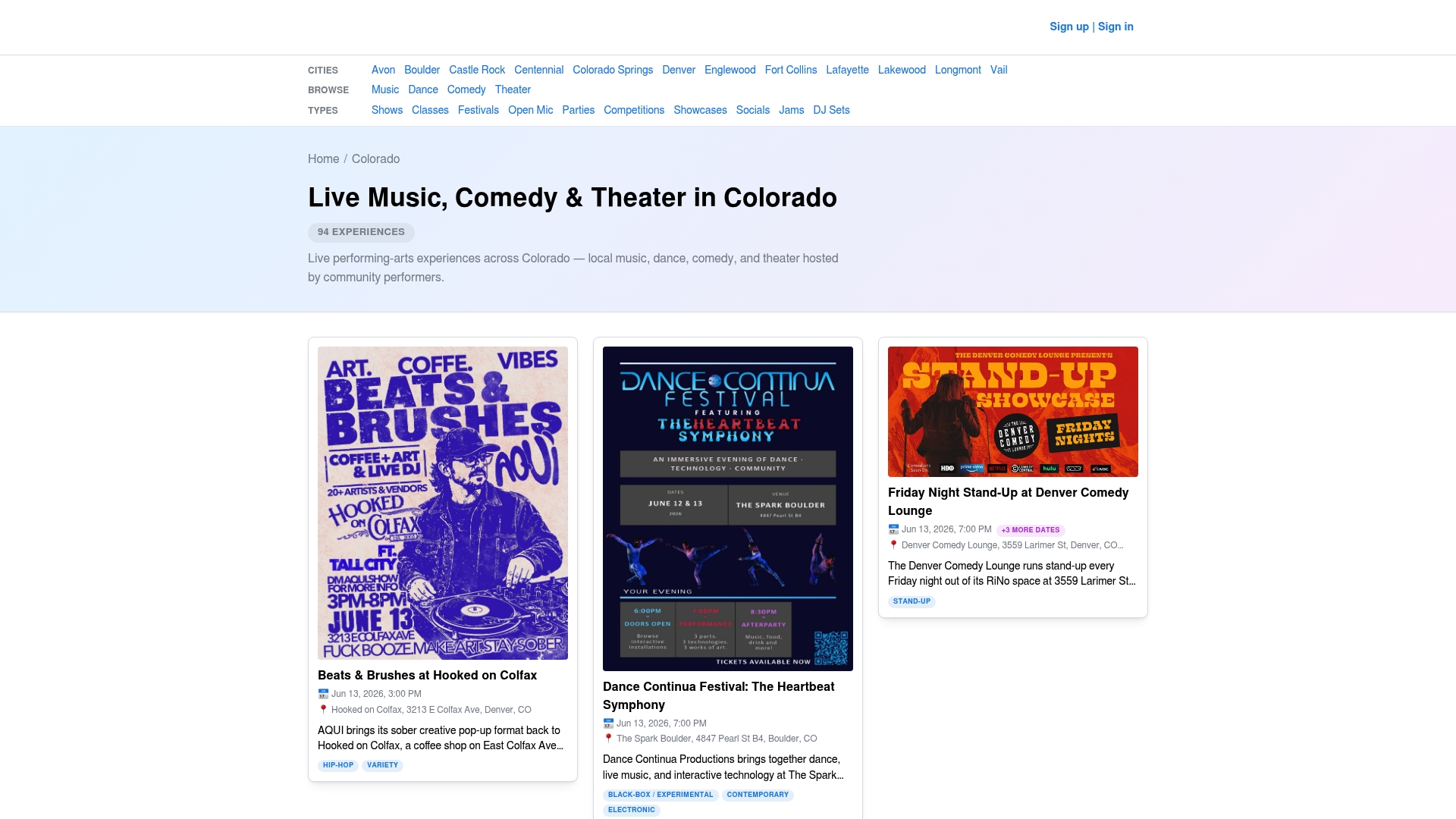
Experiencebylocals makes it easy to find authentic, community-driven dance events across Colorado that go far beyond what you will find in tourist-heavy venues. From K-pop choreography nights to grassroots cultural showcases, every listing reflects the real cultural heartbeat of the community. These are not polished productions designed for passive audiences. They are living, breathing gatherings where you are invited to participate.
Browse local events in Colorado and find something that fits your schedule, your style, and your comfort level. No auditions, no prerequisites, just real people moving together.
FAQ
How do local dance events differ from studios for beginners?
Local dance events welcome all skill levels with no prerequisites, making them ideal first steps for beginners. Studios require consistent attendance and follow a structured curriculum that assumes long-term commitment.
Are local dance events cheaper than studio classes?
Local dance events typically cost around $15 per session for casual socials, with no monthly tuition or registration fees. Studio enrollment involves ongoing costs that can reach several hundred dollars annually.
What is community dance and why does it matter?
Community dance is a practice that prioritizes social connection, cultural participation, and emotional wellness over technical skill development. Experts describe it as social infrastructure that reduces isolation and builds resilience within neighborhoods.
Can attending local dance events replace studio training?
Local events and studios serve different goals and work best together rather than as substitutes. Studios build technical depth; local events build social confidence and cultural connection.
Why do local dance festivals have economic value?
Cultural dance festivals generate economic returns more than double the initial investment through tourism and community spending. They also strengthen social bonds among large groups of participants, making them civic assets as well as cultural ones.