
The Role of Dance in Cultural Expression Explained
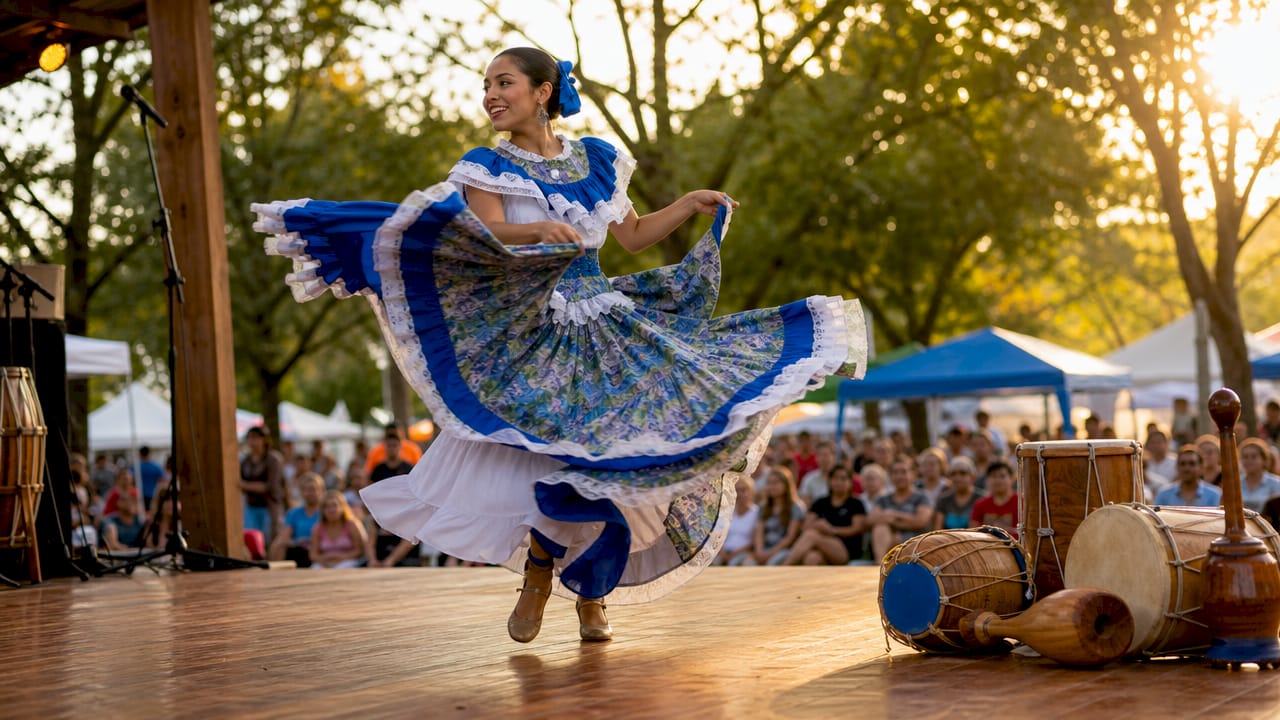
Dance is defined as one of humanity's oldest and most direct systems for encoding and transmitting cultural identity, values, and collective memory through embodied movement. Every culture on earth uses dance not just for entertainment but as a living archive. The role of dance in cultural expression is so recognized that the U.S. government has honored 32 individual dancers and dance companies with the National Medal of Arts as of early 2026. That number reflects a formal acknowledgment that dance carries the same cultural weight as literature or visual art. When a community dances, it is not performing. It is speaking.
How does dance communicate culture through movement and symbolism?
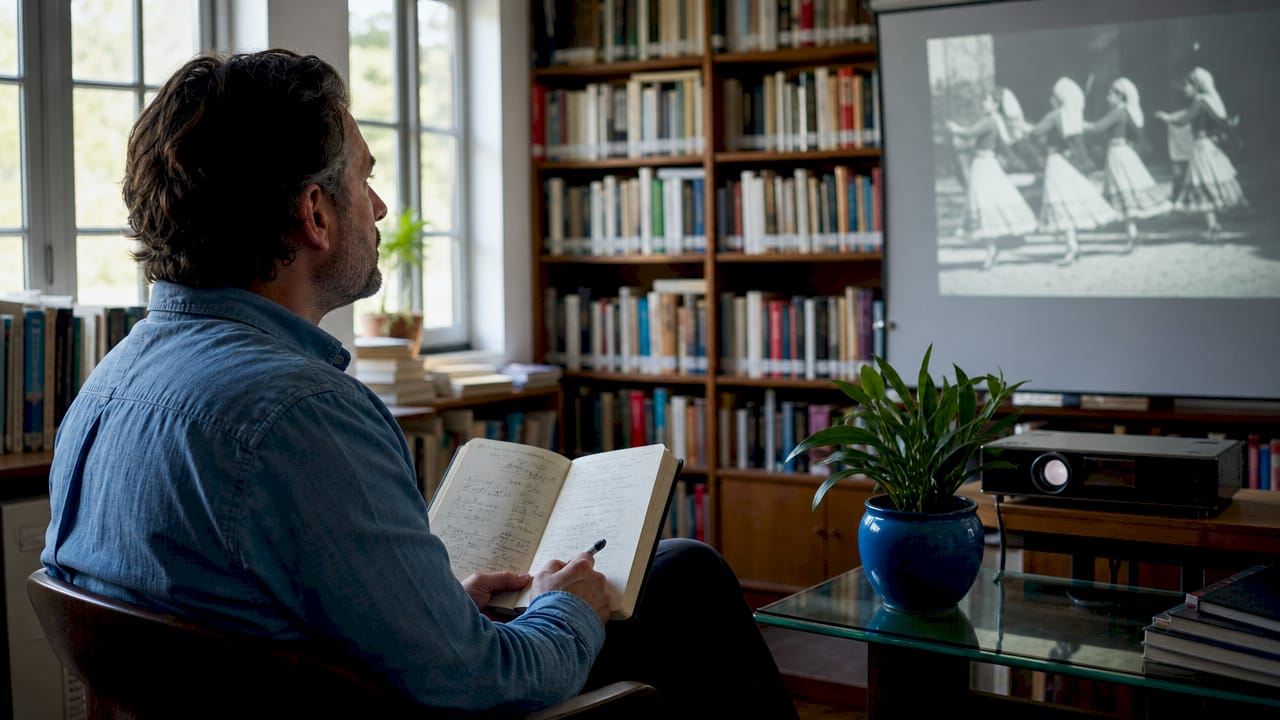
Folk dance is a complex semiotic system that transmits collective cosmological, social, and ecological knowledge through structured movement. Semiotics is the study of signs and symbols. Applied to dance, it means that every gesture, step pattern, and formation carries meaning governed by cultural convention, much the way words carry meaning in a language.
Researchers at Heriot-Watt University have found that dance shares key linguistic "design features" with human language, including semanticity (units carry meaning), compositionality (units combine to form larger meanings), and displacement (the ability to reference events beyond the present moment). That last feature is striking. A harvest dance performed in january does not just celebrate today's crop. It references ancestors, seasons past, and cosmological beliefs about the land. Dance reaches backward and forward in time simultaneously.
Here is how dance compares to language as a communication system:
| Feature | Language | Dance |
|---|---|---|
| Semanticity | Words carry meaning | Gestures and steps carry cultural meaning |
| Compositionality | Words combine into sentences | Movements combine into narrative sequences |
| Displacement | References past and future events | Encodes ancestral knowledge and future aspirations |
| Cultural convention | Grammar rules govern usage | Aesthetic conventions govern movement |
The practical implication is significant. When a dance tradition disappears, a community loses a structured knowledge system, not just a performance style.
- Gesture vocabularies in dances like the Hawaiian hula encode specific plant names, weather patterns, and genealogies.
- Spatial formations in West African dance traditions communicate social hierarchies and communal relationships.
- Rhythm patterns in flamenco carry emotional and historical narratives tied to Andalusian Romani culture.
Pro Tip: If you want to understand a culture's values, watch where the dancers look, how they use space, and whether movement flows outward toward the community or inward toward the self. Those choices are not accidental.
In what ways does dance shape cultural identity within communities?
Dance is a living social text that both performers and audiences use to negotiate and shape cultural values dynamically. This framing comes from ethnochoreology, the academic study of dance within its cultural context. The key word is "dynamically." Dance does not just preserve identity. It actively builds it, performance by performance.
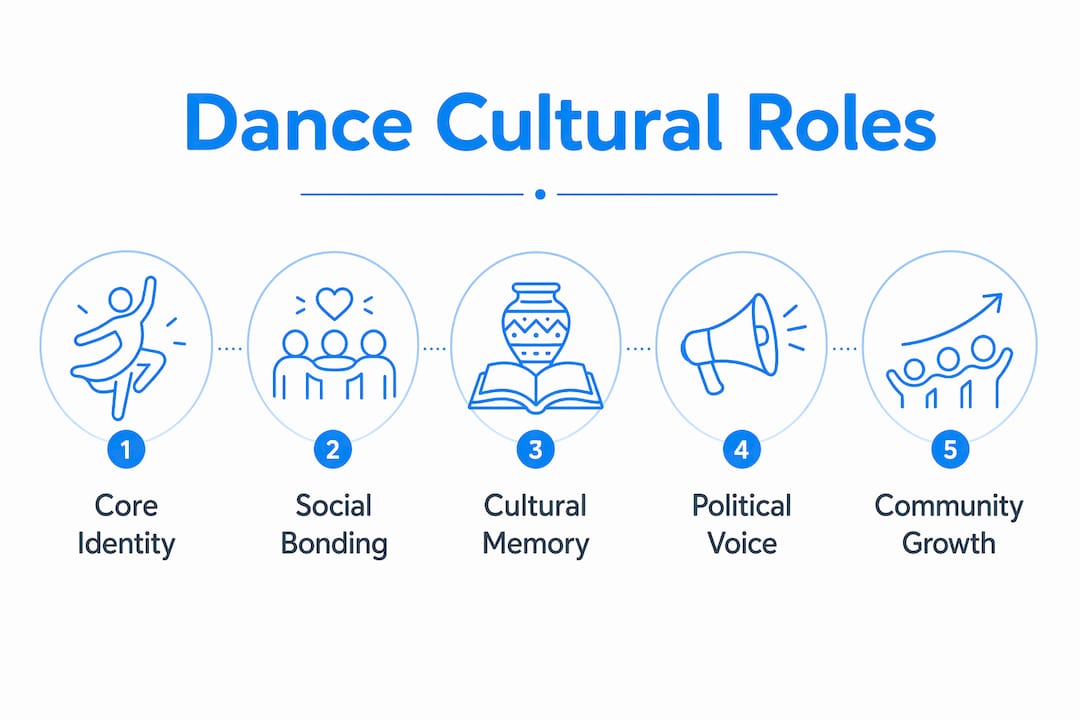
This distinction matters most for immigrant and diaspora communities. In Philadelphia, dance groups serving immigrant communities do far more than teach steps. Instructors explicitly treat dance as cultural transmission that integrates movement with language learning, family connection, and moral values. A child learning a traditional dance from their home country is not just learning choreography. They are learning who they are.
The identity-building function of dance works through several specific mechanisms:
- Belonging: Shared movement creates a physical experience of group membership that words alone cannot replicate.
- Confidence: Dance programs build a holistic sense of self, particularly for immigrant youth navigating the tension between heritage culture and their new environment.
- Intergenerational connection: When grandparents and grandchildren share a dance form, they share a living relationship with history.
- Moral transmission: Many traditional dances encode behavioral values directly. The Sangil "mangalay" dance from the Philippines, for example, allows culturally sanctioned improvisation within strict aesthetic conventions, teaching both creativity and respect for boundaries simultaneously.
- Resistance to erasure: For communities whose languages or religious practices have been suppressed, dance often survives as the last intact carrier of cultural identity.
Pro Tip: If you are working with or learning from a dance tradition that is not your own, ask about the story behind the movements before you learn the steps. Context is not optional. It is the content.
How does dance function as political and social expression?
Dance is often misunderstood as entertainment. For communities facing trauma, displacement, or political oppression, it is a political act and form of resistance. The Palestinian dabke is one of the clearest contemporary examples. Dancers choreograph traditional forms with contemporary styles to express social and political realities directly. Performers have described their practice in unambiguous terms: "My dance is a political statement."
The social and political functions of dance operate across multiple scales:
- Community solidarity: Group dances performed under conditions of occupation or displacement reinforce collective identity when other forms of assembly are restricted.
- Protest and visibility: Public performances of suppressed cultural dances assert the existence and continuity of a people.
- Trauma processing: Structured movement gives communities a physical language for grief, resilience, and survival that verbal language often cannot reach.
- Cultural advocacy: Artists who blend traditional and contemporary forms use dance to argue for the relevance of their heritage in the present moment.
"Dance is not a relic. It is a living argument for the survival and dignity of a people." This is the frame that Palestinian dabke artists, Afro-Brazilian capoeira practitioners, and Indigenous powwow dancers share across vastly different contexts.
The impact of dance on society through political expression is not limited to conflict zones. In the United States, the Harlem Renaissance used jazz and social dance to assert Black cultural dignity during a period of systemic oppression. The National Endowment for the Arts has specifically honored artists who reflect diverse dance traditions, including modern Black artistry, recognizing that these forms carry historical and political weight alongside aesthetic value.
What role does dance play in community development and cultural preservation?
Dance programs foster social inclusion and emotional well-being by providing safe spaces for marginalized groups to celebrate and express identity. Community-based programs do not just preserve dances. They preserve the communities that give those dances meaning.
The table below outlines the core functions dance serves in community development:
| Function | How it works | Example |
|---|---|---|
| Social inclusion | Creates shared experience across age and background | Intergenerational folk dance programs |
| Emotional well-being | Provides physical and expressive outlet | Dance therapy in refugee resettlement programs |
| Cultural continuity | Transmits traditions to younger generations | Diaspora dance schools in Philadelphia |
| Language preservation | Embeds vocabulary and oral tradition in movement | Hawaiian hula encoding native plant names |
| Moral education | Teaches community values through practice | Sangil "mangalay" with sanctioned improvisation |
The living heritage model of dance preservation is more effective than static archiving. Recording a dance on video preserves the form. Teaching it within a community preserves the meaning. The difference is the difference between a photograph of a meal and the meal itself.
Community-based dance programs also address isolation directly. In diasporic communities, dance instruction extends beyond movement to teach language, familial connections, and values, forming what researchers describe as a holistic cultural archive. For a teenager who feels caught between two cultures, a dance class can be the place where both identities are held at once without conflict.
Pro Tip: Support local dance programs financially and through attendance. A dance tradition that has no audience eventually has no practitioners. Showing up matters.
Key takeaways
Dance is the most complete system humans have developed for transmitting cultural identity, combining movement, memory, language, and community into a single living practice.
| Point | Details |
|---|---|
| Dance as a semiotic system | Dance shares linguistic features with language, encoding cultural knowledge through structured movement. |
| Identity formation | Dance builds belonging and confidence, especially for immigrant and diaspora communities navigating dual identities. |
| Political expression | Forms like Palestinian dabke show that dance functions as direct political resistance, not just cultural performance. |
| Community development | Dance programs foster social inclusion, emotional well-being, and intergenerational cultural transmission. |
| Living heritage over static preservation | Teaching dance within communities preserves meaning; archiving alone preserves only form. |
Why I think we underestimate what dance actually does
Most people treat dance as a nice cultural add-on, something that happens at festivals and recitals. I think that framing misses almost everything that matters. Dance is one of the few human practices that works on the body, the community, and the historical record at the same time.
What strikes me most is the living heritage concept. The Sangil "mangalay" dance allows improvisation within cultural conventions. That is not a compromise between tradition and creativity. It is the most sophisticated model of cultural transmission I have encountered. It says: here are the values, here is the form, now show us who you are within it. That is how cultures stay alive without becoming museums.
The political dimension also deserves more honest attention. When Palestinian dancers perform dabke, or when Indigenous communities hold powwows, they are not doing folklore. They are making an argument about existence. Treating those performances as entertainment is a category error. It reduces a political act to a spectacle.
At Experiencebylocals, we see this play out in real time. When a K-pop choreography class happens at an artist-run sanctuary in Colorado, something more than dance technique is being transmitted. A community is being built. A cultural conversation is happening. The people in that room are not just learning steps. They are learning how to belong to something together.
The practical takeaway is this: if you want to understand a community, watch what they dance, when they dance it, and who is allowed in the circle. That will tell you more than any history book.
— DJ
Live cultural experiences worth showing up for
Dance does not fully exist on a screen. It lives in the room, in the shared breath between performers and guests, in the moment when a movement lands and everyone feels it together.
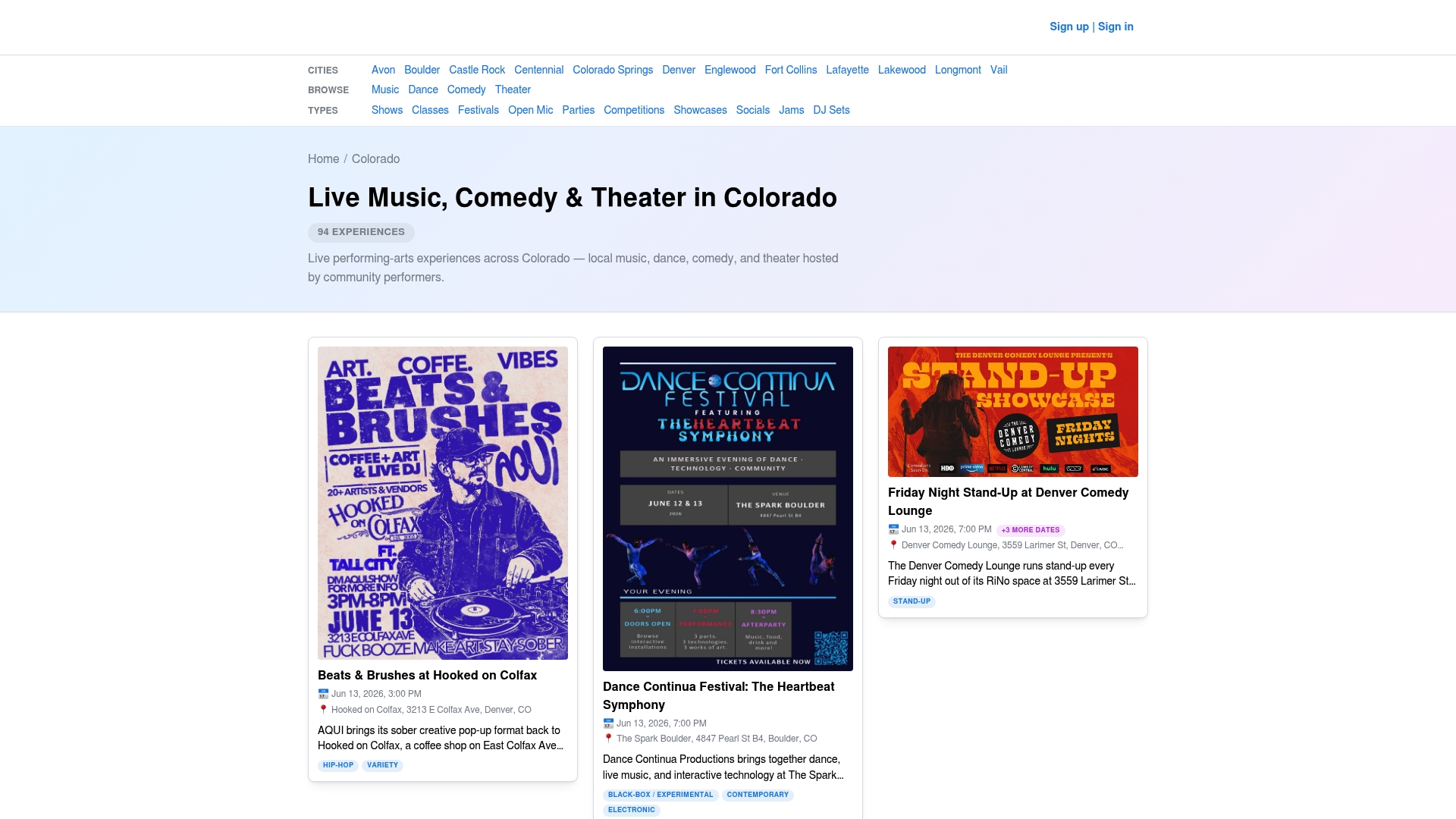
Experiencebylocals connects you with authentic live performances hosted by local artists across Colorado, from K-pop choreography at artist-run sanctuaries to community-driven cultural nights that go far deeper than standard entertainment. These are not tourist shows. They are the real cultural heartbeat of the communities that create them. Whether you are a longtime dance enthusiast or someone curious about a tradition you have never seen performed live, you will find something genuine on the Experiencebylocals platform. Creators get exposure. Guests get real connection. Everyone gets a night worth remembering.
FAQ
What is the role of dance in cultural expression?
Dance is a structured system for encoding and transmitting cultural identity, values, and collective memory through embodied movement. It functions simultaneously as a historical archive, a community-building tool, and a form of political expression.
How does dance express cultural identity for immigrant communities?
Dance programs in diaspora communities integrate movement with language, family ties, and moral values, helping immigrant youth build confidence and a sense of belonging across two cultures. Research from Philadelphia immigrant communities shows that dance instruction extends well beyond performance to serve as a holistic cultural archive.
Why is folk dance considered a semiotic system?
Folk dance shares linguistic design features with human language, including semanticity, compositionality, and displacement, meaning it can encode and transmit complex cultural knowledge across generations in the same way language does.
How is dance used as political resistance?
Palestinian dabke dancers blend traditional and contemporary styles to make direct political statements about survival, identity, and resistance. Across many cultures, dance performed under conditions of oppression functions as a public assertion of cultural existence.
What is the difference between living heritage and static preservation in dance?
Living heritage means teaching dance within a community so that meaning, values, and improvisation are transmitted alongside form. Static preservation, such as video archiving, captures the movements but loses the cultural context that gives them significance.