
The Role of Artist-Run Studios in Dance Communities
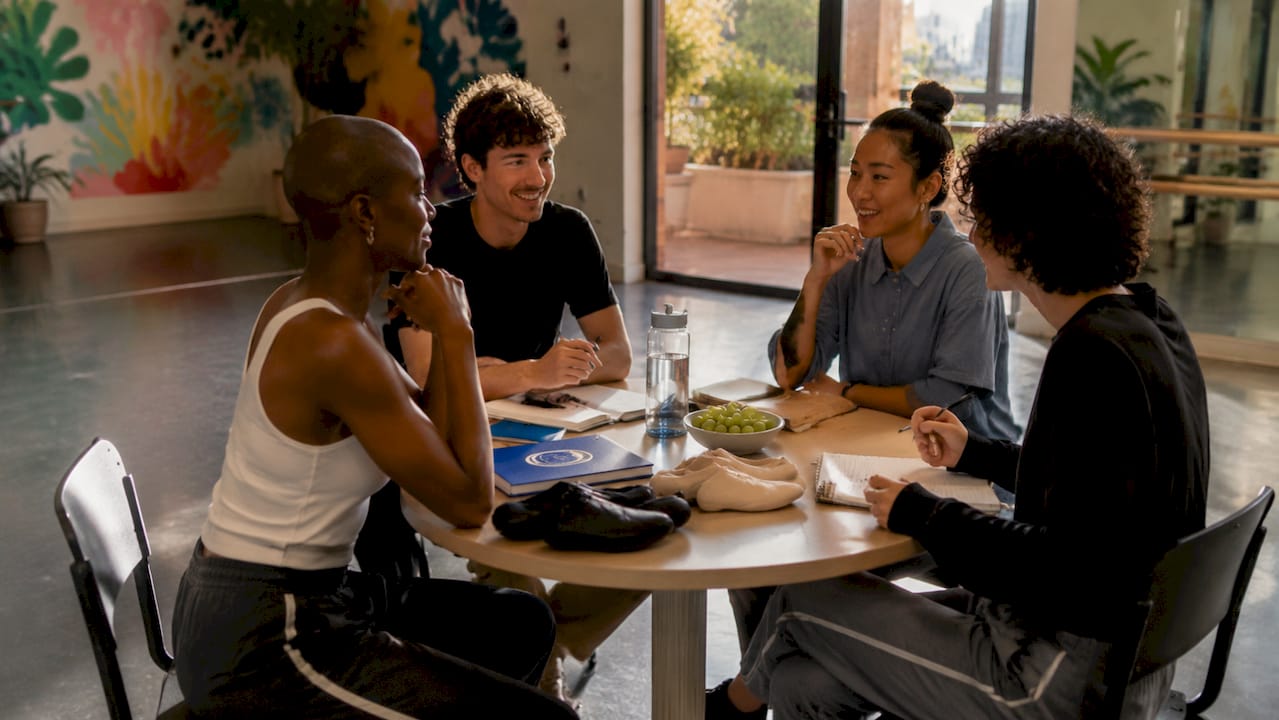
Artist-run studios in dance are defined as independently governed creative spaces where dancers and choreographers control programming, access, and artistic direction. Unlike commercial rentals, these studios function as living ecosystems. They shape how dance is made, shared, and passed down. The role of artist-run studios in dance extends far beyond square footage. These spaces serve as cultural infrastructure, peer networks, and creative incubators that commercial venues simply cannot replicate. Organizations like The Dance Centre in Vancouver and programs like the Chicago Cultural Center Dance Studio Residency show what becomes possible when artists govern their own spaces.
How do artist-run studios transform traditional rehearsal spaces?
The primary shift in artist-run studios is from space provision to creative collaboration. Artist-run spaces prioritize messy experimentation and verbal processing with peer feedback, creating an incubation environment that commercial studios rarely offer. That distinction changes everything about how choreographers develop new work.
In a commercial rental, the clock runs and the pressure mounts. In an artist-run residency, the goal is idea testing, not a finished show. Choreographers can fail productively, revisit material, and talk through movement choices with peers who understand the work from the inside. This iterative process produces more daring, more personal, and more culturally resonant work.
Dance workshops structured around this model reflect the same philosophy. The studio becomes a thinking partner, not just a room. Programs that embed feedback sessions, open rehearsals, and peer critique into their residency format produce artists who are more prepared for public presentation.
- Subsidized access: The Chicago Cultural Center Dance Studio Residency provides projects with up to $25,000 and 80 hours of rehearsal time. That level of support removes financial pressure from the creative process entirely.
- Process-first culture: Residencies explicitly deprioritize polished output. Artists are encouraged to show rough drafts, ask questions, and change direction mid-project.
- Peer feedback loops: Regular sharing sessions within the studio community build critical vocabulary and trust among artists.
- Low-cost access points: Many artist-focused organizations offer subsidized rehearsal rates as low as $10 per hour for non-profits and freelancers.
Pro Tip: If you are applying for a residency, frame your proposal around questions you want to answer rather than outcomes you plan to deliver. Residency panels respond to curiosity, not certainty.
What is the impact of artist-run studios on local dance economies?
Artist-run studios stabilize local dance economies by absorbing costs that independent artists cannot carry alone. The Dance Centre in Vancouver supports over 40 organizations and hosts over 87,000 visits per season across its 32,000 sq ft purpose-built facility. That scale of community use would be impossible in a commercial rental model.
Rising real estate costs in cities across North America have pushed many small studios out of neighborhoods where dance communities once thrived. Artist-run spaces counter that pressure by holding space intentionally. They treat affordability as a policy, not a perk. The result is that emerging choreographers, community dance teachers, and cultural organizations can remain active in cities that would otherwise price them out.
"The loss of small, affordable artist-run studios threatens dance sector diversity. Studios like The Whole Shebang in Philadelphia and The Dance Hub in Cleveland act as cultural heartbeats of their neighborhoods, enabling equitable access and community-rooted practices that commercial venues cannot sustain."
Ownership changes the equation permanently. Securing permanent land ownership transforms artist-run studios from tenants into stewards, enabling long-term community stability. When a studio owns its building, it can commit to artists across decades rather than lease cycles.
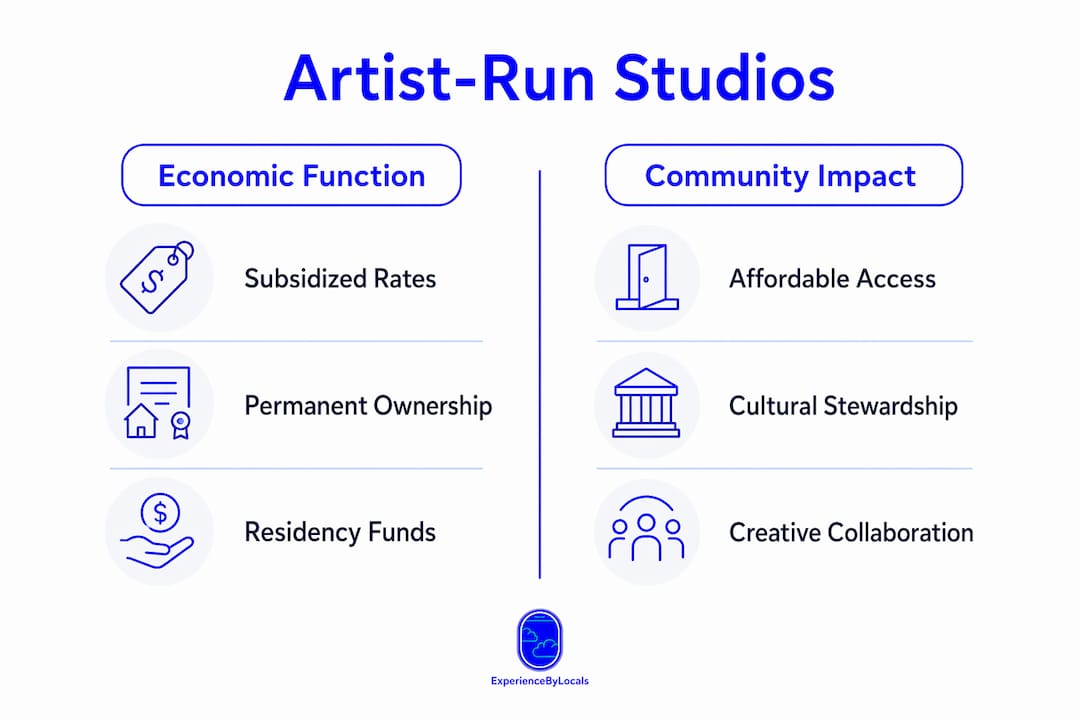
| Economic function | Community impact |
|---|---|
| Subsidized studio rates | Keeps emerging artists financially viable |
| Grant distribution | Funds projects that commercial venues would not support |
| Multi-organization hosting | Concentrates resources and reduces duplication |
| Permanent site ownership | Guarantees long-term access and planning stability |
| Neighborhood anchoring | Maintains cultural identity in gentrifying areas |
In what ways do artist-run studios preserve cultural heritage through dance?
Artist-run studios transmit cultural knowledge in ways that generic rehearsal spaces cannot. Traditional arts institutions use demonstration-based learning to pass down cultural knowledge and social values, a function that a rented gym or commercial studio floor simply does not perform. The studio environment, the people in it, and the norms it upholds are all part of the transmission.
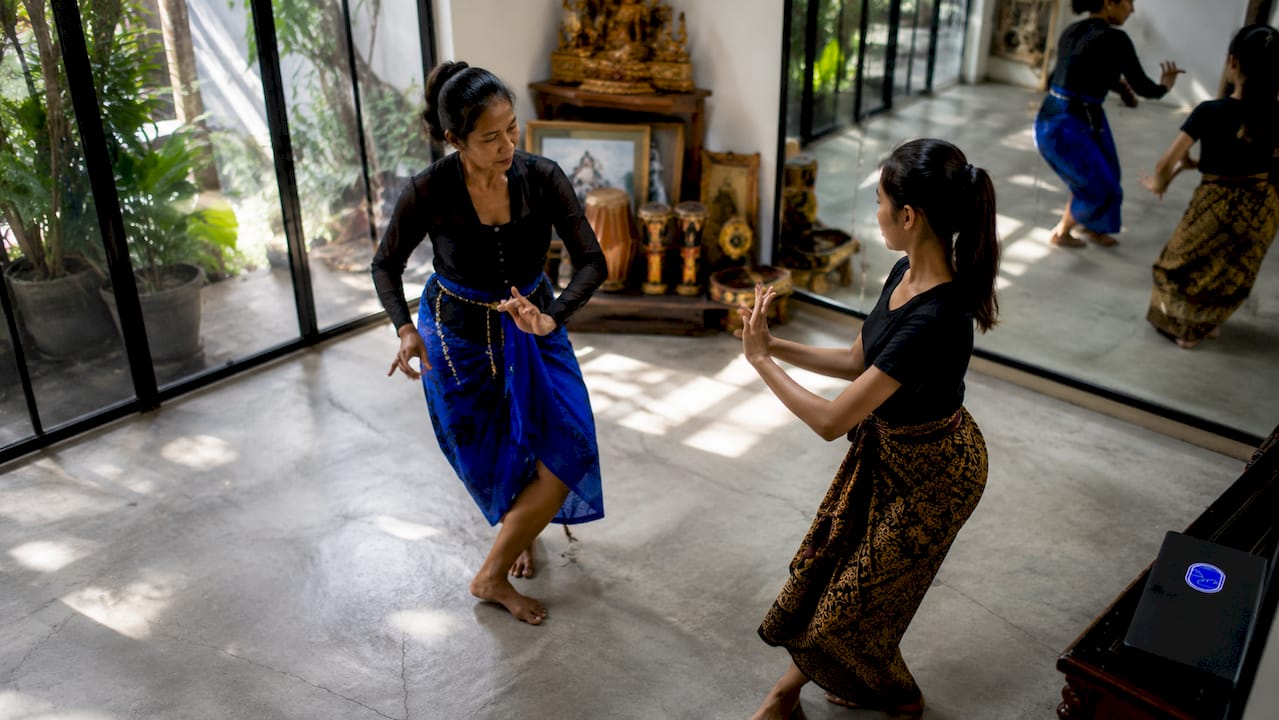
This is especially true for dance forms tied to specific communities, whether West African dance, Butoh, Bharatanatyam, or K-pop choreography. When the studio is artist-run and community-governed, the cultural context travels with the technique. Teachers and students share not just steps but history, meaning, and responsibility. That depth of dance in cultural expression is what separates a living tradition from a performance style.
Three ways artist-run studios actively preserve cultural heritage:
- Demonstration-based learning: Master practitioners teach in person, embedding gesture, weight, and intention that notation or video cannot fully capture.
- Community governance: When the people who practice a tradition also run the space, programming decisions reflect cultural priorities rather than commercial demand.
- Intergenerational programming: Artist-run studios regularly host youth workshops, elder-led intensives, and cross-generational showcases that keep traditions alive and evolving.
Generic rehearsal spaces offer none of this by default. They provide a floor, a mirror, and a sound system. Artist-run studios provide context.
What practical challenges do artists face with artist-run studios?
The biggest surprise for independent artists entering artist-run studios is the insurance requirement. Artists renting dance studios must typically provide Certificates of Liability Insurance, listing the studio as an additional insured with coverage often up to $1 million. New independent artists frequently expect informal community-use policies and are caught off guard by this requirement.
Administrative burden is the second major challenge. Self-producing artists must handle marketing, ticketing, venue logistics, and audience outreach on top of their creative work. That load is unsustainable for most choreographers working without institutional support. Artist-run organizations address this directly.
Top artist-run organizations act as intermediaries, managing production complexity and marketing to reduce artists' administrative burden, typically for a small producer fee. That model lets choreographers stay focused on the work rather than the spreadsheet.
Key practical supports that distinguish artist-run studios from commercial rentals:
- Insurance guidance: Many studios help renters understand and obtain liability coverage rather than simply rejecting unprepared applicants.
- Production support: Marketing templates, design resources, and venue logistics assistance are common offerings.
- Community referrals: Studio networks connect artists with lighting designers, stage managers, and collaborators.
- Flexible scheduling: Artist-run spaces often accommodate non-standard hours that fit rehearsal realities rather than business hours.
Pro Tip: Before signing a studio rental agreement, ask specifically about their insurance requirements and whether they have a preferred provider or group policy that renters can join. Many artist-run studios have already solved this problem for you.
How can dancers and cultural activists maximize artist-run studio benefits?
Dancers and cultural activists get the most from artist-run studios when they treat them as communities, not just venues. Group learning settings build peer networks that outlast any single residency or workshop. The relationships formed in a shared studio space become the foundation of a career.
Practical ways to engage more deeply with artist-run studio communities:
- Apply for subsidized residencies early. Programs like the Chicago Cultural Center Dance Studio Residency have competitive application cycles. Prepare proposals that emphasize process and community benefit.
- Show up for other artists' work. Attending open rehearsals and peer showings builds reciprocal trust and expands your creative vocabulary.
- Participate in governance. Many artist-run studios welcome board members, committee volunteers, and community advisors. That involvement gives you a voice in how the space evolves.
- Advocate for permanent space. Support campaigns for studios to acquire their buildings. Ownership protects the entire community from displacement.
- Connect studio practice to public events. Local dance events that grow from studio communities bring new audiences into contact with the work and expand the studio's cultural reach.
Cultural activists play a specific role here. When you document, publicize, and politically support artist-run studios, you make the case for their public funding and permanence. That advocacy work is as important as any grant application.
Key Takeaways
Artist-run studios are the most effective infrastructure for sustaining creative, cultural, and economic health in local dance communities.
| Point | Details |
|---|---|
| Creative collaboration over rental | Artist-run studios prioritize iterative experimentation and peer feedback, not finished products. |
| Economic stabilization | Studios like The Dance Centre support dozens of organizations and tens of thousands of visits per season. |
| Cultural preservation | Demonstration-based learning in artist-run spaces transmits heritage that commercial studios cannot replicate. |
| Administrative support | Top artist-run organizations handle marketing and logistics, freeing choreographers to focus on their work. |
| Permanent ownership matters | Studios that own their buildings become long-term community stewards rather than vulnerable tenants. |
Why I believe artist-run studios are irreplaceable
I have watched choreographers walk into commercial studios and walk out with technically clean work that says nothing. I have also watched the same artists spend three weeks in an artist-run residency and come out with something that genuinely matters. The difference is not talent. It is permission.
Artist-run studios give artists permission to not know yet. That is rarer and more valuable than any amount of mirror space or sprung floor. The peer feedback culture, the subsidized access, the shared governance. These are not amenities. They are the conditions that make serious artistic risk possible.
What concerns me is the pace of loss. When a neighborhood studio closes because it cannot afford its lease, the community does not just lose a room. It loses a decade of relationships, a cultural memory, and a pipeline for the next generation of artists. Permanent ownership is the only real solution. Every studio that secures its building is a win for the entire sector.
The good news is that more artists and activists understand this now than they did ten years ago. The advocacy is getting louder. The funding models are getting more creative. I am genuinely hopeful that the studios we have left will become the anchors that hold the next wave of dance culture together.
— DJ
Authentic dance culture, live and local with Experiencebylocals
The same community spirit that drives artist-run studios lives in every event on Experiencebylocals. We built this platform because we believe local artists deserve real audiences, and audiences deserve real art.
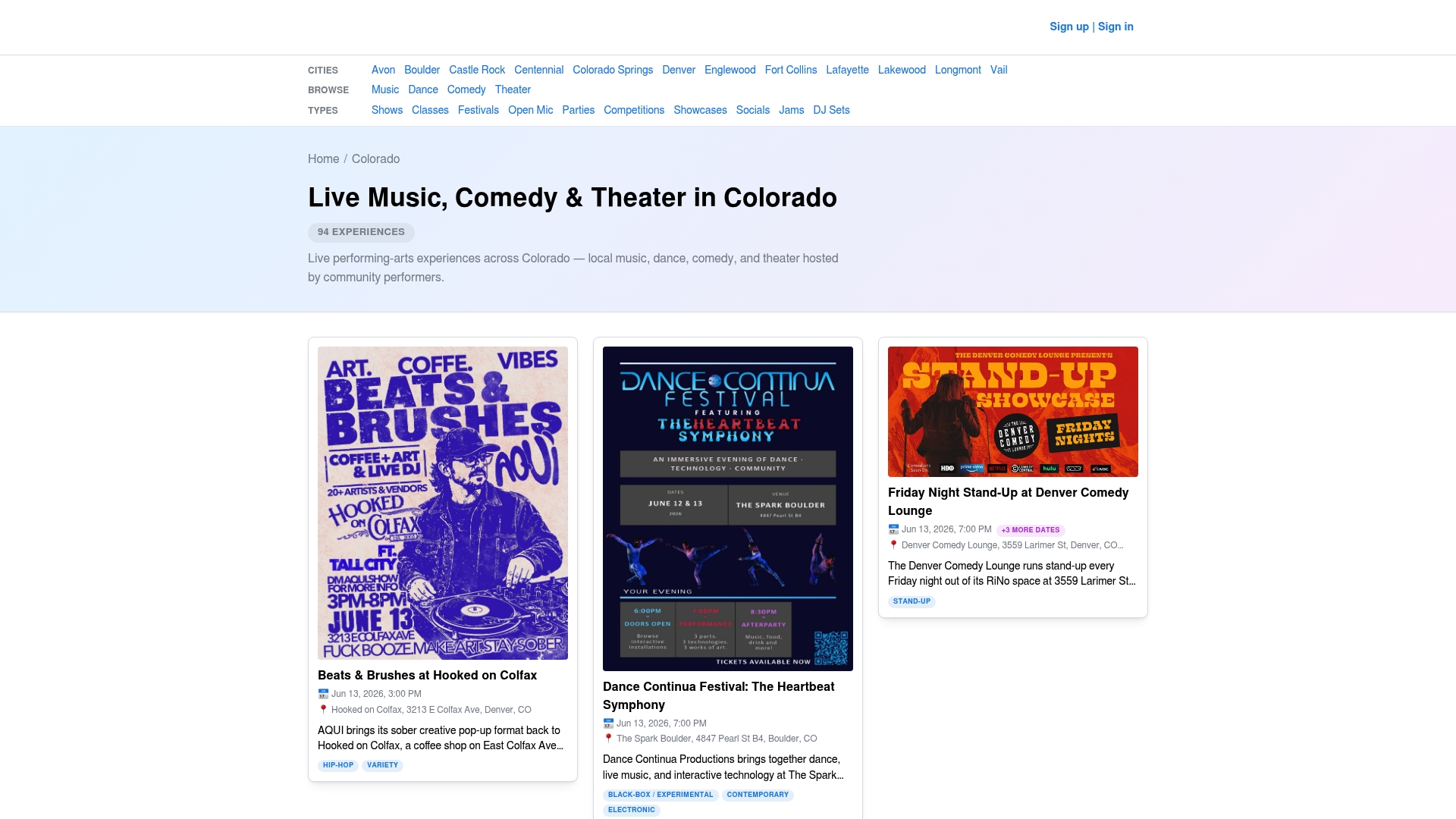
Experiencebylocals connects you with live cultural experiences across Colorado, from K-pop choreography nights at artist-run sanctuaries to community-driven comedy and theater. Every event on the platform reflects the grassroots energy that artist-run studios cultivate every day. When you attend through Experiencebylocals, you are not just watching a show. You are supporting the creative ecosystem that makes that show possible. Browse Colorado arts events and find something worth showing up for.
FAQ
What is the role of artist-run studios in dance?
Artist-run studios serve as creative incubators, cultural preservation sites, and community anchors for dancers and choreographers. They prioritize affordable access, peer collaboration, and iterative artistic development over commercial production pressure.
How do artist-run studios support emerging choreographers?
Programs like the Chicago Cultural Center Dance Studio Residency provide up to $25,000 and 80 hours of rehearsal time, removing financial barriers and creating space for experimentation without performance pressure.
What insurance do artists need to rent a dance studio?
Most dance studios require a Certificate of Liability Insurance listing the studio as an additional insured, with coverage often up to $1 million. New independent artists should ask studios about group policies or preferred providers before signing agreements.
Why does studio ownership matter for dance communities?
When artist-run studios own their buildings, they become long-term community stewards rather than tenants vulnerable to rent increases. The Dance Centre in Vancouver demonstrates how permanent ownership enables decades of stable community support.
How do artist-run studios preserve cultural heritage?
These studios use demonstration-based learning to transmit cultural knowledge, social values, and artistic traditions that generic rehearsal spaces cannot replicate. Community governance ensures programming reflects cultural priorities rather than commercial demand.