
How Dance Workshops Are Structured: A Clear Guide
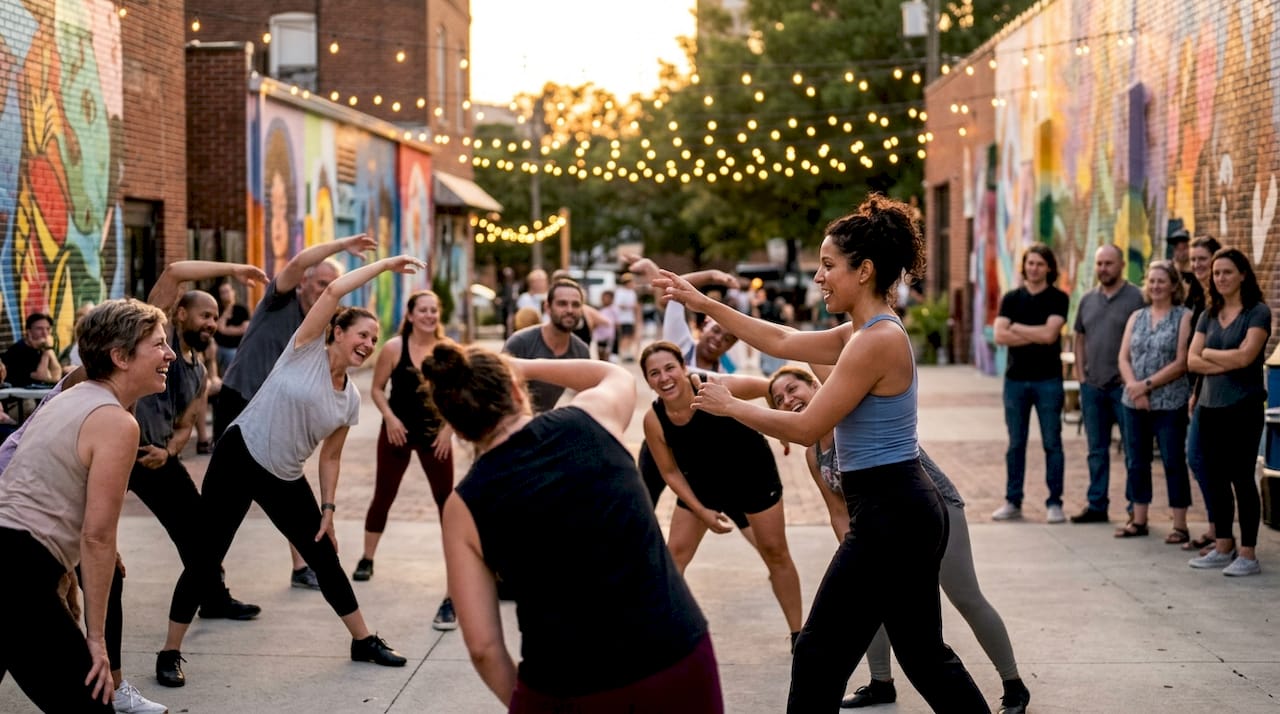
Dance workshops are defined as structured, multi-phase learning sessions designed to develop technical skill, artistic expression, and performance readiness in dancers of all levels. Understanding how dance workshops are structured gives you a real advantage before you walk into the room. The standard format follows five phases: warm-up, technical drills, choreography focus, performance practice, and cool-down. Each phase builds on the last, and skipping any one of them reduces both safety and learning. Whether you are attending your first session or your fiftieth, knowing the framework helps you get more out of every minute on the floor.
What are the key phases of a typical dance workshop session?
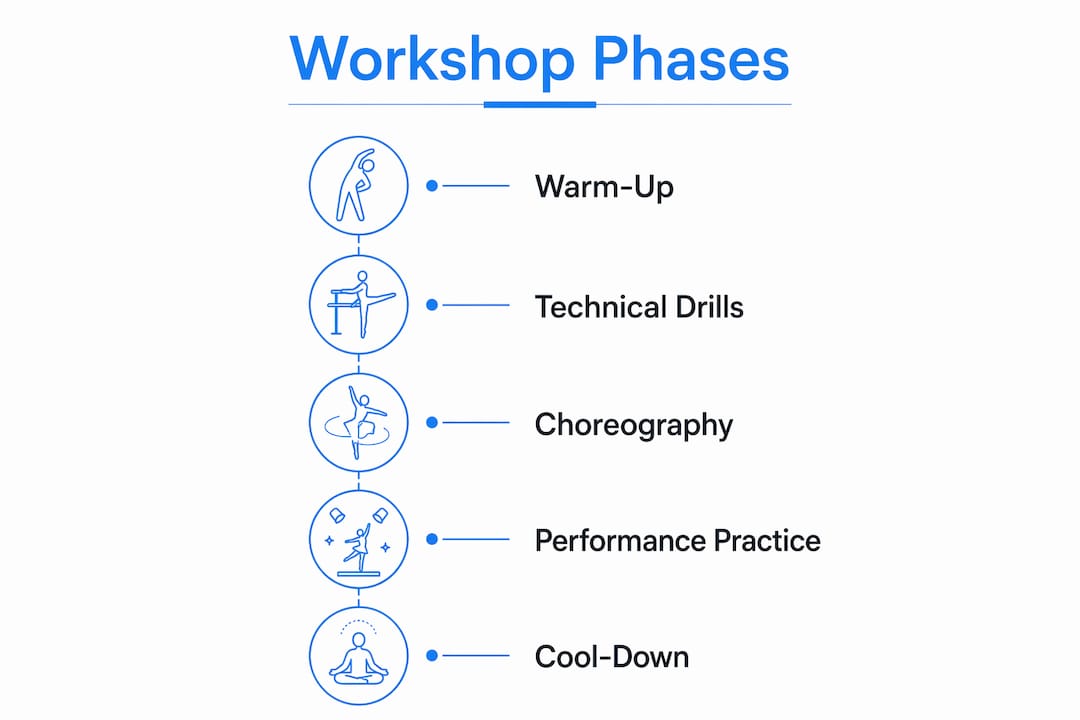
A standard dance workshop session follows a five-phase structure that runs 55–90 minutes depending on the workshop's goals and length. Each phase has a specific purpose, and the order is not arbitrary. Moving through them in sequence protects your body and builds your skills in the right order.
Here is what each phase looks like in practice:
-
Warm-up. This phase prepares muscles that are commonly underused in daily life and mentally shifts your focus to movement. A proper warm-up is not an intense fitness routine. It uses light stretching, joint circles, and gentle locomotion to raise body temperature and prevent injury.
-
Technical drills. This is where precision and muscle memory are built. Instructors isolate specific movements, such as hip isolations in Latin dance or port de bras in ballet, and repeat them until the body learns the pattern without conscious effort. Repetition here is the point, not a sign that the class is boring.
-
Choreography focus. Once technique is primed, the session moves into applying those skills in an artistic context. You learn a combination or a short phrase that connects the drills to real dancing. This is where individual style starts to show up.
-
Performance or run-through. Dancers perform the material in front of the group or in small clusters. This phase builds stage confidence and teaches you to execute under mild pressure. It also gives the instructor a clear view of what each dancer still needs to work on.
-
Cool-down. Stretching and breathing bring the body back to a resting state. Skipping the cool-down or placing choreography before technical drills increases injury risk and reduces how much you retain from the session.
Pro Tip: If you arrive five minutes early, use that time to walk the space and do light movement. You will get more out of the warm-up when your body is already slightly activated.
These phases interrelate in a specific way. The warm-up opens the body. Drills build the vocabulary. Choreography applies it. Performance tests it. Cool-down seals it. Remove one link and the chain weakens.

How do multi-day and intensive workshops organize their curriculum?
Longer workshops follow a different structural logic than single sessions. Multi-day and intensive formats commonly run from Friday evening through Sunday morning, using compressed, high-repetition training to accelerate muscle memory through immersion. The goal is to create the kind of progress that would normally take weeks of weekly classes.
A typical weekend intensive organizes its schedule like this:
- Friday evening: orientation and foundations. The first session establishes the style's core vocabulary and assesses where each dancer is starting from. This prevents instructors from pitching material at the wrong level.
- Saturday morning: technical depth. The longest and most demanding session of the weekend focuses on drilling the material introduced the night before. Fatigue is managed through pacing, not avoided entirely.
- Saturday afternoon: style and application. Dancers apply technique in longer combinations and begin working with partners or in groups.
- Saturday evening: social or performance practice. Many intensives include an informal social session or a guided practice where dancers apply everything in a low-pressure setting.
- Sunday morning: review and showcase. The final session consolidates the weekend's learning and often ends with a short sharing or recording.
For longer programs, structured dance curricula often follow 10-week sequences with defined progression across three stages: leveling, technical depth, and performance preparation. A full season may consist of three such 10-week terms, each with a distinct theme.
| Term | Focus | Goal |
|---|---|---|
| Term 1 (autumn) | Foundations and leveling | Establish baseline technique and group cohesion |
| Term 2 (winter) | Technical depth and style | Deepen vocabulary and introduce stylistic variation |
| Term 3 (spring) | Performance preparation | Rehearse and present material at a showcase |
Performance horizons, such as end-of-term showcases or recorded sharings, keep motivation high throughout each term. Without a clear performance goal, motivation tends to decline after roughly six months of training.
What are the essential elements shaping dance workshop content?
Effective dance workshop content is built on five foundational elements: body, energy, space, time, and action. These come from established dance education frameworks and give instructors a complete map for lesson planning. Each element contributes something the others cannot replace.
Effective dance lesson plans incorporate all five elements, but most workshops overemphasize body and action while underusing energy, space, and time. That imbalance produces technically capable dancers who struggle with musicality and spatial awareness. A dancer who understands energy knows the difference between a sharp accent and a sustained flow. A dancer who understands space knows how to fill a stage rather than shrink into a corner.
| Element | What it covers | Commonly neglected? |
|---|---|---|
| Body | Alignment, posture, body parts in motion | No |
| Action | Steps, jumps, turns, gestures | No |
| Energy | Quality of movement: sharp, smooth, heavy, light | Yes |
| Space | Direction, level, pathway, size of movement | Yes |
| Time | Rhythm, tempo, duration, accent | Sometimes |
Lesson plans built on all five elements develop dancers who think creatively and analytically, not just physically. That is a meaningful difference when you are performing live or adapting to a new style quickly.
Pro Tip: When you attend a workshop, notice which element the instructor emphasizes most. Then practice the neglected ones on your own. That gap is usually where your biggest growth is hiding.
Common pitfalls in dance workshop planning include placing choreography before drills, skipping the cool-down entirely, and building sessions around only body and action. Each of these shortcuts costs dancers in the long run, either through injury or through a ceiling on their artistic range.
What unique benefits do workshops offer compared to regular classes?
Workshops function as accelerators. Regular classes build skill steadily over time. Workshops compress that process by raising the intensity, varying the instruction, and creating conditions that push you past familiar habits.
The specific benefits that set workshops apart include:
-
Exposure to multiple teaching styles. Workshops provide multiple instructor perspectives, which accelerates progress more than a single teaching voice can. Each instructor notices different things and corrects different patterns. That variety sharpens your awareness of your own movement.
-
Partner rotation. Rotating partners during workshops builds adaptability faster than staying with one familiar partner. You learn to read different bodies, different timing, and different energy levels. Beginners often find this surprising, but it is one of the fastest ways to improve lead and follow skills in partnered styles.
-
Immersive repetition. The compressed format means you repeat material far more times than a weekly class allows. That repetition is what converts conscious effort into physical habit.
-
Social confidence. Performing in front of peers in a low-stakes setting builds the kind of confidence that transfers to real performances. You get used to being seen, which is a skill in itself.
-
Fresh eyes on your technique. A workshop instructor who has never seen you before will notice patterns your regular teacher has stopped seeing. That outside perspective often unlocks corrections that have been waiting for months.
Workshops serve as accelerators that push dancers out of their comfort zones by exposing them to intensive techniques and diverse instruction. The discomfort is the point. Growth lives just past the edge of what feels familiar.
Key Takeaways
A well-structured dance workshop follows a deliberate five-phase sequence that protects the body, builds skill progressively, and prepares dancers for real performance.
| Point | Details |
|---|---|
| Five-phase session structure | Every session should move through warm-up, drills, choreography, performance, and cool-down in that order. |
| Phase order matters | Placing choreography before drills or skipping cool-down increases injury risk and reduces skill retention. |
| Term-based planning | Multi-week programs work best in 10-week terms with leveling, technical depth, and performance as distinct stages. |
| Five foundational elements | Body, energy, space, time, and action must all appear in lesson plans to develop complete, creative dancers. |
| Workshops accelerate growth | Partner rotation, varied instruction, and immersive repetition produce faster progress than regular classes alone. |
What I have learned from watching structured workshops work
The most common mistake I see dancers make is treating the warm-up as optional. They arrive late, skip the first ten minutes, and then wonder why their body feels stiff or why they pick up combinations more slowly than everyone else. The warm-up is not a formality. It is the foundation the rest of the session stands on.
The second thing I have noticed is how much performance horizons matter. Dancers who know they are performing at the end of a term train differently. They show up more consistently, ask better questions, and push through plateaus that would otherwise stall them. A showcase does not have to be a big production. A recorded run-through in the studio is enough. The goal is to give the training a destination.
Partner rotation is the insight that surprises people most. Dancers who rotate through multiple partners in a single workshop session often leave with more skill than those who stayed with one partner for the whole time. Adaptability is a technique, and you only build it by practicing with people who move differently than you do.
My honest recommendation is this: go into every workshop with a specific question about your own dancing. Not a vague goal like "get better," but something concrete. "Why does my timing slip in the second half of a phrase?" or "How do I make my transitions feel less abrupt?" A structured workshop gives you the conditions to answer that question. You just have to bring it with you.
— DJ
Live dance workshops and events worth showing up for
If you are ready to put this structure into practice, finding the right workshop or live performance is the next step.
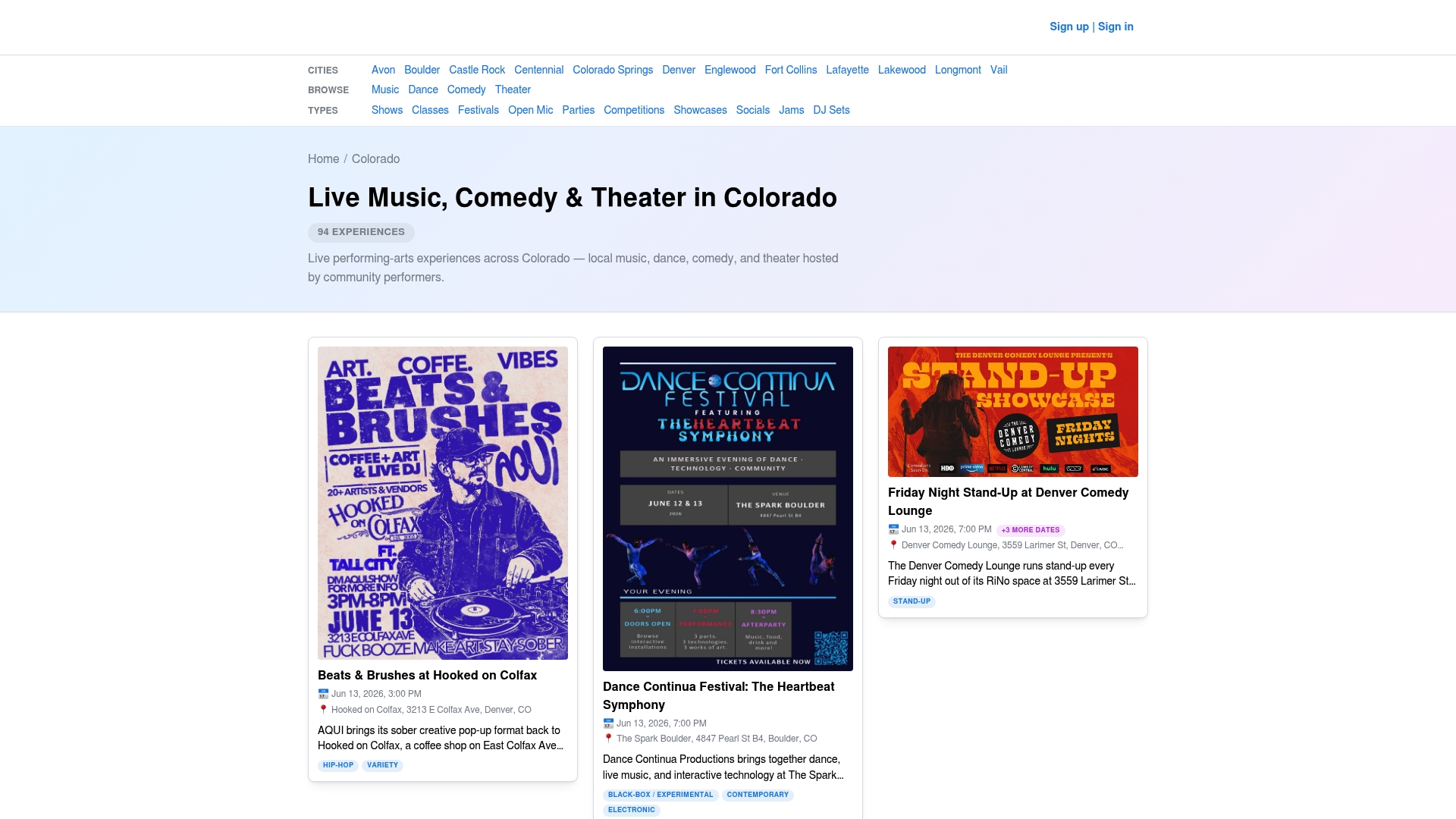
Experiencebylocals connects dancers and curious guests with authentic local events across Colorado, including dance workshops, K-pop choreography sessions, and live performances hosted by artists who are genuinely part of the community. These are not tourist-facing shows. They are the real thing. You can browse and book local dance events in Colorado directly through the platform and find sessions that match your level and interests. Whether you want to watch, participate, or both, Experiencebylocals makes it easy to find something worth showing up for.
FAQ
What is the standard format for a dance workshop session?
A standard dance workshop session follows five phases: warm-up, technical drills, choreography focus, performance practice, and cool-down. Sessions typically run 55–90 minutes depending on the workshop's length and goals.
How long do multi-day dance workshops usually run?
Multi-day and intensive workshops commonly run from Friday evening through Sunday morning. This compressed schedule uses high-repetition training to accelerate muscle memory through immersion.
What are the five foundational elements of a dance lesson plan?
The five foundational elements are body, energy, space, time, and action. Effective dance workshop curriculum incorporates all five, though energy, space, and time are most often underemphasized.
Why does partner rotation matter in dance workshops?
Rotating partners during a workshop builds adaptability faster than staying with one familiar partner. Dancers who rotate gain skill more quickly because they learn to read different bodies, timing, and energy levels.
How do performance goals affect dancer motivation in workshops?
Performance horizons such as showcases or recorded sharings keep motivation high throughout a term. Without a clear performance goal, motivation tends to decline after roughly six months of consistent training.