
Improve Dance Skills With Local Workshops in 2026
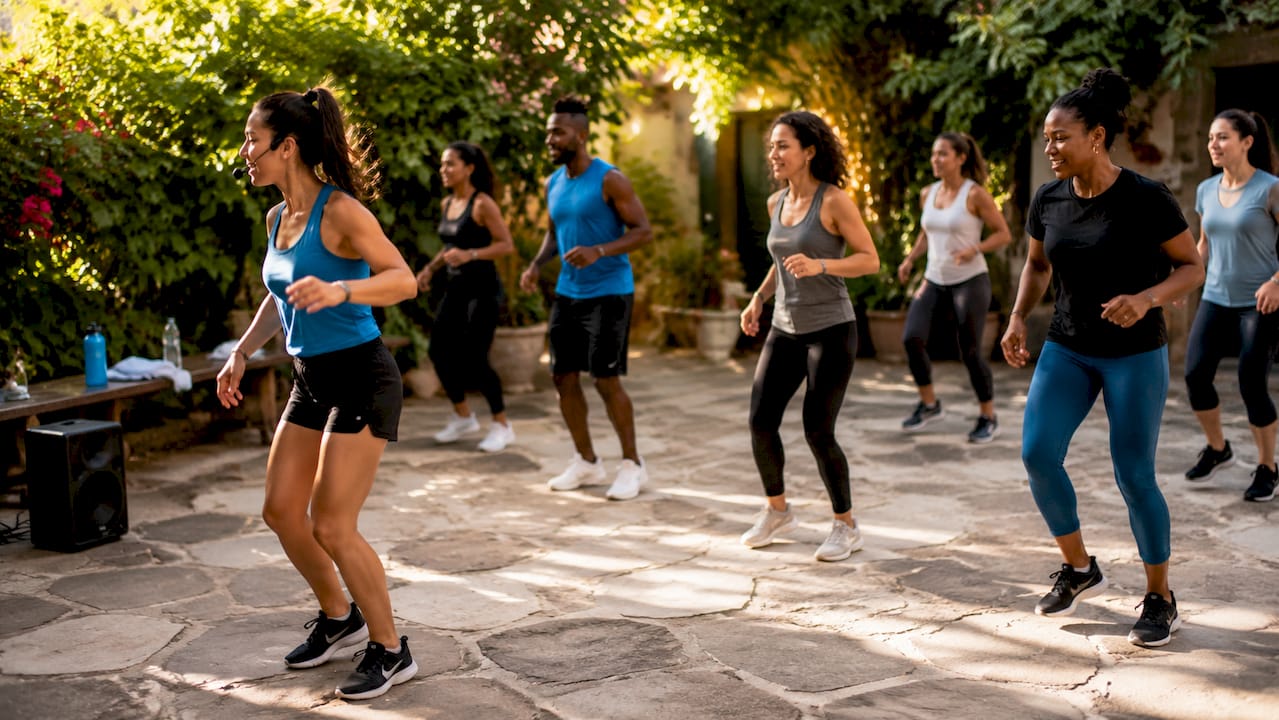
Local dance workshops are structured, instructor-led sessions designed to build technique, confidence, and musicality across all skill levels. Whether you call them dance training sessions or skill enhancement workshops, the industry term is simply "dance workshops," and they are the fastest path to real improvement outside of a full-time conservatory. From salsa fundamentals at Bella Vita Dance Company to intensive programs at Denver Dance Center, Colorado's local workshop scene gives every dancer a clear, affordable route to growth. This guide shows you how to find the right workshop, prepare well, and get the most out of every session.
How to improve dance skills with local workshops
The first step is knowing what you are looking for. Local dance workshops range from single 90-minute drop-in sessions to multi-week intensives that run several hours a day, with fees typically between $20 and $65 per session or around $140 for a multi-week program. That range means there is a format for every schedule and budget.
When searching for workshops nearby, start with these channels:
- Eventbrite and Meetup: Both list local dance events by style, date, and skill level. Filtering by "beginner" or "no experience required" narrows results fast.
- Studio websites: Schools like Broadway Dance Center and local Colorado studios post workshop calendars directly on their sites.
- Community boards and social media groups: Facebook groups for local salsa, K-pop, or contemporary dance communities often share workshop announcements before they appear anywhere else.
- Experiencebylocals: The platform lists authentic, community-hosted dance experiences across Colorado, including workshops led by local artists rather than tourist-facing venues.
Assess skill fit before you register. A beginner salsa workshop and an UrbanKiz intensive are both "dance workshops," but they serve completely different needs. Read the workshop description carefully. Look for language like "no partner needed" or "rotating partners," which signals an accessible, social format. Most beginner workshops welcome solo attendees with zero dance background, using rotating partners and solo drills to keep everyone moving and comfortable.
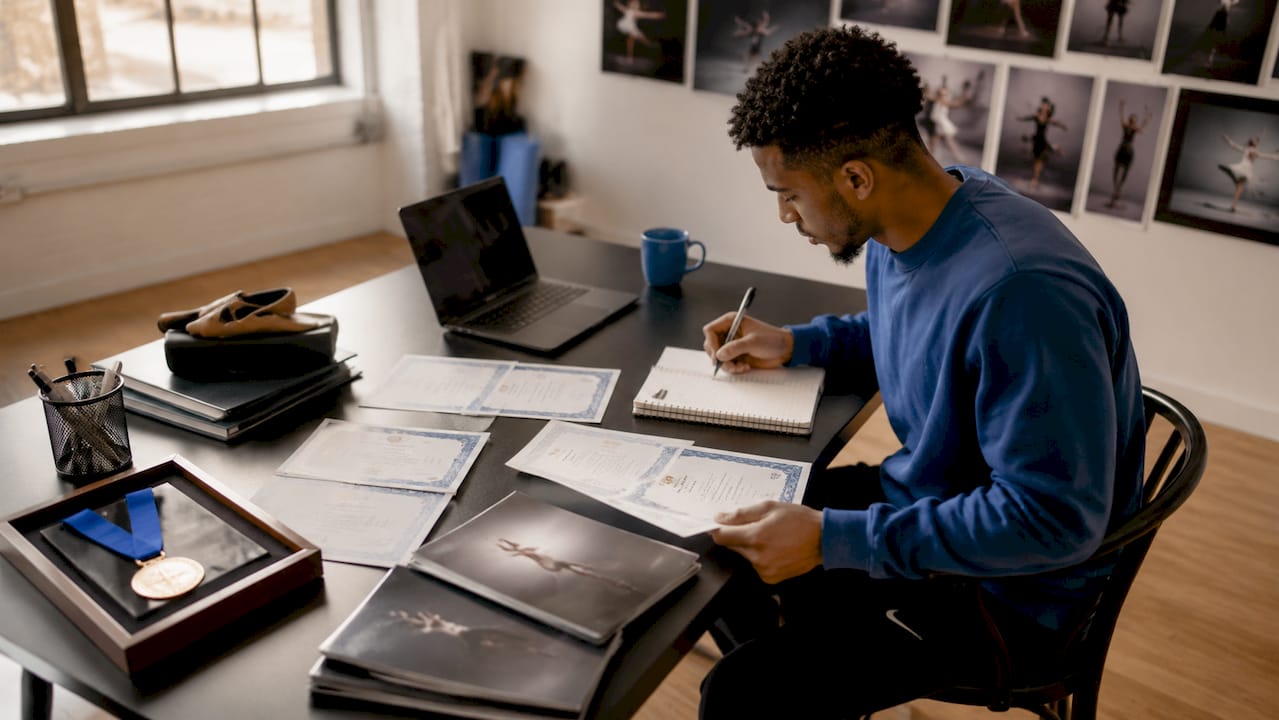
Check instructor credentials. A workshop led by a coach with audition or competition experience, like those at Casey Rosenberg's Pro Sports Dance Intensive, delivers a different quality of feedback than a general group class. That difference matters when you are trying to improve, not just participate.
Pro Tip: Search for workshops that list a specific technique focus, such as "footwork," "frame," or "musicality," rather than generic titles. Specific focus workshops produce faster, more measurable improvement.
How to prepare for a dance workshop
Preparation starts before you walk in the door. The right mindset and physical readiness determine how much you absorb during the session.
Set one clear goal for each workshop. "I want to improve my hip isolation" is more useful than "I want to get better at salsa." A specific goal directs your attention and helps you measure progress at the end of the session.
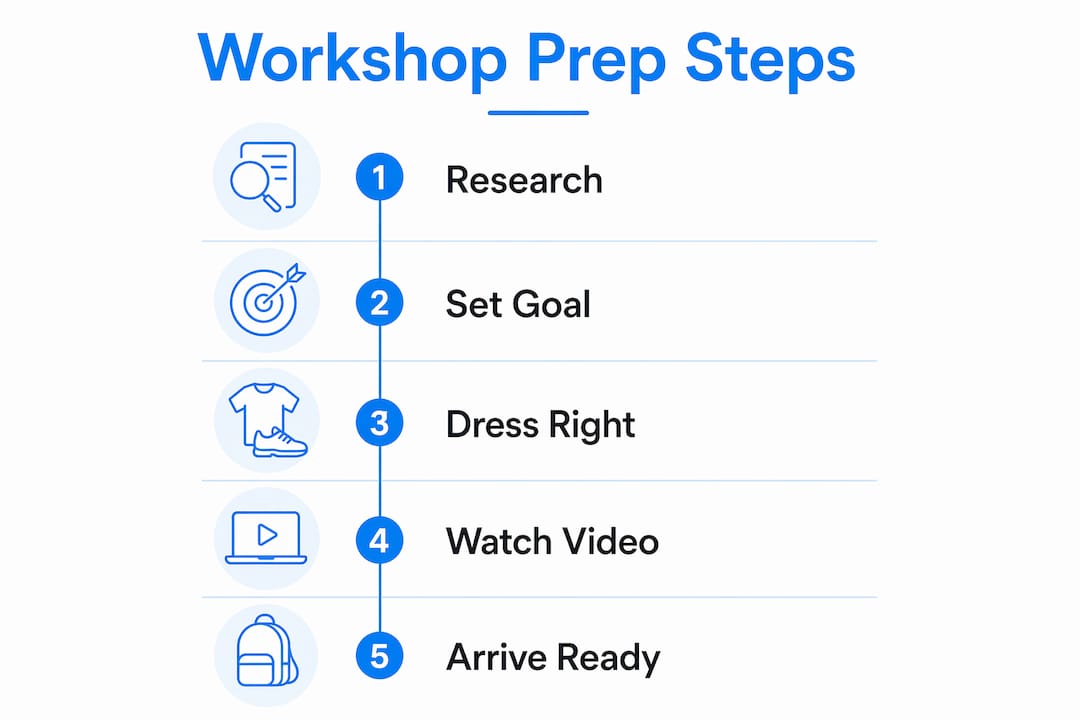
Gear matters more than most beginners expect. Instructors consistently recommend breathable, comfortable clothing and smooth-soled shoes designed for dance pivots. Rubber-soled sneakers grip the floor too hard, which strains your knees and ankles during turns. A simple leather-soled or suede-soled shoe protects your joints and lets you move freely.
Warm up before the session begins. Many workshops include a warm-up, but arriving five minutes early to stretch and activate your core puts you ahead. Dr. Donna Krasnow's C-I Training method, used in professional workshops, blends physical conditioning with visualization to accelerate neuromuscular repatterning. You do not need the full program to benefit. Even two minutes of mental rehearsal, picturing the movements you want to execute, primes your nervous system before class starts.
- ✅ Wear smooth-soled shoes, not rubber-soled sneakers
- ✅ Bring water and a small notebook or use your phone to jot key corrections
- ✅ Arrive with one specific technique goal
- ✅ Mentally rehearse the style of movement before the session
Pro Tip: Watch a short video of the dance style the night before your workshop. Visual familiarity with the movement vocabulary helps your brain process new instructions faster during class.
Step-by-step strategies to accelerate skill improvement during workshops
What you do inside the workshop determines your results. These steps apply whether you are in a beginner salsa class or an advanced contemporary intensive.
-
Follow demonstrations before you move. Watch the instructor's full demonstration without trying to copy it in real time. Your brain needs one complete pass to map the movement before your body attempts it. Rushing into motion during the demo is one of the most common ways dancers miss key details.
-
Practice fundamentals patiently. Dance instructor Chantal Schoenherz, who teaches Raqs Sharqi bellydance technique at La Pena, emphasizes that healthy posture and musicality matter more than mastering complex steps quickly. Subtlety and body awareness elevate technique at every level. Rushing to advanced material before your foundation is solid creates habits that take twice as long to unlearn.
-
Move with intention, not just memory. UrbanKiz workshops built around instructors like Monica teach dancers to move beyond rote memorization toward expressive, musical connection. Ask yourself why you are making each movement choice, not just what the next step is.
-
Ask for feedback directly. Do not wait for the instructor to come to you. After a drill, approach the instructor or a more experienced dancer and ask one specific question. "Is my frame correct?" gets a useful answer. "How am I doing?" does not.
-
Repeat the class when possible. The second time through a workshop, your brain is no longer processing new information. It is refining. Many studios offer the same workshop multiple times per season. Repeating a session often produces more improvement than attending a new one.
-
Balance solo drills with partner work. Solo drills build personal technique. Partner work builds communication and adaptability. Both are necessary. If a workshop offers both formats, treat each as equally important rather than rushing through one to get to the other.
Common mistakes in local dance workshops and how to avoid them
Most workshop mistakes fall into a few predictable patterns. Recognizing them early saves you time and frustration.
- Over-investing in gear. Beginners sometimes spend more energy finding the perfect outfit than preparing mentally. Comfort and function beat style every time. Smooth-soled shoes and breathable clothes are the only real requirements.
- Skipping fundamentals to chase advanced steps. Every experienced dancer has made this mistake. Advanced choreography built on a weak foundation looks worse, not better. Stay in the beginner or intermediate workshop until your basics feel automatic.
- Ignoring body conditioning. Conditioning and somatic training directly affect dancer longevity and performance quality. Skipping warm-ups and cooldowns increases injury risk and slows long-term progress.
- Missing the networking opportunity. Workshops serve as networking hubs where coaches give direct feedback that can influence auditions and career paths. Treating a workshop as purely technical misses half its value.
- Not checking enrollment minimums. Some intensive workshops cancel if minimum student numbers are not reached. Confirm registration policies before you book travel or take time off work.
"The workshop is not just about the steps you learn. It is about the connections you make and the feedback you carry home." This mindset shift separates dancers who plateau from those who keep growing.
Key takeaways
Local dance workshops are the most direct path to skill improvement for dancers at every level, combining expert instruction, peer feedback, and structured practice in a single accessible format.
| Point | Details |
|---|---|
| Workshop formats vary widely | Sessions run from 90-minute drop-ins to multi-week intensives; fees range from $20 to $65 per session. |
| Gear affects performance | Smooth-soled shoes and breathable clothes protect joints and improve movement quality. |
| Fundamentals before complexity | Posture, musicality, and body awareness produce faster long-term gains than chasing advanced steps. |
| Intentional movement wins | Moving with musical interpretation, not just memorized steps, marks the difference between levels. |
| Workshops build careers, not just skills | Direct coach feedback and networking at workshops open doors to auditions and mentorship. |
What I have learned from years of watching dancers grow through workshops
The biggest shift I have seen in dancers is not technical. It is attitudinal. The dancers who improve fastest are not the most naturally gifted. They are the ones who show up consistently, ask the most specific questions, and treat every correction as a gift rather than a criticism.
I have watched beginners walk into a Thursday dance lesson and social session with zero experience and, within a few weeks of consistent attendance, move with more confidence than people who have been dancing casually for years. The difference is intentionality. They came with a goal. They paid attention. They came back.
The other thing I believe strongly: do not wait until you feel "ready" for a workshop. There is no ready. The workshop is where ready happens. Every level of dancer, from absolute beginner to professional, has something to gain from structured, community-based instruction. The local workshop scene in Colorado and beyond is richer and more welcoming than most people realize. You just have to walk through the door.
— DJ
Discover local dance workshops through Experiencebylocals
Ready to find your next workshop? Experiencebylocals connects you with authentic, community-hosted dance experiences across Colorado, from K-pop choreography at artist-run sanctuaries to salsa socials led by local instructors who genuinely love what they teach.
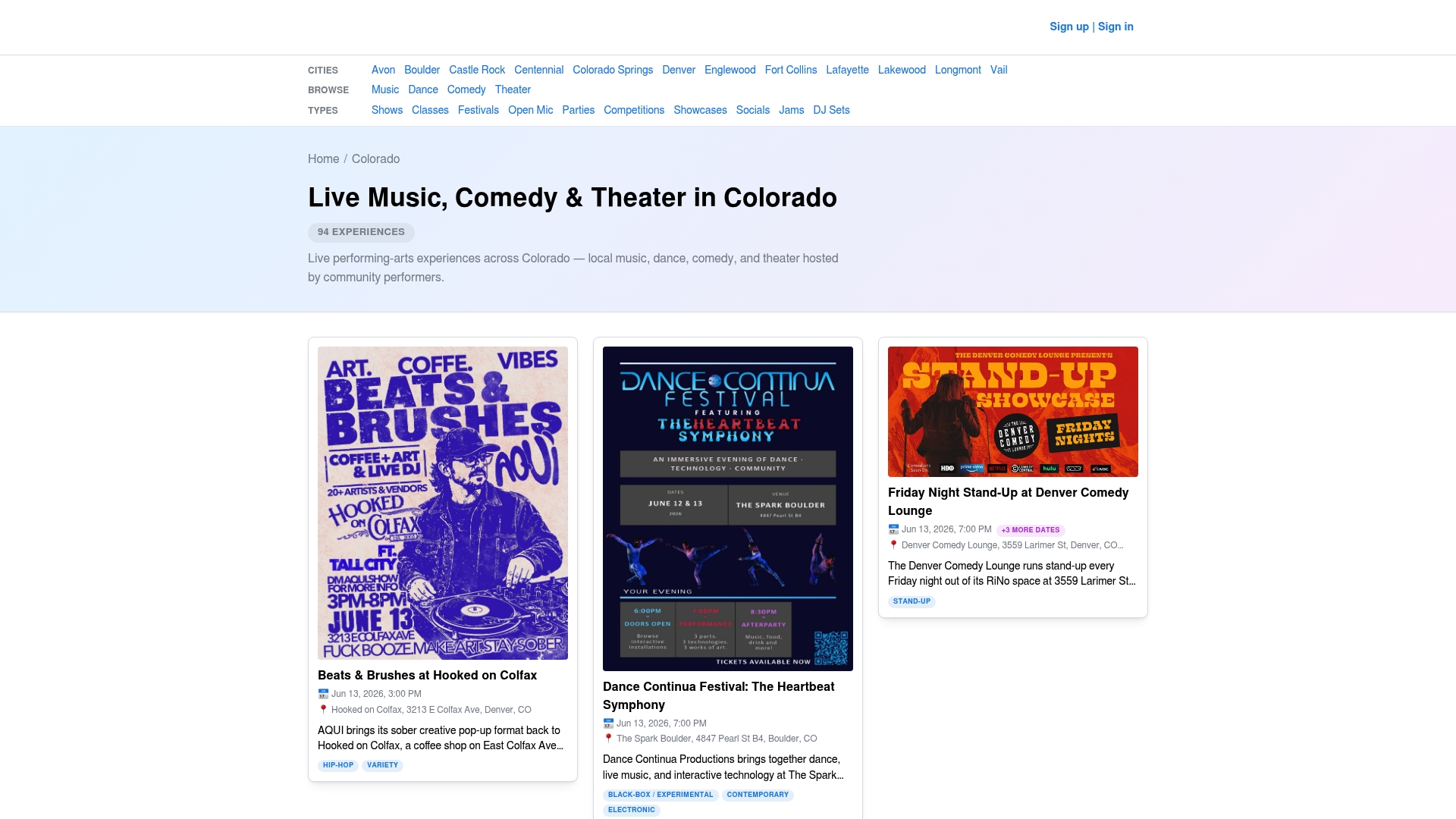
Every listing on Experiencebylocals reflects the real cultural energy of the community, not a tourist-facing production. You can browse local dance events in Colorado by style, skill level, and date, then book directly through the platform. Whether you are hunting for your first beginner class or an advanced intensive, the options are there and the community is waiting. Come as you are.
FAQ
What is a local dance workshop?
A local dance workshop is a structured, instructor-led session focused on a specific dance style or technique, typically lasting 90 minutes to several hours. Workshops differ from regular classes by their concentrated format and targeted skill focus.
Do I need a partner to attend a beginner dance workshop?
Most beginner workshops do not require a partner. They use rotating participants and solo drills so anyone can attend alone and still get full value from the session.
How much do local dance workshops cost?
Single-session workshops typically cost between $20 and $65. Multi-week intensive programs run around $140, depending on the studio, instructor, and location.
How often should I attend workshops to see real improvement?
Consistent attendance matters more than frequency. Repeating the same workshop once or twice before moving to a new one builds stronger technique than jumping between different sessions every week.
What should I wear to a dance workshop?
Wear breathable, comfortable clothing and smooth-soled shoes. Rubber-soled sneakers grip the floor too hard and strain your joints during turns and pivots.