
What Does Community Dance Night Mean for Everyone
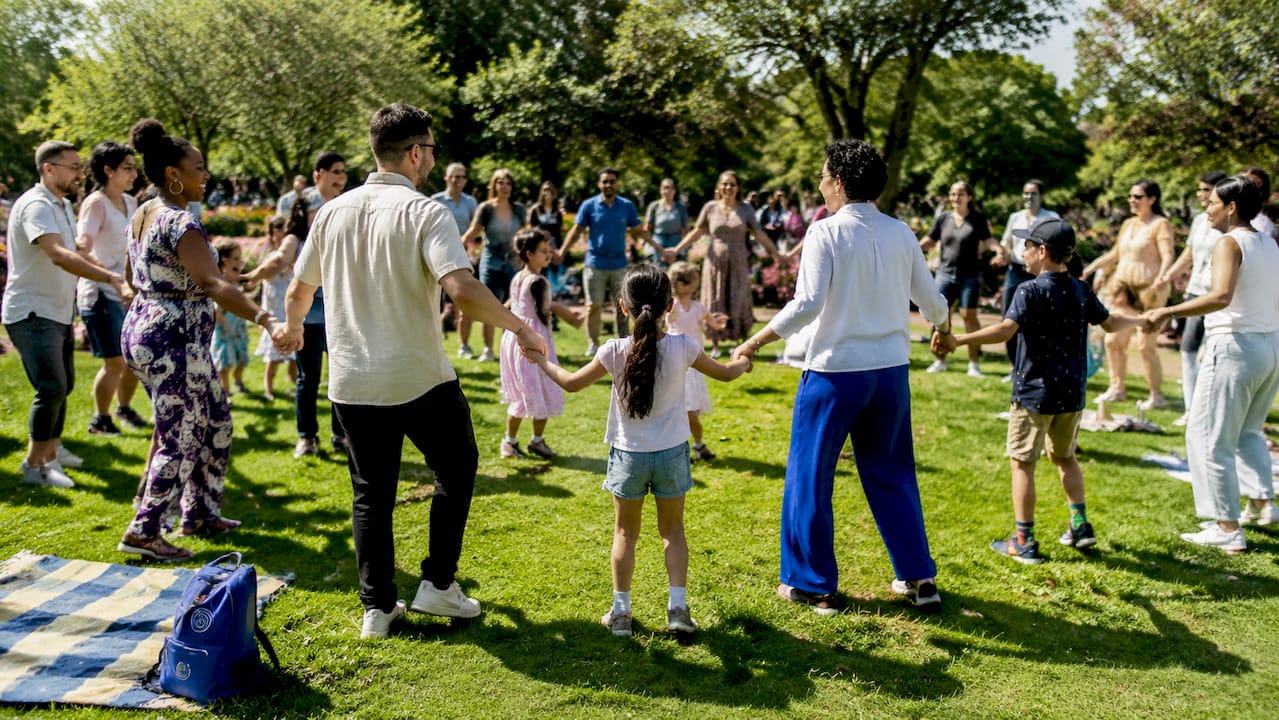
A community dance night is defined as an inclusive, participatory gathering where people of all ages and skill levels come together to move, connect, and build belonging through shared rhythm. The question it asks is not "Can you dance?" but "Can you participate?" That single shift in focus changes everything. Unlike studio classes or performance showcases, a community dance event centers the social experience over technical achievement. You do not need a partner, prior training, or any particular style. You just need to show up.
What does community dance night mean in practice?
A community dance night is a structured yet relaxed social event, typically held in a public or community space such as a park, library, recreation center, or open-air plaza. The format follows a natural arc that welcomes newcomers and rewards regulars alike. Most events run for two to three hours and move through distinct phases designed to ease everyone onto the floor.
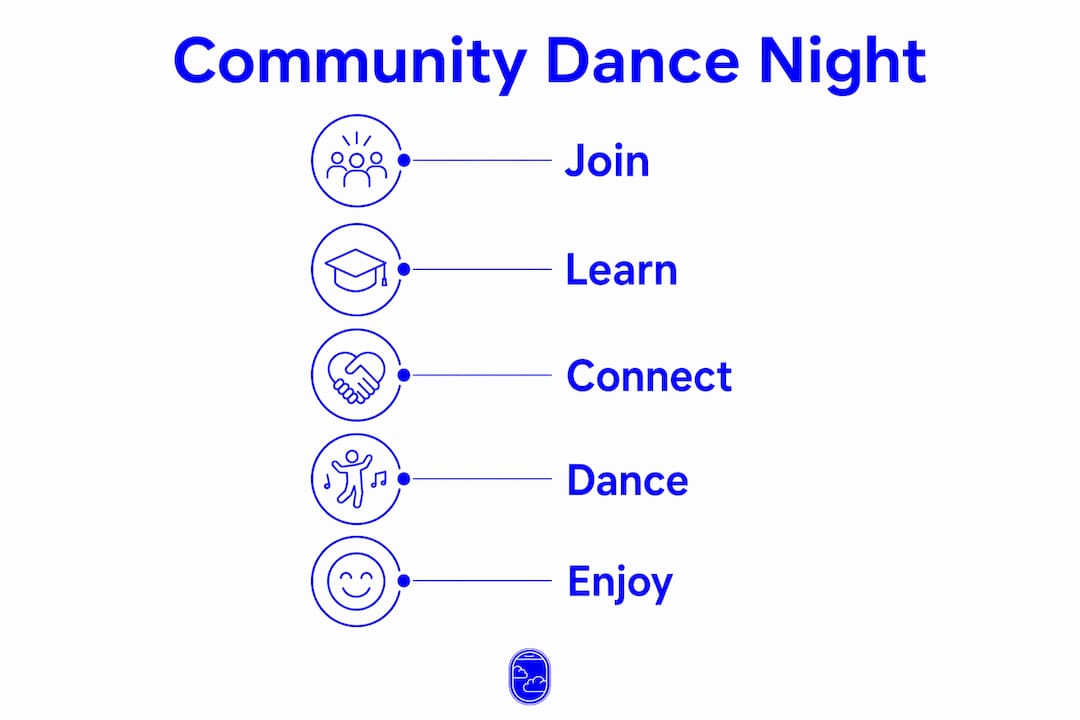
A typical event schedule looks like this:
- Welcome and introductory performance (roughly 15 minutes): A local artist or group demonstrates the featured style, giving attendees a visual reference without pressure to copy it perfectly.
- Guided instruction session (roughly 60 minutes): A facilitator walks everyone through basic movements at a relaxed pace. No experience is assumed. Repetition and encouragement replace correction and critique.
- Open dance floor (45–60 minutes): Music plays, the floor opens, and participants dance, watch, chat, or rest as they choose.
Dance styles vary widely by location and organizer. You might find swing, salsa, West African traditional movement, hip hop, line dancing, or K-pop choreography at any given event. Experiencebylocals, for example, features K-pop choreography nights held at artist-run sanctuaries in Colorado, blending cultural specificity with genuine community warmth.
Pro Tip: Arrive during the instruction phase, not after. The guided segment is where first-timers find their footing and where the social bonds of the night begin to form.
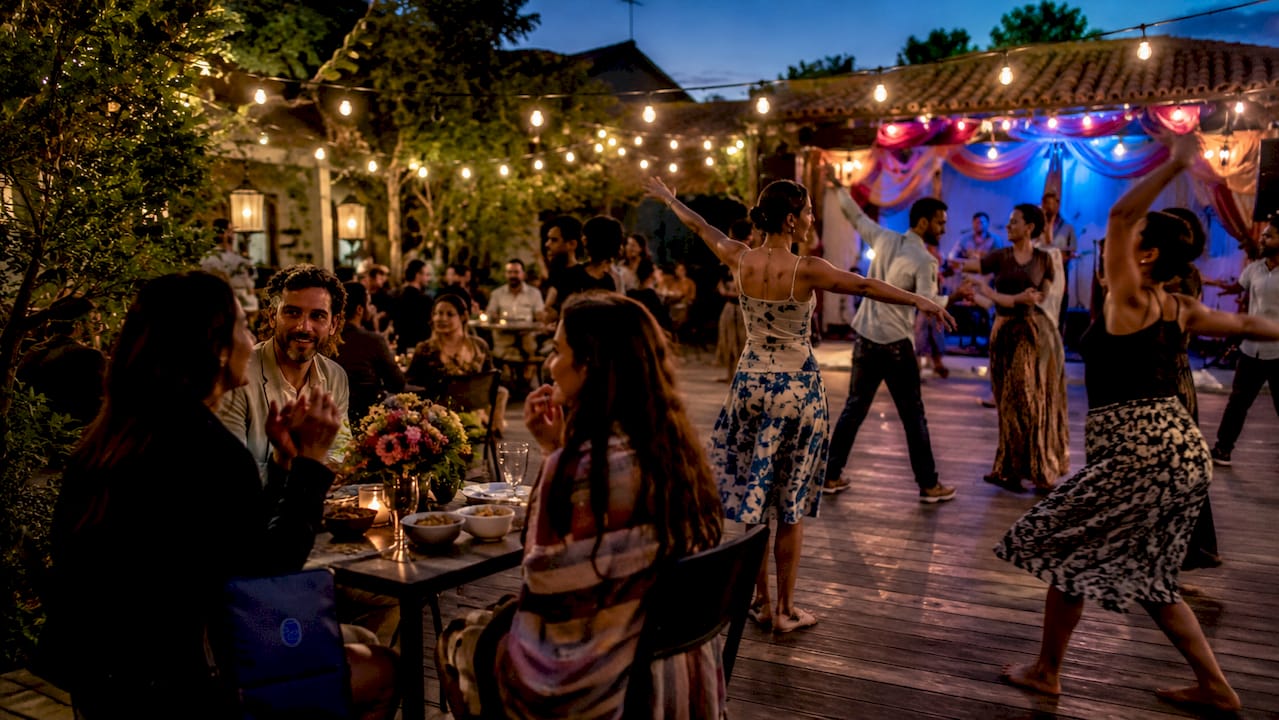
The atmosphere at a community dance event is deliberately unhurried. Conversation happens between songs. People sit out rounds without judgment. The social fabric of the evening is woven from movement and rest in equal measure.
Why community dance nights matter for well-being and connection
Community dance nights reduce social isolation by creating recurring, low-barrier opportunities for people to meet across generations and backgrounds. Recurring events attract diverse attendees and build long-term friendships through multi-generational, inclusive environments. That consistency is the key ingredient. A one-time event creates a moment. A monthly gathering creates a community.
The psychological benefits are real and well-documented in community arts research. Movement paired with shared rhythm activates a sense of presence that is hard to replicate in passive social settings. Appalachian musical traditions have long understood this. In that cultural context, the decision to dance all night represents a communal choice to stay present together, not just a physical activity. The meaning of dance night, in that tradition, is togetherness itself.
"Community dance is dance that takes people seriously." — AfiMuse on community dance
That phrase carries real weight. Taking people seriously means designing an event around their comfort, their pace, and their right to participate on their own terms. It is the opposite of a performance context where the audience judges the dancer.
The social benefits of regular attendance include:
- Reduced loneliness: Shared physical activity in a group setting creates bonds faster than conversation alone.
- Intergenerational connection: Events that welcome all ages create rare spaces where a teenager and a retiree share the same floor without awkwardness.
- Sense of belonging: Returning to the same event builds familiarity, which builds trust, which builds community.
- Mental grounding: Rhythmic movement anchors attention in the present moment, offering a natural counterweight to daily stress.
One important clarification: community dance is a relational social activity, not a clinical intervention. It supports well-being through engagement and belonging, but it is not a substitute for professional mental health care. That distinction matters because it sets honest expectations and keeps the event space free from therapeutic pressure.
How community dance nights differ from studio classes and performance events
Community dance nights and studio dance classes share a floor but serve entirely different purposes. A studio class teaches technique. A community dance event creates conditions for connection. That difference shapes everything from how the space is arranged to how facilitators speak to participants.
| Feature | Community dance night | Studio class or performance event |
|---|---|---|
| Primary goal | Social connection and belonging | Skill development or performance |
| Skill requirement | None | Varies; often progressive levels |
| Partner requirement | Not needed | Often required for partner styles |
| Atmosphere | Relaxed, conversational, flexible | Structured, focused, evaluative |
| Participation style | Dance, watch, socialize, or rest | Active participation expected |
| Cost | Often free or low cost | Typically paid enrollment |
Facilitators at community dance events prioritize safety, respect, and belonging over choreographic precision. They are not there to correct your footwork. They are there to make sure you feel welcome enough to try.
The flexible nature of a dance night is one of its greatest strengths. Social dance events succeed because they carry no fixed objective. Attendees can dance every song, sit out half the night, or spend the evening talking to someone new. All of those choices are valid. None of them make you less of a participant.
Pro Tip: If you feel self-conscious on the floor, position yourself near the edges during the open dance phase. Watch a few songs, find the rhythm, and step in when it feels natural. No one is tracking your entry point.
The nonjudgmental environment is not accidental. Organizers actively design it by choosing accessible venues, using welcoming language in event descriptions, and training facilitators to prioritize inclusion over instruction. That intentional design is what separates a genuine community dance event from a casual party with a playlist.
How to find and join a community dance night near you
Finding a local dance night is easier than most people expect. The events exist in nearly every mid-sized American city, often organized by parks departments, arts nonprofits, cultural centers, or grassroots community groups.
Here are the most reliable ways to locate one:
- Check community centers and recreation departments: Many cities host free or low-cost dance nights monthly, especially in summer. Search your city's parks and recreation website directly.
- Visit local libraries: Libraries increasingly host cultural programming, including dance events, as part of community engagement initiatives.
- Search arts organization calendars: Regional arts councils and nonprofit cultural organizations publish event listings that commercial platforms often miss.
- Browse social media groups: Local Facebook groups, Nextdoor, and Instagram accounts for neighborhood arts scenes regularly announce dance nights with short notice.
- Use platforms built for local live events: Experiencebylocals lists live community events in Colorado, including dance nights hosted by local artists, making it easy to find authentic grassroots experiences rather than tourist-facing entertainment.
When you attend your first event, bring comfortable shoes and clothes you can move in. Arrive during the instruction phase. Introduce yourself to the person next to you. Most community dance nights attract regulars who genuinely welcome new faces because a bigger floor is a better floor.
Many events explicitly state that no partner or prior skill is needed, and they mean it. Solo attendees are not just tolerated. They are expected and welcomed. The guided instruction phase exists precisely to level the playing field before the open floor begins.
The variety of styles available means you can find a dance night that matches your cultural background or your curiosity. Traditional, contemporary, and fusion styles all appear on community dance event calendars. That variety is a feature, not a complication. It reflects the actual diversity of the communities these events serve.
Key Takeaways
A community dance night is defined by participation over performance, and that single principle makes it one of the most accessible and socially meaningful cultural events available to anyone.
| Point | Details |
|---|---|
| Participation over performance | The core question is "Can you participate?" not "Can you dance?" No skill is required. |
| Structured but flexible format | Events typically include guided instruction then open floor time, welcoming solo attendees at every phase. |
| Real social and mental benefits | Regular attendance builds friendships, reduces isolation, and provides mental grounding through shared movement. |
| Different from studio classes | Community dance prioritizes belonging and comfort over technique, with no fixed objective or evaluation. |
| Easy to find and join | Local parks, libraries, arts organizations, and platforms like Experiencebylocals list accessible events near you. |
What I've learned from showing up to dance nights unprepared
The first community dance night I attended, I stood near the back wall for the first twenty minutes. I had no idea what style was being taught, I didn't know anyone in the room, and I was genuinely convinced I would look ridiculous. What changed my mind was watching a man in his seventies and a teenager in a K-pop T-shirt attempt the same basic step at the same time, both laughing at themselves, neither caring about the other's opinion.
That moment taught me something I've seen confirmed at every community dance event since: the social contract at these gatherings is fundamentally different from almost any other public space. Nobody is performing for you. Nobody expects you to perform for them. The shared goal is presence, not polish.
What I find most underrated about the meaning of dance night is its role as a recurring anchor in community life. A monthly dance event gives a neighborhood a shared ritual. Shared rituals build identity. That is not a small thing in an era when genuine third places, spaces that are neither home nor work, are disappearing from American life.
My honest advice: go once before you decide it's not for you. Bring nothing but comfortable shoes and a willingness to be a beginner. The floor will meet you where you are.
— DJ
Where to find authentic community dance events in Colorado
Experiencebylocals was built for exactly this kind of search. If you're looking for genuine local dance nights, live music, comedy, or theater hosted by real community artists in Colorado, the platform cuts through the noise of tourist-facing venues and generic event aggregators.
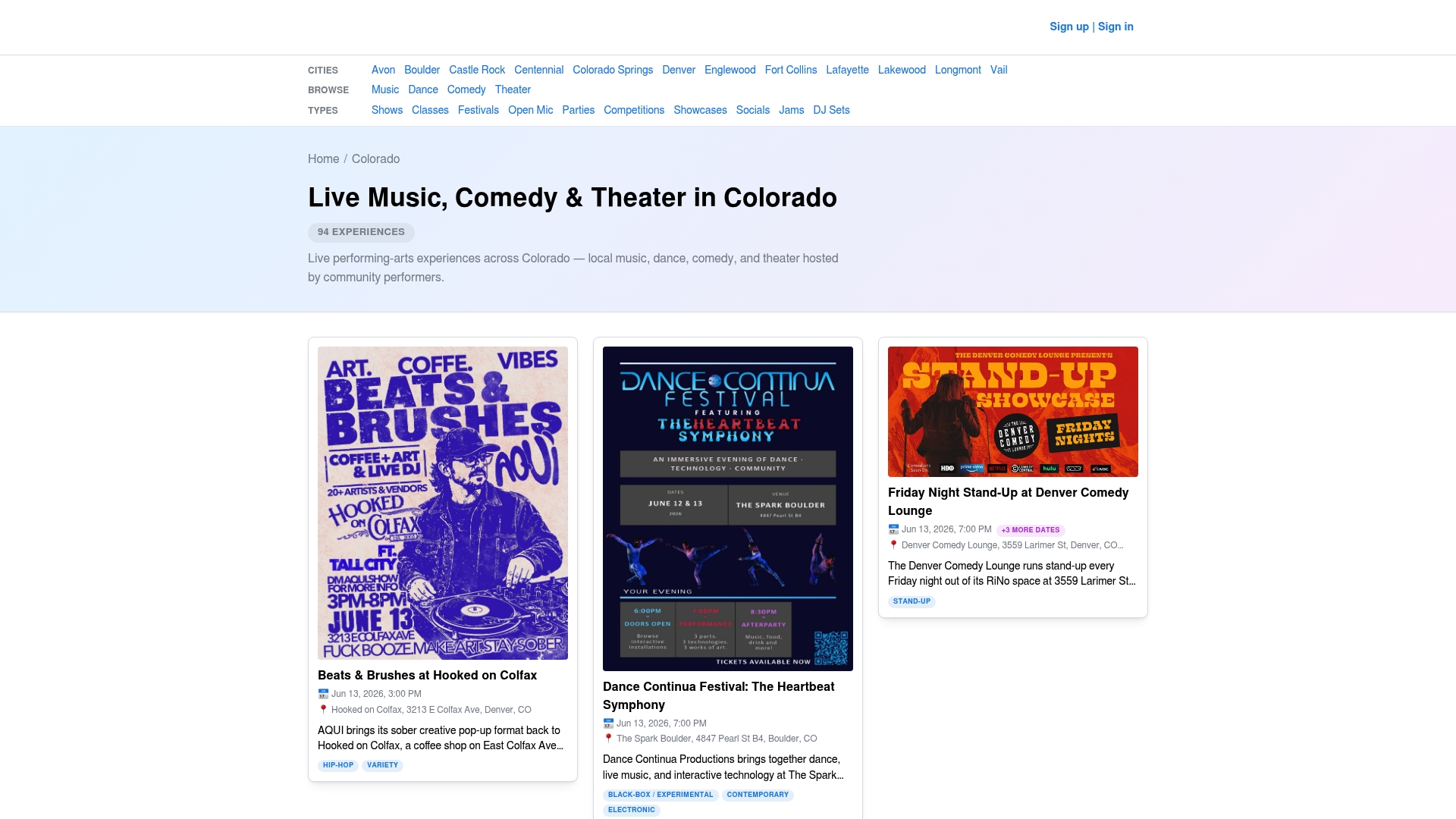
Experiencebylocals connects you directly with grassroots creators who organize events like K-pop choreography nights, community dance gatherings, and cultural showcases that reflect the actual heartbeat of their neighborhoods. You can browse by location or event type, and every listing comes from a local artist or organizer, not a promoter. Check out live events in Colorado to find a community dance night near you, or browse the full live events catalog to see what's happening across the state this month.
FAQ
What does community dance night mean?
A community dance night is an inclusive social event where people of all ages and skill levels gather to dance, connect, and build community in a welcoming, noncompetitive setting. The focus is on participation and belonging, not technical ability.
Do I need dance experience to attend a community dance night?
No prior experience is needed. Most events include a guided instruction phase specifically designed for first-timers, and solo attendees are actively welcomed throughout the evening.
What activities happen at a community dance event?
A typical community dance event includes a short introductory performance, a guided instruction session lasting about an hour, and an open dance floor period where attendees can dance, socialize, or simply enjoy the atmosphere.
How is a community dance night different from a dance class?
A dance class teaches technique and follows a structured curriculum. A community dance night prioritizes social connection and belonging, with no evaluation, no required skill level, and no fixed objective for participants.
Where can I find community dance nights near me?
Check local parks and recreation departments, library event calendars, arts organization websites, and platforms like Experiencebylocals, which lists authentic community dance events and live cultural experiences hosted by local artists in Colorado.