
Why Attending Live Dance Performances Helps Dancers
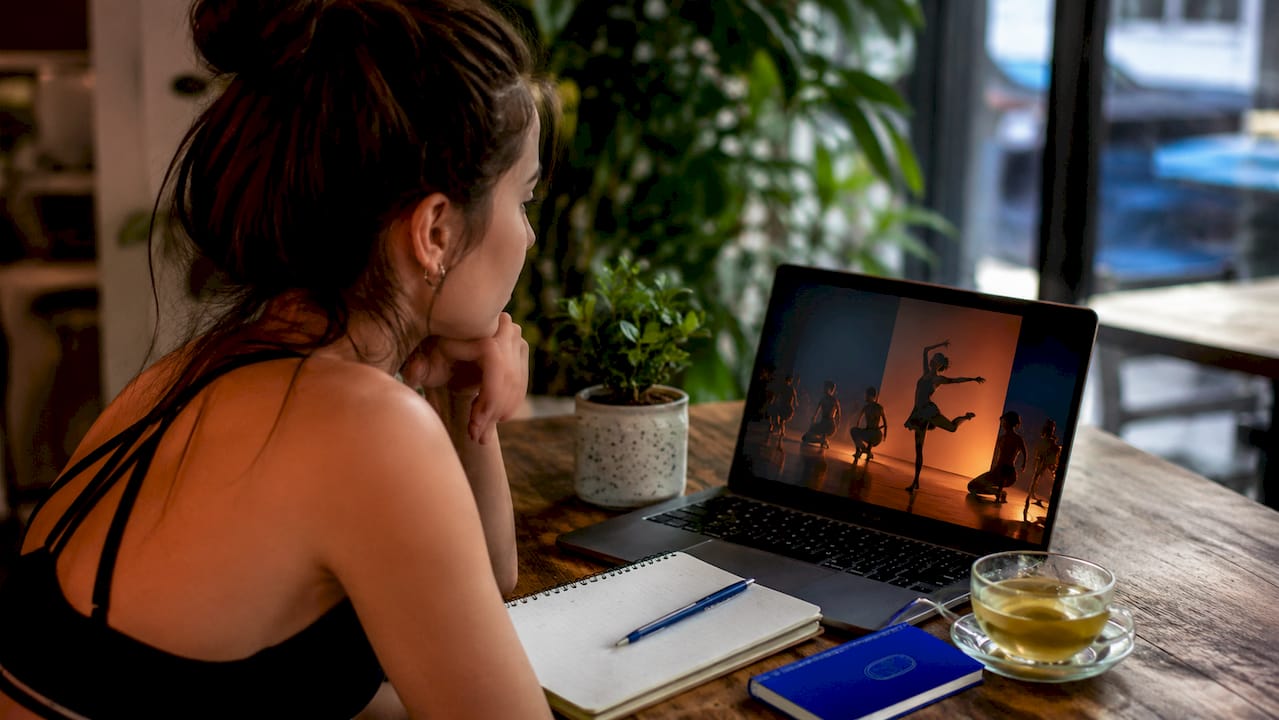
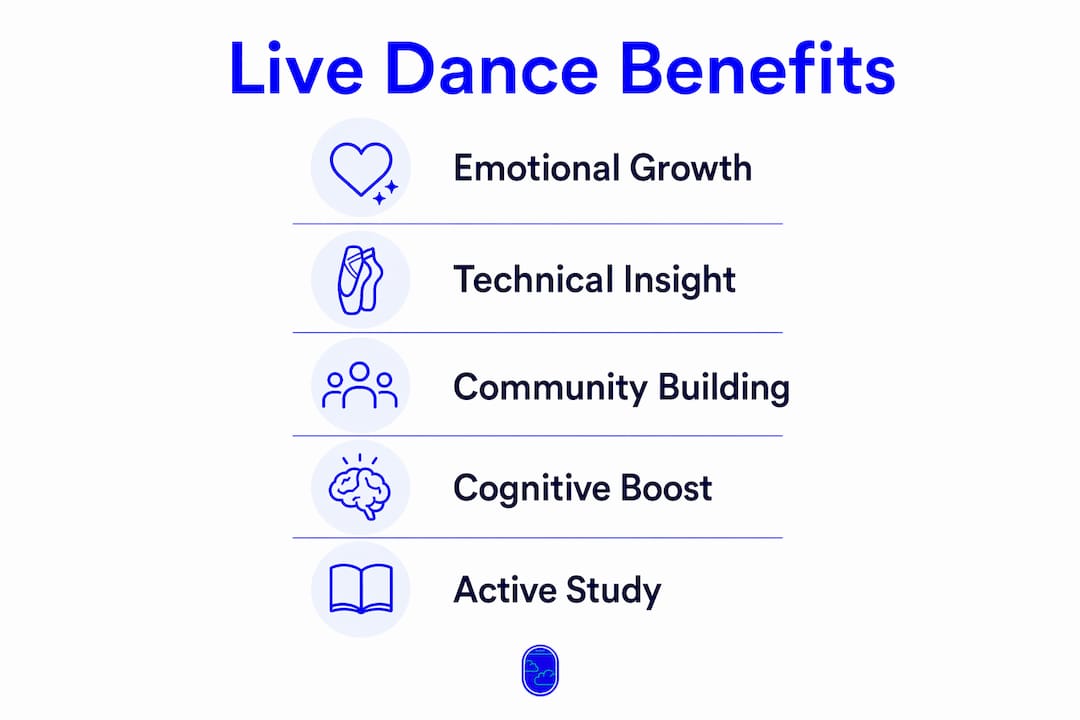
Attending live dance performances helps dancers grow in ways that no recording or livestream can replicate. Live performance activates mirror neurons more powerfully than video, synchronizes brainwaves between performers and audiences, and creates a shared emotional state that sharpens timing, empathy, and creative instinct. The benefits of live dance shows extend beyond inspiration. They produce measurable changes in how dancers learn, connect, and sustain their passion over time. Whether you are a beginner or a seasoned performer, showing up in person is one of the most effective things you can do for your craft.
Why attending live dance performances helps dancers grow emotionally
Live performance produces stronger emotional engagement than any recorded version of the same show. A randomized controlled pilot study with 130 participants found that live concert attendees showed significantly higher mean heart rates and emotional appreciation scores compared to virtual viewers. That gap in physiological response matters because emotional arousal is directly tied to how deeply we encode new information and movement patterns.
The neurological mechanism behind this is mirror neuron activation. Live theater activates mirror neurons more effectively than recordings, producing lasting cognitive and emotional benefits across a study of more than 1,600 participants. For dancers, this means watching a live performance is not passive. Your brain is rehearsing what it sees in real time.
"Witnessing performers' vulnerability and real-time response teaches dancers to embrace imperfection and personal growth. There is a human presence in live performance that no screen can carry."
— Maria Caruso, performing arts educator
Researcher Nicole Koefler identifies "collective effervescence" as a key driver of this effect. A survey of 183 participants found that shared emotional connection at live events strongly predicted positive experience and sustained happiness for up to a week after the event. For dancers, that week of elevated mood and motivation is a genuine training asset. It keeps you returning to the studio with energy and purpose.
How live choreography observation deepens your technical skills
Watching live choreography teaches skills that video simply cannot deliver. When you sit in the same room as performers, you pick up spatial relationships, weight shifts, and breath patterns that cameras compress or miss entirely. Active observation during live performances helps dancers understand timing, spatial negotiation, and improvisational cues at a level recordings cannot match.
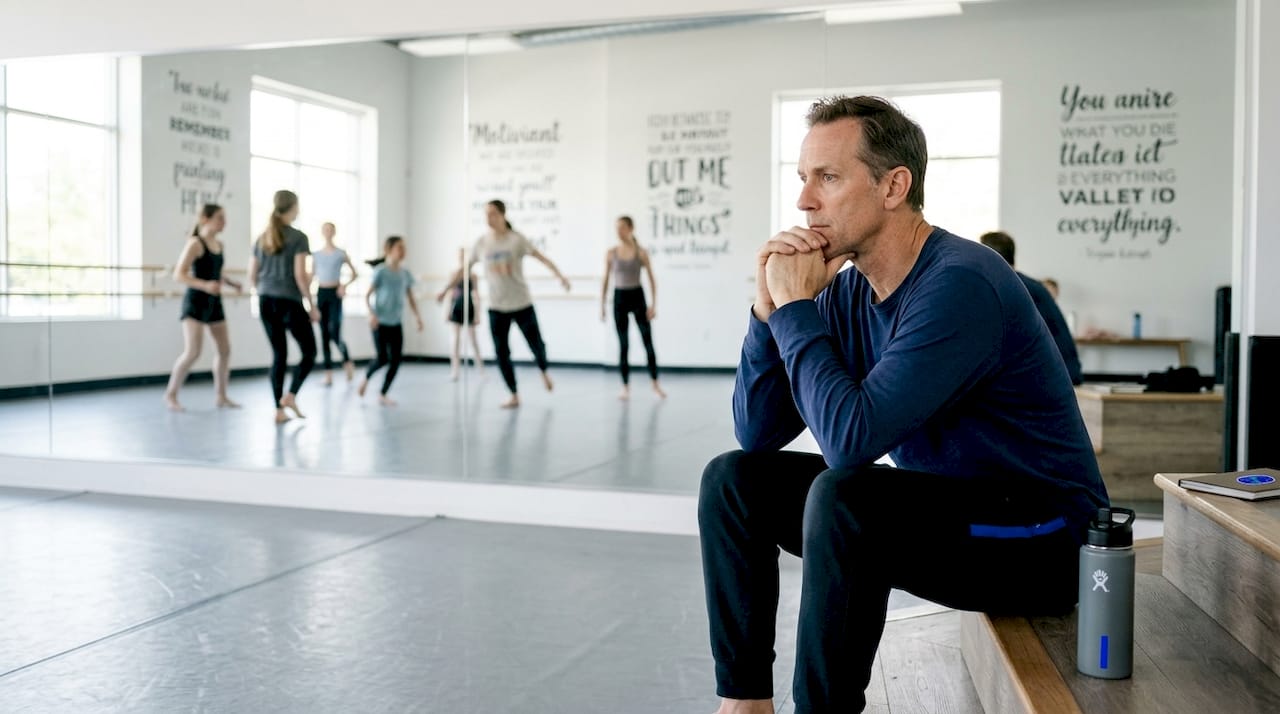
Dancer and educator Adji Cissoko describes this as "embodied listening." You are not just watching steps. You are absorbing how performers negotiate space with each other, respond to live music, and adapt in real time. That kind of nuanced communication is the difference between a dancer who executes choreography and one who truly performs.
Professional dancers use live shows as continuing education. Lines Ballet artists study the interplay between musicians and choreographers to improve timing, rhythm, and adaptability. Watching a dancer respond to a live musician's unexpected tempo shift teaches you something no rehearsal recording can.
Here are four specific skills you sharpen by observing live performances:
- Rhythmic flexibility. Brainwave synchronization with live performers is strongest with fast-rhythm music, directly improving your ability to adapt timing on the fly.
- Spatial awareness. You learn how performers share and claim space without verbal cues, a skill critical for ensemble work.
- Improvisational instinct. Live shows reveal spontaneous decisions that expand your creative vocabulary beyond rehearsed movement.
- Nonverbal communication. Watching performers cue each other builds your ability to read and send subtle physical signals during your own performances.
Pro Tip: Sit close enough to see the performers' faces and feet simultaneously. The face tells you the intention; the feet tell you the technique. That combination is your most valuable live classroom.
How live dance events build community and social learning
Live dance events create belonging in a way that solo practice and online content cannot. Shared audience-performer energy physically enables higher levels of performer intensity and commitment, and that energy flows both directions. When you show up as an engaged audience member, you are actively contributing to the quality of the performance you came to learn from.
The social benefits of attending live events are well documented. Live performance improves cognitive function and reduces stress compared to passive entertainment forms. For dancers who often train in isolation or within a single studio culture, the relief of being part of a larger community is both emotional and practical.
University dance education programs report that students who attend live performances with Q&A sessions show enhanced connection and learning compared to those who only study in class. The informal conversation after a show, with performers, choreographers, or fellow audience members, is where some of the most direct skill transfer happens.
Here is what consistent live attendance builds for you as a dancer:
- Exposure to diverse styles. Seeing contemporary, hip-hop, ballet, and folk forms in one season expands your movement vocabulary faster than any single class.
- Reduced performance anxiety. Watching others perform regularly normalizes the vulnerability of being on stage and builds your confidence to take risks.
- Peer connections. The people sitting next to you at a local showcase are often the collaborators, teachers, and creative partners you have been looking for.
- Cultural perspective. Dance as cultural expression becomes tangible when you witness it live, deepening your respect for traditions outside your own training.
What practical steps maximize the benefits of attending live shows
Treating live attendance as active study, not entertainment, is the single biggest shift you can make. Experts advise dancers to focus on diverse teaching styles, unconventional choreography, and musical collaboration when attending any live event. That focus turns a two-hour show into a concentrated learning session.
Before you go, research the company or artists performing. Knowing their training background and influences gives you a framework for what you are about to observe. You will notice choices you would otherwise miss.
During the performance, resist the urge to watch passively. Pick one element to study per show: footwork, transitions, use of breath, or performer-to-performer communication. Narrowing your focus sharpens your observation skills faster than trying to absorb everything at once.
After the show, write down three specific things you noticed. Not general impressions, but concrete observations. "The lead dancer delayed her weight transfer by half a beat to create tension" is useful. "It was beautiful" is not. Those notes become a personal library of technique and artistry you can draw from in your own work.
- ✅ Research the performers before attending to sharpen your observation focus.
- ✅ Choose one technical element to study per show.
- ✅ Stay for Q&A sessions or post-show conversations whenever possible.
- ✅ Write specific observations within 30 minutes of leaving the venue.
- ✅ Attend local dance events regularly, not just major productions, to see a wider range of styles and approaches.
Pro Tip: Attend the same production twice if you can. The first viewing is emotional and absorptive. The second is analytical. You will catch entirely different details, and both layers feed your growth.
Key Takeaways
Live dance attendance is one of the most direct and underused tools for dancer development, combining neurological, emotional, and social benefits that no recording or solo practice can replicate.
| Point | Details |
|---|---|
| Mirror neuron activation | Live performance triggers stronger mirror neuron response than recordings, accelerating skill learning and empathy. |
| Brainwave synchronization | Live music and dance sync your brainwaves with performers, improving timing and rhythmic flexibility. |
| Collective effervescence | Shared live energy boosts happiness for up to a week, sustaining motivation and artistic commitment. |
| Active observation builds technique | Focusing on specific elements like spatial negotiation and improvisation deepens skills faster than passive viewing. |
| Community connection | Post-show Q&A sessions and peer interactions at live events create lasting networks and reduce performance anxiety. |
What I have learned from years of watching dancers perform live
I used to think attending performances was something you did to celebrate the art, not to improve at it. That belief cost me years of growth I could have had sooner.
The shift happened when I watched a contemporary piece where the lead dancer visibly lost her footing in the second act and recovered so smoothly that half the audience never noticed. What I saw in that moment was not a mistake. It was a masterclass in presence and adaptability. No rehearsal video would have shown me that, because no rehearsal video captures the stakes of a live moment.
The feedback loop between audience and performer is real and it runs both ways. When you are genuinely engaged in the room, the performers feel it. They take more risks. They go deeper. And you, as a dancer watching from the seats, absorb that courage. You carry it back to your own rehearsals.
My honest advice to any dancer hesitant to spend time and money on attending shows: reframe it. You are not buying entertainment. You are investing in continuing education that no class can fully replace. The group learning dynamics of a live audience, the shared breath, the collective response, those are part of the curriculum.
Go often. Go to shows outside your style. Go to the small community showcase as readily as the big touring production. The most useful thing I ever watched was a 12-person local company perform in a 60-seat black box. I still use what I saw that night.
— DJ
Where Experiencebylocals helps you find live dance near you
Knowing the value of live attendance is one thing. Finding the right shows consistently is another.
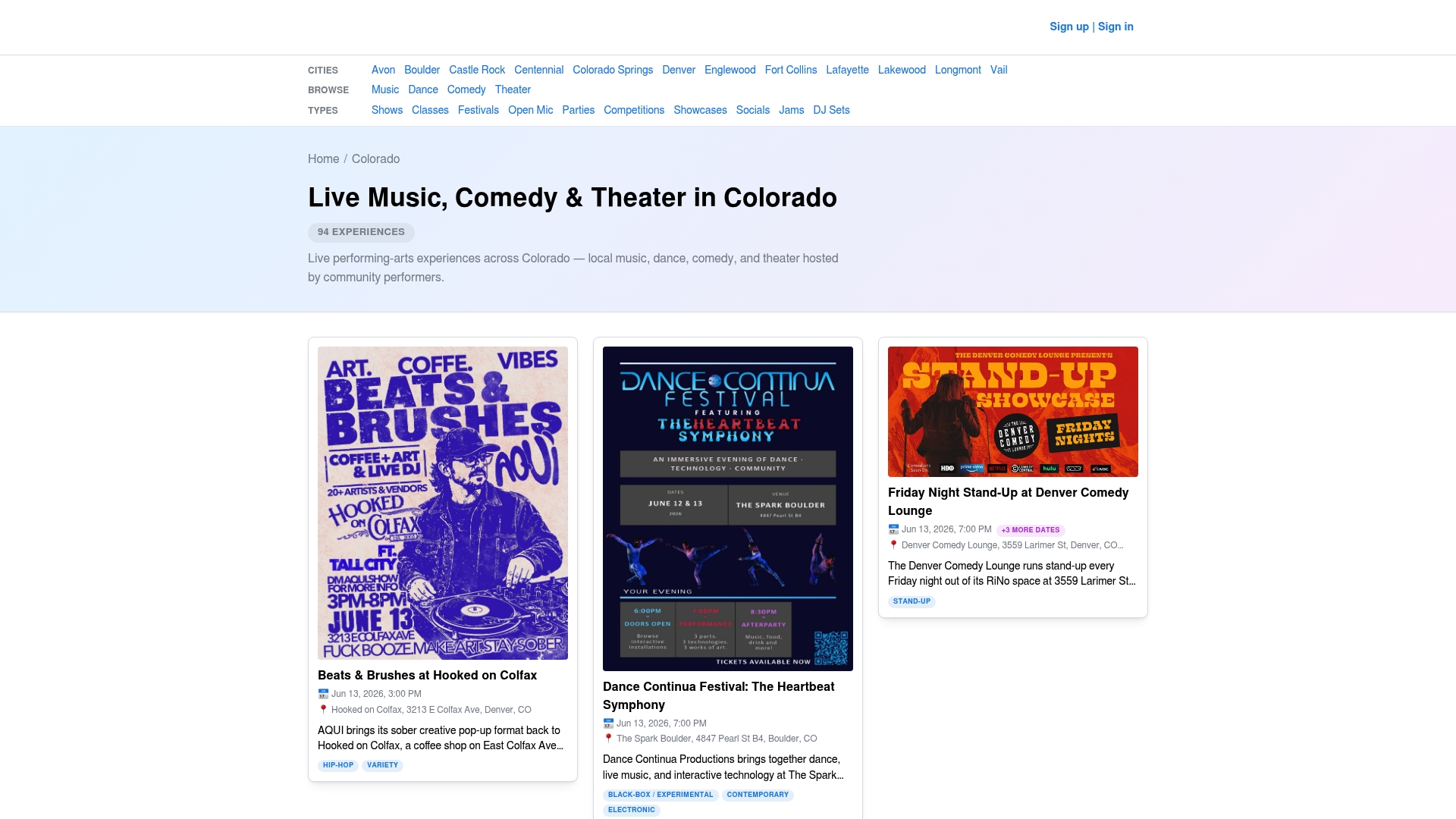
Experiencebylocals curates live dance performances in Colorado from local artists who bring authentic, community-rooted work to the stage. The platform lists events across styles and venues, updated regularly so you always have something new to study and experience. From intimate showcases to full productions, you can find performances that match where you are in your growth as a dancer. Experiencebylocals also connects you with live music and theater events that expand your artistic perspective beyond dance alone. Real local art, real community, right where you are.
FAQ
Why do live performances help dancers more than videos?
Live performances activate mirror neurons more powerfully than recordings and synchronize brainwaves between performers and audiences, producing stronger emotional and physiological engagement. That combination accelerates skill learning and empathy in ways video cannot replicate.
How does attending live dance events improve timing and rhythm?
Research shows that brainwave synchronization with live performers is strongest during fast-rhythm music, directly improving a dancer's ability to adapt timing and stay rhythmically flexible. This effect does not occur at the same level when watching recorded performances.
What is collective effervescence and why does it matter for dancers?
Collective effervescence is the shared emotional high that occurs in live group settings. A survey of 183 participants found it strongly predicts positive experience and sustained happiness for up to a week, giving dancers an extended window of elevated motivation and creative energy.
How often should dancers attend live performances?
Consistent, periodic attendance produces the best results. Attending shows across different styles and scales, from local community showcases to larger productions, builds a broader movement vocabulary and sustains the motivational benefits of live experience throughout the year.
What should dancers focus on when watching a live performance?
Experts advise focusing on one specific technical element per show, such as spatial negotiation, improvisation, or performer-to-musician interaction. Writing down concrete observations within 30 minutes of leaving the venue turns each performance into a lasting personal learning resource.