
Freestyle vs. Structured Dance: What Every Dancer Should Know
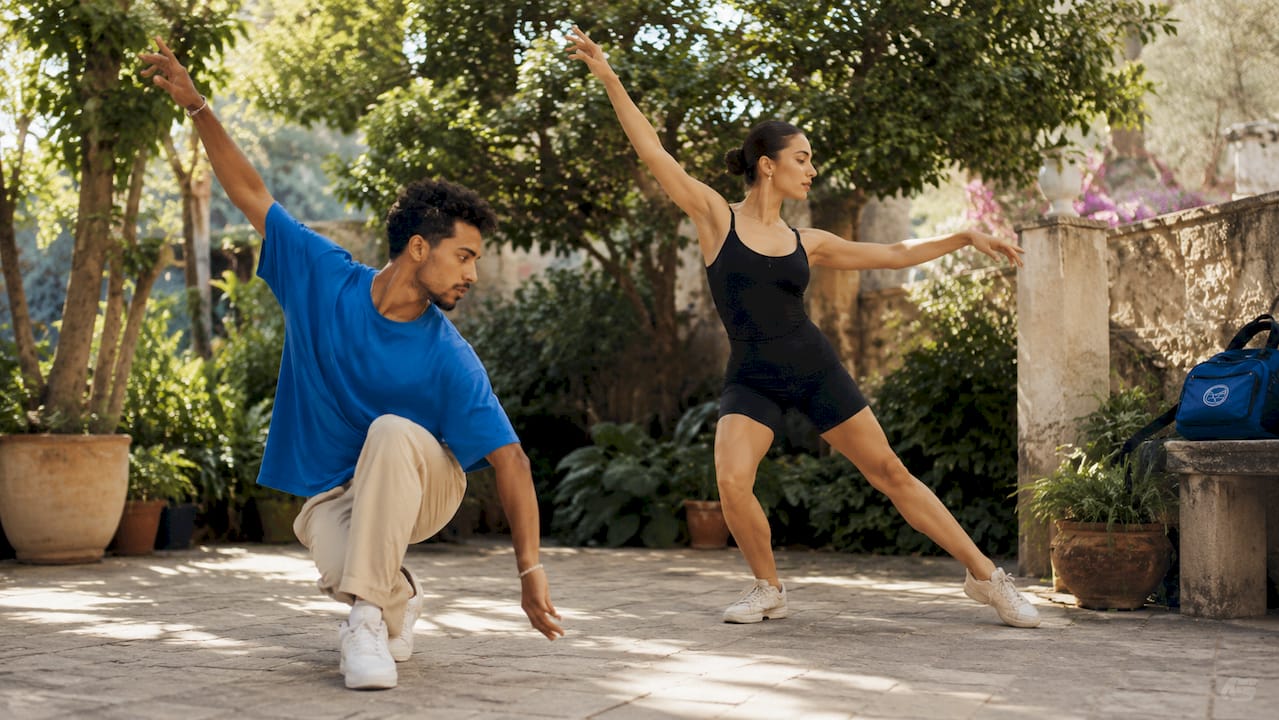
Freestyle dance is defined as spontaneous, improvised movement created in the moment without preset choreography, while structured dance follows detailed, rehearsed sequences guided by a choreographer or technical syllabus. Understanding what is freestyle versus structured dance shapes how you train, perform, and grow as a dancer. Both styles appear across hip-hop, ballroom, theater, and social dance settings. Knowing the difference helps you choose the right training path and build a more complete skill set. Experiencebylocals connects Colorado dancers with live workshops and performances that feature both approaches, from K-pop choreography nights to open freestyle sessions hosted by local artists.
What is freestyle versus structured dance?
Freestyle and structured dance represent two fundamentally different relationships between a dancer and movement. Structured dance involves pre-planned choreography with strict adherence to fixed sequences, while freestyle emphasizes spontaneous, improvised movement without prior planning. That distinction shapes everything from how you practice to how you perform under pressure.
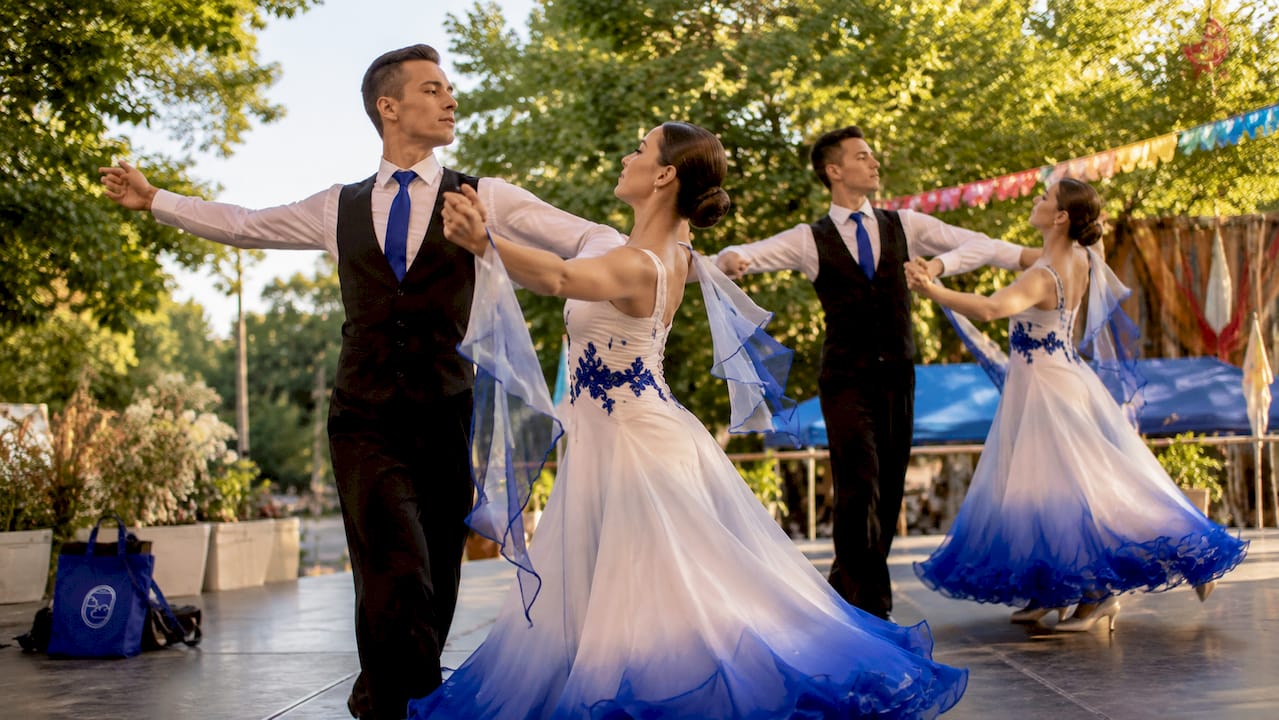
Structured dance, sometimes called choreographed dance, is the foundation of competitive and stage performance. International Ballroom, for example, requires full compliance with a technical syllabus covering footwork, hold, and timing. American Ballroom allows open holds and dramatic lines, which can look like freedom but still operates within a defined framework. American Smooth allows open positions and expressive lines, while International Standard requires a fixed closed hold throughout.
Freestyle dance, by contrast, is the dancer's personal conversation with music. It draws on whatever movement vocabulary the dancer has built and applies it in real time. Hip-hop, breaking, and house dance all have strong freestyle traditions where the dancer responds to the music rather than a rehearsed count. The style rewards musical sensitivity, physical confidence, and a willingness to take risks in the moment.
Both styles matter in professional dance. Structured dance is essential for synchronized stage and competition performances, while freestyle is critical for auditions and social dancing. Knowing both makes you a more adaptable and hireable performer.
What characterizes structured dance and its technical framework?
Structured dance builds technical discipline through repetition and precision. A choreographed class typically runs 60–90 minutes and covers a fixed sequence of movements that students refine over multiple sessions. Structured training leads to measurable improvement in rhythm and spatial awareness within six months of consistent practice. That improvement comes from the repetition required to lock movement into muscle memory.
The technical benefits of structured training include:
- Rhythm accuracy: Counting to music trains your internal metronome.
- Spatial awareness: Fixed choreography teaches you to move precisely within a shared space.
- Technical vocabulary: You learn named steps, transitions, and formations.
- Muscle memory: Repeated sequences become automatic, freeing mental focus for performance quality.
- Timing with partners or groups: Synchronized choreography demands listening and matching.
A typical International Ballroom syllabus involves learning and refining five dances per category, each with specific footwork patterns and hold requirements. That level of structure demands consistent attendance and focused repetition. Choreographed workshops cost roughly $25–$50 per session, reflecting the instructor time and curriculum design involved.
Structured dance also builds the group learning dynamics that make ensemble performance possible. When every dancer knows the same sequence, the group can achieve visual synchronization that no amount of improvisation can replicate.
Pro Tip: Record yourself during structured practice every two weeks. Watching your own footage reveals timing gaps and spatial drift that you cannot feel in the moment.
How does freestyle dance function and build creativity?
Freestyle dance is spontaneous movement that responds directly to music without a predetermined plan. The dancer draws on their existing movement vocabulary and makes real-time decisions about direction, rhythm, and expression. Freestyle practice increases confidence and reduces performance anxiety significantly, making it a powerful tool for performers who need to stay present under pressure.
The core elements of freestyle dance include:
- Improvisation: Movement is created in the moment, not recalled from memory.
- Musical interpretation: The dancer responds to bass lines, snares, and melodic shifts rather than counts.
- Individuality: Personal style and physical instincts shape every choice.
- Adaptability: The dancer adjusts to tempo changes, crowd energy, and spatial constraints in real time.
Freestyle requires dancers to develop musical mapping by responding to intricate musical layers, unlike choreography which aligns strictly with counts. Musical mapping means you hear the snare hit and let your body react before your brain processes the decision. That skill separates a dancer who moves to music from one who moves with it.
Freestyle sessions typically run 30–45 minutes and require little more than open floor space and a good playlist. The low barrier to entry makes freestyle accessible, but the skill ceiling is high. Freestyle is not easier than structured dance. Without a strong technical foundation, freestyle becomes repetitive and limited to the same handful of moves.
Dance as a form of cultural expression runs deep in freestyle traditions. Breaking, for example, carries the cultural history of the South Bronx. House dance reflects the community spaces of Chicago's underground club scene. Freestyle in these contexts is never just personal. It is also communal and historical.
Pro Tip: Practice musical mapping by choosing one layer of a song, such as the bass line only, and improvise movement that responds exclusively to that layer. Then add the snare. Then the melody. This builds layered musical awareness faster than dancing to a full mix.
What are the main differences between freestyle and structured dance?
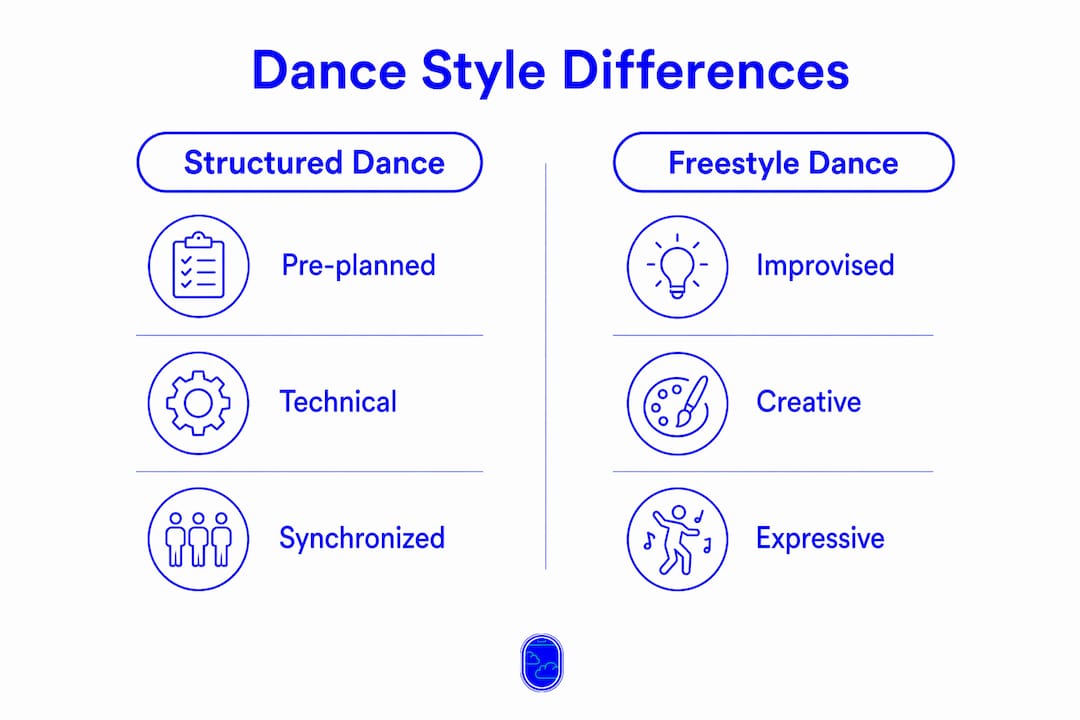
The clearest way to understand the differences in dance styles is to compare them across four categories: control, creativity, training focus, and performance context.
| Category | Structured dance | Freestyle dance |
|---|---|---|
| Movement origin | Pre-planned choreography | Spontaneous improvisation |
| Training focus | Muscle memory, technical precision | Musical mapping, flow state |
| Performance context | Stage shows, competitions | Auditions, social dance, cyphers |
| Session length | 60–90 minutes | 30–45 minutes |
| Skill demand | Technical vocabulary, spatial accuracy | Musicality, adaptability, confidence |
The most common misconception is that freestyle is easier because it has no rules. The opposite is true. Structured dance is the 'language' and freestyle is the 'conversation' that follows. You cannot hold a conversation in a language you do not know. A dancer with no technical training will default to the same three moves in every freestyle session.
The other major misconception involves expressive freedom within structured styles. American Ballroom allows open holds and dramatic lines, which observers sometimes read as a lack of discipline. Expressive freedom within structure actually enhances a dancer's capabilities rather than reducing technical rigor. The freedom is earned, not given.
Both styles share one non-negotiable requirement: body awareness. Whether you are hitting a precise formation in a group number or reading the room in a freestyle cipher, you need to know where your body is in space at all times.
How can dancers integrate freestyle and structured training?
Balanced training produces the most complete dancers. A regimen of approximately 60% structured and 40% freestyle practice supports both technical growth and personal artistic development. High-level performers draw on structured technique to fuel freestyle creativity, not the other way around.
A practical integration approach follows this progression:
- Build your technical base first. Spend your first three to six months in structured classes. Learn the vocabulary of your chosen style before you try to improvise with it.
- Introduce structured improvisation. Imposing constraints, such as upper body only or bass line focus, helps bridge the gap between choreography and freestyle. This approach sparks creativity while reducing the fear of freezing.
- Practice freestyle in low-stakes environments. Beginners should practice freestyle in low-stakes settings to build confidence before performing in front of others. A bedroom session with a playlist beats a public cipher when you are still finding your voice.
- Alternate your weekly sessions. Dedicate three days to structured class and two days to freestyle practice. Use the structured sessions to refine technique and the freestyle sessions to apply it freely.
- Audit your freestyle for repetition. If you notice yourself returning to the same moves every session, go back to structured training to expand your vocabulary. Repetition in freestyle signals a gap in technical knowledge.
Understanding how dance workshops are structured helps you choose the right format for each phase of your development. Some workshops blend both modes within a single session, which is an excellent environment for intermediate dancers.
The psychological barrier to freestyle is real. Many dancers who excel in choreography freeze when asked to improvise. The fix is not more freestyle. It is more structured training that expands the vocabulary available for improvisation.
Key Takeaways
Structured dance builds the technical foundation that makes freestyle meaningful, and the most complete dancers train in both modes with deliberate balance.
| Point | Details |
|---|---|
| Core distinction | Structured dance follows fixed choreography; freestyle uses spontaneous improvisation. |
| Technical foundation matters | Freestyle without structured training becomes repetitive and limited in range. |
| Training balance | A 60% structured, 40% freestyle split supports both discipline and creative growth. |
| Musical mapping | Freestyle demands response to complex musical layers, not just tempo counts. |
| Integration method | Structured improvisation with constraints bridges choreography and free movement effectively. |
Why I think most dancers undervalue one of these styles
Most dancers I have watched over the years fall hard into one camp. The competition kids drill choreography for hours and panic the moment someone asks them to freestyle. The street dancers pride themselves on improvisation but struggle to hold a formation or match a partner's timing. Both groups are leaving growth on the table.
The truth is that structured dance and freestyle are not opposites. They are phases of the same skill. Structure gives you the words. Freestyle lets you speak. If you only drill choreography, you become a very precise robot. If you only freestyle without building technique, you become a very enthusiastic one-trick dancer.
The dancers I find most compelling to watch are the ones who carry their technique so deeply in their bodies that it disappears. You see the freedom, not the work behind it. That is what happens when you commit to both sides of the practice. The structure becomes invisible, and what remains is pure expression.
My honest advice: if you are a choreography-focused dancer, spend one month doing nothing but freestyle in private. If you are a freestyle-first dancer, take a structured class for six weeks and let it feel uncomfortable. The discomfort is the growth.
— DJ
Live dance experiences worth showing up for
Whether you are refining your choreography or building your freestyle confidence, nothing accelerates growth like watching and participating in live performance.

Experiencebylocals connects you with authentic live dance events in Colorado hosted by local artists who bring both structured choreography and freestyle culture to the stage. From K-pop choreography workshops at artist-run spaces to open freestyle nights rooted in community, these experiences go well beyond a standard class. You get to see technique and improvisation in action, side by side, in real time. Check out the full lineup of local dance and performance events and find something that fits where you are in your training right now.
FAQ
What is the main difference between freestyle and structured dance?
Structured dance follows pre-planned choreography with fixed sequences, while freestyle dance is spontaneous improvisation created in response to music. The key distinction is whether movement is rehearsed or invented in the moment.
Is freestyle dance harder than structured dance?
Freestyle is not easier than structured dance. Without a strong technical foundation, freestyle becomes repetitive and limited, because dancers can only improvise with the vocabulary they have already built through structured training.
What styles use freestyle dance most often?
Hip-hop, breaking, and house dance have the strongest freestyle traditions. These styles prioritize improvisation, musical response, and individual expression over fixed choreography.
How much structured versus freestyle training should a dancer do?
A training split of approximately 60% structured and 40% freestyle supports both technical discipline and creative development. High-level performers use structured technique as the fuel for their freestyle expression.
Can you learn freestyle without taking structured classes?
You can start freestyling without formal training, but your range will stay narrow. Structured classes expand your movement vocabulary, which is the raw material freestyle draws from. Most professional dancers build their structured foundation first.