
Inclusive Dance Experiences: Real Examples for All Abilities
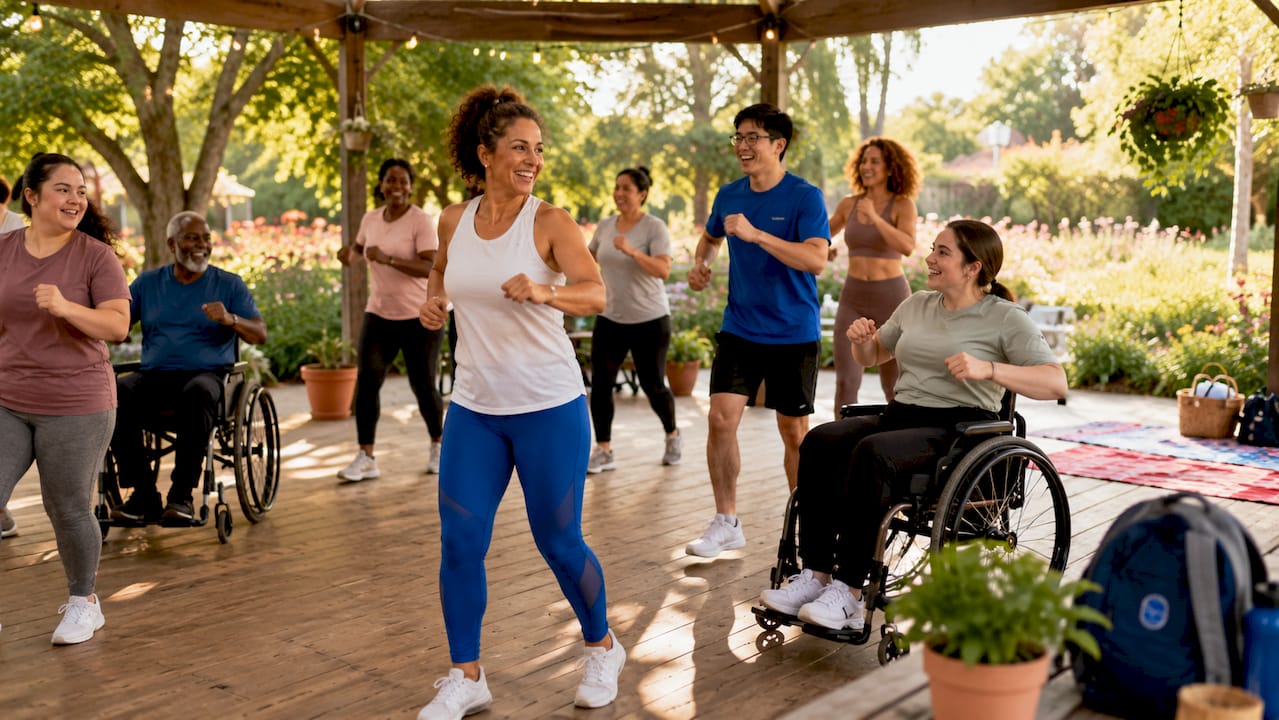
Inclusive dance, formally known as integrated or adaptive dance, is an artistic practice designed to welcome participants of all abilities into shared movement spaces. These examples of inclusive dance experiences range from intimate weekly classes of a dozen people to large-scale community performances involving over 150 participants. Organizations like DanceSyndrome and Parable Dance have built entire programs around co-production, where disabled individuals lead and create rather than simply attend. The result is a growing movement that treats every body as a valid artistic voice, not a problem to accommodate.
1. What are examples of inclusive dance experiences?
Inclusive dance experiences take many shapes, but they share one defining quality: no ability level is a barrier to entry. The industry term "integrated dance" captures this best, referring to programs where wheelchair users, neurodivergent participants, and non-disabled dancers share the same floor and the same choreographic goals. You will find these programs in community centers, professional theaters, outdoor festivals, and artist-run studios. Dance's role in cultural expression makes these spaces especially powerful because movement communicates what words sometimes cannot.
The clearest examples span a wide spectrum. A small weekly adaptive dance class at a local studio counts. So does a 162-person public performance staged at a major arts festival. What connects them is the shared commitment to joy over technical perfection, a philosophy championed by choreographers like Claire Hodgson who argue that accessibility, not mastery, should define the goal.
2. Common formats and structures for inclusive dance sessions
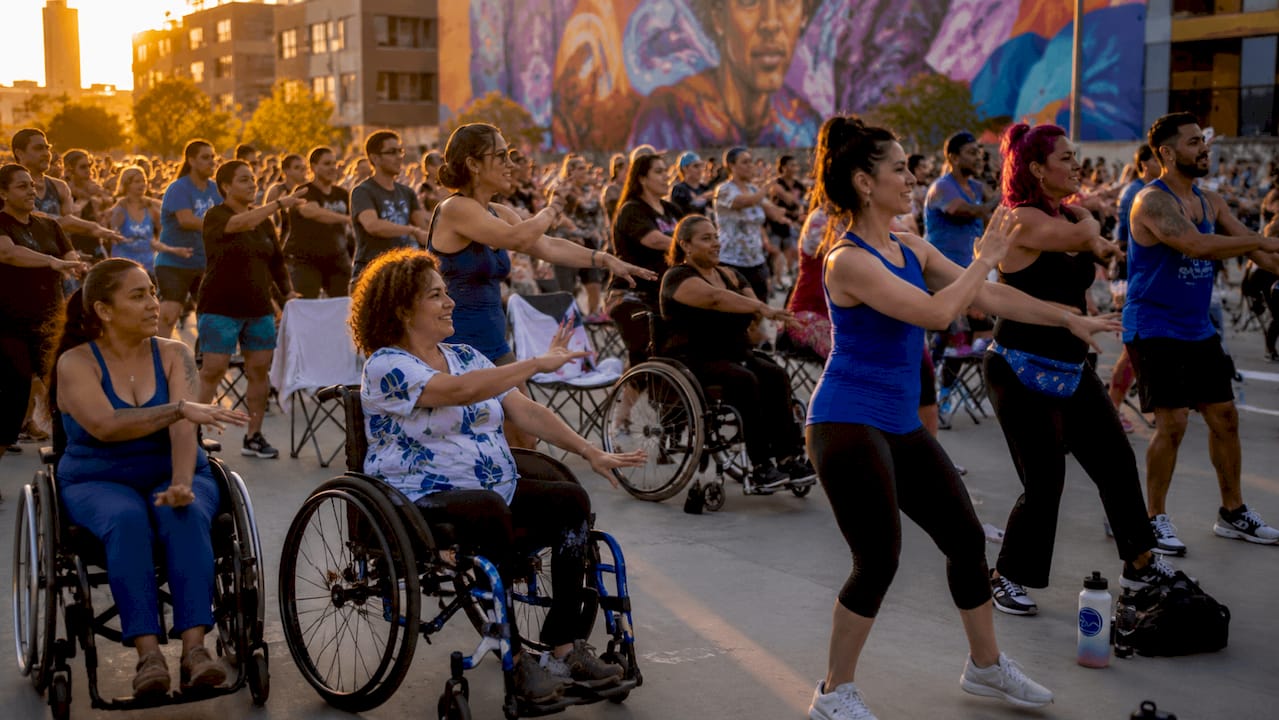
Inclusive dance classes typically run 45 to 75 minutes, blending active movement with intentional socializing. That structure is not accidental. It reflects the dual purpose of these programs: physical expression and community building.
A standard session often looks like this:
- Movement segment (30 minutes): Guided choreography adapted for all ability levels, with modifications offered in real time
- Socialization segment (15 minutes): Informal connection time that reinforces the community bonds built during movement
- Participant preparation: Comfortable clothing and supportive shoes are the standard ask; no prior dance experience is required
- Cost range: Sessions vary from free community-led events to donation-based models, making access genuinely broad
Class sizes range from small groups of 10 to 15 participants up to large community events with hundreds of attendees. Smaller classes allow for more personalized instruction and deeper connection. Larger events create a sense of collective energy that smaller settings cannot replicate.
Pro Tip: If you are new to inclusive dance, start with a smaller group class. The lower participant-to-instructor ratio gives you more space to ask questions and move at your own pace.
3. Notable real-world examples of inclusive dance events
Two events stand out as benchmarks for what inclusive dance can look like at different scales.
Wild Dance is a weekly small-group session with 13 regular participants. It prioritizes consistency and relationship-building, giving dancers a predictable, safe space to grow over time. CERCLES, staged at the Perth Festival, brought together 162 performers aged 10 to 83 in a single public performance. That age range alone tells you something important: inclusive dance is not a program for one demographic. It is a format that works across generations.
| Event | Scale | Age Range | Key Feature |
|---|---|---|---|
| Wild Dance | 13 participants | Mixed adults | Weekly consistency, community bonds |
| CERCLES (Perth Festival) | 162 performers | Ages 10 to 83 | Intergenerational public performance |
| Community adaptive classes | 10–20 participants | All ages | Accessible studio settings |
| Large festival dance events | 100+ participants | Broad range | Collective energy, public visibility |
The CERCLES model is particularly instructive. A performance involving 162 people across seven decades of age does not happen by accident. It requires deliberate casting, adaptive choreography, and a production team that treats age and ability diversity as a creative asset rather than a logistical challenge.
4. How co-production shapes inclusive dance experiences
Co-production is the practice of placing disabled individuals in leadership and creative roles, not just participant slots. Organizations like DanceSyndrome and Parable Dance have built their entire models around this principle, and the results go well beyond better performances.
When disabled dancers co-create work, several things shift:
- Self-belief grows: Participants move from "I am being included" to "I am leading this."
- Isolation breaks down: Creative leadership builds social networks that extend beyond the studio.
- Expertise develops: Co-producers gain real artistic skills, not just participation certificates.
- Non-disabled dancers learn: Inclusion becomes bidirectional, with non-disabled participants gaining genuine insight into accessibility and movement diversity.
"Co-production shifts the power dynamic entirely. Disabled dancers are not guests in someone else's art form. They are the authors of it. That shift changes what the work looks like, what it says, and who it speaks to." — DanceSyndrome, Perspectives in Public Health
The community dance night model reflects this co-production philosophy well. When disabled artists lead the creative process, the entire community benefits from richer, more honest artistic work.
5. Mindset shifts and teaching approaches that make inclusive dance work
The single biggest barrier to successful inclusive dance is not physical. It is the instructor's mindset. Inclusive dance pedagogy requires recognizing diverse movement as artistically valid, not as a deviation from a correct form. A wheelchair user's glide across the floor is not a modified version of a walking step. It is its own movement vocabulary.
Inclusive dance classes treat diverse bodies as artistic strengths rather than separating participants into "special" sessions. Mainstream integration, not segregation, is the standard. This means wheelchair users, dancers with cognitive differences, and non-disabled participants share the same choreographic goals and the same creative space.
Two practical teaching tools make this possible. First, pre-class communication with each participant to understand their strengths and support needs allows instructors to tailor the session before anyone walks through the door. Second, consistent session structure gives neurodivergent dancers the predictability they need to feel secure and fully present.
Pro Tip: Before your first inclusive class, send a short intake form asking participants about their movement preferences, support needs, and any sensory sensitivities. That five-minute investment shapes the entire session.
Incorporating caregivers or partners actively into choreography is another technique that transforms the experience. When a caregiver is woven into the movement rather than seated on the sidelines, the dynamic shifts from "support person watching" to "co-creator participating." That shift strengthens the artistic bond and deepens the experience for everyone in the room.
6. Key features to look for when choosing an inclusive dance experience
Not all inclusive dance programs are built the same way. Knowing what to look for helps you find the right fit, whether you are a participant, an educator, or an advocate building a program from scratch.
| Feature | Small community class | Large festival event | Co-production program |
|---|---|---|---|
| Class size | 10–20 participants | 100+ participants | Varies (often 15–40) |
| Physical accessibility | Studio-based, adapted | Venue-dependent | Purpose-built or adapted |
| Co-creation level | Low to moderate | Low | High |
| Age range | Often mixed adults | Broad intergenerational | Varies by program |
| Cost | Free to donation-based | Often free (public) | Program fees may apply |
| Best for | Beginners, regular practice | Community connection | Leadership development |
For participants new to adaptive dance programs, a small community class offers the lowest barrier and the most personal attention. For educators building inclusive dance activities into a curriculum, a co-production model provides the deepest learning outcomes. Large festival events work best as entry points, giving first-timers a low-pressure taste of what dance for all abilities actually feels like in practice.
Budget matters too. Free and donation-based sessions exist in most communities, meaning cost is rarely the true barrier. The real barrier is awareness. Most people simply do not know these programs exist near them.
Key Takeaways
Inclusive dance works best when co-production, accessible structure, and a mindset that values movement diversity are built into the program from the start.
| Point | Details |
|---|---|
| Scale varies widely | Programs range from 13-person weekly classes to 162-person festival performances. |
| Structure supports access | Sessions of 45–75 minutes with movement and socialization segments lower barriers for all participants. |
| Co-production changes outcomes | Disabled dancers in leadership roles build self-belief, reduce isolation, and produce richer artistic work. |
| Mindset is the first step | Treating diverse movement as artistic strength, not deviation, is the foundation of effective inclusive teaching. |
| Pre-class communication matters | Intake conversations before sessions allow instructors to tailor the experience to each participant's needs. |
Why inclusive dance changed how I think about movement
I used to believe that a "good" dance class meant everyone moving toward the same technical standard. That belief did not survive my first experience watching a co-produced inclusive performance. A wheelchair user led the opening sequence. The movement was precise, intentional, and genuinely beautiful. Nothing about it was a modification of something else. It was the thing itself.
What surprised me most was not the performance. It was the room afterward. People who had never met were talking, laughing, and making plans to come back. That is not a side effect of inclusive dance. It is the point. The physical movement is the vehicle. Connection is the destination.
The misconception I hear most often is that inclusive dance is "easier" or "less serious" than conventional dance. That framing gets it exactly backward. Designing choreography that works for a 10-year-old and an 83-year-old simultaneously, across a range of physical and cognitive abilities, is one of the most technically demanding creative challenges in the performing arts. The instructors and co-producers doing this work are not lowering the bar. They are raising it.
My honest hope is that more Colorado communities build these programs into their regular arts calendars, not as special events, but as standard offerings. The dance performances already happening in Colorado show that the appetite is there. The infrastructure just needs to catch up.
— DJ
Live inclusive and accessible dance events near you
Experiencebylocals connects you with authentic, community-rooted dance and performance events across Colorado, hosted by local artists who care about genuine participation.
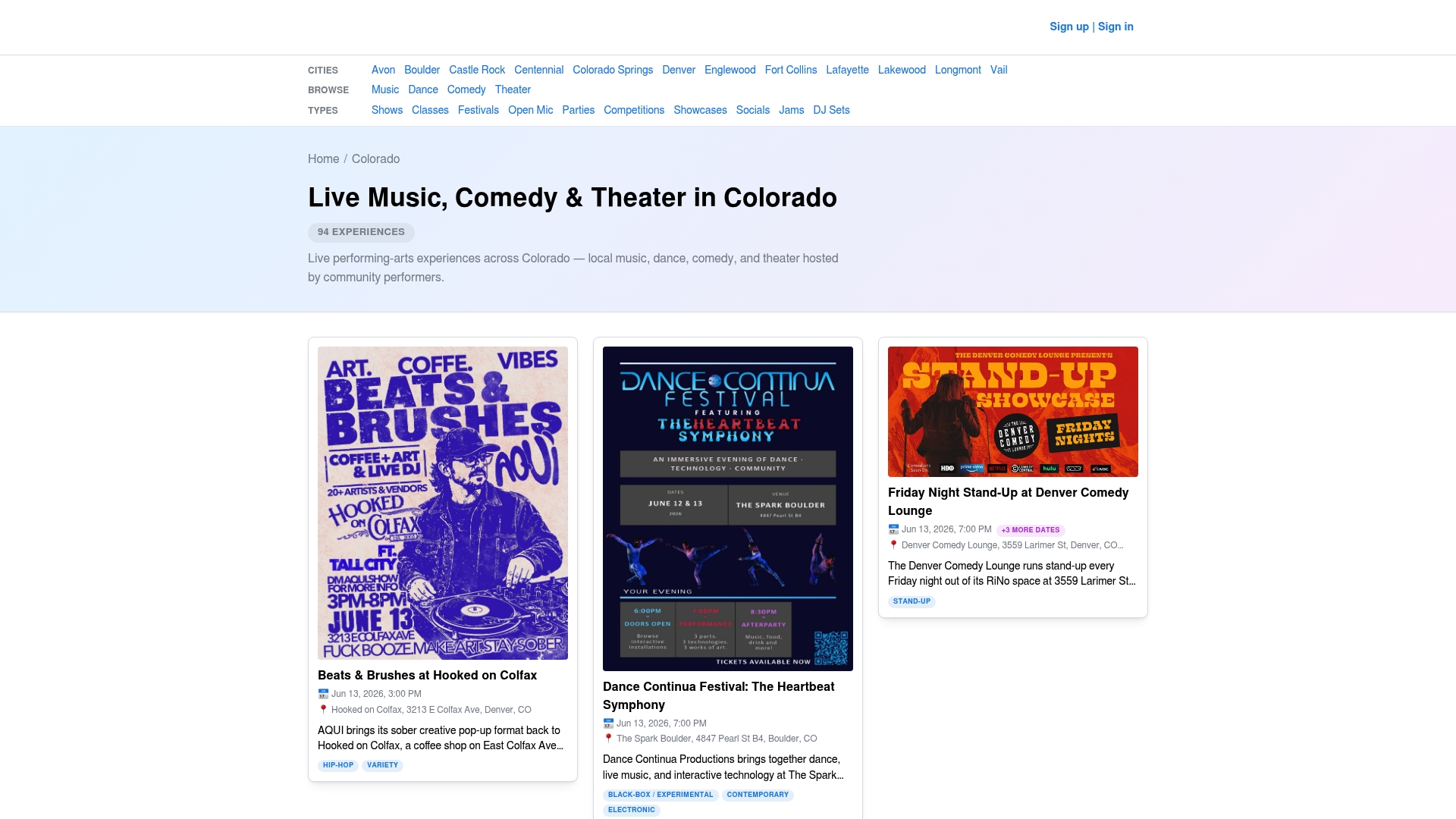
Whether you are looking for an all-levels contemporary class, a community showcase, or a live performance that welcomes every ability, the platform surfaces events that go deeper than standard entertainment. The Mariposa Collective All-Levels Contemporary at Mi Chantli is one example of the kind of grassroots, accessible experience Experiencebylocals highlights. You can also browse the full range of dance performances in Colorado to find events that fit your schedule, ability level, and community. Real art, real people, real connection.
FAQ
What is inclusive dance?
Inclusive dance, also called integrated or adaptive dance, is a practice that welcomes participants of all abilities into shared movement spaces without requiring prior experience or physical prerequisites.
How long do inclusive dance classes typically last?
Most inclusive dance sessions run 45 to 75 minutes, combining a movement segment with a socialization period to build both physical expression and community connection.
Can beginners join inclusive dance events?
Yes. Inclusive dance events are specifically designed to welcome all levels, and no prior dance experience is required. Many programs explicitly state that joy and participation matter more than technical skill.
What is co-production in inclusive dance?
Co-production means disabled participants take on leadership and creative roles in designing and performing the work, rather than simply attending as participants. Organizations like DanceSyndrome have built entire programs around this model.
How do I find inclusive dance activities near me?
Community centers, arts organizations, and platforms like Experiencebylocals list accessible dance classes and adaptive dance programs. Searching for "integrated dance" or "adaptive dance" alongside your city name returns the most accurate local results.