
One Application Packet That Lands Calls for Performers in Colorado

Colorado performers land gigs through five reliable channels: municipal arts pages, festival and nonprofit calls, juried public art portals, specialty collectives, and platforms like Experiencebylocals that connect artists directly with local hosts. The single best move you can make today is to build one application packet, resume, headshot, three demo links, and a short proposal, then save alerts on the portals below so you never miss a submission window.
TL;DR:
- Most Colorado performance calls open several months in advance, requiring regular monitoring of municipal arts pages, festival notices, and community platforms.
- Paid opportunities like Aurora's Art 2C offer stipends up to $2,500, while community slots and volunteer roles focus on exposure rather than direct pay.
- A strong application includes a one-page resume, headshot, demo links, and a customized artist statement; following file naming and submission rules is critical.
- Clear communication with organizers involves a concise cover note and prompt follow-up, while negotiations should verify technical support and fee details upfront.
- Building a reliable profile on local community platforms can lead to ongoing gigs and opportunities, especially as many private calls are shared informally among organizers.
Table of Contents
- How Do You Find Calls for Performers in Colorado?
- What Types of Performance Calls Should You Expect?
- How Do You Prepare a Competitive Application?
- How Should You Communicate With Organizers?
- What Do Real Colorado Deadlines and Pay Look Like?
- What Actually Gets You Rebooked in Colorado
- List Your Availability and Find Local Colorado Calls
- Sources
- FAQ
How Do You Find Calls for Performers in Colorado?
Municipal arts and cultural affairs offices post some of the steadiest work in the state. The Town of Erie's call for artists ran August 24 through September 18, 2026, and beyond the immediate exhibition, it built a pre-qualified artist list the town draws from for future public art commissions. That's a pattern worth knowing: one application can open doors for years. Pagosa Springs runs a similar model, using a request-for-qualifications process before inviting finalists to submit site-specific proposals. Aurora's Art 2C program on Havana Street works the same municipal muscle but at a larger scale, discussed in detail below.
Festival and nonprofit organizers post on a different rhythm, usually three to six months ahead of the event, and often reopen the same call annually. Fort Collins Pride and the African American Youth Leadership Conference both follow this cycle.
For juried and specialty opportunities, watch these channels:
- Public art RFQ portals like CallForEntry.org (CAFÉ), where regional sculpture and mural programs post multi-stage reviews.
- Aerial and movement collectives such as AerialWorks, which post open calls requiring video submissions and stated rehearsal availability.
Set a Google Alert for "call for artists Colorado" plus your city name, and check municipal pages monthly. Most windows close in three to four weeks, so monitoring beats searching from scratch every time.
What Types of Performance Calls Should You Expect?
Not every call pays the same way, and knowing the category before you apply saves you disappointment later.
- Paid gigs carry a set fee, usually disclosed upfront, often tied to a festival main stage or a venue with a box office.
- Stipends cover partial costs, materials, travel, or time, without functioning as a full professional fee. Aurora's Art 2C program is a strong example of stipend-supported engagements.
- Volunteer or community slots offer exposure and audience connection rather than payment. The AAYLC entertainment call is a clear case of this, alongside some community-stage slots at festivals.
- Juried exhibitions ask for a portfolio review first, then may require you to handle installation and transportation yourself, as public art RFQs typically do.
- Audition-based calls follow a formal process with appointment times and specific repertoire, the model Opera Colorado uses for its chorus.
Scale changes what's expected of you too. A 30-minute community-stage slot needs little more than your own gear, while a festival main-stage booking or a public art installation can mean technical riders, insurance questions, and multi-day rehearsal commitments.
How Do You Prepare a Competitive Application?
Organizers reject strong performers over sloppy submissions more often than over talent. Work through this checklist before you send anything.
- Build a one-page resume. List contact information, performance credits, and any technical needs (sound, lighting, stage size) right at the top.
- Prepare a headshot and demo links. Keep video demos to two or three minutes, hosted on a private or unlisted link rather than emailed as a large file.
- Write a 150 to 300 word artist statement. Say who you are, what you perform, and why this specific call fits your work. Generic statements read as generic to organizers who see dozens of them.
- Note technical and insurance requirements early. Some venues ask for a certificate of insurance (COI) or a technical rider listing your equipment needs. Have this ready rather than scrambling after acceptance.
- Name your files correctly. Use your name and the piece title, not "IMG_4821.jpg." Reviewers juggling forty submissions in CAFÉ or email inboxes drop improperly labeled files first, and Opera Colorado's audition process is explicit that failing to follow file and repertoire instructions can mean disqualification.
- Budget for application fees where they apply. The Heritage Fine Arts Guild charges $30 for members and $50 for non-members on its "This is Colorado" call. Keep a payment receipt or confirmation email as proof in case a submission platform glitches.
Pro Tip: Save your artist statement as a flexible template with blanks for the call name and specific detail. Swapping in a sentence about why this venue or theme fits you takes five minutes and reads far more genuine than a form letter.
How Should You Communicate With Organizers?
Your submission email or CAFÉ upload should include a short cover note (three to four sentences), your one-page resume, headshot, and demo links, all clearly labeled. Skip the temptation to over-explain your artistic journey here; organizers reviewing dozens of applications want facts fast.
If you haven't heard back by the stated notification date, one polite follow-up is appropriate, not several. A short note asking if a decision timeline has shifted works better than asking whether you got the gig.
Once you're selected, this is where it's fair to negotiate:
- Ask directly about the fee structure and whether travel or lodging is reimbursed.
- Confirm technical support (sound engineer, lighting operator) is provided or if you need to bring your own.
- Consider in-kind tradeoffs, free festival passes, promotional exposure, or vendor space, when cash payment is limited.
- Watch for red flags: a contract with no clear payment terms, or no named technical contact, is worth questioning before you commit.
Colorado's grassroots scene runs on goodwill, but goodwill works both directions. Organizers who won't put fees or logistics in writing are asking you to take on risk they should be sharing.
What Do Real Colorado Deadlines and Pay Look Like?
Numbers make expectations concrete. Here's how four actual 2026 Colorado calls broke down:
| Call | Deadline / Window | Compensation | Requirements |
|---|---|---|---|
| Town of Erie call for artists | Aug. 24–Sept. 18, 2026 | Varies by commission | Ready-to-hang 2D work, size limits, builds pre-qualified list |
| Aurora Art 2C on Havana Street | Jan. 30, 2026 | $2,500 stipend plus cash awards | Submitted via CAFÉ, regional eligibility, multi-year display |
| Opera Colorado chorus auditions | Appointment-based | Paid chorus compensation | Headshot, one-page resume, memorized repertoire |
| Fort Collins Pride performer application | Seasonal, ahead of event | Modest fees or in-kind exchange | Open to singers, bands, drag, comedy, spoken word |
Once you know a deadline, put it on your calendar with two reminders: one two weeks out to finish materials, one three days out to submit and double check file specs. Missing a window over a forgotten date is the most avoidable rejection there is.
What Actually Gets You Rebooked in Colorado
Talent gets you noticed once. Reliability gets you asked back, and in a scene this size, word travels fast between organizers who all know each other. That's not a cliché, it's how a state with a relatively tight grassroots network operates: show up prepared, hit your set times, and communicate clearly, and you'll hear about the next call before it's even public.
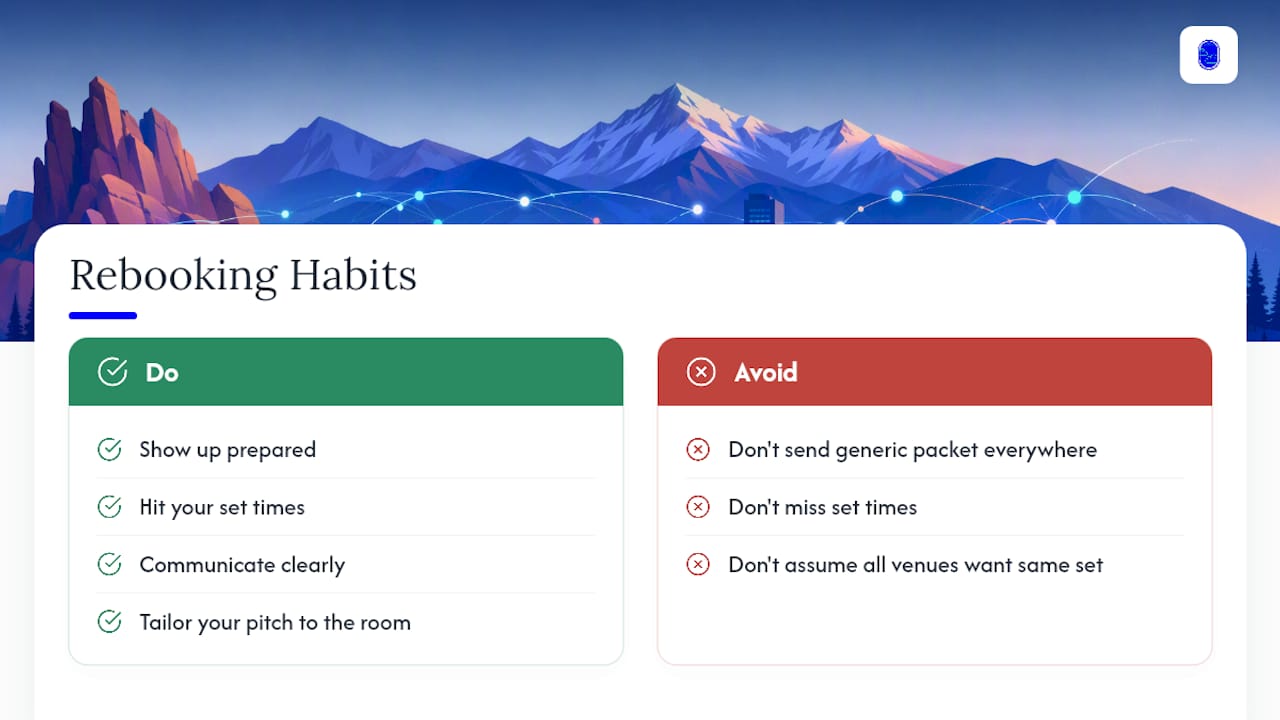
Community organizers I've watched succeed here consistently favor performers who show they understand the room, not just the résumé. A DJ set built for a listening bar reads differently than one for a block party, and the artists who tailor their pitch to that distinction get picked more often than the ones who send the same generic packet everywhere. Categories like open mic slots, dance showcases, and comedy nights on platforms built for grassroots discovery exist because that specificity is exactly what local audiences want.
After you apply, do three things: follow the organizer's other events on social media, introduce yourself to at least one other performer on the bill before the show, and ask the organizer directly what other calls are coming up. Half the best opportunities in Colorado never get widely posted. They get passed along.
— DJ
List Your Availability and Find Local Colorado Calls
A community platform offers an alternative to chasing scattered municipal pages and festival deadlines one by one: instead of hunting multiple portals, you build one profile and let local hosts, from open mic organizers to festival bookers, find you.
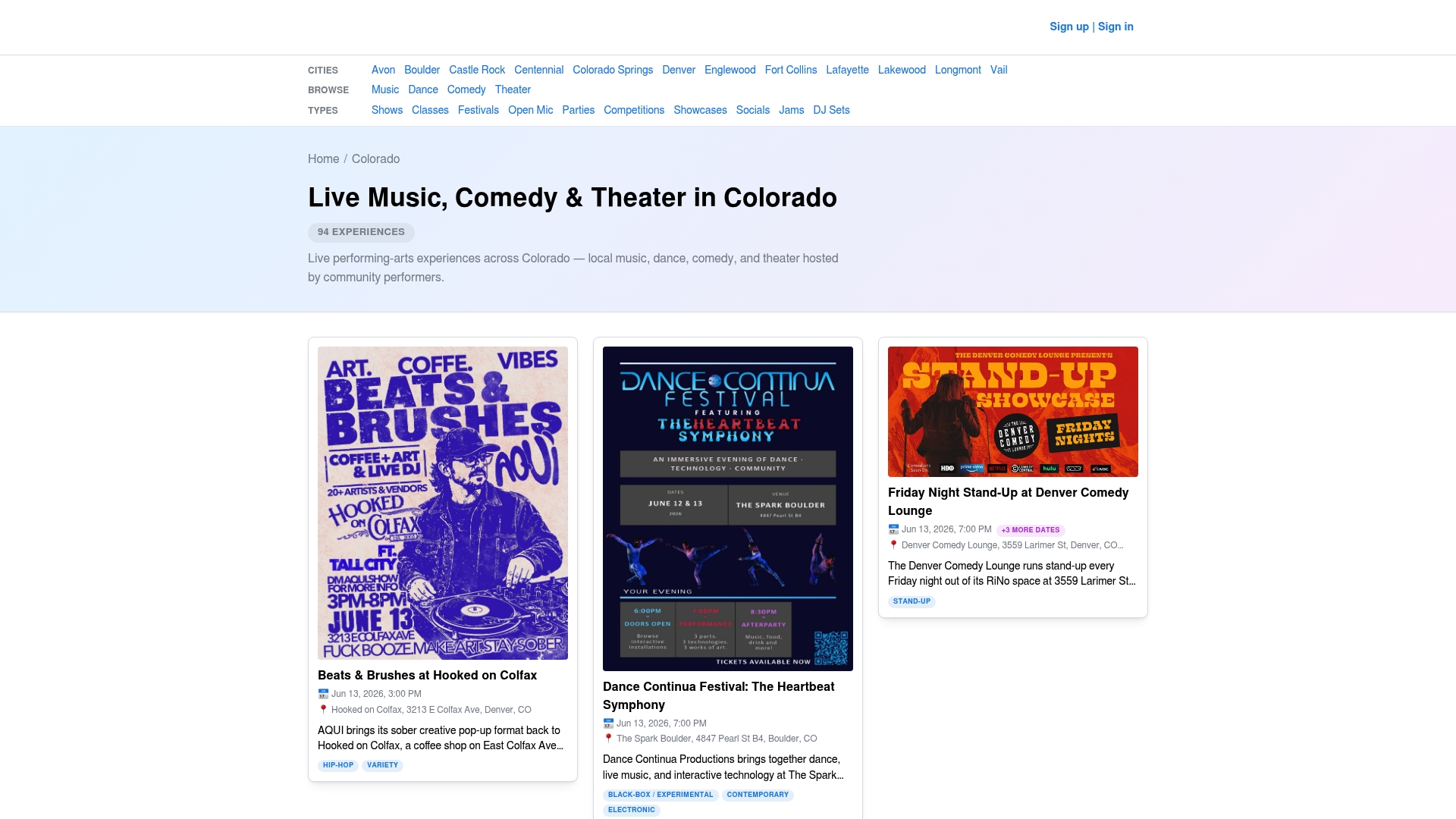
The platform lists music, dance, comedy, and theater opportunities across Colorado, connecting performers to the organizers hosting them without extra agency layers or application fees. Getting listed is straightforward: create a profile with your credits, demo links, and technical needs, then browse or claim listings that match your act. Whether you're a comedian eyeing a community comedy night, a dancer building a following through live dance shows, or a theater performer scouting productions like The Comedy of Errors by Shakespeare in the Wild, the same principle applies: showing up as reliable, community-minded talent gets you rebooked.
Start by browsing the Colorado listings and setting up your performer profile this week.
Sources
- Call for Artists | Town of Erie, CO
- Opera Colorado chorus audition announcement (2026)
- Fort Collins Pride — 2026 performer application
FAQ
Where Can I Find a Call for Performers in Colorado?
Check municipal arts pages like Erie and Pagosa Springs, festival and nonprofit calls like Fort Collins Pride, juried portals like CAFÉ, and community platforms like Experience By Locals. Most windows open several months ahead, so setting alerts helps you catch them early.
Do Colorado Performance Calls Pay?
It depends entirely on the call. Some, like Aurora's Art 2C exhibition, offer a $2,500 stipend plus cash awards, while community and volunteer slots at events like the AAYLC conference offer exposure without direct pay.
What Should I Include in a Performer Application?
A one-page resume, headshot, two or three demo links, and a short 150 to 300 word artist statement cover most requirements. Some calls, like Opera Colorado's chorus auditions, also require memorized repertoire and strict adherence to file naming rules.
How Do I Audition for Opera Colorado or Similar Companies?
Opera Colorado runs appointment-based chorus auditions and requires a headshot and one-page resume when you request a slot. Chorus members are compensated but must commit to the full rehearsal schedule.
Does Experience By Locals Cost Anything to List a Performance?
Current listing details and pricing are available directly on the Experience By Locals Colorado page. The platform is built to connect Colorado performers with hosts looking for music, dance, comedy, and theater talent.