
Guitar Clubs for Players: Where to Join and How to Start
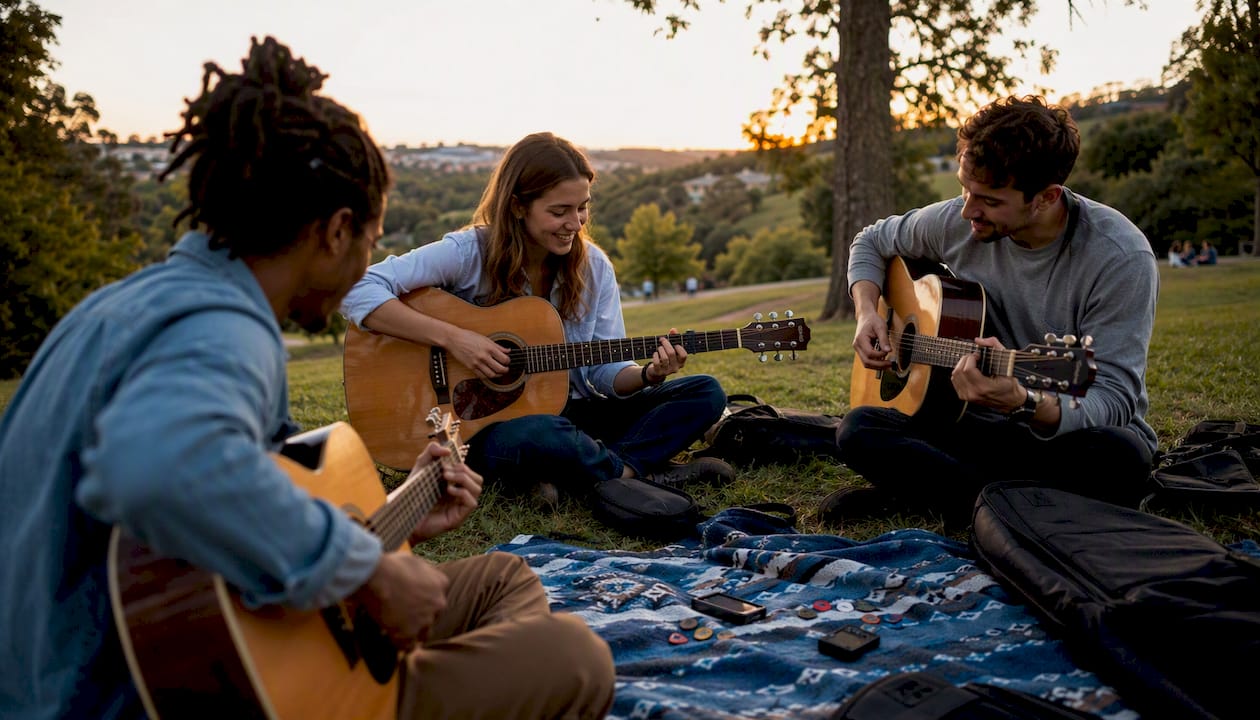
The fastest way to join a guitar club today is to search Meetup for local jams, check JustinGuitar Clubs for live online sessions, browse a nearby guitar society's website, or scroll Experiencebylocals for open mics and music events near you. You can be playing with other guitarists tonight.
Here are four actions you can take right now:
- Search "guitar" on Meetup.com and filter by your city to find recurring local jams.
- Visit JustinGuitar Clubs and RSVP to a live class or community session.
- Check your nearest guitar society (Sacramento, Portland, South Bay, and dozens more have free public meetings).
- Browse open mic nights in Colorado on Experiencebylocals to find a live event this week.
Before your first meeting, pack a tuner, a few picks, and a spare set of strings. Most venues are casual, but those three items save you from an awkward moment mid-jam. A small fee—often around $10—is common at Meetup-style events to cover the venue.
Table of Contents
- 1. Where you can find guitar clubs and groups across the U.S.
- 2. What types of guitar clubs actually exist
- 3. How to choose the right guitar club for your goals
- 4. How to join your first meeting, or start a club if none exist nearby
- 5. Online and virtual guitar clubs: how they work
- 6. Why joining a guitar club pays off long-term
- 7. What to bring and how to act at your first club meeting
- Key Takeaways
- What actually works when you host a guitar meetup
- Find local jams, open mics, and guitar events on Experiencebylocals
- Useful sources and next steps
1. Where you can find guitar clubs and groups across the U.S.
🔎 The most reliable discovery channels are Meetup, established guitar societies, genre forums, and curated local event platforms. Each one serves a different goal.
- Meetup.com aggregates hundreds of local guitar groups. Search the "guitar" topic page and you'll find everything from weekly acoustic jams to monthly electric showcases. The Tucson Guitar Players Meetup is a solid example of a recurring, welcoming group that runs regular in-person jams.
- JustinGuitar Clubs — connects students worldwide through live interactive classes and community forums, free or low-cost for registered learners.
- Guitar societies like the Sacramento Guitar Society (a 501(c)(3) nonprofit with $40 annual membership) and the Portland Guitar Society (free monthly public meetings, 7–9 PM, open mic plus featured performer) offer structured programming with concerts and workshops.
- Genre forums like Metal Guitarist Forums serve players who want technique discussions, gear classifieds, and peers who share a specific style.
- Local Meetup groups — such as The Guitar Aces in San Diego and the South Bay Guitar Society round out the in-person options for California players.
| Organization | Format | Cost | Meeting Frequency |
|---|---|---|---|
| Sacramento Guitar Society | Concerts, workshops, outreach | $40/year membership | Monthly |
| Portland Guitar Society | Open mic + featured performer | Free, public | Monthly |
| Tucson Guitar Players Meetup | In-person jams | ~$10/event | Recurring |
| JustinGuitar Clubs | Live online classes | Free/low-cost | Weekly |
| Metal Guitarist Forums | Online forum + marketplace | Free | Ongoing |
2. What types of guitar clubs actually exist
Not every group runs the same way. Matching your goal to the right format saves a lot of wasted Tuesday nights.
- Casual jams and open mics are the most common format. Players show up, sign a list, and take turns. The Portland Guitar Society model, with its open mic plus featured performer structure, is a great example. No audition, no pressure.
- Teacher-led group classes follow a curriculum. The Guitar Club runs sessions in social venues with flexible four-week membership renewals, focusing on playing with a band and building gig-ready skills.
- Genre-specific groups like Metal Guitarist Forums live mostly online, with forum threads, gear marketplaces, and technique breakdowns for players who want depth in one style.
- Community-first clubs like OG Guitar Club prioritize inclusivity and improvement over performance polish. These are ideal if you're newer and want a low-stakes environment.
- Online and virtual clubs — (covered more below) let you join from anywhere, with structured lessons or drop-in community sessions.
3. How to choose the right guitar club for your goals
The right club fits your schedule, skill level, and what you actually want from the experience. Here's a quick checklist to evaluate any group before you commit:
- ✅ Cost — free, around $10 per event for Meetup jams, or $40 per year for Sacramento Guitar Society membership?
Before attending, ask the organizer: What's the typical skill range? Do I need to prepare a song? Is there a fee, and what does it cover?
Pro Tip: Try a group for two or three sessions before deciding it's not for you. A small per-meeting fee common at Meetup jams actually increases attendance reliability for everyone, including you. Skin in the game matters. Check out this guide on joining local arts groups for more on evaluating community fit.
4. How to join your first meeting, or start a club if none exist nearby
Joining step by step
- Find a listing on Meetup, a society website, or Experiencebylocals.
- RSVP and confirm the venue address and any fee.
- Ask the organizer about the expected skill level and format.
- Pack your gear (see the checklist section below).
- Arrive 10–15 minutes early to set up and introduce yourself.
- Follow the sign-up sheet for open-mic or jam slots.
- Help pack down at the end — it's the fastest way to become a regular.
Starting your own club
If no good local option exists, starting one is more straightforward than it sounds. Recruit 6–12 interested players through Meetup, social media, or a local music shop bulletin board. Choose a format (weekly jam, monthly society meeting, or teacher-led class) and secure a venue — a community room, a pub back room, or a rehearsal space all work. Set a simple first agenda: a 10-minute icebreaker, then a 30–45 minute jam. Create a recurring listing on Meetup or Experiencebylocals. Charge a small fee—about $10—to cover costs. For a deeper look at hosting, the music jams guide on Experiencebylocals walks through the logistics clearly.
A quick note on liability: if you collect fees or host in a public space, check whether your venue requires event insurance or a permit. This varies by city and venue type, so confirm with your local parks department or venue manager before your first paid event. This is general guidance, not legal advice.
5. Online and virtual guitar clubs: how they work
Remote options have gotten genuinely good. You don't need to live near a major city to find a real guitar community.
- Metal Guitarist Forums — hosts ongoing discussions, technique threads, and a gear marketplace — a strong pick if your style is heavy and you want peers who speak that language.
- Meetup online events — let organizers run virtual jams and listening sessions, though audio latency makes real-time playing together tricky. These work better as listening parties or Q&A sessions than live jams.
For virtual sessions, use a wired internet connection and a USB audio interface for cleaner sound. Mute yourself when others are playing, and use a metronome or backing track to stay in sync. Rediscovering your passion for music is often easier when you have a community holding you accountable, even a digital one.
6. Why joining a guitar club pays off long-term
🤝 The benefits go well beyond learning a few new chord shapes.
- Performance opportunities open up through open-mic slots, society recitals, and ensemble showcases. Many players find their first real gig through a club connection. Clubs can even lead to band collaborations and broader performance networks.
- Social connection and leadership — grow naturally over time. Long-running community ensembles report members forming lasting friendships and stepping into organizer or mentor roles after years of participation.
- Access to outreach and student programs is a real perk of joining a nonprofit society. The Sacramento Guitar Society runs concerts, workshops, and community outreach, all supported by its $40 annual membership model.
7. What to bring and how to act at your first club meeting
Pack this before you leave:
- 🎸 Your instrument, in tune
- 🎵 Spare strings (one full set)
- 🔧 A clip-on tuner and string winder
- 🎵 Picks in two or three gauges
- 📄 Sheet music or chord charts for one or two songs
- 🔌 Cable and small amp if you play electric
- 💧 Water bottle
- 💵 Cash for any door fee (often $10, per San Jose Guitar Players' Meetup organizer notes)
Etiquette basics: Listen fully when others play. Sign up for open-mic slots fairly and stick to the agreed time limit. Offer to help set up chairs or pack down gear. Applaud generously.
Pro Tip: Prepare one short, complete arrangement — even 60 seconds of a song you know cold. Showing up ready to play, not just to watch, signals that you're serious and gets you into the rotation faster.
Key Takeaways
Joining a guitar club is one of the fastest ways to accelerate your playing, find performance opportunities, and build a musical community that lasts.
| Point | Details |
|---|---|
| Start with Meetup or JustinGuitar Clubs | Both offer free or low-cost entry and let you find a group or class within hours. |
| Match the club format to your goal | Casual jams suit social players; teacher-led classes suit structured learners; societies suit performers. |
| Bring the basics every time | Tuner, spare strings, picks, and $5–$10 cash cover you at almost any in-person event. |
| Start your own if nothing fits | Recruit 6–12 players, pick a venue, and list your event on Meetup or Experiencebylocals. |
| Experiencebylocals for Colorado events | Browse curated open mics, live music, and local jams listed by community artists across Colorado. |
What actually works when you host a guitar meetup
Most guitar meetup advice focuses on the player experience and skips the host's perspective entirely. That's a gap worth closing.
The single most effective thing an organizer can do is set a clear, published start time and stick to it. Players who arrive on time feel respected; late arrivals learn the culture quickly. A physical sign-up sheet at the door, rather than a digital one, keeps the flow visible and gives people something to do while they tune up.
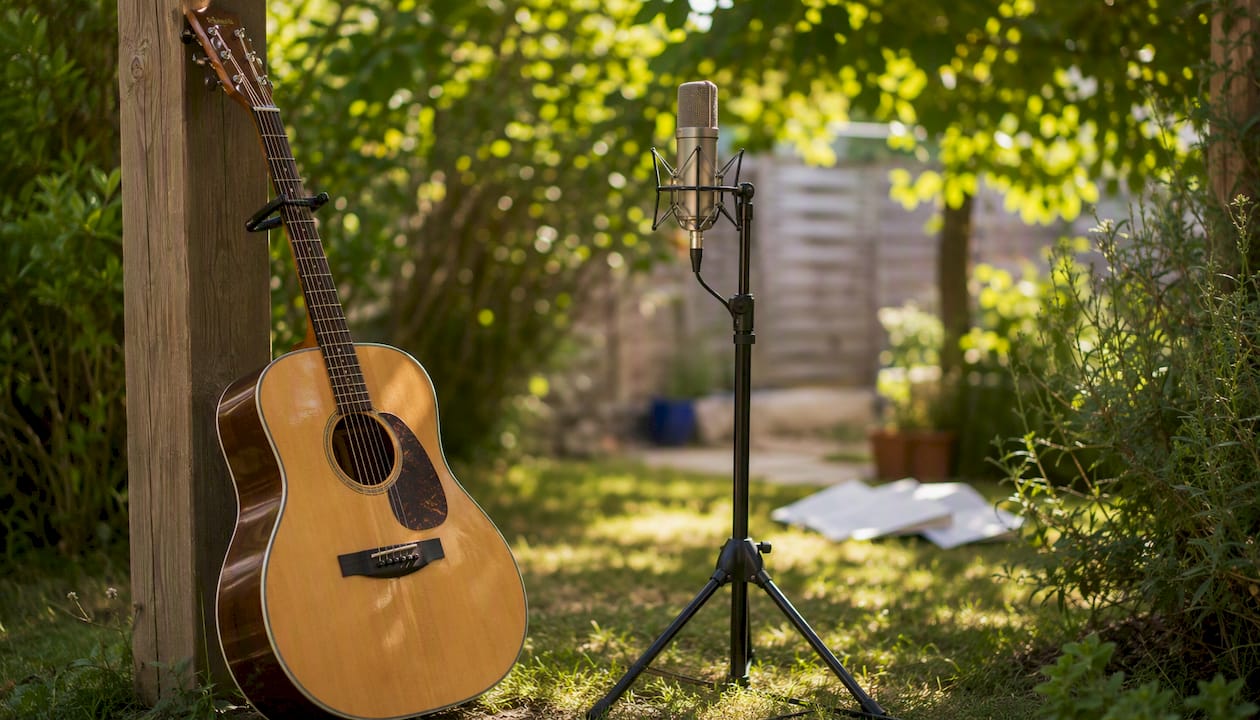
Mic placement matters more than most new hosts expect. A single condenser mic in the center of a circle picks up everyone reasonably well for acoustic jams. For electric players, a small PA with one monitor facing the room is enough for a group of 10–15.
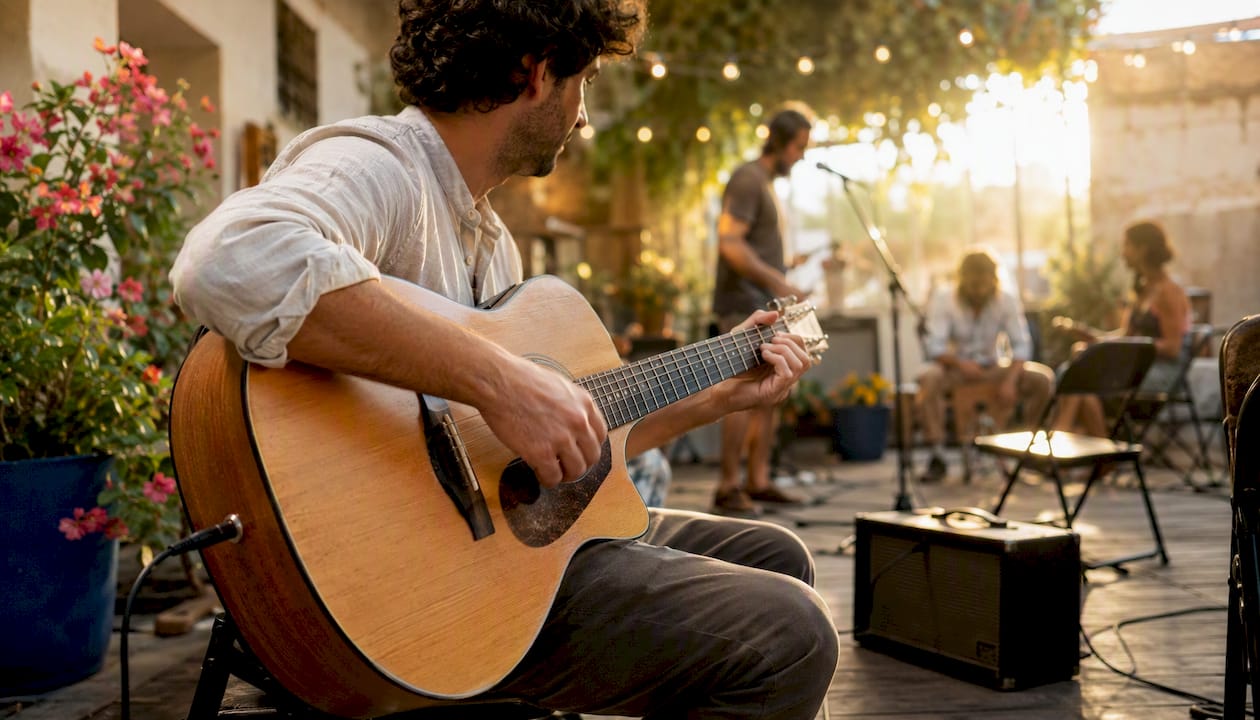
The groups that grow are the ones where someone plays a short, welcoming set to open the room. It sets the tone, lowers the anxiety of first-timers, and signals that the space is for playing, not performing. Experiencebylocals has seen this pattern hold across the open mics and community events listed on the platform: a warm opener creates a room where people come back.
Find local jams, open mics, and guitar events on Experiencebylocals
There are solid routes to finding guitar communities: Meetup groups, society websites, genre forums, and online clubs. Experiencebylocals offers something those channels don't — a curated, searchable listing of real local events hosted by community artists in Colorado, from open mic nights to live music showcases and music classes.
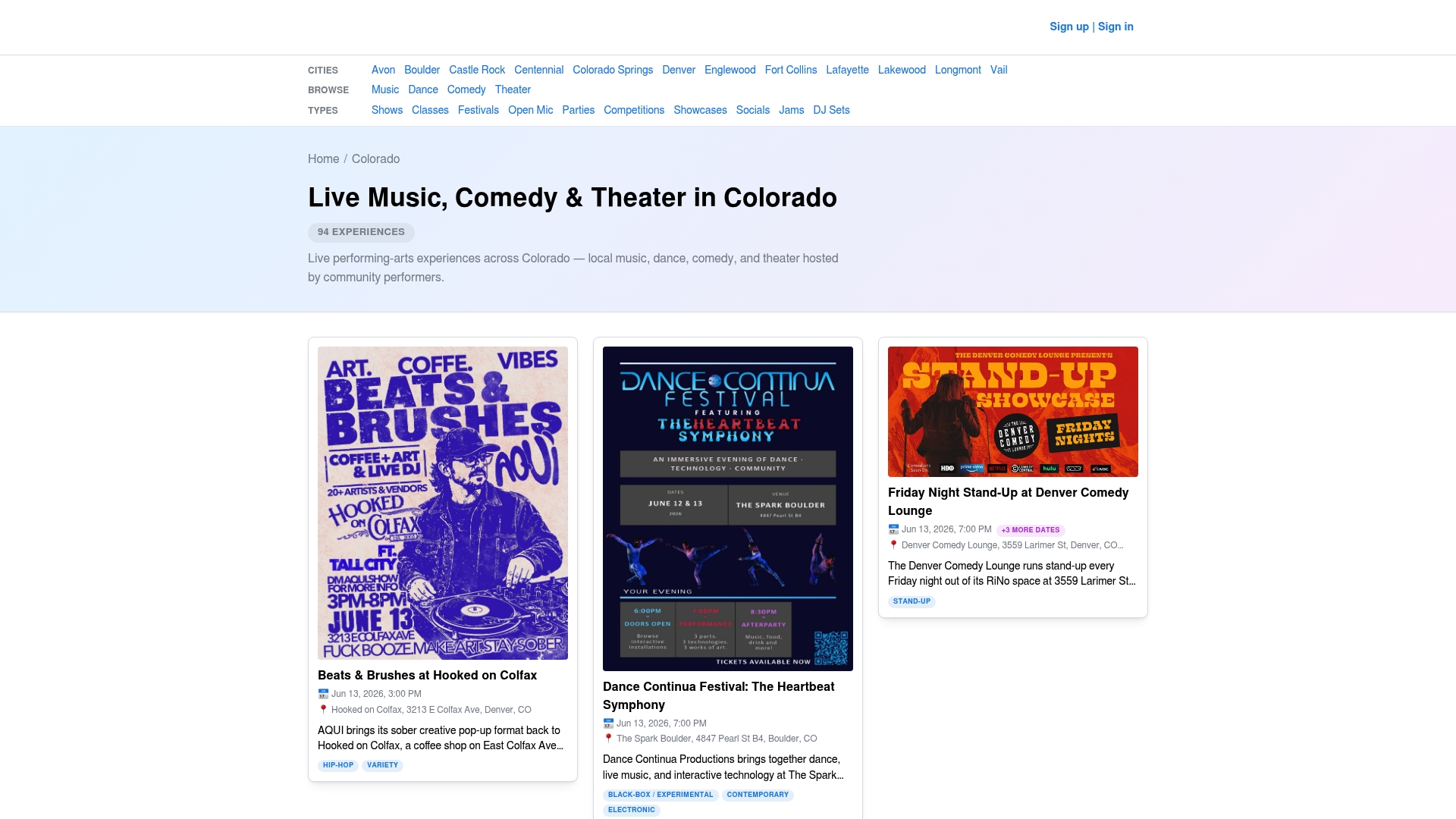
Search live music events in Colorado to find open mics, jams, and performances happening near you this week. If you host events, list your meetup or class on the platform to reach an audience that's already looking for exactly what you offer. Booking is direct, discovery is free for attendees, and your event sits alongside other community-first experiences that reflect the real cultural life of Colorado.
Useful sources and next steps
Bookmark these and RSVP to at least one event within 48 hours:
- Sacramento Guitar Society (SGS) » Sacramento Guitar Society
- Portland Guitar Society - Home
- Tucson Guitar Players Meetup | Meetup
- JustinGuitar Clubs
- Metal Guitarist Forums
- The Guitar Club
- OG Guitar Club
- San Jose Guitar Players’ Meetup Group | Meetup