
How Colorado's Arts Scene Is Structured in 2026
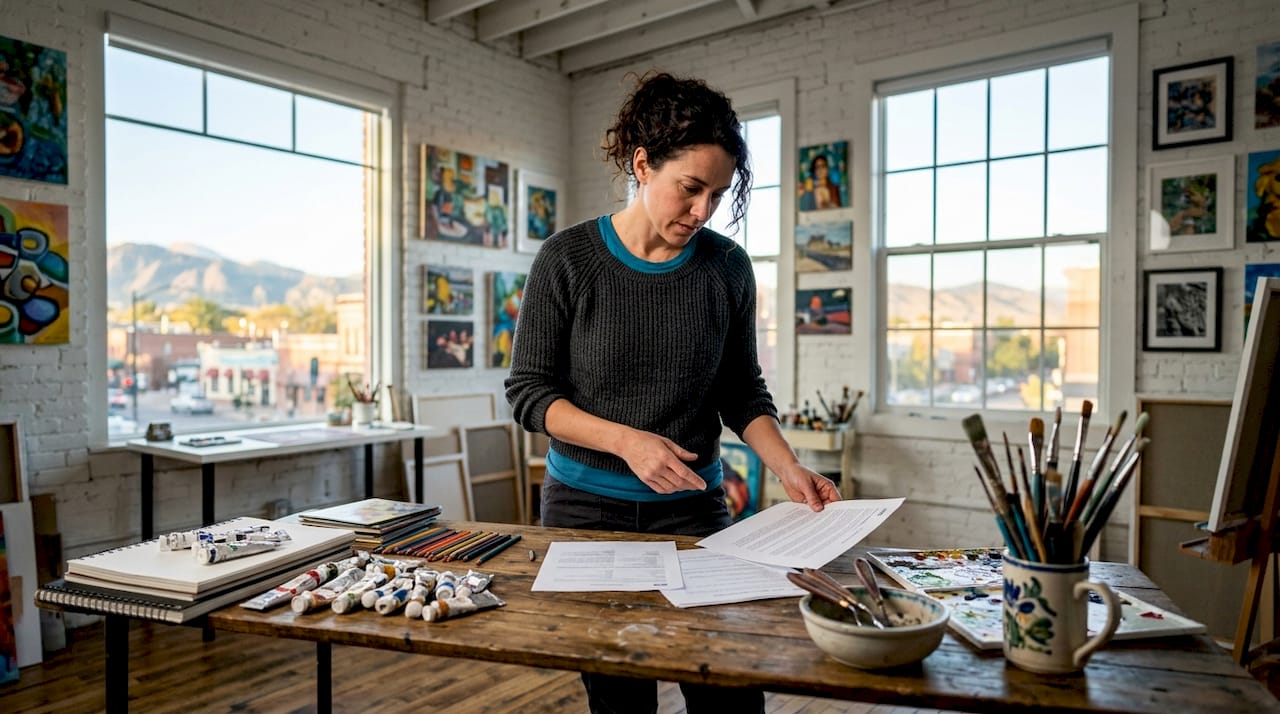
Colorado's arts scene is structured through three interlocking systems: artist-controlled business entities, state-certified Creative Districts, and a network of nonprofit organizations and coalitions that provide legal, financial, and advocacy support. Understanding this structure helps artists protect their work, helps communities build cultural identity, and helps audiences connect with the creative energy that makes Colorado one of the most arts-rich states in the country. Whether you are a working creator, a cultural enthusiast, or a community member curious about why Colorado's arts community overview looks the way it does, this guide breaks it all down clearly.
How Colorado's arts scene is structured through legal business models

The most significant recent development in the structure of arts in Colorado is the creation of Colorado Artist Companies, known as A Corps. Governor Jared Polis signed Senate Bill 133 into law, establishing A Corps as a new business structure that guarantees artists retain creative control by holding at least 51% of voting shares. The Colorado Secretary of State is set to implement the program by july 1, 2027, with an initial state cost of $93,878 for fiscal year 2026–27. This is not a small administrative update. It is a structural shift in how artists can own and operate their creative businesses.
What makes A Corps different from a traditional LLC
A traditional LLC gives investors equal or majority voting power based on their financial stake. A Corps separates economic participation from governance entirely. Investors can financially benefit from the company without gaining control over creative decisions. Artists keep the wheel. This separation also protects intellectual property, with reversion rights built into the structure so creators do not lose their work if a business relationship ends.
Here is what the A Corps model requires and provides:
- Artist voting majority: Artists must hold at least 51% of voting shares at all times.
- IP protection: Intellectual property rights stay with the artist, not the investor.
- Reversion rights: Creative work reverts to the artist if the business dissolves or a partnership ends.
- Investor access: Outside investors can participate financially without overriding creative direction.
- Reduced administrative burden: The structure is designed to be more accessible than traditional corporate models for independent creators.
Pro Tip: If you are a Colorado artist considering forming a business entity, consult with a CAFTA attorney before choosing between an LLC and an A Corps. The governance difference is significant and could affect your creative ownership for years.
What are Colorado's Creative Districts and how do they support arts ecosystems?
Colorado's Creative Districts are state-certified, place-based ecosystems that integrate artists, businesses, cultural organizations, and recurring public events into a single geographic hub. These are not just neighborhoods with galleries. They are formally recognized systems with certification criteria, ongoing management structures, and year-round programming responsibilities. The Colorado Creative Industries division oversees the certification process, and districts must demonstrate multi-actor collaboration to qualify.
Examples like Pueblo's Creative Corridor, Telluride, and Colorado Springs show how different communities have built their own versions of this model. Pueblo's Creative Corridor anchors galleries, live music, festivals, and public art within a defined area that draws both residents and visitors. Telluride uses its mountain setting and festival culture to sustain a year-round creative economy. Colorado Springs integrates military history, visual arts, and performing arts into a district identity that serves a large and diverse population.
| Creative District | Key Features | Primary Arts Focus |
|---|---|---|
| Pueblo Creative Corridor | Galleries, murals, live music venues | Visual arts, public art |
| Telluride | Film and music festivals, studios | Film, music, performing arts |
| Colorado Springs | Museums, theaters, arts nonprofits | Performing arts, visual arts |
| North Fork Valley | Rural coalition, co-working, markets | Mixed arts, creative businesses |
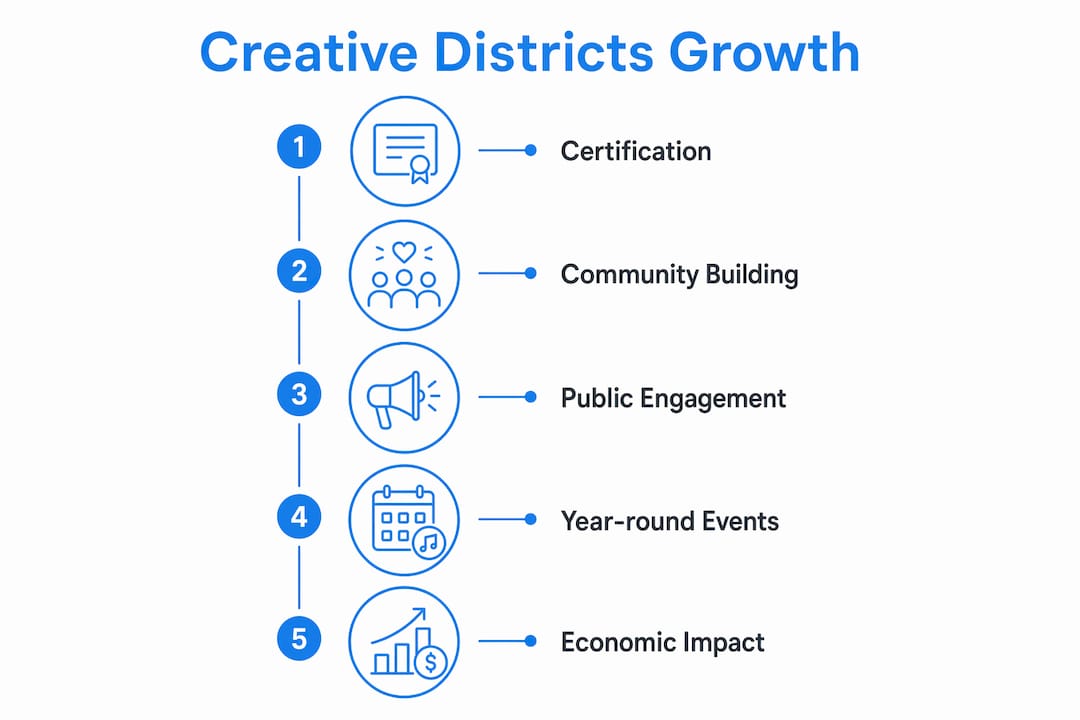
What makes Creative Districts work is continuous management, not just event hosting. Year-round coordination drives public programming, funding pipelines, and community engagement that isolated events cannot sustain. A district that only activates during a summer festival is not functioning as a true Creative District. The certification model demands ongoing convening, funding guidance, and community presence throughout the calendar year.
How do nonprofit organizations support Colorado artists legally and financially?
The Colorado Business Committee for the Arts, known as CBCA, is the anchor nonprofit in Colorado's arts support network. CBCA has connected arts and business through advocacy, research, training, leadership development, and volunteerism since 1985. The organization also played a direct role in shepherding Senate Bill 133 through the legislature, which shows how deeply it is embedded in both policy and practice.
CBCA's most direct service to working artists is the CAFTA program, which provides pro bono legal services to artists across all disciplines. Eligibility extends to artists earning up to 300% of federal poverty guidelines, covering rural, urban, and suburban applicants statewide. CAFTA serves not just individual artists but also creative businesses and arts nonprofits, making it a broad safety net for the entire creative economy.
Here is how arts organizations operate in Colorado through the CBCA and CAFTA model:
- Eligibility screening: Artists apply and verify income at or below 300% of federal poverty guidelines.
- Attorney matching: CAFTA connects applicants with volunteer attorneys who specialize in arts law.
- Legal services: Services include contract review, IP registration, business formation, and dispute resolution.
- Training and workshops: CBCA offers business skills training alongside legal support.
- Statewide reach: The program serves artists in every region of Colorado, not just Denver.
Pro Tip: CAFTA is one of the most underused resources in Colorado's creative community. If you are a working artist who has never had a contract reviewed by a lawyer, this is the place to start. It costs nothing and could protect your livelihood.
The North Fork Valley Creative Coalition is another strong example of regional nonprofit support. This coalition manages a certified Creative District, delivers year-round programming, and received a $75,000 state grant to support its growth. That funding reflects the state's recognition that rural creative economies need dedicated infrastructure, not just occasional event support.
What economic impact does Colorado's arts structure generate?
Arts and culture contribute $19.7 billion to Colorado's economy and support 121,000 jobs statewide. That number reflects the combined output of institutions, independent artists, Creative Districts, and the businesses that cluster around them. Arts-related employment in Colorado grew 3.6% since 2022, compared to just 0.3% nationally. That gap is not accidental. It is the result of a coordinated structure that keeps creative workers employed and connected to markets.
"Colorado's creative economy measurement focuses on institutional funding networks, nonprofit ecosystems, and advocacy groups to evaluate success via employment, attendance, and economic impact metrics." — Colorado arts economy analysis
The Denver Center for the Performing Arts is the most visible anchor of this economic engine. Tony Award-winning productions that come through the DCPA generate hotel stays, restaurant visits, and retail spending that ripple through the regional economy. But the economic story is not only about Denver. Creative Districts in smaller cities and rural areas generate local spending, attract tourism, and retain creative workers who might otherwise leave for larger markets.
The benefits extend beyond dollars. Creative Districts and arts organizations build social cohesion by giving communities shared cultural experiences. They support arts education by partnering with schools and youth programs. They attract visitors who stay longer and spend more than standard tourists. Colorado's arts structure is not just a cultural asset. It is an economic one.
How do local coalitions shape Colorado's creative scene on the ground?
Local coalitions are the operational layer that makes the broader structure function at the community level. The North Fork Valley Creative Coalition is a clear model. It supports 150+ artists, small businesses, and nonprofits through events, co-working spaces, and regional marketing. It manages the certified Creative District for its region and applies for state grants on behalf of the broader community. That kind of sustained, multi-sector work is what separates a thriving creative community from a scattered collection of individual artists.
Coalitions do several things that individual artists and even larger nonprofits cannot do alone:
- Aggregate resources: Pooling grant applications and shared spaces reduces costs for every member.
- Coordinate programming: Festivals, markets, and workshops are planned across the year, not just in peak seasons.
- Provide business development support: Members get help with marketing, pricing, and finding new audiences.
- Manage Creative District certification: Coalitions handle the ongoing reporting and coordination required to maintain state certification.
- Amplify rural voices: In areas outside Denver, coalitions give smaller creative communities a seat at the state funding table.
The coalition model also creates resilience. When one member faces a slow season or a funding gap, the network absorbs some of that pressure. Colorado's creative ecosystem thrives partly because it is built on these distributed, community-managed nodes rather than a single centralized institution.
Key Takeaways
Colorado's arts scene is structured through three systems working together: artist-controlled A Corps business entities, state-certified Creative Districts, and nonprofit and coalition support networks that provide legal, financial, and advocacy services.
| Point | Details |
|---|---|
| A Corps legal structure | Artists must hold 51% of voting shares, protecting creative control and IP rights. |
| Creative Districts | State-certified place-based hubs require year-round management, not just event hosting. |
| CBCA and CAFTA | Pro bono legal services are available statewide to artists earning up to 300% of federal poverty guidelines. |
| Economic scale | Arts and culture generate $19.7 billion and 121,000 jobs in Colorado, with employment growing 3.6% since 2022. |
| Coalition power | Local coalitions like North Fork Valley manage districts, pool resources, and connect rural artists to state funding. |
What I have learned watching Colorado's arts structure evolve
The part of Colorado's arts structure that most people miss is how intentional it is. This is not a scene that grew organically and got lucky. The A Corps legislation, the Creative District certification program, the CAFTA legal network — these are deliberate choices made by artists, advocates, and policymakers who understood that creative work needs infrastructure the same way any other industry does.
What strikes me most is the A Corps model. For years, artists who wanted outside investment had to choose between keeping creative control and accessing capital. That was a real barrier. The separation of economic participation from governance is genuinely new thinking. It borrows from cooperative business models and applies them specifically to creative work. I think it will change how serious artists in Colorado think about building sustainable careers.
The Creative District model also deserves more credit than it gets. The requirement for year-round management rather than event-only activation is the detail that makes it work. A district that only activates for a summer festival is not a district. It is a pop-up. The certification criteria force communities to build real infrastructure, and that infrastructure is what creates lasting cultural identity.
The challenge going forward is reach. The tools exist. CAFTA, A Corps, Creative District certification, coalition grants — these are real resources. But awareness is uneven, especially outside Denver. The artists who need these structures most are often the ones least likely to know they exist. That is the gap worth closing.
— DJ
Colorado's live arts scene is waiting for you
Colorado's arts structure creates the conditions for genuinely memorable live experiences. The Creative Districts, the artist-owned venues, the coalition-managed festivals — they all feed into a live arts scene that goes far deeper than tourist-facing entertainment.
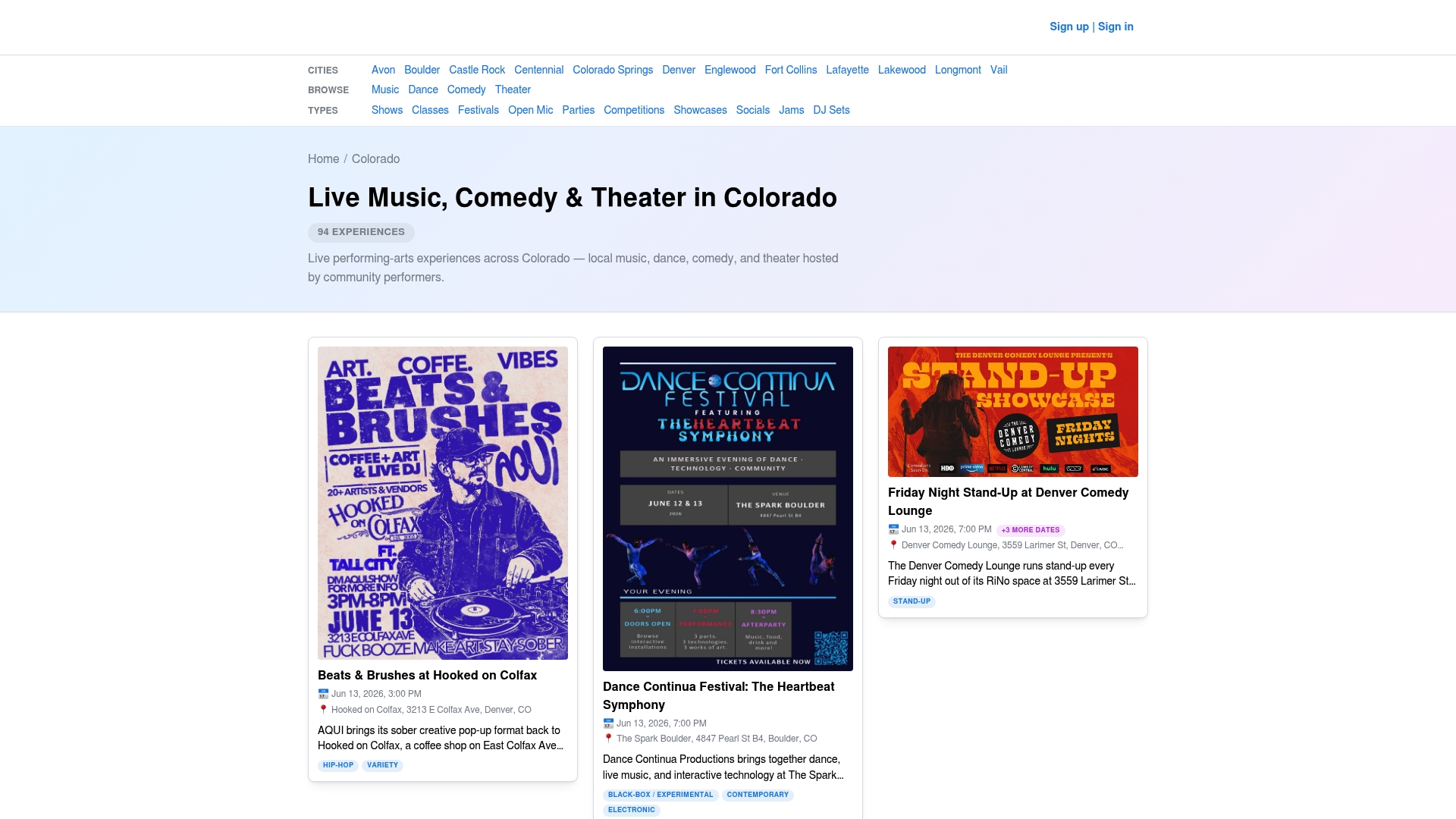
Experiencebylocals connects you directly with that scene. The platform brings together live music, comedy, and theater hosted by local Colorado artists in spaces that reflect the real creative culture of their communities. From K-pop choreography at artist-run sanctuaries to community-driven comedy nights, these are experiences built by creators who live and work inside the structures described in this guide. If you want to participate in Colorado's creative community rather than just observe it, Experiencebylocals is where you start. Browse upcoming Colorado events and find something that connects.
FAQ
What is a Colorado Artist Company (A Corps)?
A Colorado Artist Company, or A Corps, is a new business structure created by Senate Bill 133 that requires artists to hold at least 51% of voting shares. It separates investor financial participation from creative governance, protecting artist control and intellectual property.
How do Colorado Creative Districts get certified?
Creative Districts are certified by Colorado Creative Industries based on criteria that require multi-actor collaboration among artists, businesses, cultural organizations, and recurring public events. Certification also requires ongoing management and year-round programming, not just seasonal events.
What does CAFTA offer Colorado artists?
CAFTA provides free legal services to Colorado artists through CBCA, including contract review, IP registration, and business formation support. Artists earning up to 300% of federal poverty guidelines qualify, and the program serves all disciplines statewide.
How large is Colorado's creative economy?
Arts and culture contribute $19.7 billion to Colorado's economy and support 121,000 jobs. Arts-related employment grew 3.6% since 2022, far outpacing the national rate of 0.3%.
What does the North Fork Valley Creative Coalition do?
The North Fork Valley Creative Coalition manages a certified Creative District, supports 150+ artists and small businesses, and received a $75,000 state grant to expand its programming. It provides co-working spaces, regional marketing, and year-round events for its creative community.