
Site Specific Theater in Colorado: Find Shows on Trails and in RiNo

Site-specific theater is live performance built around a real location, a trail, a warehouse, a historic mansion, rather than a conventional stage, so the setting becomes part of the story itself. Colorado has an active scene of these shows, from guided hikes through Boulder's foothills to immersive productions inside RiNo warehouses and historic estates across the Front Range. To find what's playing near you, check local listings, neighborhood arts calendars, and Experience By Locals, which surfaces grassroots performances alongside music, dance, and comedy across the state.
TL;DR:
- A Chautauqua Park production ran for two hours, and outdoor shows can involve uneven trails and elevation changes, so wear sturdy shoes and bring water.
- Before booking, ask the producer about required participation, walking demands, and accessible seating, since accommodations may exist even when listings do not mention them.
- Because short engagements may miss mainstream ticketing sites, check local arts coverage, neighborhood calendars, producer social accounts, and listings using terms such as trail performance.
- Denver public park productions require separate park and event operational approvals; apply about 60 days ahead, and pay the invoice to secure the space.
Table of Contents
- Colorado Examples: Trail Shows, Warehouse Immersives, and Historic Estates
- Where to Find Site-Specific Shows Near You
- What to Expect: Movement, Interaction, Accessibility, and Weather
- Organizer Essentials: Permits, Timing, and Private-Site Coordination
- Experience By Locals: A Local Resource for Site-Specific Shows
- Why Site-Specific Theater Matters for Colorado's Communities
- Ready to Find Your Next Site-Specific Show?
- FAQ
- Sources
Colorado Examples: Trail Shows, Warehouse Immersives, and Historic Estates
Colorado's site-specific scene breaks into a few recognizable formats, and knowing them helps you pick a show that matches what you're looking for.
Outdoor trail productions are among the most distinctly Colorado version of this art form. Arts in the Open has staged walking productions at Chautauqua Park in Boulder, including a two-hour immersive hike through an outdoor staging of Frankenstein that moved audiences between scenes along the trail. These productions lean on Leave No Trace principles, using lightweight sets and minimal costuming so the natural setting stays undisturbed, and they typically build in clear communication about how much walking and interaction to expect.
Warehouse and commercial-space immersives have found a home in RiNo's industrial buildings. A production like Cryptic uses a multi-room commercial space as an active partner in the story, with audiences rotating through small rooms while projection mapping and spatial audio design pull them deeper into a puzzle-driven narrative. These shows ask producers to think about room capacity and emergency egress differently than a traditional proscenium theater would, since the audience is moving through the building rather than watching from fixed seats.

Historic estates and mansions offer a third format. A recent Denver premiere, Morwood Manor, frames its rooms as individual scenes in a surreal, puzzle-driven experience built around emotional exploration rather than simple scare tactics. That shift toward conceptual and emotional engagement, instead of horror-only framing, is showing up across newer Colorado immersive work and broadens who these shows appeal to.
A few cues help you spot a site-specific or immersive show before you buy a ticket:
- Listings that use words like "immersive," "site-specific," or "walk with performers" are signaling audience movement.
- Descriptions mentioning "audience interaction" or "choose your path" usually mean some level of participation is built in.
- Trail or park productions will note hiking distance, terrain, or duration in the event description.
- Warehouse and mansion shows often list a run time per room or rotation, which hints at the pacing.
Each format rewards a different kind of curiosity, whether you want to walk a Boulder trail at golden hour or puzzle your way through a RiNo warehouse.
Where to Find Site-Specific Shows Near You
Finding these performances takes a slightly different search than looking up a regular theater season, mostly because site-specific work often runs in short engagements and doesn't always show up on mainstream ticketing sites.
Local arts journalism is one of the most reliable sources. Outlets like OnStage Colorado regularly cover outdoor and immersive productions around the Front Range, and RiNo Arts District's own event pages track what's running in the neighborhood's warehouses and galleries.
Beyond press coverage, a few habits will keep you ahead of the calendar:
- Check the Denver listings page regularly, since warehouse and mansion immersives tend to cluster in and around the city.
- Follow venue and producer social accounts directly, since many site-specific companies announce dates there before anywhere else.
- Subscribe to neighborhood arts newsletters, particularly for RiNo and Boulder, where this kind of programming is concentrated.
- Search using terms like "site-specific," "immersive," "walk," "outdoor theater," or "trail performance" rather than generic terms like "theater near me."
Before you commit to tickets, it's worth confirming two things directly with the producer: how much walking or physical interaction the show involves, and whether accessible viewing or seating options exist. Site-specific shows vary enormously on both fronts, and a quick email or message usually gets you a clear answer.
What to Expect: Movement, Interaction, Accessibility, and Weather
Site-specific theater asks more of its audience than sitting in a seat, so a little preparation goes a long way toward actually enjoying the experience.
Interaction levels vary by production. Some shows keep participation voluntary, letting you observe from the edges if you'd rather not get pulled into the scene, while others build required audience movement into the structure. Event descriptions usually flag this, so read them closely before you buy.
Terrain and pacing matter most for outdoor trail productions. Walking between scenes at a site like Chautauqua Park means uneven footing, elevation changes, and a show that can run two hours or longer, so comfort with moderate hiking makes a real difference in how much you enjoy it.
Accessibility is worth confirming directly with producers rather than assuming. Many immersive companies offer observation-only options or alternative seating for audience members who can't manage stairs, long walks, or close physical interaction, but these accommodations aren't always listed publicly.
Sustainability matters too, especially for trail and park shows. Packing out everything you bring in and staying on marked paths protects the same natural sites that make these productions special in the first place.
A simple packing checklist covers most outdoor and site-specific shows:
- Sturdy, closed-toe footwear suited to the terrain.
- Layers, since Colorado evenings cool down fast even after a warm afternoon.
- Water, particularly for shows running over an hour.
- A small flashlight or headlamp for shows that run past sunset.
- A seat pad or light blanket if the venue doesn't guarantee seating.
Pro Tip: Email the producer a day or two before the show to ask about terrain, interaction level, and accessibility; most small companies respond quickly and would rather you ask than show up unprepared.
Organizer Essentials: Permits, Timing, and Private-Site Coordination
Staging a site-specific production on public land in Denver means working through two separate city processes, and getting the timeline wrong is the single most common reason a date falls through.
Denver Parks & Recreation requires a Preliminary Park Permit for public park events, and the department recommends applying about 60 days before your event date. Space isn't actually confirmed until you've paid the resulting DPR invoice, so an accepted application alone doesn't guarantee your spot.
Apply roughly 60 days ahead of your event and expect to pay a confirmation invoice before your park reservation is locked in. Popular dates and locations fill well before that window closes, so earlier is almost always better.
The city's PEFP event permitting guide separates the park permit from the Event Operational Permit, and both have to be satisfied before you're cleared to run a public event. Some sites carry their own complications: Denver Parks has noted that Civic Center Park may be temporarily unavailable for new public-event applications while construction continues, a reminder that it's worth checking current site availability before you build a production around a specific location.
Private-property productions follow a different track entirely. The city's PEFP film guide makes clear that locations like Red Rocks, Union Station, or the Denver Art Museum require direct coordination with the property owner, since the city doesn't book private sites on your behalf, even when additional city approvals are also required.
A basic organizer checklist keeps the moving pieces manageable:
- Build your permit timeline backward from the event date, starting at least 60 days out.
- Line up event insurance before submitting permit paperwork.
- Confirm site access, restroom availability, and waste disposal plans.
- Notify neighboring residents or businesses if the production involves sound, lighting, or evening hours.
- Check sound and lighting restrictions for the specific park or district.
If you're planning to sell tickets through a platform once your permits are secured, resources like The Ticket Blog's guide to ticket pricing strategy can help you think through pricing and promo structures before your show goes on sale.
Experience By Locals: A Local Resource for Site-Specific Shows
We built Experience By Locals around a simple idea: Colorado's best live experiences often come from local artists and small producers, not big venues, and they deserve a place where guests can actually find them. It offers listings of live music, dance, comedy, and theater by community creators across the state, placing site-specific theater productions alongside other local performances such as open mics and dance showcases.
Finding these shows on our platform is straightforward. Our theater category page lets you browse productions across Colorado, while neighborhood pages for Denver and other cities help you narrow in on what's running close to home. Genre pages for music, dance, and comedy help users discover varied performances, including interdisciplinary and outdoor shows.
The platform highlights grassroots and community-driven talent, reflecting the nature of Colorado's site-specific theater scene. A few quick next steps: browse our Colorado listings, filter by theater or your city of choice, and check event details for the interaction and accessibility notes we encourage every host to include.

Why Site-Specific Theater Matters for Colorado's Communities
Site-specific theater does something a conventional stage can't: it ties a story permanently to a place you already know, so a familiar trail or warehouse carries a little more meaning every time you pass it afterward. That's the part most people underestimate about this art form. It isn't just a creative gimmick, it's a way for small, community-rooted producers to turn Colorado's own landscape and architecture into collaborators, without needing a traditional venue's budget or four walls.
What's struck me most, watching this scene grow, is how much it depends on trust between performers and audience. A trail show at Chautauqua Park or a warehouse piece in RiNo only works if people show up willing to walk, to look closely, and sometimes to be part of the scene themselves. That's a different kind of audience than a typical Tuesday night at the movies, and Colorado seems to have an unusually large supply of people willing to meet that invitation.
— DJ
Ready to Find Your Next Site-Specific Show?
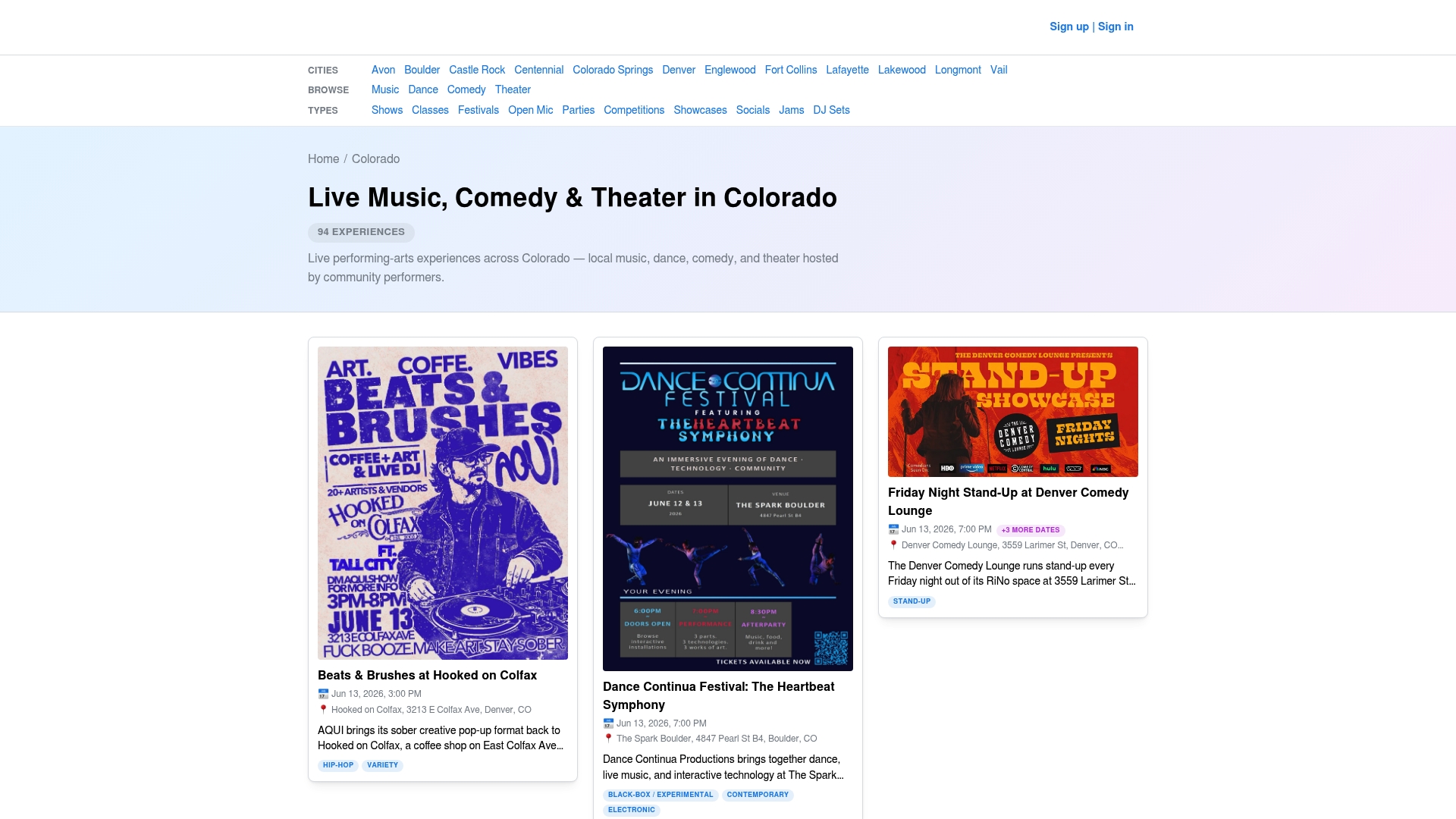
Finding your next trail hike-turned-theater piece or warehouse immersive doesn't have to mean scrolling through scattered social posts. Start on our Colorado events page and filter by theater, then narrow by neighborhood, Denver, Boulder, or Colorado Springs, and by date to see what's coming up near you.
Once you've found a show that fits, check the listing for details on interaction level and terrain before booking, since that's the easiest way to pick a production that actually matches what you want from the evening. Browse our theater listings now and see what's running this season.
FAQ
What does "site-specific theater" actually mean?
Site-specific theater is live performance designed around a real, nontraditional location, like a park trail, a warehouse, or a historic mansion, so the setting itself becomes part of the story rather than just a backdrop. It differs from a traditional stage production because the audience often moves through the space as the scenes unfold.
How is immersive theater different from site-specific theater?
Immersive theater usually emphasizes audience interaction and participation within the story, while site-specific theater is defined primarily by its unconventional location. Many Colorado productions, like the RiNo warehouse piece Cryptic, combine both, using a nontraditional site and inviting audience interaction at the same time.
Where can I find upcoming site-specific shows in Colorado?
Check local arts coverage like OnStage Colorado, neighborhood arts calendars for districts like RiNo, and listings platforms such as Experience By Locals, which filters by city and show type. Following producer social accounts directly also helps, since many announce dates before they appear elsewhere.
Do I need special gear to attend an outdoor trail production?
Sturdy closed-toe shoes, layers for cooling evening temperatures, and water are the basics for most Colorado outdoor site-specific shows, since many involve walking on uneven trail terrain for an hour or more. A small flashlight or headlamp is useful for productions running past sunset.
How far in advance do organizers need to apply for a Denver park permit?
Denver Parks & Recreation recommends submitting a Preliminary Park Permit application about 60 days before the event date. Space is only confirmed once the resulting invoice is paid, so applying early matters more than it might seem.
Sources
- Public Event Permits - City and County of Denver
- ‘Frankenstein’ hits the trail in outdoor production at Chautauqua Park | OnStage Colorado
- Cryptic (RiNo Arts District listing/coverage)
- MORWOOD MANOR to Premiere as Surreal Immersive Theatre in Denver