
What Does a Dance Showcase Event Mean?
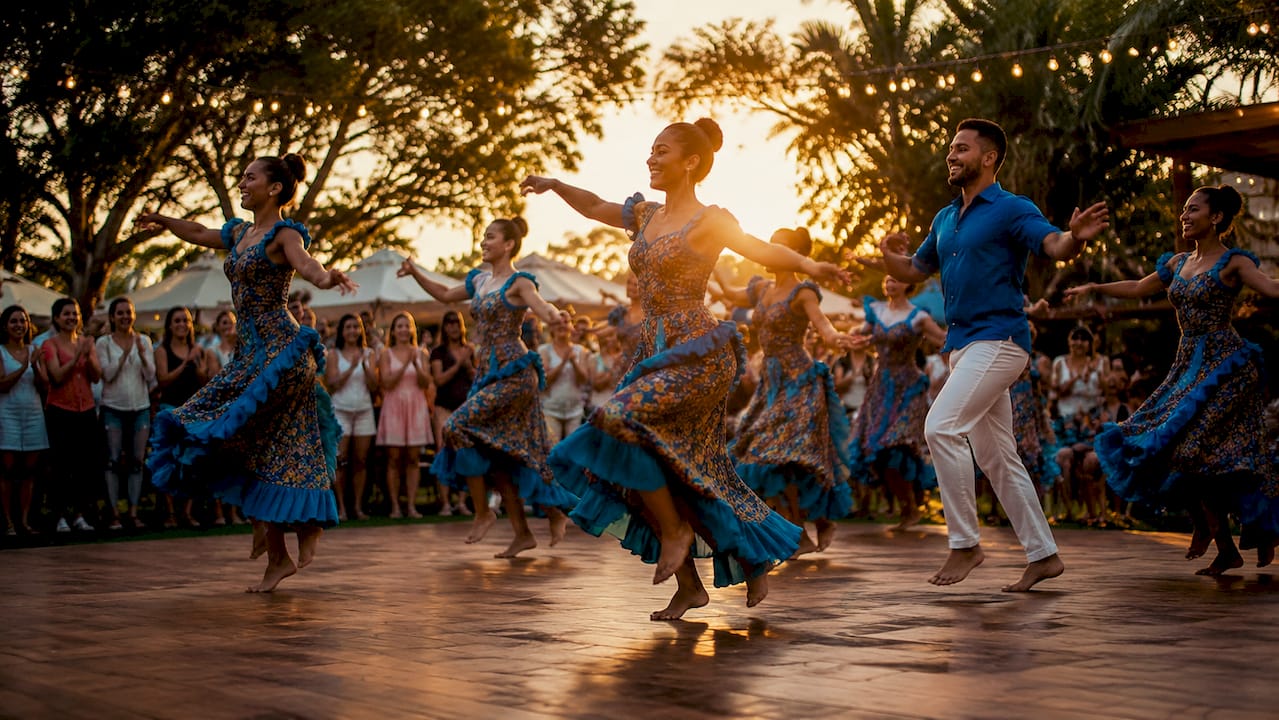
A dance showcase event is a choreographed performance where dancers present rehearsed routines to an audience, emphasizing artistic expression, community, and personal growth over competition. The term "dance showcase" is the widely recognized industry label for this format, though you may also hear it called a dance exhibition or performance showcase. Understanding what does a dance showcase event mean helps you appreciate why these events matter far beyond the stage itself. They are structured celebrations of skill, creativity, and connection, and they show up in studios, theaters, and community centers across the country.
What does a dance showcase event mean for dancers and communities?
A dance showcase is defined as a performance event where dancers present rehearsed routines focused on artistic expression and community rather than competitive scoring. These events typically include multiple dance genres and welcome performers ranging from age 5 to 18 and beyond, with programs lasting anywhere from a few hours to a full day. That range tells you something important: showcases are built for inclusion, not elimination.
The purpose of a dance showcase goes well beyond putting on a good show. Here is what these events accomplish:
- Skill exhibition: Dancers get a real stage to display months of training in front of a live audience.
- Confidence building: Performing in front of a crowd builds self-assurance that classroom practice simply cannot replicate.
- Community celebration: Families, friends, and neighbors gather to honor the work of local artists.
- Fundraising: Many showcases support dance schools financially, generating revenue for scholarships and outreach programs.
- Cultural exchange: Showcases often combine diverse dance styles, from ballet to hip-hop to K-pop choreography, giving audiences a window into different artistic traditions.
Pro Tip: If you are attending a dance showcase for the first time, arrive a few minutes early. Programs often list each piece with the style and performers, so you can follow along and appreciate the variety on display.
The fundraising angle is one that surprises many first-time attendees. Successful showcases require meticulous logistical preparation and serve as critical financial support for local dance communities. That ticket price you pay does real work behind the scenes.
How does a dance showcase differ from competitions and recitals?
The meaning of a dance showcase becomes clearest when you compare it to other dance events. These three formats look similar on the surface but serve very different purposes.
| Event Type | Focus | Scoring | Atmosphere | Typical Venue |
|---|---|---|---|---|
| Dance Showcase | Artistic expression and community | None | Celebratory, low pressure | Theater, community center |
| Dance Competition | Technical skill and rankings | Judges score each act | High stakes, competitive | Convention center, auditorium |
| Studio Recital | Student progress, informal | None | Intimate, family-focused | Studio, small hall |
| Innovation Showcase | Experimental choreography | None | Creative, exploratory | Black box theater, arts space |
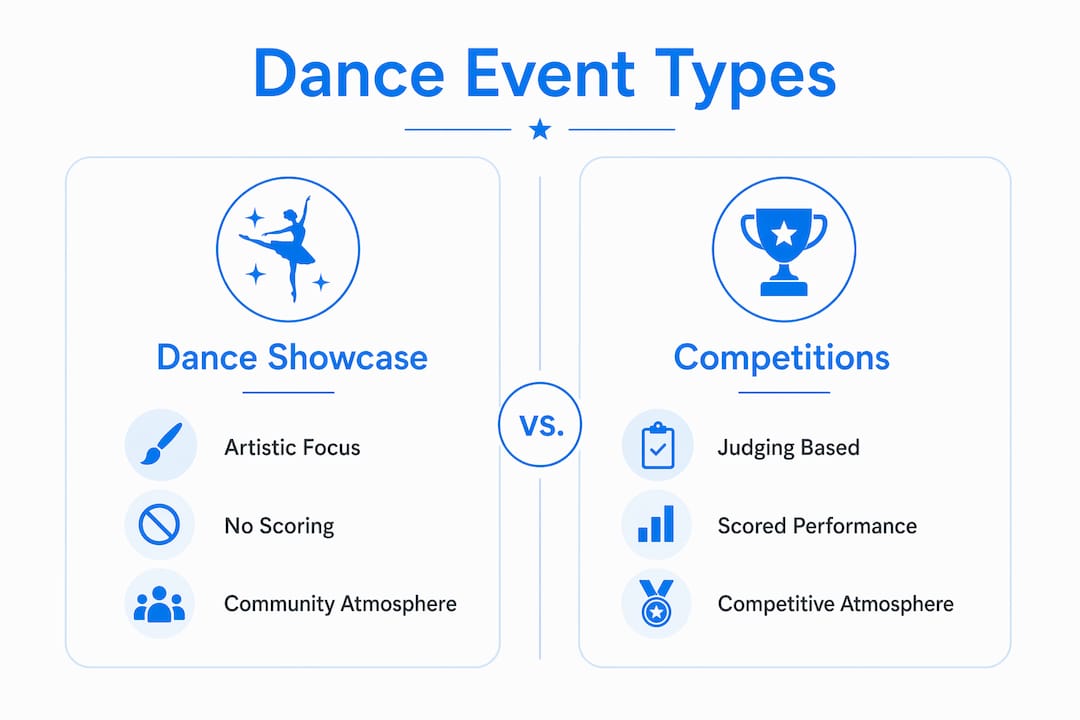
Unlike competitions, showcases focus on creativity and lower performance anxiety by removing objective scoring entirely. That shift changes everything about how dancers prepare and how audiences experience the event. A dancer at a competition is trying to beat a score. A dancer at a showcase is trying to connect with the room.
Recitals tend to be smaller and more informal, typically organized within a single studio for families of enrolled students. Showcases are often larger, more public, and may feature guest professional artists alongside student performers. The innovation showcase is a specialized format that encourages accessibility and joy for all ages, prioritizing experimentation over technical perfection.
Pro Tip: If a dancer you know is nervous before a showcase, remind them that no judge is holding a scorecard. The audience is there to cheer, not evaluate.
The non-competitive environment is not just a nice detail. It is the defining feature of the dance showcase format. Removing scores lets dancers take artistic risks they would never attempt in a judged setting.
What actually happens at a dance showcase?
A dance showcase typically unfolds across several distinct phases, from months of preparation to the final curtain call. Here is how the experience breaks down for participants:
Before the event: rehearsal and preparation
- Choreography development: Instructors or student choreographers create routines weeks or months in advance.
- Costume coordination: Dancers are fitted for costumes that match the theme and music of each piece.
- Music selection and editing: Tracks are cut and mixed to fit the performance time.
- Stage rehearsals: Dancers practice in the actual venue to get comfortable with lighting, spacing, and sight lines.
- Backstage logistics: Groups learn their cues, quick-change routines, and where to stand offstage.
The rehearsal process involves months of discipline, teamwork, and stage presence development. Backstage coordination and costume management differ significantly from what happens in a regular class. That behind-the-scenes work is where a lot of the real growth happens.
During the event: performance formats
Dance showcases include solo, duet, group, and guest performances held in theaters or auditoriums, offering genuine stage experience. Events may run from a few hours to full-day productions. You might see:
- Solo pieces where one dancer commands the entire stage
- Duets that explore partnership and synchronization
- Large group numbers with 10 or more performers moving in unison
- Guest artist segments featuring professional dancers as headliners
The variety keeps audiences engaged and gives every dancer a moment to shine, regardless of age or experience level.
After the curtain: the emotional payoff
The backstage experience, including costume management and rehearsals, teaches teamwork and discipline not captured in classes. When the final bow happens, dancers often describe a mix of relief, pride, and genuine surprise at what they pulled off together. That emotional payoff is a big part of why showcases matter so deeply to the people in them.
What are the benefits of dance showcase events?
Participation in a dance showcase delivers real, measurable outcomes for both individual dancers and the wider community. These are not abstract benefits. They show up in how dancers carry themselves after the event.
- ✅ Confidence and self-assurance: The stage is a milestone for dancers, realizing progress through courage and commitment. Many dancers report that performing in front of a live audience changes how they see themselves.
- ✅ Artistic risk-taking: Because there is no scoring, dancers and choreographers feel free to try new styles, unconventional music, or storytelling through movement.
- ✅ Community and cultural connection: Showcases celebrate dance diversity and remove competitive pressure to foster emotional connection and collaboration among performers and audiences alike.
- ✅ Financial support for arts organizations: Revenue from ticket sales and sponsorships funds scholarships, equipment, and outreach programs that keep local dance accessible.
- ✅ Accessible entertainment for audiences: A well-produced showcase offers live performing arts at a price point far below a professional touring company, bringing quality entertainment to neighborhoods that might not otherwise have it.
Showcases also represent a dancer's journey and transformation from training to performance, emphasizing progress over perfection. That framing matters. It tells dancers that showing up and growing is the goal, not winning.
For communities, the impact compounds over time. When a local dance school thrives financially through showcase revenue, it can offer more classes, lower tuition, and reach kids who might not otherwise have access to arts education. A single showcase night can set that chain in motion.
Key takeaways
A dance showcase event is a non-competitive, community-centered performance format that builds dancer confidence, supports arts organizations financially, and brings diverse audiences together through live artistic expression.
| Point | Details |
|---|---|
| Core definition | A dance showcase is a rehearsed, non-competitive performance event focused on artistic expression and community. |
| Distinct from competitions | Showcases remove scoring entirely, which lowers anxiety and encourages creative risk-taking on stage. |
| Event formats vary | Programs include solos, duets, group numbers, and guest artists, running from a few hours to a full day. |
| Financial impact | Showcases are a primary fundraising vehicle for local dance schools, funding scholarships and outreach. |
| Community value | Attendance supports local artists and gives audiences access to live performing arts at the neighborhood level. |
Why dance showcases reveal the true heartbeat of local arts
I have watched a lot of live performances over the years, and I will tell you honestly: the ones that stay with me longest are rarely the most polished. They are the ones where you can feel the stakes. A 12-year-old stepping into a solo spotlight for the first time carries a kind of electricity that no professional touring show can manufacture. That is what a dance showcase delivers, and it is something most people do not expect until they are sitting in the audience.
What surprises me most is how many people still confuse showcases with competitions. The competitive model gets all the media attention, from reality TV to viral videos of judges holding up scorecards. But the showcase format is where most dancers actually grow. Removing the scorecard does not lower the stakes. It changes them. Dancers stop performing for a judge and start performing for the room. That shift produces something more honest and, in my experience, more moving.
The community dimension is also undervalued. When a local dance school puts on a showcase, it is not just a recital. It is a fundraiser, a cultural event, and a neighborhood gathering all at once. I have seen live performing arts in Colorado bring together people who would never otherwise share a room, united by the simple act of watching someone they know take the stage. That is not a small thing.
My honest advice: go to a local showcase before you decide whether dance is "your thing." You might be surprised by what you find there.
— DJ
Discover live performances near you
If a dance showcase has sparked your curiosity about live performing arts, there is a whole world of authentic local experiences waiting for you.

Experiencebylocals connects you with genuine live music, dance, comedy, and theater events hosted by local artists across Colorado and beyond. These are not tourist-trap venues or generic entertainment packages. They are real performances by real community creators, the kind that reflect the cultural heartbeat of where you live. Whether you are looking for K-pop choreography at an artist-run sanctuary or a community-driven comedy night, Experiencebylocals surfaces the events that matter. Browse live events in Colorado or explore the full nationwide performing arts calendar to find your next unforgettable night out.
FAQ
What is a dance showcase in simple terms?
A dance showcase is a live performance event where dancers present rehearsed, choreographed routines for an audience, with no competitive scoring or rankings involved. The focus is on artistic expression, community celebration, and personal growth.
How long does a typical dance showcase last?
Dance showcases typically run from a few hours to a full day, depending on the number of performers and acts. Larger productions held in theaters may include intermissions and feature both student and guest professional artists.
Is a dance showcase the same as a dance recital?
No. A recital is usually smaller and more informal, organized within a single studio for enrolled students and their families. A showcase is typically larger, more public, and often features multiple dance styles, guest artists, and a professional venue.
How should i prepare for a dance showcase as a first-time attendee?
Arrive early, review the program to identify the dance styles and performers, and come ready to applaud generously. There are no judges in the audience, so your energy and enthusiasm directly shape the experience for every dancer on stage.
Why do dance schools hold showcase events?
Dance schools hold showcases to give students real stage experience, build community among families and supporters, and raise funds for scholarships and outreach programs. The showcase serves as both a season-ending milestone and a critical financial event for the organization.