
What Does Ensemble Dance Performance Mean?
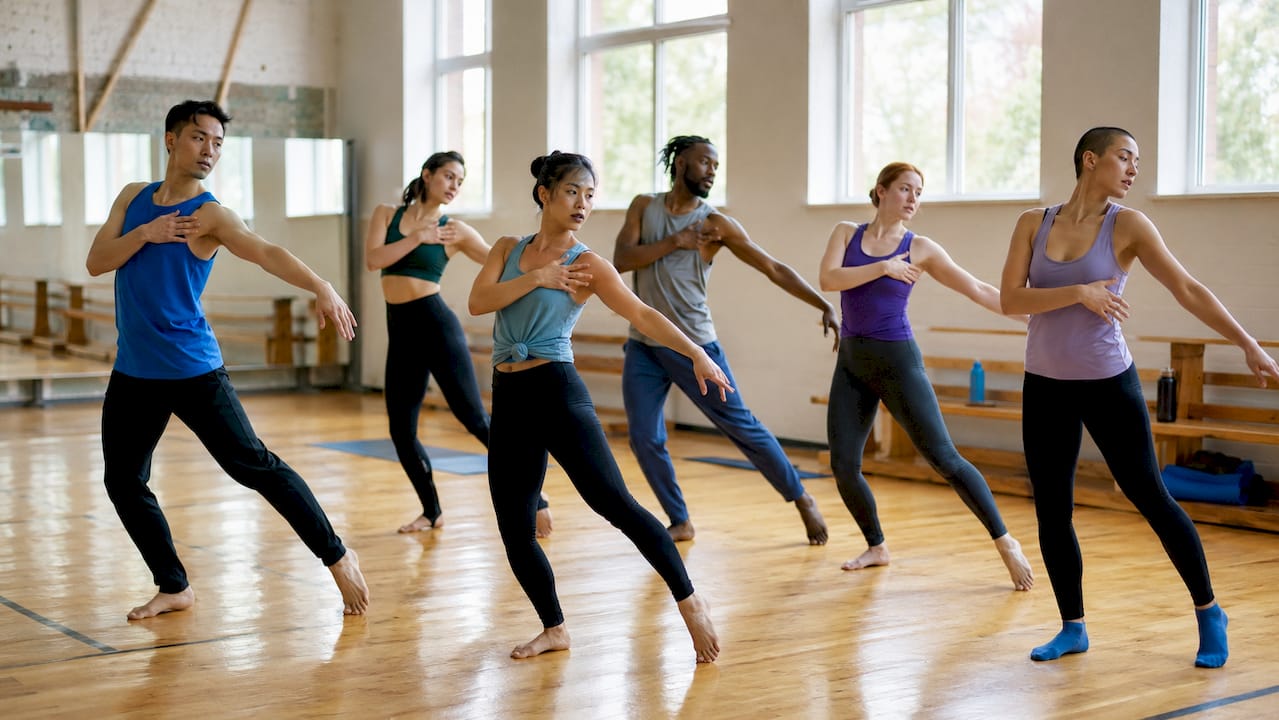
Ensemble dance performance is defined as a group of dancers performing choreographed routines together, prioritizing collective unity and shared artistic vision over individual spotlight. The industry term is "group choreography," and it sits at the heart of ballet companies, K-pop troupes, folk dance groups, and contemporary theater productions worldwide. Understanding what ensemble dance performance means gives you a richer appreciation for every group performance you watch, whether at a community arts night in Colorado or on a major stage. This article breaks down the technical elements, educational frameworks, and cultural significance that make ensemble dance one of the most powerful forms of live performance.
What does ensemble dance performance mean technically?
A dance ensemble is a group of dancers who perform choreographed routines together with a shared artistic goal, placing the group dynamic above individual solos. That definition sounds simple, but the technical reality is layered and demanding. Four core elements give ensemble dance its distinctive power.
-
Synchronization. Dancers move in unison to create visual unity across the stage. Professional ensemble dance relies on synchronization, formations, dynamics, and storytelling to produce a visually intense experience stronger than solo work. Synchronization is not just matching counts. Dancers use breath sounds and rhythmic footfalls as subtle cues to stay in sync even when they cannot see each other directly.
-
Formations. Spatial arrangements structure the performance and guide the audience's eye. A tight cluster communicates intimacy. A wide diagonal line signals power or conflict. Choreographers like those at the San Francisco Conservatory of Dance use formations as a visual grammar that audiences read instinctively.
-
Dynamics. Variation in energy, speed, and intensity keeps a performance alive. A group moving at one constant pace reads as flat. Shifts from slow, weighted movement to sharp, fast bursts create emotional contrast and hold attention.
-
Storytelling. Ensemble dance conveys themes and emotions collectively. A single dancer expressing grief is moving. Ten dancers expressing grief in interlocked, rhythmically distinct patterns creates something closer to a shared human experience.
Pro Tip: Watch the dancers at the edges of a formation, not just the center. Choreographers often place the most technically precise performers there to anchor the group's spatial accuracy.
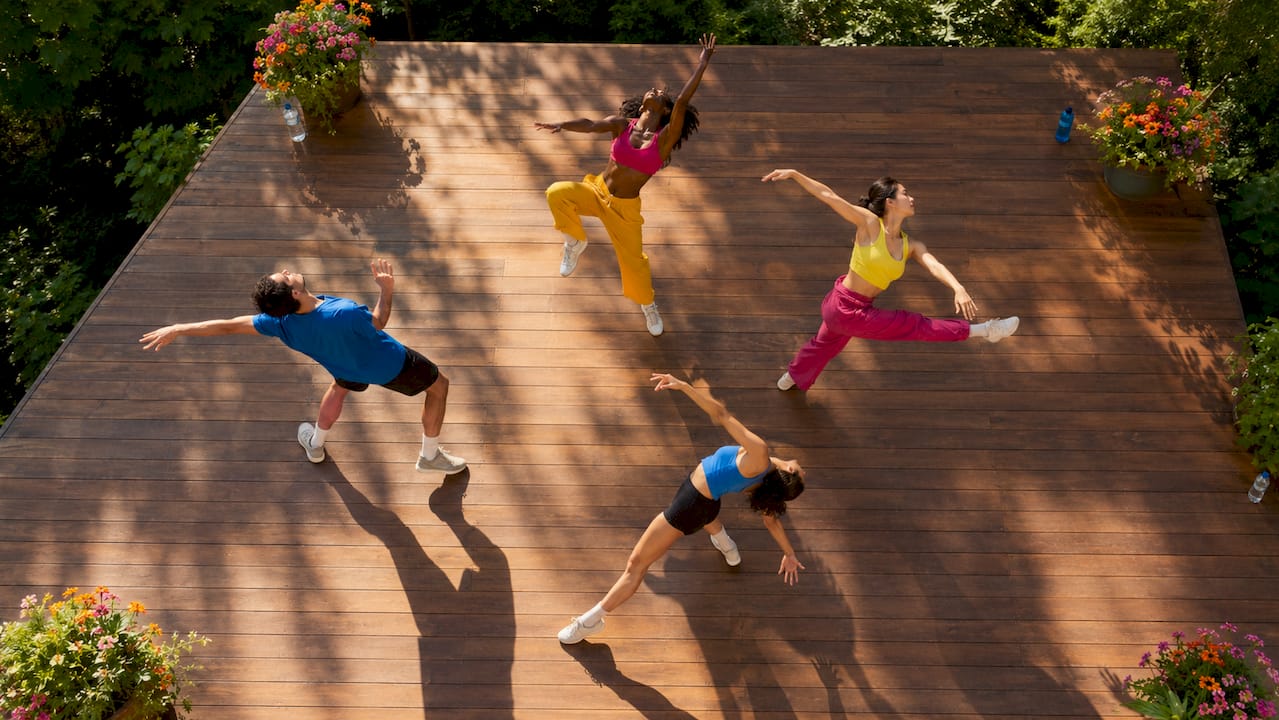
Group choreography often features contrasting, rhythmically locked distinct movements rather than everyone doing the same steps. This composition creates complex textures and visual interest that pure synchronization alone cannot achieve. Think of a West African drum ensemble translated into movement: each dancer carries a distinct rhythmic layer, and the whole becomes greater than any single part.
How does ensemble dance differ from solo and team performances?
This is where ensemble dance meaning gets genuinely interesting. Most people conflate "ensemble" with "team," but the distinction is critical for both performers and audiences.
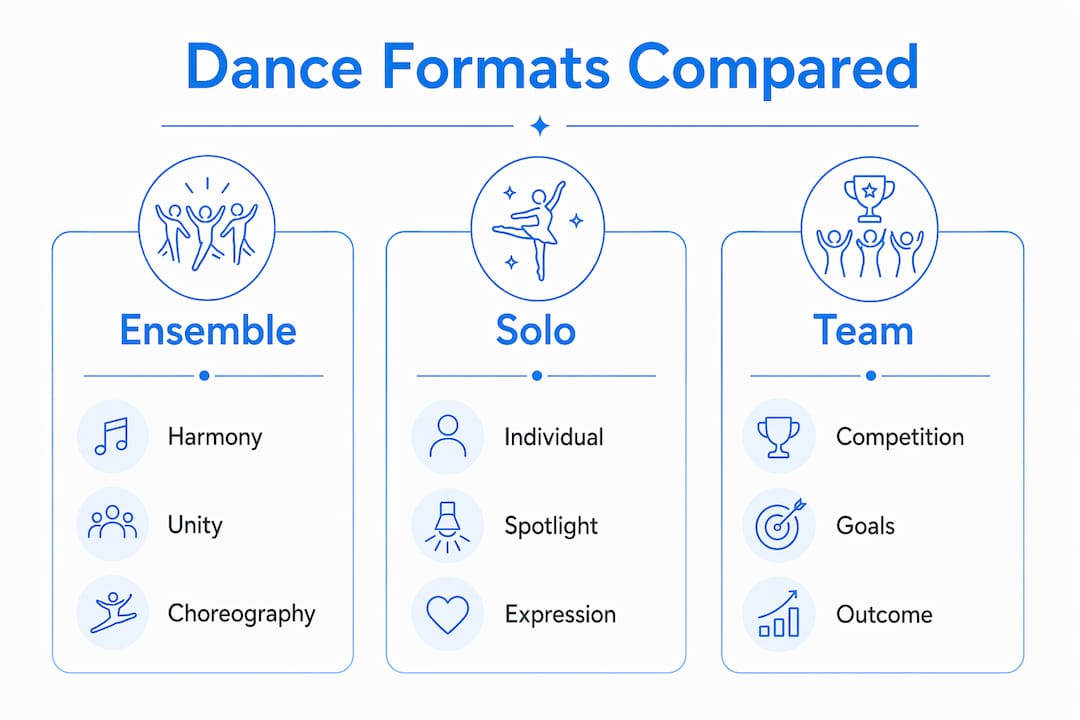
Unlike teams, which focus on winning goals, ensembles emphasize harmony and unity of the performance itself. A basketball team wins by outscoring opponents. An ensemble succeeds when every member disappears into the collective shape. There is no scoreboard. The measure is whether the group feels like one organism.
Solo dance places the individual in the spotlight. The audience watches one person's technique, expression, and interpretation. Ensemble dance redistributes that focus. No single dancer carries the performance. The shared artistic focus becomes the star.
Here is how those three formats compare directly:
| Format | Primary Focus | Success Measure | Individual Role |
|---|---|---|---|
| Solo Dance | Individual expression | Personal technique and artistry | Sole performer and storyteller |
| Ensemble Dance | Collective harmony | Group unity and shared vision | One voice in a larger whole |
| Team Sport/Activity | Goal achievement | Winning or completing an objective | Contributor to a competitive outcome |
The table makes one thing clear: ensemble dance occupies a unique space. It demands individual skill but channels that skill entirely toward a collective result. That tension between personal ability and group surrender is what makes ensemble work so compelling to watch and so challenging to perform.
How is ensemble dance taught and assessed?
Ensemble dance education is more structured than most people realize. RSL Awards for Ensemble Dance focus on developing measurable skills such as spatial awareness, timing, and responsiveness in group performances. Assessments include video evidence, and total qualification time runs around two hours for foundational levels. That structure matters because it gives young dancers a clear pathway from beginner group work to professional ensemble performance.
Here is what structured ensemble training actually builds:
- Spatial awareness. Dancers learn to sense where every other body is on stage without looking directly. This is a trainable skill, not an innate talent.
- Timing and responsiveness. Structured ensemble education builds discipline, coordination, and cooperative skills not as prevalent in solo-focused study. Responding to a group's collective rhythm is fundamentally different from following a personal count.
- Non-verbal communication. Ensemble dance is highly dependent on non-verbal cues and peripheral awareness to maintain synchronization without direct visual contact. Training sharpens this sensitivity deliberately.
- Rehearsal discipline. Ensembles rehearse several times weekly and focus on unified aesthetics. Missing a rehearsal does not just affect your own performance. It creates a gap in the group's muscle memory.
Choreographers play a central role in shaping ensemble performances by creating movement sequences and guiding dancers to execute the collective vision. They collaborate closely with dancers for technique refinement and emotional expression within the group. In educational settings, this relationship teaches students how to receive and apply direction, a skill that transfers directly to professional performance careers.
Pro Tip: If you are new to ensemble training, record your rehearsals and watch yourself from the outside. You will spot spacing errors and timing gaps that feel invisible from inside the formation.
The RSL Awards framework also emphasizes that ensemble training improves overall performance quality and group cohesion in ways that solo study simply cannot replicate. You learn to listen with your whole body, not just your ears.
Why does ensemble dance matter culturally and socially?
Ensemble dance serves important social and cultural functions far beyond entertainment. Ensembles often participate in local traditions, spiritual events, and cultural celebrations, acting as a means of identity expression and communal connection. This is where ensemble dance meaning expands from a technical definition into something genuinely human.
Consider these roles ensemble dance plays across cultures:
- Cultural preservation. Traditional folk ensembles in communities across the American Southwest, West Africa, and Southeast Asia carry ancestral movement vocabularies forward. When a group performs a traditional dance, they are transmitting history through the body.
- Community identity. A local K-pop choreography group performing at an artist-run sanctuary in Colorado is not just entertaining an audience. They are signaling who they are, what they value, and who belongs in their community.
- Spiritual and ceremonial roles. Many of the world's oldest ensemble dance traditions, from Balinese Kecak to Native American ceremonial dances, are inseparable from spiritual practice. The group movement is the ritual.
- Cultural innovation. Ensemble formats allow artists to blend traditions. A contemporary ensemble might layer West African polyrhythm with ballet vocabulary, creating something that neither tradition could produce alone.
The social function of ensemble dance also operates at the audience level. Watching a group move as one body creates a shared emotional experience among viewers. That shared experience builds the kind of community connection that solo performances rarely achieve at the same scale.
Key takeaways
Ensemble dance performance succeeds when individual skill is fully surrendered to collective harmony, making the group's unified vision the defining measure of quality.
| Point | Details |
|---|---|
| Core definition | A dance ensemble is a group performing choreographed routines together with a shared artistic goal above individual solos. |
| Four technical pillars | Synchronization, formations, dynamics, and storytelling combine to create powerful group choreography. |
| Ensemble vs. team | Ensembles prioritize harmony and unity, not goal achievement, setting them apart from competitive team formats. |
| Educational structure | RSL Awards and similar frameworks build spatial awareness, timing, and non-verbal communication through assessed group training. |
| Cultural significance | Ensemble dance preserves cultural identity, builds community connection, and carries spiritual and ceremonial meaning across traditions. |
What ensemble dance taught me about listening
I have spent years watching and writing about live performance, and the thing that consistently surprises newcomers to ensemble dance is this: the best ensembles do not look like a group of skilled individuals. They look like one thing.
Most people assume ensemble work is about matching steps. It is not. The real skill is in relinquishing individual ego to support the choreographer's collective vision. That is genuinely hard for trained dancers. You spend years developing personal artistry, and then ensemble work asks you to make that artistry invisible. The dancers who resist that ask are always the ones who break the visual unity, even when their technique is flawless.
The other thing newcomers miss is how much ensemble performance is a conversation happening in real time. Dancers use breath, footfall, and peripheral vision to stay connected without looking at each other. That is a form of listening most people never practice in any area of life. Watching a tight ensemble perform is watching a group of people who have learned to pay full attention to everyone around them simultaneously.
My honest take: ensemble dance is the most underappreciated form of live performance precisely because it hides its own difficulty. When it works, you do not see the work. You just feel the result. That invisibility is the whole point, and it is worth seeking out in person.
— DJ
See ensemble dance live near you
Reading about ensemble dance is one thing. Watching it live in a room with a real audience is something else entirely.
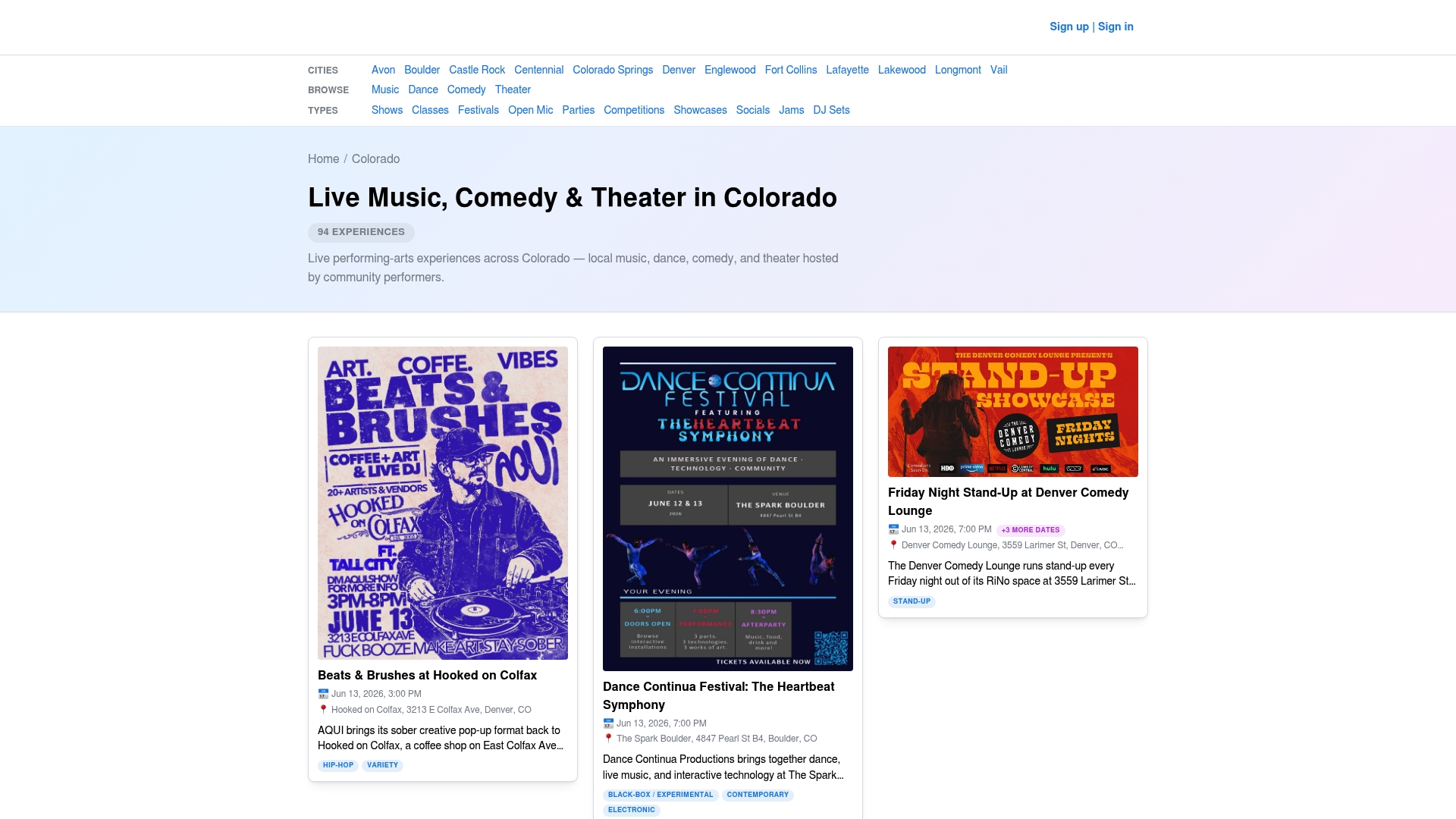
Experiencebylocals connects you with authentic live performances hosted by local artists across Colorado, including ensemble dance, theater, K-pop choreography nights, and cultural showcases that go well beyond standard tourist venues. These are grassroots performances where you feel the group energy up close, not through a screen. Whether you are new to dance performance or a longtime fan looking for something genuine, there is a show waiting for you. Explore live performances in Colorado and find your next ensemble experience with Experiencebylocals.
FAQ
What is the simple definition of ensemble dance?
Ensemble dance is a group of dancers performing choreographed routines together, prioritizing collective unity and shared artistic vision over individual performance. The group dynamic is the central artistic element.
How does ensemble dance differ from a dance team?
A dance team focuses on competitive goals or outcomes, while an ensemble prioritizes harmony and the quality of the unified performance itself. The distinction is harmony versus achievement.
What skills does ensemble dance training develop?
Ensemble training builds spatial awareness, timing, responsiveness, and non-verbal communication. RSL Awards assessments measure these skills through video evidence and structured group rehearsals.
Why is synchronization so important in ensemble dance?
Synchronization creates the visual unity that makes a group read as one organism rather than separate individuals. Dancers use breath sounds and footfalls, not just visual cues, to maintain it.
Can ensemble dance have cultural or spiritual significance?
Yes. Many ensemble traditions, from Balinese Kecak to Native American ceremonial dances, are rooted in spiritual practice and community identity, making them far more than entertainment.