
Why Beginner Dance Spaces Matter for Every Community
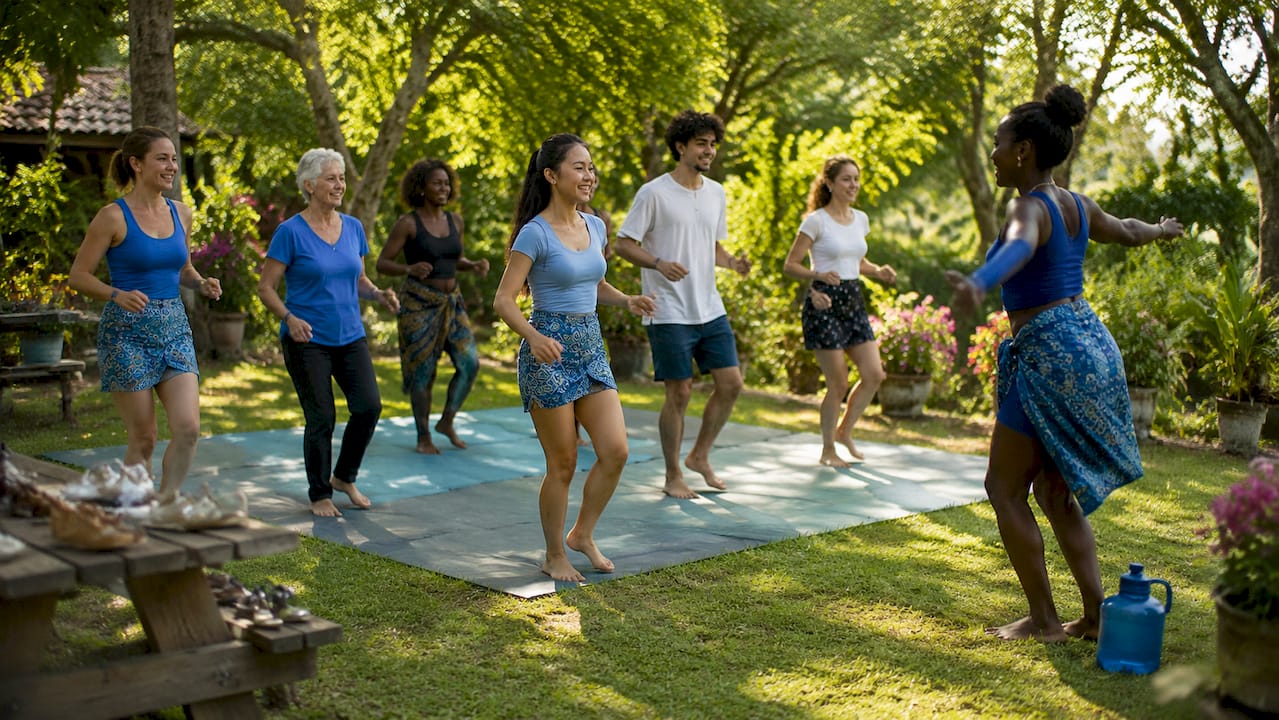
Beginner dance spaces are defined as structured, welcoming environments built to prioritize access and participation over performance, giving new dancers a place to belong before they ever master a single step. These spaces exist in community centers, libraries, faith spaces, and studios with beginner-focused programming. They are not lesser versions of professional studios. They are the foundation on which dance communities grow. Understanding why beginner dance spaces matter means recognizing that most people who want to dance never start because no one made room for them.
The core idea behind community dance, the recognized term for this model, is simple: participation over performance. That shift changes everything. When a space stops ranking people by talent and starts welcoming them by showing up, the entire social and cultural dynamic of a neighborhood can shift. Experiencebylocals sees this play out in Colorado every week, where grassroots dance events draw guests who would never set foot in a competitive studio.
Why beginner dance spaces matter for belonging and connection
The social benefits of beginner dance spaces go far beyond learning choreography. In-studio shared learning builds trust, mutual respect, and a sense of belonging that improves motivation and wellbeing for new dancers. The Royal Academy of Dance describes studios as relationship-building environments first and skill-building environments second. That framing matters because it tells us what beginners actually need most.
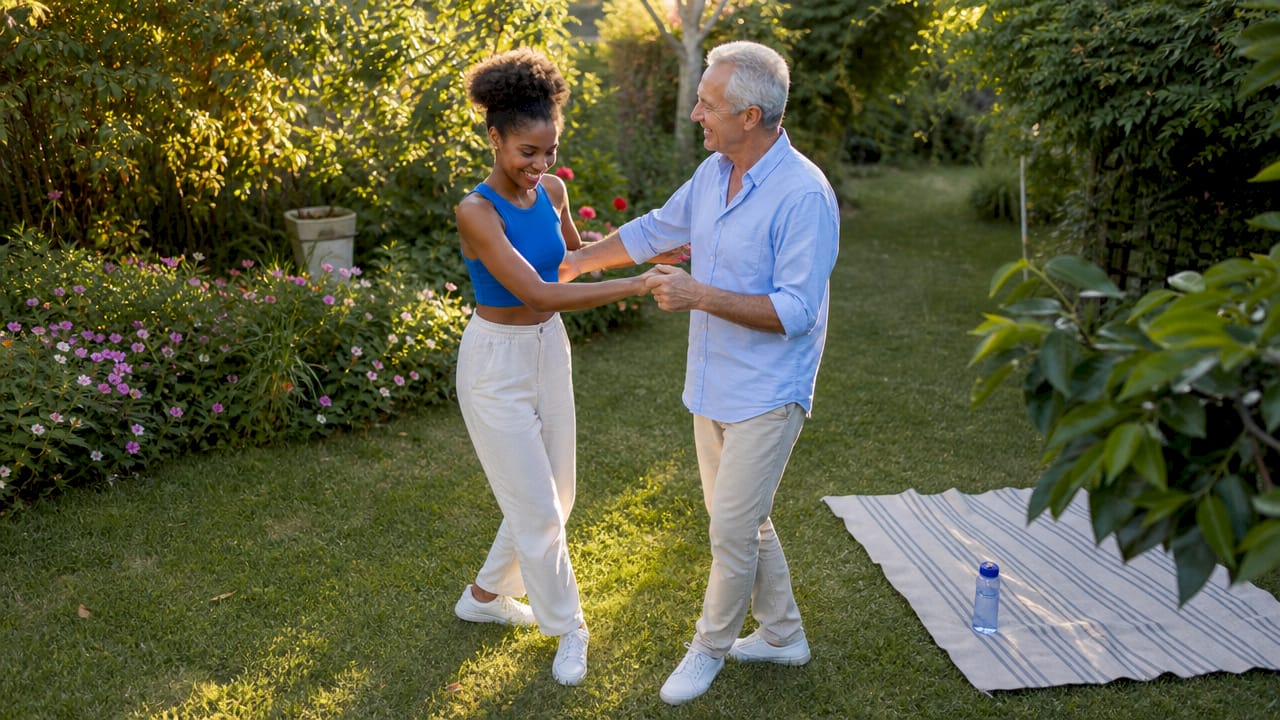
Research confirms the connection between group movement and social bonding. A 2025 Frontiers study found that participants who dance at festivals show a higher sense of community and lower loneliness compared to non-dancers or attendees at events without dancing. That finding is not about technique. It is about the act of moving together. Shared movement synchrony reduces self-focus and pulls people into a collective experience that builds real social bonds.
Here is what that looks like in practice for a beginner:
- Reduced self-consciousness. Moving alongside others at the same skill level removes the spotlight effect that keeps many people from trying.
- Mutual encouragement. Group classes create peer accountability. When everyone is learning, no one is performing.
- Repeated contact. Showing up weekly to the same space with the same people builds familiarity and trust over time.
- Shared identity. Calling yourself a dancer, even as a beginner, becomes possible when the space supports that identity.
"Retention in beginner classes depends heavily on early social safety perceptions, not just skill acquisition. Studios build trust and respect rather than relying on beginners to endure discomfort." — Royal Academy of Dance
A 2025 Frontiers study also shows that dancesport participation produces significant positive associations between perceived social support and psychological wellbeing in college students. Social support acts as the mechanism, not just the byproduct. That means the community inside a beginner dance space is doing real psychological work.
What makes a beginner dance space truly accessible?
Accessibility in dance is not only about physical ramps or wide doorways. True accessibility means removing the barriers that stop most people before they ever walk in. Those barriers include skill anxiety, cost, pacing that assumes prior knowledge, and instruction that does not adapt to different learning needs.
Small shifts in studio design and pedagogy reduce these barriers without requiring a full program overhaul. The most effective beginner spaces share a few consistent features:
- Slow pacing. Instructors break movements into small, repeatable steps rather than running through full routines.
- Positive, specific feedback. Praise that names what a student did right builds confidence faster than correction alone.
- Financial support. Scholarships and sliding-scale tuition remove cost as a reason to quit before starting.
- Adapted instruction. Programs like the Pacific Northwest Ballet's Dance for All support neurodiverse and neurotypical learners together, prioritizing joy and social bonding over uniformity.
- No ranking. Beginner spaces work best when there is no visible hierarchy of skill, so newcomers do not feel judged from day one.
Pro Tip: If you are evaluating a beginner dance class, ask the instructor how they handle students who fall behind. A good answer focuses on individual pacing and encouragement, not keeping up with the group.
Financial accessibility deserves its own attention. Cost is one of the top dropout drivers in beginner dance programs. Studios that offer sliding-scale tuition or community scholarships see higher retention and more diverse enrollment. That diversity, in age, background, and ability, is what makes a beginner space feel genuinely welcoming rather than just marketed as such.
How do beginner dance spaces affect mental health?
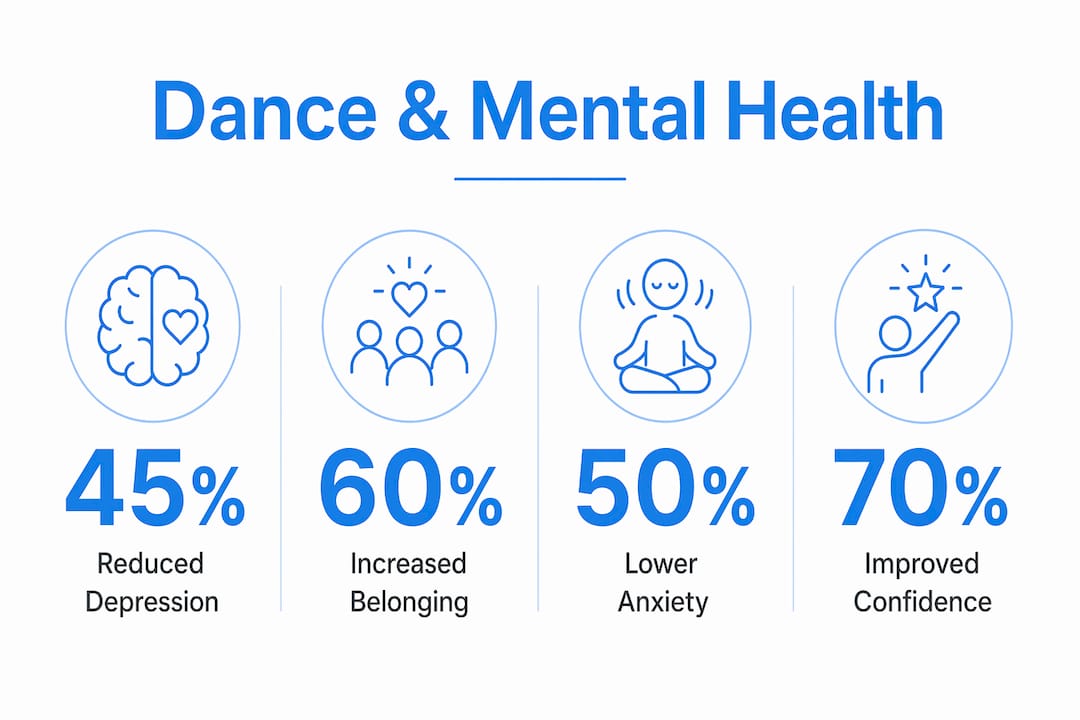
The mental health benefits of beginner dance spaces are specific and measurable. A 12-week dance program with disadvantaged adults produced increased acceptance and belonging alongside decreased depression and social isolation. Twelve weeks is not a long time. That timeline shows how quickly a well-designed beginner space can shift someone's internal experience.
The mechanism behind these gains is not just exercise. Dance combines physical movement with social engagement, creative expression, and repeated contact with a supportive group. Each of those elements contributes to wellbeing independently. Together, they produce outcomes that solo workouts or passive social activities rarely match.
| Benefit | What drives it |
|---|---|
| Reduced depression | Repeated social engagement and physical movement combined |
| Lower social isolation | Shared identity and group belonging in a low-pressure setting |
| Increased confidence | Patient, personalized instruction and visible personal progress |
| Stronger community ties | Consistent contact with the same group over multiple sessions |
A 2026 Frontiers paper adds an important nuance: a supportive learning climate is the moderating factor that determines whether dance's social-emotional benefits actually show up. The space itself must be safe. Without that safety, the benefits do not transfer. This is why environment matters more than curriculum in beginner dance programming.
Pro Tip: When recommending a beginner dance class to a friend dealing with anxiety or low confidence, prioritize spaces that explicitly describe their climate as supportive and non-competitive. The instructor's philosophy matters more than the dance style.
How beginner dance spaces drive sustained community growth
Beginner-friendly models do not just help individuals. They grow entire dance communities. Second Chance Dance grew from 23 to hundreds of students over three years by building an inclusive model that welcomed people of all ages, shapes, and sizes. Founder Alyssa Bowser's guiding principle is direct: "It doesn't matter when you start. It matters that you start." That philosophy removed the identity barrier that keeps most adults from ever claiming the word "dancer."
The contrast between exclusive and inclusive models is stark:
| Model | Enrollment pattern | Community outcome |
|---|---|---|
| Performance-focused studio | High attrition among beginners | Small, skilled, homogeneous group |
| Beginner-inclusive space | Sustained growth across demographics | Diverse, expanding community |
Sustainable growth comes from treating beginner spaces as cultural infrastructure, not one-off enrollment opportunities. When people feel welcome at any stage, they stay. They bring friends. They become advocates. That word-of-mouth growth is what turned Second Chance Dance from a small class into a community anchor.
Beginner dance spaces also serve a broader cultural function. They give communities a place to gather around shared movement, which is one of the oldest forms of human connection. When a neighborhood has a thriving beginner dance space, it has a place where people from different backgrounds can show up as equals and leave feeling less alone.
- ✅ They lower the "who counts as a dancer" barrier for everyone.
- ✅ They create recurring community touchpoints that build long-term social ties.
- ✅ They generate cultural participation that feeds local arts ecosystems.
- ✅ They model inclusion in a way that other community spaces can replicate.
Key Takeaways
Beginner dance spaces matter because they combine accessible design, supportive climate, and repeated social engagement to produce belonging, mental health gains, and sustained community growth.
| Point | Details |
|---|---|
| Participation over performance | Beginner spaces prioritize access and engagement, removing the pressure that stops most people from starting. |
| Social safety drives retention | Early belonging and trust, not skill acquisition, determine whether beginners stay and grow. |
| Accessible design is specific | Slow pacing, financial aid, and adapted instruction are the practical tools that make inclusion real. |
| Climate moderates outcomes | A supportive environment is the deciding factor for whether dance's mental health benefits actually appear. |
| Inclusive models grow communities | Studios like Second Chance Dance prove that removing identity barriers leads to rapid, sustained enrollment growth. |
What I've learned from watching beginner spaces change people
I have watched people walk into a beginner dance class convinced they had no business being there. They were wrong every single time. The spaces that work are not the ones with the best sound systems or the most Instagram-worthy walls. They are the ones where the instructor remembers your name on week two and no one laughs when you miss the beat.
The conventional wisdom in arts programming is that quality attracts audiences. I think that gets it backwards for beginners. Safety attracts beginners. Quality comes later, after someone has decided they belong. The facilitators who understand this build something rare: a room where people stop performing for each other and start actually dancing together.
What I find most underappreciated is the cultural argument. Beginner dance spaces are not charity programs for people who cannot afford real training. They are the front door of a living cultural tradition. Every community that loses its beginner spaces loses the pipeline that feeds its professional artists, its local performances, and its shared identity. Experiencebylocals exists because that pipeline matters. The K-pop choreography sessions and community events we feature in Colorado are not side projects. They are the thing itself.
My practical suggestion for advocates: stop framing beginner spaces as accessible alternatives and start framing them as the core product. The dance community does not need more advanced students. It needs more people who feel like they belong in the room.
— DJ
Local dance events worth supporting near you
If you are ready to move from reading about beginner dance spaces to actually experiencing one, Colorado has a growing scene worth exploring. Experiencebylocals connects guests with authentic local dance, music, comedy, and theater events hosted by real community artists.
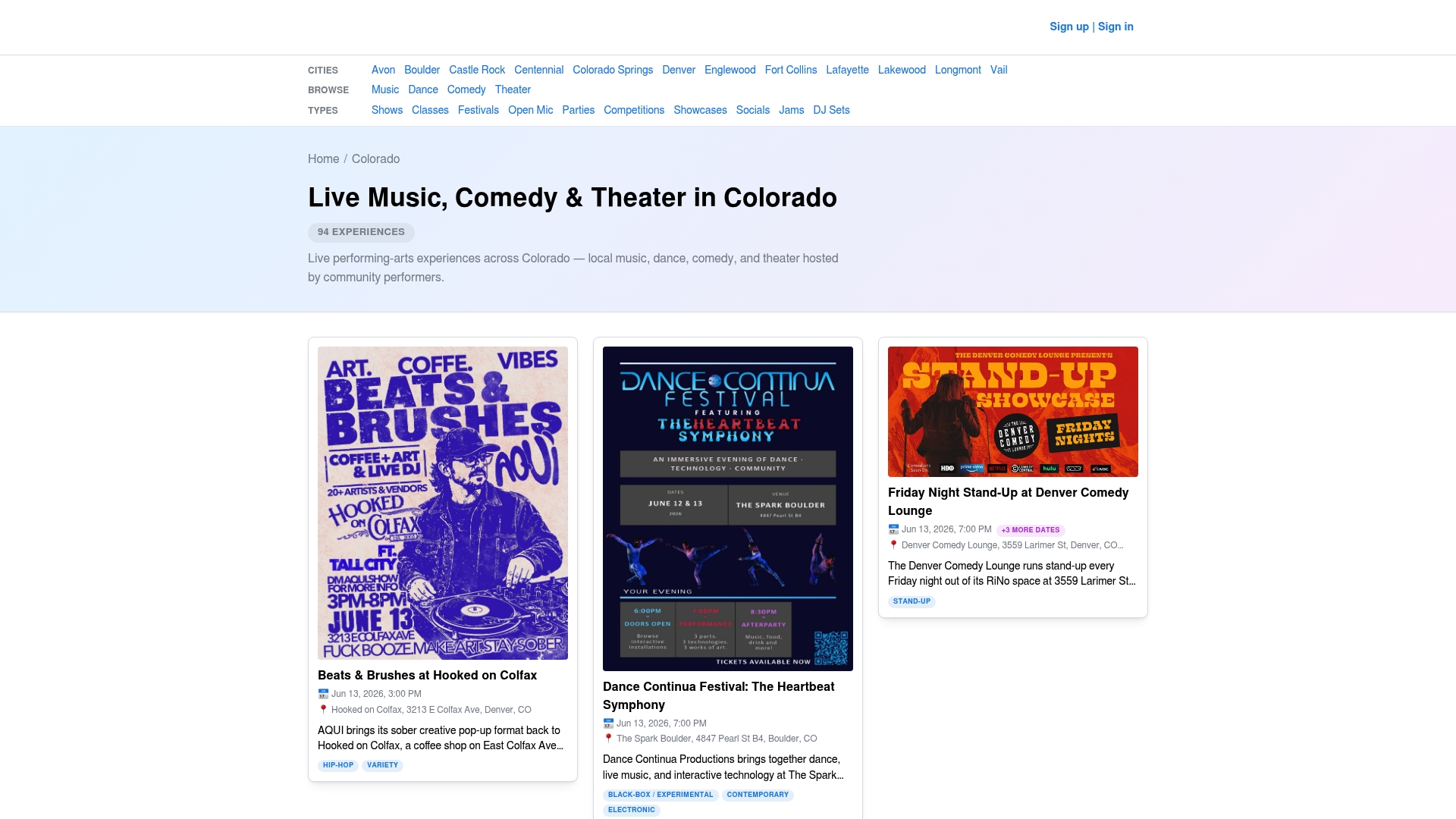
These are not tourist-facing productions. They are the kind of grassroots events where you might find K-pop choreography in an artist-run sanctuary or a community night that doubles as a neighborhood gathering. Experiencebylocals makes it easy to find live cultural events in Colorado that reflect the actual heartbeat of the community. Whether you are an aspiring dancer, a local arts advocate, or someone who just wants to feel more connected to where you live, there is something on the platform worth showing up for.
FAQ
What are beginner dance spaces?
Beginner dance spaces are environments designed to welcome new dancers by prioritizing participation over performance. They reduce barriers related to skill, cost, and confidence so that anyone can start dancing regardless of background.
How do beginner dance spaces improve mental health?
A 12-week dance program with disadvantaged adults showed decreased depression and social isolation alongside increased belonging. The combination of physical movement, social engagement, and a supportive climate drives these outcomes.
What makes a dance space truly inclusive for beginners?
Slow pacing, positive feedback, financial aid like sliding-scale tuition, and adapted instruction for diverse learners are the defining features. Programs like Pacific Northwest Ballet's Dance for All show what full inclusion looks like in practice.
Can beginner dance spaces actually grow a community?
Second Chance Dance grew from 23 to hundreds of students in three years using an inclusive beginner model. Removing identity barriers and welcoming people at any age or skill level produces sustained, diverse enrollment growth.
Why does the learning climate matter more than the curriculum?
A 2026 Frontiers study found that a supportive climate moderates whether dance's social-emotional benefits actually appear. Without psychological safety, the benefits of dance instruction do not transfer to real wellbeing gains.