
Artist Cooperatives in Denver: How They Work and How to Join
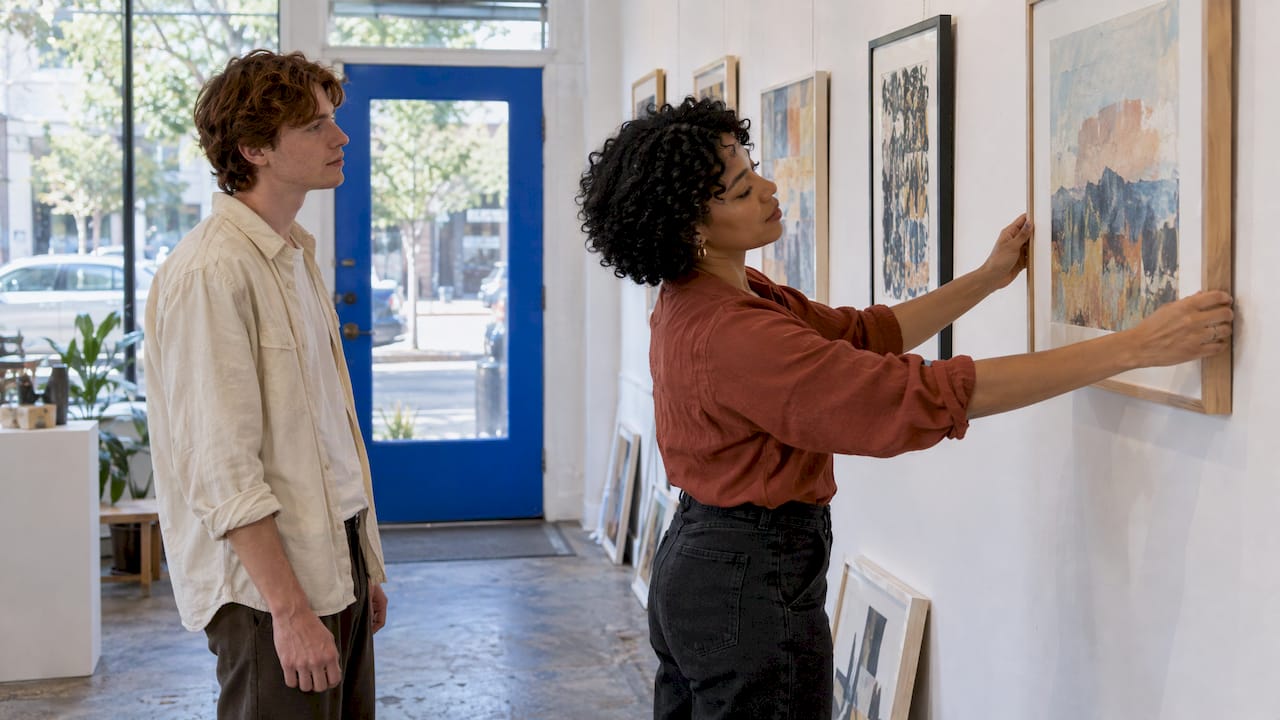
A Denver artist cooperative is a space owned and run by the artists who use it. Members pay dues, share the work of keeping the doors open, and get studio time, wall space or stage time in return. If you're an artist, this guide shows what membership costs and demands. If you're a neighbor, a visitor or a fan of live performance, it shows how to find the people behind these spaces and meet them in person. 🎯 We built Experience By Locals around the second half of that: Colorado's grassroots music, dance, comedy and theater, listed in one searchable place where you can book directly with the hosts.
TL;DR
- An artist cooperative is jointly owned and democratically run by its members, who pay dues and share the labor.
- Denver examples show the range: a member-owned makerspace at $135 a month, and cooperative galleries from $20 to $110 a month.
- Before joining, count the hours (gallery sitting, meetings, volunteer shifts) as well as the dollars.
- You don't need to be a member to benefit: co-op neighborhoods host open studios, workshops, First Friday events and community shows.
- For live music, dance, comedy and theater by local artists, browse Colorado listings and book straight with the host.
Table of Contents
- What an artist cooperative actually is
- Denver co-ops you can look at today
- Before you join: the honest cost of a co-op
- You don't have to be a member to take part
- Where performance fits in
- Our perspective
- Find your next local show 🔎
- FAQ
- Sources
What an artist cooperative actually is
The College Art Association describes artists' collectives and cooperatives as spaces owned and administered by artistic professionals, usually admitted after a peer review of their portfolios or CVs. Once accepted, members take on the cost of operating the gallery, and sales commissions typically run from nothing to a nominal percentage.
That's the key difference from a commercial gallery. A commercial gallery chooses artists, takes a large cut and does the marketing. In a co-op, the artists are the owners, so they also do the work: hanging shows, staffing the front desk, sitting on committees, voting on rent and insurance. Co-ops are most often formed for marketing reasons, according to the New York Foundation for the Arts: shared retail or gallery space, shared internet marketing, or a jointly published catalog. Joining generally means an application, an entry fee and monthly dues, and members share decisions on insurance, rent and other money matters.
Two neighboring terms are easy to mix up:
- Collective: a looser group that shares ideas, projects or a name, often without joint ownership of a building or a legal structure.
- Meetup or club: a regular gathering with no financial commitment, useful for meeting people but not a shared business.
In practice Denver has all three, and plenty of artists move between them. Many dance, theater and comedy groups work like collectives: they share rehearsal space, split door money and put on shows together. If that's the world you're looking for, our guides to finding artist-run venues in Denver and dance collectives in Denver are good next reads.
Denver co-ops you can look at today
Denver's cooperative scene is mostly visual art and making, with a few spaces that reach into performance. Here is what the public membership pages say, so you can see the real range of commitments.
A member-owned makerspace: Art Gym
Art Gym, at 1460 Leyden St., opened in 2015 as a privately owned makerspace. According to the Colorado Sun's February 2026 report, it converted into a member-owned Limited Cooperative Association. A hybrid umbrella co-op covers four disciplines: printmaking, metal smithing, 2D/3D art and performance. Each discipline is represented on the board.
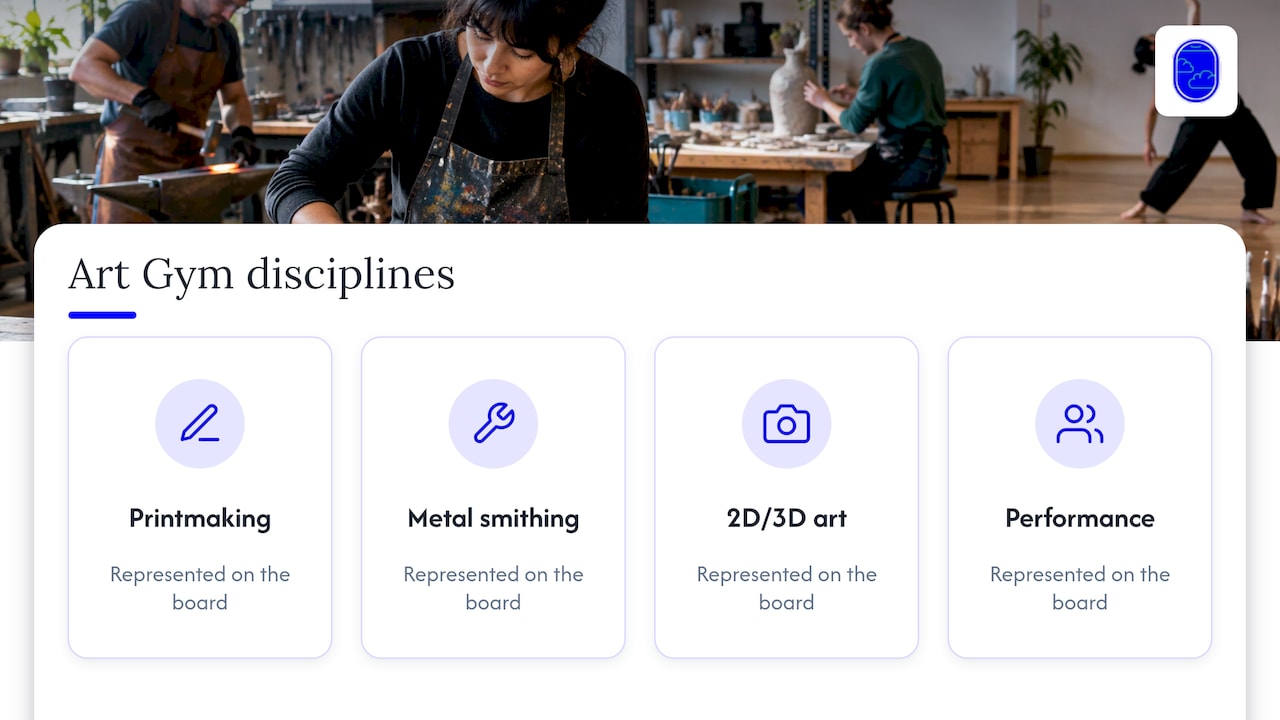
Standard membership costs $135 per month and asks for 12 monitor hours per month. Members can pay more to reduce those hours, or volunteer more to lower the fee. That flexibility is worth noticing: a co-op can trade money for time, and the choice is yours.
Cooperative galleries
Galleries are the classic Denver co-op format. The table below pulls from each gallery's own membership page, so check those pages for current terms before you apply.
| Space | Membership level | Monthly cost | What it asks of you |
|---|---|---|---|
| Spark Gallery | Full | $80 | Live within 60 miles; monthly meetings and gallery operations; one show in half the main gallery per 16 to 18 month cycle |
| Spark Gallery | Associate | $110 | No meeting requirement; open to collaborating artists and small collectives; one show in the associate gallery per cycle |
| Spark Gallery | Supporting | $20 | One group show a year with one or two pieces |
| EDGE Gallery | Full | $75 | Live within 50 miles; one solo show a year in half the gallery; at least 14 sitting hours; at least 9 meetings a year; one gallery job or committee role |
| EDGE Gallery | Associate | $50 | Solo show in a quarter of the space; 7 sitting hours; 6 meetings; one gallery job |
| ARTWORKS | Member | Monthly fee | Original handcrafted work only; local to the Denver metro area; gallery shifts; a share of gallery time |
Notice the pattern. The cheaper the dues, the more hours you usually give. Spark's Associate tier costs more than its Full tier precisely because it removes the meeting requirement. ARTWORKS, in Centennial at The Streets at SouthGlenn, doesn't allow mass-produced or resale items, and a member of its jury contacts applicants about next steps and current openings.
Funded programs that open the door
Not every route in costs dues. Denver Arts & Venues' 2025 to 2026 Denver Creates Fund awarded $633,270 to 62 organizations. Among them is a program in the Art District on Santa Fe that, every three months, gives three Colorado-based artists free studio space, a $500 materials stipend, a business course, mentorship and a chance to curate and show work in the district. Funded programs like this change from year to year, so look at the grantee list on the Denver Arts & Venues site for the current round.
Before you join: the honest cost of a co-op
NYFA's Amy Aronoff puts it plainly: co-op membership is a real financial investment. Fees can reach $100 or more per month, and gallery sitting and volunteering compete with your studio hours. Her advice is to talk with artists who have been members before you commit.
Here's a checklist that works for any Denver co-op:
- Add up the hours. Multiply sitting shifts, meetings and committee work by your own hourly rate, then add the dues. EDGE's Full tier, for example, lists 14 sitting hours plus at least 9 meetings a year.
- Check the distance rule. Spark limits Full membership to artists within 60 miles, and EDGE to 50 miles. Make sure your address qualifies.
- Match your work to the rules. Some spaces, like ARTWORKS, accept only original handcrafted pieces.
- Ask what a show gets you. Spark's Full members get one exhibition per 16 to 18 month cycle. Know how often your work will actually be on the wall.
- Ask about governance. In a true co-op, members elect the board from within the membership. Ask how decisions on rent and insurance are made.
- Visit first. Go to an opening, a workshop or an open studio and talk to the members. 🤝
You don't have to be a member to take part
Co-ops and artist-run spaces are built to be visited. They host the kind of events that make a neighborhood feel alive, and many are free or low-cost.
- Open studios and demos. Mo'Print's 2026 calendar included a free all-day studio sampler at the Co-op at Art Gym, with printmaking demos across relief, intaglio, lithography and screenprinting. It also listed a four-week Lithography for Beginners course at $300, materials included, with pre-registration. Events like these recur, so look at the host's calendar for the next round.
- Gallery openings and artist talks. PlatteForum in the Art District on Santa Fe runs exhibitions with opening receptions and artist talks, often timed to First Friday, and publishes an annual artist-residency application window with a virtual info session. Check its calendar for the current schedule.
- Art walks. The neighborhood art walk is a format many cities share. To see how one big city organizes it, read this guide to art walks in Los Angeles, then pair the idea with Denver's First Friday crowd.
For more of the pop-up side of the scene, see our post on pop-up art in Denver.
Where performance fits in
Visual art gets most of the co-op attention, but Denver's performers organize themselves the same way: they share space, split costs and put on each other's shows. Dancers form collectives, comedians run community nights, and theater companies build seasons together.
That's the corner of the scene we focus on. Our listings cover local music, dance, comedy and theater, plus open mics, classes and cultural events, hosted by community artists and creators across Colorado. A few places to start:
- Dance: dance classes and workshops in Colorado, including modern and jazz.
- Comedy: the Denver comedy showcase page for community-driven nights.
- Theater: local companies such as Ineffable Theatre Co and Elemental Theatre Company.
- Music: folk events in Denver and Globe Hall.
- Everything at once: live performances in Denver.
If you're an artist looking for stage time or collaborators, our guide on networking with local Colorado artists walks through how to meet people in person.
Our perspective
We started Experience By Locals because the best nights out in Colorado are rarely the loudest ones online. They're a choreography showcase in an artist-run sanctuary, a comedy night put together by the people who live down the street, a theater company trying something new.
A cooperative works because people give time and trust to each other. We think audiences should be part of that circle too. When you book a local show, you're not just buying a ticket: you're telling a community that its artists matter.
That's why we list local talent and nothing else as our focus. Browse by music, dance, comedy or theater, pick something that sounds like your neighborhood, and book directly with the host. Guests find real connections with local art, and creators find an audience.
If you're an artist, we'd love to have your events listed. If you're a supporter, we'd love to see you in the front row.
DJ
Find your next local show 🔎
Whether you've just visited a co-op gallery and want to see more Denver talent, or you're a visitor tired of tourist-heavy venues, our Colorado listings let you browse live music, dance, comedy and theater by local artists and book directly with the host. Start with the Colorado listings, or narrow to live performances in Denver.
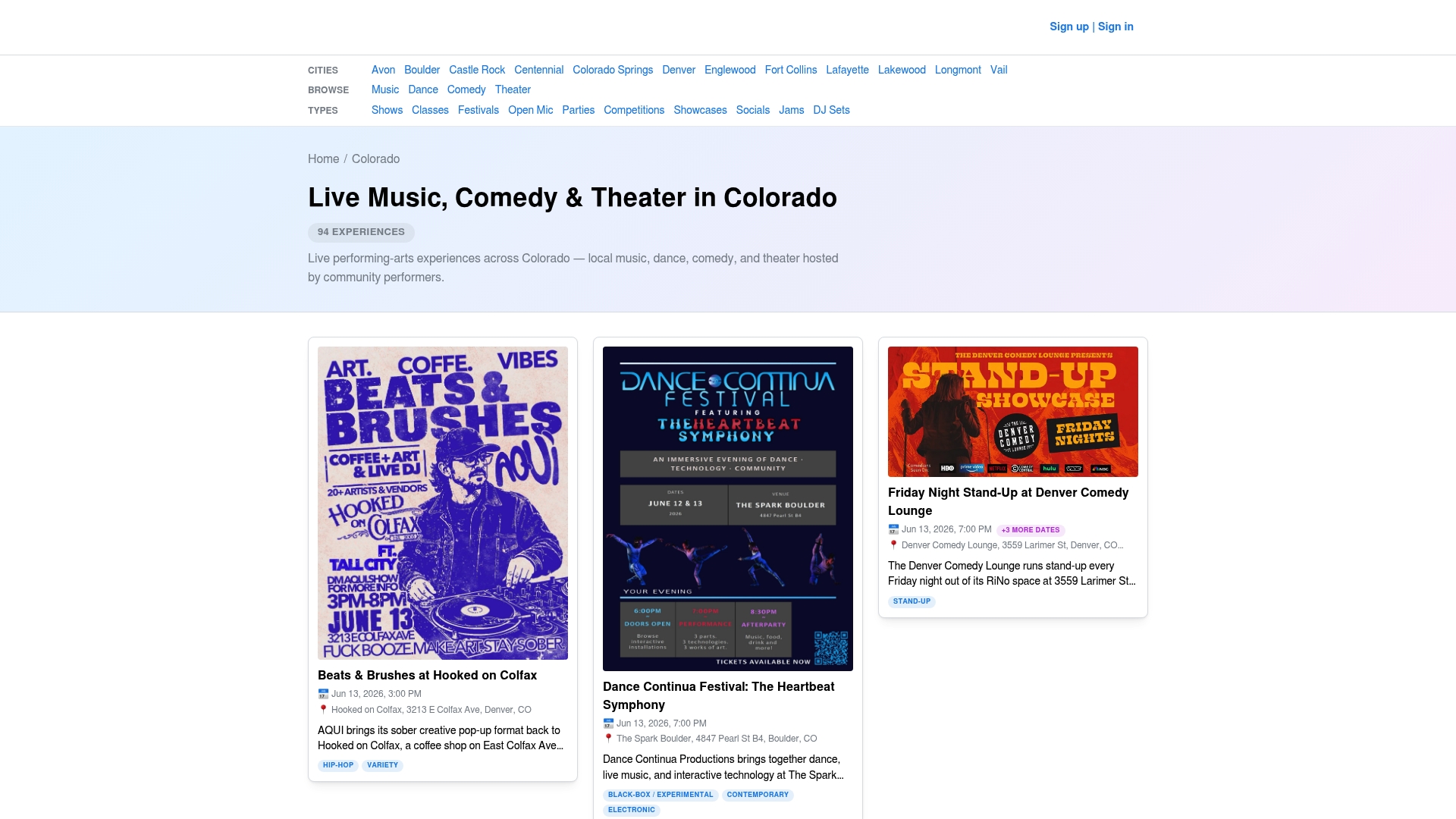
If you want to learn a craft yourself, our classes and workshops in Colorado page collects hands-on options from community artists.
FAQ
What is the difference between an artist cooperative and a regular gallery?
In a cooperative, the artists own and run the space, and they pay dues and share the work of operating it. A commercial gallery selects artists and handles the business itself. Co-op sales commissions are typically nothing to a nominal percentage, according to the College Art Association.
How much does it cost to join a Denver artist co-op?
Published monthly dues in the Denver area range from $20 for a Spark Gallery Supporting membership to $135 for standard membership at Art Gym. Spark's Full tier is $80 and EDGE's is $75. Terms change, so confirm with each space before you apply.
Can I enjoy a co-op without being a member?
Yes. Co-op spaces and artist-run organizations host free studio samplers, paid workshops, openings and artist talks. Check each host's calendar, and for local performances, browse our Denver listings.
Where can I find local performances in Denver by community artists?
Our Colorado listings cover live music, dance, comedy, theater, open mics and classes hosted by local artists. You can filter by category and city, then book directly with the host.
Sources
- CAA Guidelines: Statement on exhibition venues
- Ask #ArtistHotline: Should I Join a Co-op Gallery? (NYFA)
- How Denver's Art Gym went from private passion project to artist co-op (Colorado Sun)
- Spark Gallery membership
- EDGE membership information
- ARTWORKS: Join the Collective
- 2025-26 Denver Creates Fund Grantees (Denver Arts & Venues)
- Mo'Print Workshops and Events 2026
- PlatteForum calendar
- Art Walks in Los Angeles: Where to Go and When