
Book Local Performance Venues in Colorado: A Complete Guide
Booking a local performance venue is the process of selecting, approaching, and securing a space that fits your performance style, audience size, and event goals. Whether you are an independent artist looking for your first Colorado gig, a community organizer planning a cultural night, or a tourist wanting to catch authentic local talent, this book local performance venue guide walks you through every step. The standard lead time for most venues runs 4–12 weeks, with popular weekend slots requiring 2–3 months of advance planning. Getting the timing right is the first thing that separates a confirmed show from an ignored email.
How to book a local performance venue: finding the right fit
The right venue is not just a room with a stage. It is a space where your audience feels at home and your performance lands the way you intended.
Research before you reach out
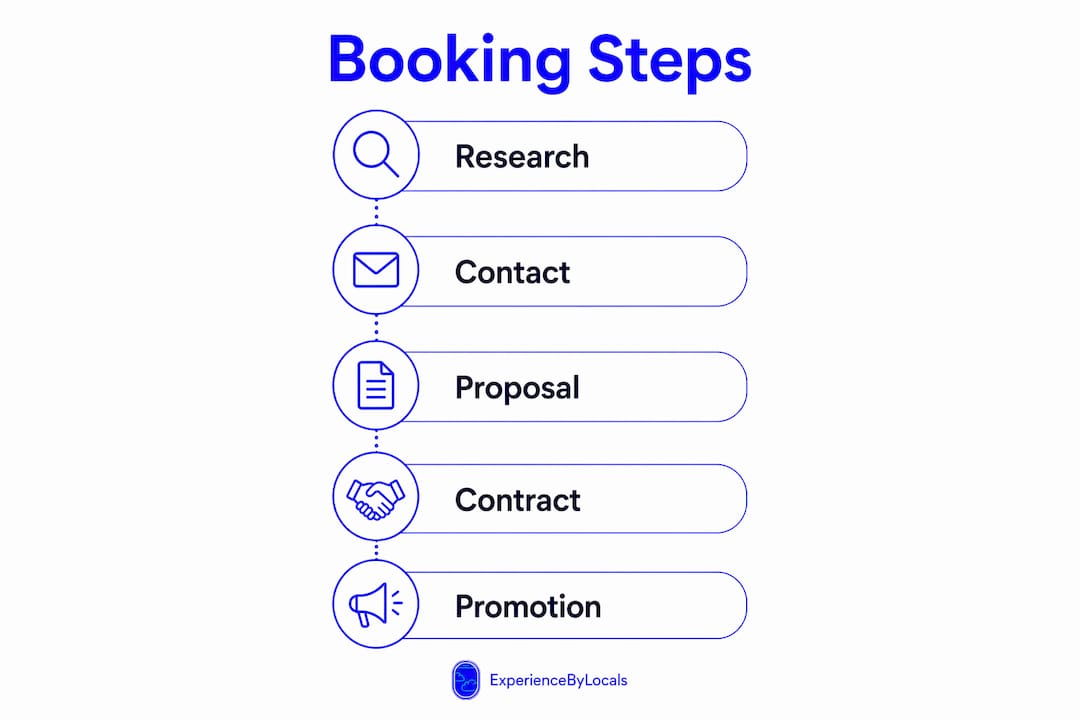
Start by attending shows at venues you are considering. Nothing replaces walking the floor, checking sightlines, and feeling the room's energy in person. Local event calendars, community boards, and platforms like Experiencebylocals give you a real picture of which spaces host which genres. Searching for live music in Colorado shows you which venues are actively programming and what crowds they draw.
Look at what similar artists have played recently. If a venue books acoustic folk on weeknights and punk on weekends, you already know where you fit. Genre compatibility matters more than venue prestige, especially when you are building your first local following.
Evaluate the venue against your crowd size
Venues prioritize artists who can realistically fill at least 20% of their capacity. That means if you can draw 20 people, a 50-capacity room is a smarter pitch than a 300-seat theater. Matching your draw to the room shows bookers you understand the business.
Amenities shape the audience experience just as much as the performance itself. Venue features like free parking, ADA accessibility, and proximity to dining increase audience retention and artist satisfaction. Colorado venues range from intimate bars and black box theaters to community centers and artist-run spaces, each with different trade-offs.
- Bars and clubs: High foot traffic, built-in audiences, but noisy environments and limited production support
- Theaters and black box spaces: Better acoustics and staging, but higher rental costs and stricter scheduling
- Community centers: Affordable and accessible, great for family-friendly or culturally specific programming
- Artist-run spaces: Artist-run venues build community by offering rehearsal and creation space alongside performance, deepening the local cultural ecosystem
Pro Tip: Visit at least two or three venues as an audience member before you pitch. You will notice details like sound bleed from the bar, limited load-in access, or a crowd that never looks at the stage. Those details will save you from a bad booking.
How to craft a booking proposal that actually gets a response
Most booking emails get deleted in under 10 seconds. The ones that work are short, specific, and written for the person reading them, not for the artist sending them.
Find the right contact
The booker, talent buyer, or venue manager is your target. Emailing a general inbox rarely works. Check the venue's website, social media bio, or call the front desk and ask who handles booking. Getting the right name takes five minutes and doubles your response rate.
Build your pitch around what the venue needs
Pitch emails should stay under 150 words and include your genre, city, one or two performance links, and social proof such as recent ticket sales or press coverage. Venues are not looking for your life story. They want to know if you will bring people through the door and whether you are professional to work with.
A strong booking proposal follows this structure:
- Opening line: Name the venue and reference a recent show they hosted. This proves you did your homework.
- Who you are: One sentence with your name, genre, and city.
- Your draw: State your typical attendance or recent ticket numbers honestly.
- Performance links: Two links maximum, one live video and one audio track.
- Available dates: Give three to five specific dates within the venue's typical booking window.
- Close: One sentence asking for a conversation, not a commitment.
Professional pitch materials should also include a brief bio, recent show history, and clearly stated available dates in a one-page document you can attach or link. Think of it as your booking resume.
Pro Tip: Reference a specific artist the venue has hosted and explain why your audience overlaps with theirs. Bookers respond to artists who understand the room, not just artists who want to play it.
Time your outreach correctly
First-time performers book venues 4–12 weeks in advance depending on venue size. Smaller bars may have open slots two to three weeks out. Larger theaters and festival stages need three to six months. Send your pitch inside that window. Too early and you get lost in the calendar. Too late and the slot is gone.
What are the key logistics and contract terms to know?
Booking a venue is a business transaction. Understanding the standard terms protects you from surprises on show night.
Typical rental terms and costs
Local event spaces often require a minimum of 3–4 hours and a security deposit at booking. Hourly rates typically run $125–$200 depending on the day and demand. Weekend evenings cost more. Weekday afternoons cost less. Always ask what is included in the hourly rate before you sign.
Deal structures vary by venue type and your negotiating position:
| Deal Type | How It Works | Best For |
|---|---|---|
| Flat guarantee | Venue pays a fixed fee regardless of attendance | Established artists with proven draw |
| Door split | Artist and venue divide ticket revenue by percentage | Mid-level artists building their audience |
| Percentage of bar | Artist earns a cut of bar sales during the show | Artists with high-energy, drinking-friendly crowds |
| Rental agreement | Artist pays the venue and keeps all ticket revenue | New artists or community event organizers |
Contract essentials
Every booking should be confirmed in writing, even for small shows. A solid agreement covers the time slot, load-in and sound check times, equipment provided by the venue, compensation terms, and cancellation policy. Verbal agreements fall apart. Written ones hold.
Ask specifically about what backline gear the venue provides. Some Colorado venues supply a full PA system and drum kit. Others expect you to bring everything. Knowing this before the show prevents expensive last-minute rentals.
How do you promote your event and build lasting venue relationships?
Booking the show is step one. Filling the room and getting invited back is the real goal.
Promote like the show depends on it
Because it does. Venues track attendance, and a poorly attended show affects your chances of returning. Start promoting at least three weeks out using every channel available to you.
- ✅ Post event details on your social media profiles with the venue tagged
- ✅ Add the show to local event calendars and platforms like Experiencebylocals
- ✅ Email your list with a direct link to tickets or the venue's booking page
- ✅ Ask the venue to share the event on their own channels
- ✅ Reach out to local press, blogs, and community newsletters for coverage
Platforms like open mic nights in Colorado are a low-pressure way to build your local audience before you take on a full headlining slot. Use those smaller shows to grow your email list and social following.
Show up professionally every time
Artists who show reliable attendance and professionalism build long-term venue relationships more easily than those relying only on talent. Arrive early. Communicate with the sound engineer before doors open. Respect the load-out time. These habits get you re-booked.
After the show, send a short thank-you message to the booker within 48 hours. Mention something specific about the night. This is not a formality. It is how you become a preferred artist. Venues remember the people who make their job easier.
Turn one show into a series
A single successful show is proof of concept. Use it to pitch a residency, a seasonal return, or a co-promoted event with another local artist. Colorado's live performance scene rewards artists who think like community builders, not just performers. Connecting with the local dance community or theater groups opens cross-promotional opportunities that fill rooms faster than solo promotion ever will.
Key Takeaways
Booking a local performance venue successfully requires matching your draw to the right room size, pitching within the 4–12 week lead window, and following up with professionalism that earns you a return invitation.
| Point | Details |
|---|---|
| Lead time matters | Book 4–12 weeks out; popular weekend slots need 2–3 months advance planning. |
| Match your draw to the room | Target venues where you can fill at least 20% of capacity to improve booking chances. |
| Keep pitches under 150 words | Include genre, city, performance links, and social proof in every booking email. |
| Get everything in writing | Confirm time slots, compensation, equipment, and cancellation terms before the show. |
| Professionalism earns return bookings | Artists who arrive early, communicate well, and follow up get re-booked consistently. |
Why venue size is the most underrated decision you will make
I have watched talented artists play to three people in a 200-capacity room and walk away feeling like failures. The room was not the problem. The mismatch was. Choosing a venue that fits your current draw, not your dream draw, is the most honest and effective thing you can do for your career right now.
Artist-run spaces changed how I think about this entirely. Places built by creators for creators carry a different energy. They are flexible, community-minded, and genuinely invested in your success because your success is their success. The role of artist-run studios in Colorado's cultural scene goes far beyond providing a stage. They create ecosystems where artists rehearse, collaborate, and grow together.
The artists I have seen thrive in Colorado's live scene share one habit: they treat every venue relationship like a long-term partnership, not a transaction. They show up on time, they bring their crowd, and they say thank you. That is not a performance strategy. That is just how community works.
— DJ
Colorado's live performance scene, brought to you by Experiencebylocals
Experiencebylocals connects artists, audiences, and venues across Colorado through a platform built around authentic cultural experiences. Whether you are an artist looking for your next stage or a guest searching for something real beyond the tourist circuit, the platform brings it all together.
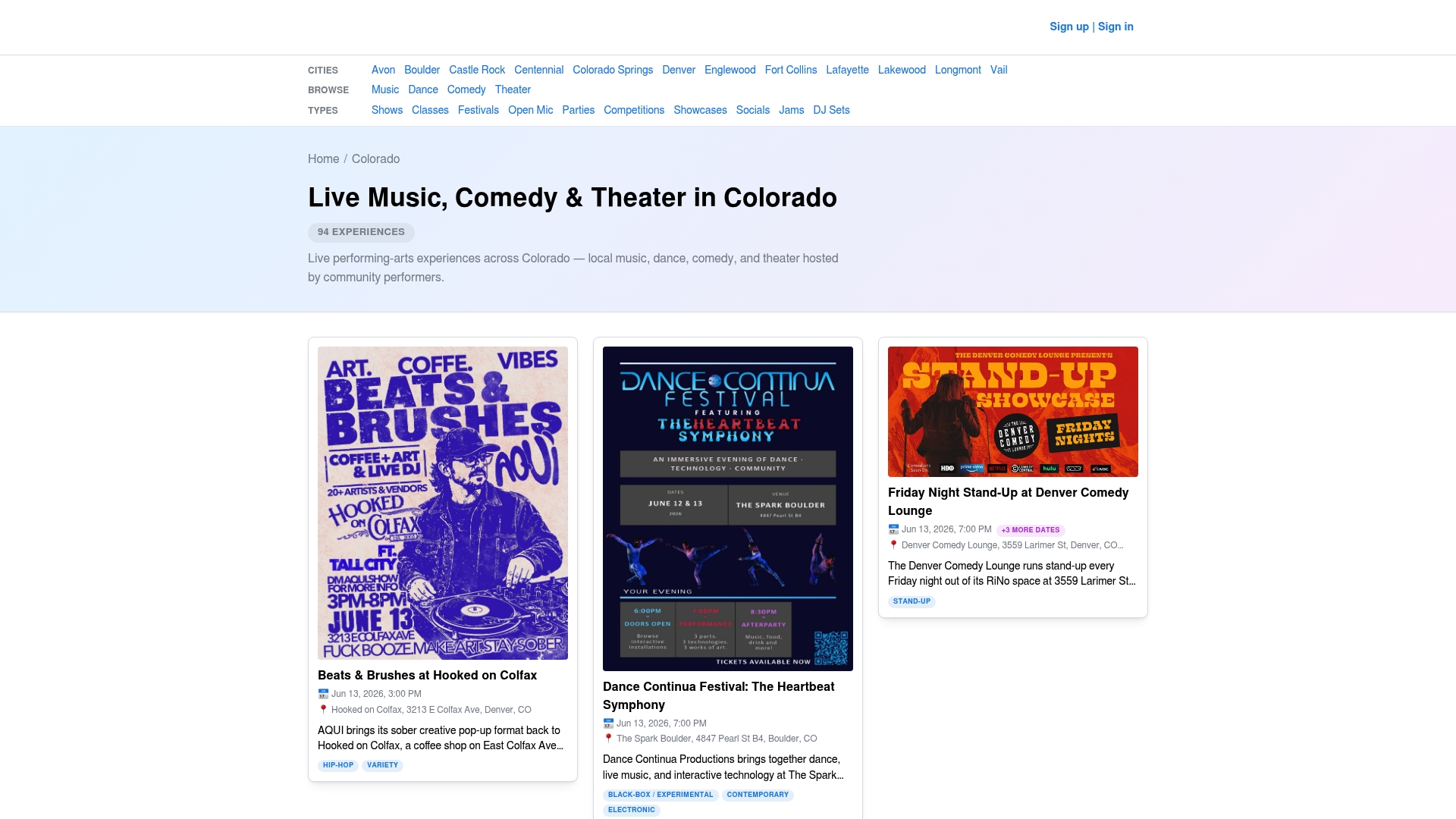
From grassroots live music and comedy events to dance showcases and theater nights, Experiencebylocals features performances that reflect the genuine cultural heartbeat of Colorado communities. You can browse upcoming shows, find venues near you, and connect with the creators behind the art. Start with live music near you and see what Colorado's local artists are building right now.
FAQ
How far in advance should I book a local performance venue?
Book 4–12 weeks in advance for most local venues. Popular weekend slots at mid-size Colorado venues often require 2–3 months of lead time.
What should a venue booking email include?
Keep it under 150 words and include your genre, city, one or two performance links, and recent social proof like ticket sales or press. Attach or link a one-page pitch document with your bio and available dates.
How much does it cost to rent a local performance space?
Hourly rates typically run $125–$200, with most venues requiring a 3–4 hour minimum and a security deposit at booking. Costs vary by day of week and venue demand.
What is the best venue size for a new artist?
Target a venue where you can fill at least 20% of capacity. If your realistic draw is 25 people, a 100-seat room is a better fit than a 500-seat hall.
How do I find performance venues near me in Colorado?
Browse local event calendars, attend shows at venues you are considering, and use platforms like Experiencebylocals to see which Colorado spaces are actively programming live events in your genre.