
Beginner Contra in Denver From $5: CFOOTMAD Dates & Hands Across

For regular contra dancing in Denver, CFOOTMAD runs the main recurring series, with Hands Across adding an inclusive, gender-neutral night every fourth Saturday. Every dance opens with a beginner lesson, so you can show up solo, with a friend, or with a partner and still follow along. Check the organizer calendar or browse our Denver listings for the next date, then arrive early enough to catch that lesson.
TL;DR:
- Arrive early for the beginner lesson, as it provides essential instruction that improves comfort and confidence during the dance.
- Check the CFOOTMAD calendar weekly for schedule updates, venue changes, and last-minute announcements to stay current on dance details.
- Dress in breathable, non-marking shoes with a shallow sole and bring water and cash for admission, to ensure comfort and readiness.
- Hands Across offers a gender-neutral night every fourth Saturday with a sliding scale fee and role terms like larks and robins, promoting inclusivity.
- Dancers often return multiple times to build familiarity, friendships, and improve their skills in the caller-led, community-focused contra dance scene.
Table of Contents
- Where to find Denver contra dances and how to check the schedule
- What to expect at a Denver contra dance
- How to prepare and what to bring
- Cost, accessibility, and community norms
- Local perspective: why Denver contra builds community
- Experience By Locals: find and book Denver contra and other local dance events
- Author perspective: why show up more than once
- FAQ
- Sources
Where to find Denver contra dances and how to check the schedule
CFOOTMAD (Colorado Friends Of Old Time Music And Dance) organizes the backbone of Denver's contra scene, and their Denver contra dance page is the first place to look for upcoming dates. Dances typically happen at Wheatridge Grange, a community hall that has hosted the group's events for years, which means you'll find a familiar room, a welcoming floor, and regulars who remember what their first dance felt like.
If you want a gender-neutral night with role terms like larks and robins instead of the traditional leads and follows, look for Hands Across, the fourth-Saturday series built around that format. Some Denver dancers also make the short drive to Boulder, where Friends of Traditional Dance keeps a similar schedule running, so it's worth knowing the patterns in both cities if you want more frequent chances to dance.
A few ways to stay current on dates, times, and venue changes:
- Bookmark the CFOOTMAD calendar and check it weekly, since holidays and venue availability sometimes shift a dance by a day or a location.
- Browse our Denver event listings alongside the organizer page to cross-check details and discover other local dance nights happening the same week.
- Sign up for the organizer's mailing list if one is offered, since last-minute cancellations or special callers are usually announced there first.
- Look at the event page itself rather than relying on memory, because start times and lesson windows can vary by a few minutes from dance to dance.
What to expect at a Denver contra dance
A caller walks everyone through each dance's figures before the band starts, then keeps calling softly as the room gets the hang of it. That's the whole trick to contra: you're taught the pattern live, in real time, with a live band providing the rhythm that makes the moves feel natural once you're inside them.
A typical evening breaks down roughly like this:
- A free beginner lesson starts first, usually a half hour before the advertised dance time, covering the basic moves you'll need for the night.
- The caller introduces the first dance, walks the group through the figures without music, then brings in the band once everyone has the pattern.
- The caller continues calling the figures during the first few rounds of live music, fading out once the room finds its footing.
- Dances continue for two to three hours, with short breaks between sets so dancers can catch their breath and switch partners.
Missing a turn or ending up in the wrong spot is normal, and the dancers around you will usually nudge you back into place without missing a beat. You don't need a partner to attend. Many dancers arrive alone and rotate through the evening meeting new people each set.
How to prepare and what to bring
The single most useful thing you can do as a first-timer is arrive for the lesson rather than the advertised dance start, since that's when you actually learn the vocabulary you'll use all night. Organizer guidance consistently points to this as the biggest difference between a confusing first dance and a comfortable one, according to contra dance etiquette guidance.
A short checklist before you head out the door:
- Wear clean, non-marking shoes with a shallow sole that lets you pivot and turn without sticking to the floor.
- Choose breathable clothing that moves with you. Contra involves a lot of turning, and stiff fabric fights back.
- Bring water, since a full evening of dancing adds up even in a cool hall.
- Carry a little cash or a card for sliding-scale admission at the door.
Pro Tip: If you're nervous walking in alone, introduce yourself to the caller or anyone standing near the sign-in table. Most regulars are happy to walk a newcomer through their first dance.
Cost, accessibility, and community norms

Admission at CFOOTMAD's main Denver dances generally runs on a published scale, listed around $15 for non-members, $12 for members, $10 for students, and free for kids 12 and under, according to CFOOTMAD's Denver dance page. Hands Across uses a sliding scale instead, typically in the $5 to $15 range, which keeps the fourth-Saturday series accessible regardless of what you can afford that month, per CFOOTMAD's Hands Across page.
A few norms worth knowing before your first night:
- If money is tight, ask an organizer about volunteer or work-for-admission arrangements. Sliding scales exist precisely so cost doesn't keep people home.
- Hands Across nights use gender-neutral role language (larks and robins) so dancers can choose either role freely, which matters if traditional lead-and-follow terms feel limiting.
- It's considered polite to accept a dance invitation when you're free, but it's equally fine to decline if you need a break.
- If you have accessibility needs, reach out to organizers ahead of time. Most are glad to talk through seating, pacing, or other accommodations.
Local perspective: why Denver contra builds community
Contra dancing rewards showing up more than once. The figures get easier, the faces get familiar, and the caller-led format means you're never stuck relying on memory alone, since instruction happens live every time. Regional coverage of the broader contra scene describes it as a recurring social network built on repeat participation, where dancers form friendships that outlast any single evening, according to regional reporting on contra dance culture.

We list these community-run nights, alongside other grassroots dance and music events across Colorado, because that kind of recurring, locally organized gathering is exactly what our platform exists to surface for people looking past the tourist circuit.
Experience By Locals: find and book Denver contra and other local dance events
We built our Denver listings so you can search local dance nights the same way you'd search for a concert or a comedy show, without digging through a dozen separate organizer sites. Browsing our Colorado dance category alongside CFOOTMAD's own calendar gives you a fuller picture of what's happening on any given week, contra included.
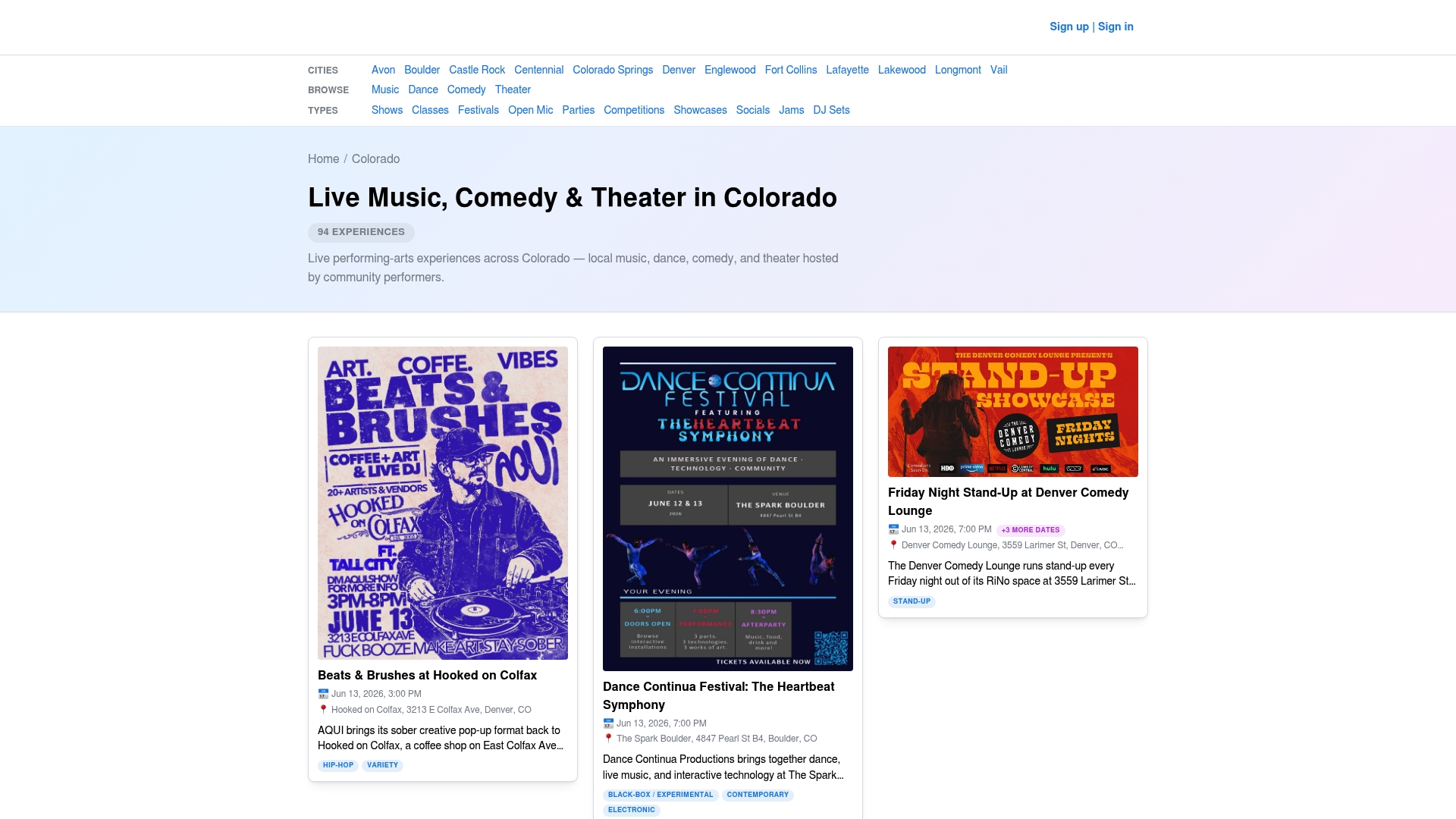
When you search, you'll find event listings with dates, venues, lesson times, and contact information to reach hosts.
Start with our Colorado landing page to see what's dancing, playing, or performing near you this month.
Author perspective: why show up more than once
The first contra dance I attended, I knew no one and remembered maybe half the figures. By the third visit, I had a handful of regulars who waved me over before the lesson even started. That's the quiet magic of a caller-led format: it strips away the pressure to already know what you're doing, so the only real requirement is curiosity. If you've been putting off your first night, let a beginner lesson be the low-stakes start, and let our Denver listings help you find the next one.
— DJ
FAQ
Do I need a partner to go contra dancing in Denver?
No, you don't need a partner or any prior experience. Dances rotate you through different people each set, and the beginner lesson before the dance teaches you everything you need for the night.
How much does a Denver contra dance cost?
CFOOTMAD's main Denver dances are typically priced around $15 for non-members, $12 for members, $10 for students, and free for kids 12 and under, per CFOOTMAD's Denver dance page. Hands Across uses a sliding scale of roughly $5 to $15, according to CFOOTMAD's Hands Across page.
What should I wear to a contra dance?
Wear clean, non-marking shoes with a shallow sole that lets you turn easily, plus breathable clothing that won't restrict your movement. Avoid sticky-soled hiking shoes, since they can catch during pivots, based on contra dance preparation guidance.
What is Hands Across and how is it different from a regular contra dance?
Hands Across is a CFOOTMAD series held every fourth Saturday that uses gender-neutral role terms, larks and robins, instead of traditional lead-and-follow language. It runs on a sliding-scale admission and includes the same free beginner lesson as other Denver contra nights, according to CFOOTMAD's Hands Across page.
Where exactly do Denver contra dances happen?
Most of CFOOTMAD's Denver dances take place at Wheatridge Grange, a community hall that regularly hosts the series. Exact dates and any venue changes are posted on the CFOOTMAD Denver dance page.
Sources
- Denver Contra Dance - Traditional Contra Dancing | CFOOTMAD
- Contra dance FAQ and practical guidance
- Regional coverage of contra dancing and community impact