
Authentic Denver Flamenco: Classes, Tablaos, Six Week Modules

Yes, Denver has an active flamenco scene with classes and live performances happening throughout the year. Whether you want to learn footwork and palmas yourself or just want to watch a tablao-style show, you have real options here. The fastest next step is checking current class schedules or browsing Denver dance events to see what is happening soon.
TL;DR:
- Most flamenco classes in Denver are offered in six-week modules, with drop-in options available for tryouts before full commitment.
- Live guitar and singing accompaniment are best included in classes to ensure a genuine connection to flamenco's musical roots.
- Small, intimate venues offer the most authentic experiences, where real-time interaction and close proximity enhance the performance.
- When choosing a class or show, verify instructor lineage and whether live music is part of the curriculum or event.
- Residents can find local flamenco performances, classes, and cultural events easily through Experience By Locals listings, which highlight grassroots and community-based programs.
Table of Contents
- Flamenco classes and programs in Denver
- Where to see flamenco in Denver: performances, tablaos, and community shows
- How to choose the right flamenco class or show in Denver
- Practical details: schedules, pricing shapes, and what to bring
- Denver's flamenco community and cultural context
- Local host perspective: finding authentic flamenco in Denver
- Find and book flamenco shows and classes with Experience By Locals
- FAQ
- Sources
Flamenco classes and programs in Denver
Denver's flamenco classes generally sort into a few clear tracks, so you can pick a starting point without guessing. Beginner classes focus on posture, basic footwork, and rhythm. Intermediate and performance-track classes layer in choreography, costume work, and live accompaniment. Many studios also run youth programs that introduce kids to flamenco through simplified movement and rhythm games.
Most programs run on a module system rather than an open-ended subscription. Local reporting on Denver's flamenco scene notes that six-week modules are common, with drop-in spots sometimes available for folks who want to try a class before committing. That structure makes it easier to test the waters without signing up for a full semester.
A first class typically covers:
- A warmup focused on posture and arm positioning
- Basic footwork patterns (zapateado) at a slow tempo
- Palmas, the hand-clapping patterns that carry the rhythm
- An introduction to compás, the underlying beat structure that holds everything together
What separates a genuinely rooted class from a generic dance workout is how instructors handle lineage. Look for classes that include live guitar accompaniment or cante (flamenco singing) at some point in the curriculum, even if it is just for performance-track students. That connection to the music's origins is part of what makes flamenco distinct from other forms of dance fitness.
Where to see flamenco in Denver: performances, tablaos, and community shows
Live flamenco in Denver shows up in a few different formats, and each one offers a different experience. Tablao-style shows put dancers, singers, and guitarists close to the audience in an intimate setting built around spontaneity. Concert programs are more staged and theatrical, often tied to a specific production or theme. Student showcases let you see local learners perform what they have practiced, and seasonal festivals bring multiple groups together for a bigger celebration.
Typical event types include:
- Tablao performances at small, intimate venues
- Concert-style shows at performing arts centers
- Student and company showcases
- Community festivals with multiple performers
Venues span performing arts centers, smaller tablao-style rooms, and community spaces that host dance alongside other cultural programming. Ticketing varies by event: some shows sell out weeks ahead, while community performances are sometimes free or low-cost. Local radio coverage of productions like RAÍCES highlights upcoming performance dates through interviews and event listings, which is a good way to track what is coming up.
Pro Tip: Arrive early for tablao-style shows. Seating is often close and informal, and the best spots near the performers go quickly.
Audience participation is part of the tradition, not an interruption of it. Shouting words of encouragement, known as jaleo, and clapping along with palmas are welcomed and expected at most live shows.

How to choose the right flamenco class or show in Denver
Picking the right class or show gets easier once you know your own goal. Are you looking for technique and discipline, a fitness outlet, or an eventual performance opportunity? Each answer points you toward a different kind of program.
- Decide whether you want pure technique, general fitness, or a path toward performing.
- Ask about class size. Smaller groups generally mean more individual feedback.
- Ask whether live guitar or singing accompaniment is part of the class, especially at intermediate and advanced levels.
- Ask about the instructor's training lineage and how long they have taught in Denver.
- Ask about refund or make-up policies before paying for a full module.
- Compare drop-in pricing against session or membership pricing to see which fits your commitment level.
A few red flags are worth watching for. A studio or event with no clear published schedule, vague pricing, or no live accompaniment at the advanced level is worth a second look before you commit your time or money.
Practical details: schedules, pricing shapes, and what to bring
Denver flamenco programs tend to run on predictable rhythms, but details shift often enough that confirming directly before you show up is worth the extra minute. Six-week class modules are a common format in Denver's flamenco scene, according to local reporting on the city's flamenco history, though exact schedules vary by studio and season.
Pricing generally falls into a few shapes:
- Single drop-in classes, priced per session
- Full module pricing, usually discounted compared to paying per class
- Workshop fees for special guest instructor sessions
- Performance or recital fees for students moving toward a showcase
For footwear and attire, character shoes with a sturdy heel are standard for intermediate and advanced students, while beginners can often start in comfortable flat shoes with good grip. A flowing practice skirt helps you see and feel your hip and leg movement, though it is rarely required for a first class. Most studios ask you to check in a few minutes early and confirm your spot by phone, email, or an online booking form before each module begins.
Denver's flamenco community and cultural context

Denver's flamenco roots run deeper than many visitors expect. René Heredia, often called Denver's godfather of flamenco, spent decades teaching, performing, and building the city's flamenco guitar tradition from the late 1960s onward, earning major local arts recognition along the way. That legacy continues through students and companies who carry his teaching forward today.
Educational outreach matters here because flamenco is an oral and physical tradition passed hand to hand, not something picked up from a book. Community programs and local productions like RAÍCES keep that chain intact by pairing experienced performers with new students and audiences.
Flamenco is recognized by UNESCO as part of the Intangible Cultural Heritage of Humanity, inscribed in 2010, reflecting its origins in Andalusia and the gitano community.
That global recognition is part of why community-rooted shows matter so much locally. Every student class and small tablao performance in Denver is a thread connecting back to that much older tradition.
Local host perspective: finding authentic flamenco in Denver
The flamenco shows that stick with people are rarely the biggest or flashiest ones. They tend to be the small tablao nights where the guitarist and the dancer are reading each other in real time, and the room is close enough that you can hear the footwork land.
My tip for finding that kind of show: look for events tied to a specific teaching lineage or community organization rather than a one-off novelty act. Ask whether there is live cante or guitar, not just recorded music. If a venue or studio can answer that question clearly, you are probably looking at something grassroots and genuine rather than a tourist version of the art form.
— DJ
Find and book flamenco shows and classes with Experience By Locals
Finding a flamenco class or show in Denver should not take more effort than the dancing itself. Experience By Locals lists local music, dance, comedy, and theater events hosted by Colorado artists and community organizers, which means flamenco classes and performances sit alongside other grassroots cultural experiences rather than getting buried in generic listings.
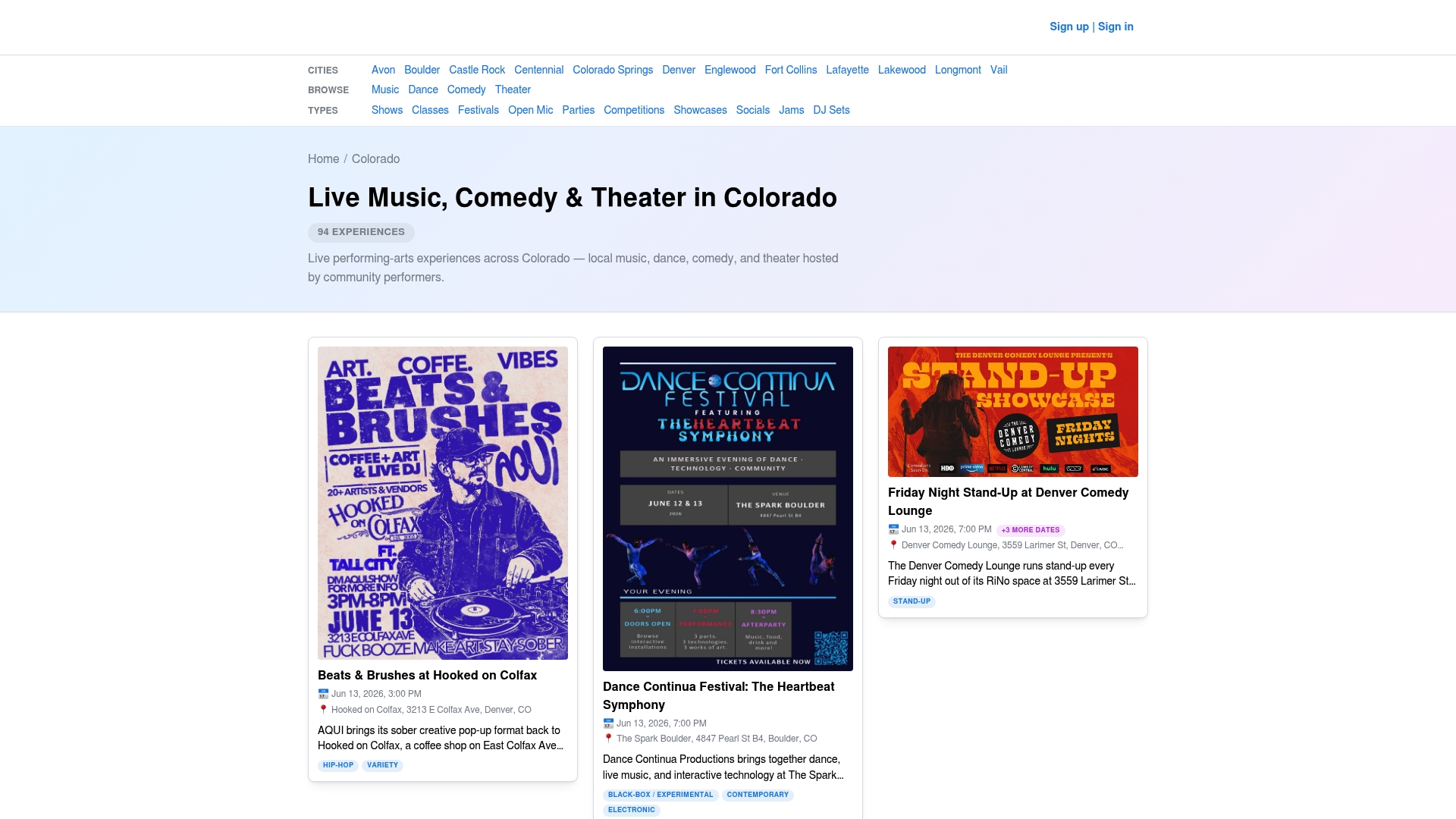
Browsing is simple:
- Filter by dance performances across Colorado to see what is currently listed
- Check the Denver city page for local shows close to home
- Look at community cultural events like Latin Night Denver for a sense of the kind of grassroots programming the platform features
| What you can browse | Where to find it |
|---|---|
| Dance performances across Colorado | Dance Performances in Colorado |
| Local events in Denver | Denver city page |
| Community cultural experiences | Latin Night Denver example |
Browse current listings and book directly through Experience By Locals in Colorado to see what flamenco and dance events are coming up near you.
FAQ
What do they yell during flamenco?
Audiences and performers often shout encouraging phrases known as jaleo during flamenco, including exclamations like "Olé." These shouts are a traditional part of the performance, meant to encourage dancers and musicians rather than interrupt them, according to flamenco terminology references.
What cities are known for flamenco?
Flamenco originated in the region of Andalusia in southern Spain and remains closely associated with that region, according to encyclopedic summaries of the art form. In the United States, cities with established local flamenco communities include Denver, where instruction and performance have deep local roots.
What do you call a female flamenco dancer?
A female flamenco dancer is called a "bailadora," while a male dancer is called a "bailador." A flamenco singer, regardless of gender role in performance, is typically called a "cantaor" or "cantaora," according to flamenco glossary references.
What does flamenco mean?
Flamenco refers to an art form that blends singing, dance, and guitar music, rooted in the culture of Andalusia and the gitano community in Spain. It was recognized by UNESCO as Intangible Cultural Heritage of Humanity in 2010, reflecting its cultural significance beyond entertainment alone.
How do I find flamenco classes or shows in Denver right now?
Check studio schedules directly since many programs run on six-week modules that change throughout the year, as local reporting on Denver's flamenco scene notes. You can also browse current listings for dance events in Colorado to see what performances are coming up near Denver.
Sources
- Remembering Rene Heredia, Denver’s Godfather of Flamenco
- ¡Olé! Beyond Borders / Flamenco sin fronteras – KGNU Community Radio
- Flamenco: what happens when a grassroots musical genre becomes a marker of culture
- Diccionario flamenco (flamenco glossary)