
Find Tonight's Denver Fusion Nights via Experience By Locals

The fastest way to try fusion dance in Denver is to show up at a weekly or monthly social like Back Room Fusion or Tuesday Fuse-day, or dive into the annual Hot Night Fusion Weekend for a full immersion. Before you go, check the event page for lesson level, start time, and tickets. Platforms like local event listing sites and organizers such as CMDance keep that information current, so you can walk in ready instead of guessing.
TL;DR:
- Most Denver fusion events recommend arriving early to secure parking and avoid heavy scents that can affect close contact dancing.
- Beginners should prioritize attending weekly socials with explicit beginner-friendly lessons to build confidence and establish consistency.
- Always verify event details such as times, prices, and venue accessibility on official pages before attending to ensure up-to-date information.
- The city’s scene offers both regular socials like Back Room Fusion and an annual festival, providing varied learning intensities and social experiences.
- Utilizing platforms like Experience By Locals helps easily find current fusion dance events and explore surrounding styles in the Denver area.
Table of Contents
- Where to try fusion in Denver right now
- Local logistics and etiquette to know before you go
- How to choose the right event for you
- What actually matters when you're starting out
- Why Experience By Locals makes finding Denver fusion easier
- Event pages and background reading worth bookmarking
- Sources
- FAQ
Where to try fusion in Denver right now
Fusion dance blends techniques from multiple partner dance styles into one improvised conversation on the floor. According to Wikipedia's overview of fusion dance, it prioritizes musicality, connection, and lead-and-follow over any single fixed step pattern, which is exactly why it welcomes dancers from so many backgrounds. You don't need to master a syllabus. You need to listen, adapt, and show up.
Denver's scene runs on a mix of recurring socials and one big annual festival, each serving a different purpose depending on how you like to learn.
- Back Room Fusion meets monthly at Casa Denver Dance Studio, typically from 8:30 to 11 PM, with a short warm-up lesson followed by open-floor movement. You don't need a partner to attend, according to the Back Room Fusion event listing.
- Tuesday Fuse-day is a weekly fixture with an 8 to 9 PM lesson and a 9 to 11 PM social, running on a sliding-scale contribution of $0 to $20, as described on the Tuesday Fuse-day event page. Many weeks lean into community potluck norms, so bring something to share if you can.
- Hot Night Fusion Weekend is CMDance's annual festival, held in September with daytime classes and evening socials packed into one immersive weekend, according to the event description.
Socials build steady relationships over time. A festival compresses months of growth into a single weekend of workshops, DJs, and late nights on the floor. Both are worth your time, just for different reasons.
One honest note before you commit to a date: times, prices, and venues shift. Always confirm the specifics on the event or ticket page the week you plan to go, rather than relying on a schedule from months back.
Local logistics and etiquette to know before you go
A lot of Denver's fusion scene lives in house venues and shared studio spaces, which means the usual nightclub assumptions don't always apply. Parking is often limited to a driveway or a quiet residential street, so arrive a few minutes early and park with your neighbors in mind. Loud car doors at 11 PM do not make a good first impression on the block.

Scent policies show up more often than you'd expect. Dancing fusion means close contact, so many hosts ask attendees to skip heavy perfume, cologne, or strong-smelling lotions. If you're sick, even mildly, plan to stay home. These are community spaces built on trust, and organizers take that seriously.
Potluck culture is common at weekly socials, where a shared snack table doubles as a way to keep costs low and connection high. Sliding-scale pricing works the same way: it's not a discount, it's a way to make sure teachers and DJs get paid while keeping the door open to newcomers. None of this is written down anywhere official, which is exactly why checking the event page, and reading the fine print in the description, matters before your first visit.

How to choose the right event for you
Start with the lesson description. A social that lists a specific lesson topic (musicality, connection, a particular style influence) tells you more about the night than one that just says "lesson included." If you're brand new, look for events that explicitly welcome beginners rather than assuming you'll pick things up from the sidelines.
Venue matters too. A studio floor like Casa Denver Dance Studio behaves differently than a converted living room, both in terms of space and in terms of social norms. If accessibility is a concern, parking, stairs, or floor surface, a quick message to the organizer ahead of time usually gets you a clear answer.
Health etiquette has become part of choosing an event, not an afterthought. Many Denver hosts now state their expectations directly on the event page: stay home if you're sick, be mindful of scent, and respect anyone who asks for space on the floor. If an event doesn't mention any of this, it's worth asking before you go.
The goal is matching the night to where you are right now: a gentle weekly lesson if you're new, a festival weekend if you're ready to go deep.
What actually matters when you're starting out
The advice you'll hear most often is to "just show up and feel it out," and there's some truth to that. Fusion really does reward listening over memorized steps. But that advice undersells how much the lesson portion of a social matters for a first-timer. Skipping the warm-up lesson at Back Room Fusion or Tuesday Fuse-day and heading straight to the open floor is where most beginners get discouraged, not because they can't dance, but because nobody explained the basic frame first.
What's overrated is picking the "best" studio or the "best" event. What's underrated is consistency: dancers who return to the same weekly social for a month improve faster than those who festival-hop looking for the perfect night. Start local, start small, and let the Hot Night Fusion Weekend be your reward for showing up on the Tuesdays in between.
— DJ
Why Experience By Locals makes finding Denver fusion easier
Denver's fusion scene moves fast: a monthly social here, a weekly lesson there, a festival once a year. Some platforms are built to track exactly that kind of grassroots, community-run event, pulling it into one place instead of leaving you to piece it together from flyers and word of mouth.
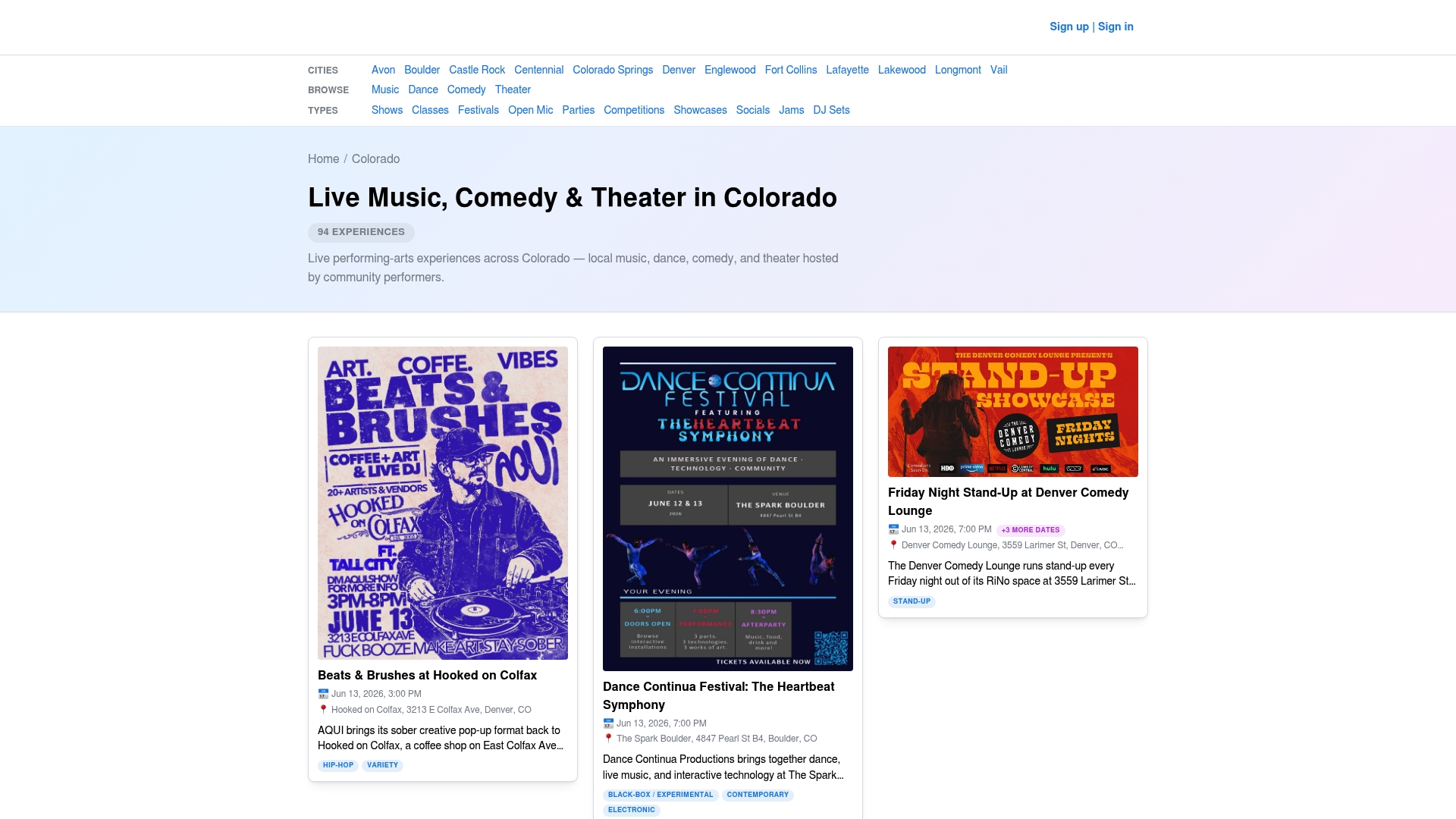
Here's how to put it to use:
- Search the Denver listings page for upcoming dance events across styles, including fusion.
- Filter for dance specifically on the Colorado dance category page to narrow things down fast.
- Open each event page to confirm lesson level, schedule, and ticket links before you head out.
The platform also covers other styles worth exploring once you're hooked, like the guide to Colorado DanceSport ballroom or the breakdown of how local dance events differ from studios, both useful if you're trying to figure out where fusion fits alongside everything else on the Denver dance calendar. If you're curious how DJs shape a dance floor's energy, this guide to dance-floor DJ music breaks down the basics. When you're ready to find your next night out, start at the Colorado events hub and go from there.
Event pages and background reading worth bookmarking
Before you commit to a night, these are the pages worth checking for current details:
- Hot Night Fusion Weekend for festival dates, workshop schedules, and pass pricing.
- Back Room Fusion at Casa Denver Dance Studio for monthly social details.
- Tuesday Fuse-day for weekly lesson and social times.
- Danceus for background on fusion's roots and how local scenes vary.
Details like start times and prices change often, so always confirm on the event or ticket page itself before you plan your night.
Sources
- Fusion Dance — Wikipedia
- Hot night fusion weekend! 2025 – CMDance
- The Back Room Fusion Dance at Casa Denver Dance Studio
- Tuesday Fuse-day event listing
- Danceus
FAQ
What is fusion dance style?
Fusion dance blends techniques from multiple partner dance styles into one improvised form, emphasizing musicality and connection over a fixed set of steps. According to Wikipedia, influences can include blues, tango, Afro Latin, and contemporary movement, which is part of why no two fusion nights look identical.
What is the best dance studio in Colorado?
There's no single official ranking, and the right studio depends on the style and vibe you're after. For fusion specifically, Casa Denver Dance Studio hosts the recurring Back Room Fusion social, while Experience By Locals' Colorado dance pages list current options across the state.
Is fusion dance good for beginners?
Yes, fusion is generally considered approachable for beginners because it rewards listening and adapting rather than memorizing fixed choreography. Most Denver socials, including Tuesday Fuse-day, build a short lesson into the night specifically to get newcomers comfortable before the open floor begins.
How long does a fusion dance event last?
A typical weekly social like Tuesday Fuse-day runs a lesson from 8 to 9 PM followed by a social from 9 to 11 PM, for about three hours total. Festival events like Hot Night Fusion Weekend stretch across an entire weekend with daytime classes and evening socials each night.