
Get RSVP Access Fast: 3 Ways Locals Find Denver's Underground Shows
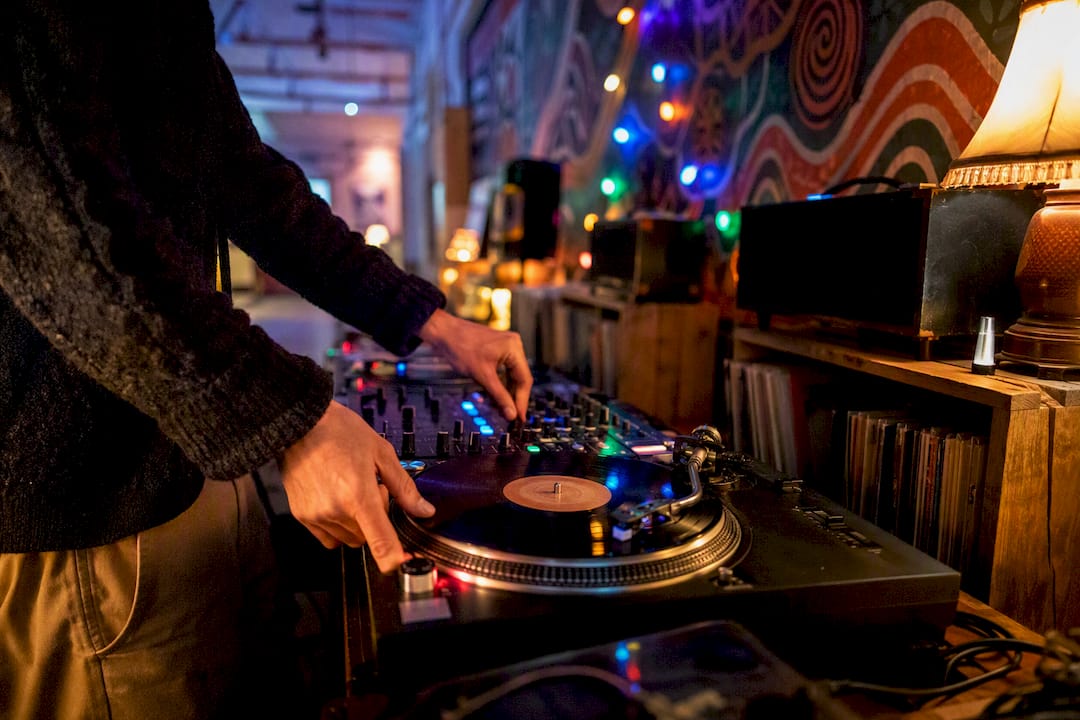
Your fastest route to Denver's underground scene is a three-pronged check: venue calendars like The Black Box, RSVP platforms like Partiful for invite-only nights, and a curated local aggregator like Experience By Locals for filtered, grassroots listings. Many of these shows reveal locations only after you RSVP, so build a habit of checking your email or texts close to showtime. That small bit of patience is the price of admission to the real Denver.
TL;DR:
- Reliance on venue websites like The Black Box provides the most accurate schedule and direct ticket access for underground events.
- RSVP and private platforms such as Partiful and Discord channels are key for discovering secret or invite-only shows close to their start time.
- Underground events in Denver frequently follow a location reveal system, often just hours before the event, requiring RSVP confirmation and proof at check-in.
- Denver's scene is heavily bass-driven, with rave, basement, and warehouse formats predominating, and usually features experimental, punk, and comedy acts.
- Networking involves consistent attendance, volunteering, and engaging within closed community groups rather than typical social approaches.
Table of Contents
- Where To Look For Underground Events In Denver
- How Do RSVP-Only Events Actually Work?
- Is It Safe And Legal To Attend Underground Shows?
- What Kinds Of Underground Events Will You Find?
- How Do You Stay In The Loop Without The Noise?
- Where Did Denver's Underground Scene Come From?
- What Genres And Formats Define Denver's Scene?
- What Are The Unwritten Rules At These Shows?
- How Do Underground Events Shape Denver's Wider Arts Scene?
- How Do You Meet Organizers And Regulars?
- What Organizers Get Right (And What They Fake)
- Find Denver's Underground Scene Through Experience By Locals
- Sources
Where To Look For Underground Events In Denver
Finding underground events in Denver come down to knowing which channels actually get used by organizers, not just which ones show up first on a search. Official venue pages remain your most dependable source. The Black Box, for instance, programs multi-room underground nights and lists ticket access directly on its own calendar, which cuts out the guesswork of third-party resellers.
Beyond venue sites, a handful of channels do most of the heavy lifting for Denver's alternative nightlife:
- RSVP and ticketing platforms like Partiful and Eventbrite host invite-style listings where the exact address sometimes stays hidden until closer to the date.
- Private community spaces including Discord servers, closed Facebook groups, and organizer Instagram accounts often carry the first announcement, well before any public listing appears.
- Local newsletters curated by promoters or arts collectives tend to bundle several weeks of shows into one email, which saves you from checking a dozen accounts individually.
- Search alerts set for phrases like "Denver warehouse party" or a specific promoter's name can catch announcements you'd otherwise miss.
- Niche apps and aggregators, including Experience By Locals, pull grassroots listings into one filtered view so you're not scrolling five different platforms to find one Tuesday night show.
That last point matters more than it sounds. Denver Comedy Underground is a good case study: the venue celebrated its first anniversary after relocating to RiNo, and its programming leans heavily on community-driven, locally booked comedians rather than touring headliners advertised citywide. Shows like that rarely dominate mainstream search results. A platform built specifically to surface Colorado's grassroots calendar, with filters for genre, neighborhood, and date, closes that gap without asking you to memorize a dozen Instagram handles.
How Do RSVP-Only Events Actually Work?
Most secret or RSVP-model events in Denver follow a predictable sequence, even when the final location stays a mystery until hours before doors. Understanding that sequence keeps you from showing up confused, or worse, not showing up at all because you missed a text.
- You RSVP or buy a ticket through a platform like Partiful, which confirms your spot but doesn't always hand over the address right away.
- The organizer reveals the location by email or text, sometimes just a few hours before the event starts, sometimes the morning of.
- You arrive within a defined window, since many of these spaces (basements, warehouses, artist studios) have limited capacity and staggered entry to avoid a crowd bottleneck at the door.
- You check in with proof, usually a ticket screenshot, matching ID, and a phone number the organizer can reach if plans shift last minute.
Organizers use this reveal model for a few practical reasons: it protects capacity limits, keeps the vibe intimate, and helps maintain good relationships with neighbors who might otherwise call in noise complaints on a venue that isn't zoned for it.
Pro Tip: Screenshot your RSVP confirmation the moment you get it. Cell service inside a basement show or warehouse space is unreliable, and you don't want to be digging through email at the door.
If you're waitlisted, stay reachable. Spots open up right until doors, and organizers usually text waitlisted guests first.
Is It Safe And Legal To Attend Underground Shows?
Attending an underground event in Denver is legal as long as you respect the property you're on and follow the venue's posted rules. Trespassing laws still apply to unpermitted or squatted spaces, and Denver police enforce local ordinances the same way they would at any private gathering. The organizer's job is to secure a legitimate space; your job is to respect whatever access rules come with it.
Personal safety at these events works the same way it does anywhere: your own habits matter more than the venue.
- Go with at least one other person, especially for a first visit to a new organizer's event.
- Share your location with a trusted contact before you head out, particularly if the address wasn't public until the day of.
- Plan your ride home before you arrive. Rideshare availability near industrial areas and warehouse districts can be spotty late at night.
- Respect "no photos" requests. Many underground artists and DJs specifically avoid public exposure, and violating that trust gets you blacklisted fast.
- Be mindful of neighbors. Quiet arrivals and departures, and proper trash disposal, keep these spaces available for future shows.
Denver's underground venues survive on discretion and goodwill. One statistic worth internalizing: repeat venues like The Black Box only stay bookable long term because organizers police their own crowds before the city has to. If something feels genuinely unsafe, staff or a manager should be your first call. For anything beyond that, call 911 like you would anywhere else.
What Kinds Of Underground Events Will You Find?
Denver's underground calendar isn't one format repeated at different addresses. It splits into a few recognizable types, each with its own crowd and pacing.
- Interactive scavenger-hunt events send you chasing clues across a neighborhood before revealing a final hidden party. Hidden Frequencies, staged in the Santa Fe Art District, builds this format around connecting attendees with local creatives at each stop, not just the final destination.
- Dual-room or multi-stage club nights keep two distinct sonic experiences running simultaneously. The Black Box's FREQFIEND dual-signal takeover is a working example, curated so guests move between rooms rather than parking in one spot all night.
- Basement and invite-only shows run on tight capacity and RSVP reveals through platforms like Partiful, favoring an intimate crowd over a big one.
- Warehouse and late-night raves scale up production, sound systems, and crowd size, trading intimacy for a bigger, more immersive sonic experience that runs deep into the night.
Genre-wise, expect heavy representation from bass music and underground electronic acts, alongside DIY punk, experimental, and comedy showcases that never make it onto a mainstream events app.
How Do You Stay In The Loop Without The Noise?
A simple, repeatable routine beats obsessively refreshing five different apps. Try this order:
- Bookmark and check venue pages for spots like The Black Box on a weekly basis, since major shows post there first.
- Subscribe to a couple of targeted newsletters run by promoters or arts collectives you already trust.
- Join one or two vetted private channels, whether Discord or a closed group, rather than a dozen loosely moderated ones.
- Set alerts on RSVP platforms like Partiful for organizers whose taste consistently matches yours.
- Save filtered searches on Experience By Locals so Denver's underground and grassroots listings land in front of you automatically, instead of getting buried under tourist-facing event ads.
Five channels, checked on a schedule, will surface more real invitations than fifty random follows ever will.
Where Did Denver's Underground Scene Come From?
Denver's underground culture didn't start with warehouse raves. It grew out of a much older DIY instinct, artists, musicians, and comedians finding cheap industrial space when commercial venues were too expensive or too restrictive for experimental work. RiNo and the Santa Fe Art District became natural homes for this because both neighborhoods offered exactly that: affordable square footage close enough to downtown to draw a crowd.
Comedy played a bigger role in this evolution than most people realize. Denver Comedy Underground's move into RiNo and its first-anniversary milestone reflects a broader pattern: alternative comedy rooms following the same path electronic music promoters carved out years earlier, chasing flexible spaces where local talent gets stage time without waiting for a booking agent's approval.
Electronic music's underground roots run parallel. Bass-heavy and experimental DJs built followings in basements and lofts long before Denver's EDM scene had any mainstream visibility, and that history still shapes who book what today. A useful primer on that lineage lives on The Gurlz's Denver bass music scene guide, which traces how the city's bass community grew into one of the more distinct regional scenes in the country.
What ties it together is scarcity of formal infrastructure. Denver never had the density of legacy underground venues that cities like Chicago or Detroit built decades ago, so its scene stayed scrappier, more RSVP-dependent, and more neighborhood-specific by necessity.
What Genres And Formats Define Denver's Scene?
Denver's underground identity leans hard into bass music. Dubstep, drum and bass, and hybrid bass genres dominate warehouse and basement lineups more consistently than in many comparable mid-size cities, a pattern documented in The Gurlz's scene guide. That regional bass identity shapes everything from sound system choices to the late-night hours most shows run on.
Beyond bass, a few other formats show up repeatedly:
- Techno and house nights in smaller capacity rooms, often programmed as one half of a two-room night rather than a standalone show.
- Experimental and noise sets, typically hosted in art spaces or studios rather than dedicated music venues.
- Underground comedy showcases, exemplified by Denver Comedy Underground's community-first booking approach.
- Gamified, hybrid experiences like Hidden Frequencies, which blend a physical scavenger hunt with a final concert or party reveal, a format gaining traction specifically because it turns a single night out into a multi-stop neighborhood experience.
Denver's altitude and outdoor culture also bleed into event design more than you'd expect. Several promoters build in earlier start times or shorter sets compared to coastal cities, a practical adjustment for a crowd that often has sunrise hikes or ski mornings on the calendar the next day.
What Are The Unwritten Rules At These Shows?
Underground events run on trust, and trust runs on a shared set of norms that nobody writes down but everyone's expected to know. Respecting them is how you get invited back.
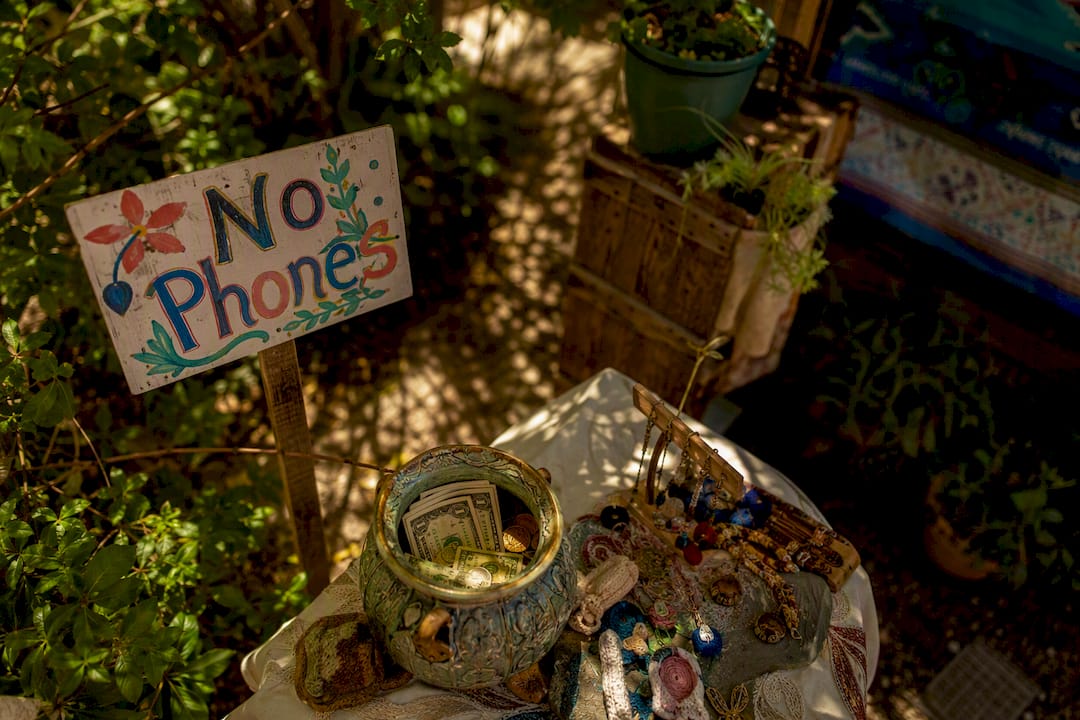
Photography is the biggest one. Many DJs and artists performing at basement or warehouse shows specifically avoid public documentation, either because the space isn't technically licensed for the event or because the culture simply values discretion over content. Ask before you shoot, and assume "no photos" means no phones out at all, not just no flash.
Supporting the artists matters as much as respecting the space. Tip DJs when there's a jar out, buy merchandise directly from performers when it's available, and skip the temptation to livestream a set that took someone months to build.
Noise and neighbor relations are the quiet backbone of whether a venue survives. Arriving and leaving without lingering loudly outside, disposing of trash properly, and avoiding street parking that blocks driveways all directly affect whether an organizer can use that space again next month.
Finally, gatekeeping information responsibly is part of the culture. If you get an RSVP-only address, that's not something to broadcast publicly. Sharing it with a friend directly is fine; posting it to a public feed undermines the entire reason organizers use reveal models in the first place.
How Do Underground Events Shape Denver's Wider Arts Scene?
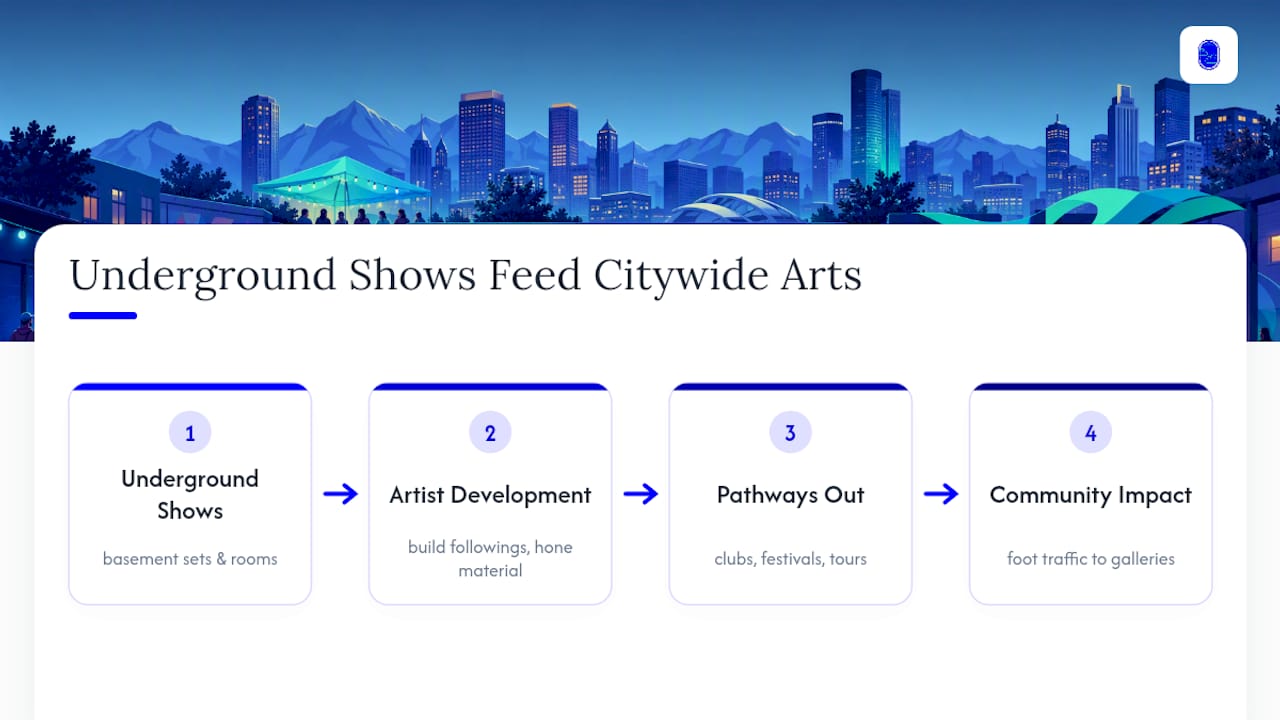
Underground events function as a farm system for Denver's broader music and arts economy, not a separate world running alongside it. DJs who build a following spinning basement sets often graduate to booked slots at established clubs and festivals once they've proven they can draw a crowd without any marketing budget behind them.
The same pipeline exists in comedy. Rooms like Denver Comedy Underground give local comedians consistent stage time to develop material before they're ready for larger clubs or touring opportunities, a dynamic that mirrors how independent theaters function for actors before mainstream stages come calling.
Interactive formats like Hidden Frequencies extend this impact outward into neighborhoods and small businesses. By routing attendees through the Santa Fe Art District as part of a scavenger hunt, these events funnel foot traffic and attention toward galleries and studios that don't have citywide marketing reach on their own.
Venues themselves benefit from this cross-pollination too. A two-room concept like The Black Box's FREQFIEND format only works because there's a deep enough bench of local talent to fill two curated lineups on the same night, rather than importing every act from out of state. That local talent pool exists specifically because underground shows gave those artists somewhere to develop before they were ready for a bigger stage.
How Do You Meet Organizers And Regulars?
Networking at underground events works differently than at a typical bar or club. Nobody's handing out business cards, but relationships form fast if you show up consistently and respect the space.
Start by showing up more than once to the same organizer's events. Familiarity builds trust quicker than any direct introduction, and most promoters remember faces before they remember names. Arriving early, when the crowd is thinner and the DJ or host has more downtime, is a far better window for an actual conversation than trying to talk over a packed dance floor at midnight.
Volunteering is an underrated entry point. Many smaller shows need help at the door, with setup, or running the merch table, and volunteering puts you directly inside the organizing circle rather than on its edge as a guest. Following up genuinely, complimenting a specific track choice or set transition rather than a generic "great show," signals that you were actually paying attention.
Community platforms matter here too. Private Discords and closed groups aren't just for event announcements, they're where regulars talk shop between shows, share who's DJing where, and pass along which nights are worth prioritizing. Treat those spaces as the actual social fabric of the scene, not just an alert feed.
What Organizers Get Right (And What They Fake)
Authentic Denver underground events share a few consistent signals: they support local artists financially, they promote through grassroots channels instead of paid ad buys, and their ticketing feels community-oriented rather than transactional. When an organizer is transparent about where proceeds go, that's usually a good sign the event is built by the scene, for the scene.
The red flags are just as consistent. Watch for events leaning hard on VIP packages and bottle service marketing, heavy corporate sponsorship that feels bolted onto a supposedly underground night, or promoters who clearly haven't bothered to manage noise and parking around the venue. Those events might still be fun, but they're borrowing the aesthetic of underground culture without the community relationships that actually built it.
The best organizers treat their events as an extension of Denver's DIY music history, not a marketing opportunity dressed in warehouse lighting.
— DJ
Find Denver's Underground Scene Through Experience By Locals
Experience By Locals is the direct route to Denver's grassroots calendar, no scrolling through a dozen Discord servers or hoping a promoter's Instagram story doesn't disappear before you screenshot the address. The platform filters listings specifically for Colorado's local, community-driven events, which means the shows you find are already vetted for the kind of authentic, artist-first programming this article has been pointing you toward.
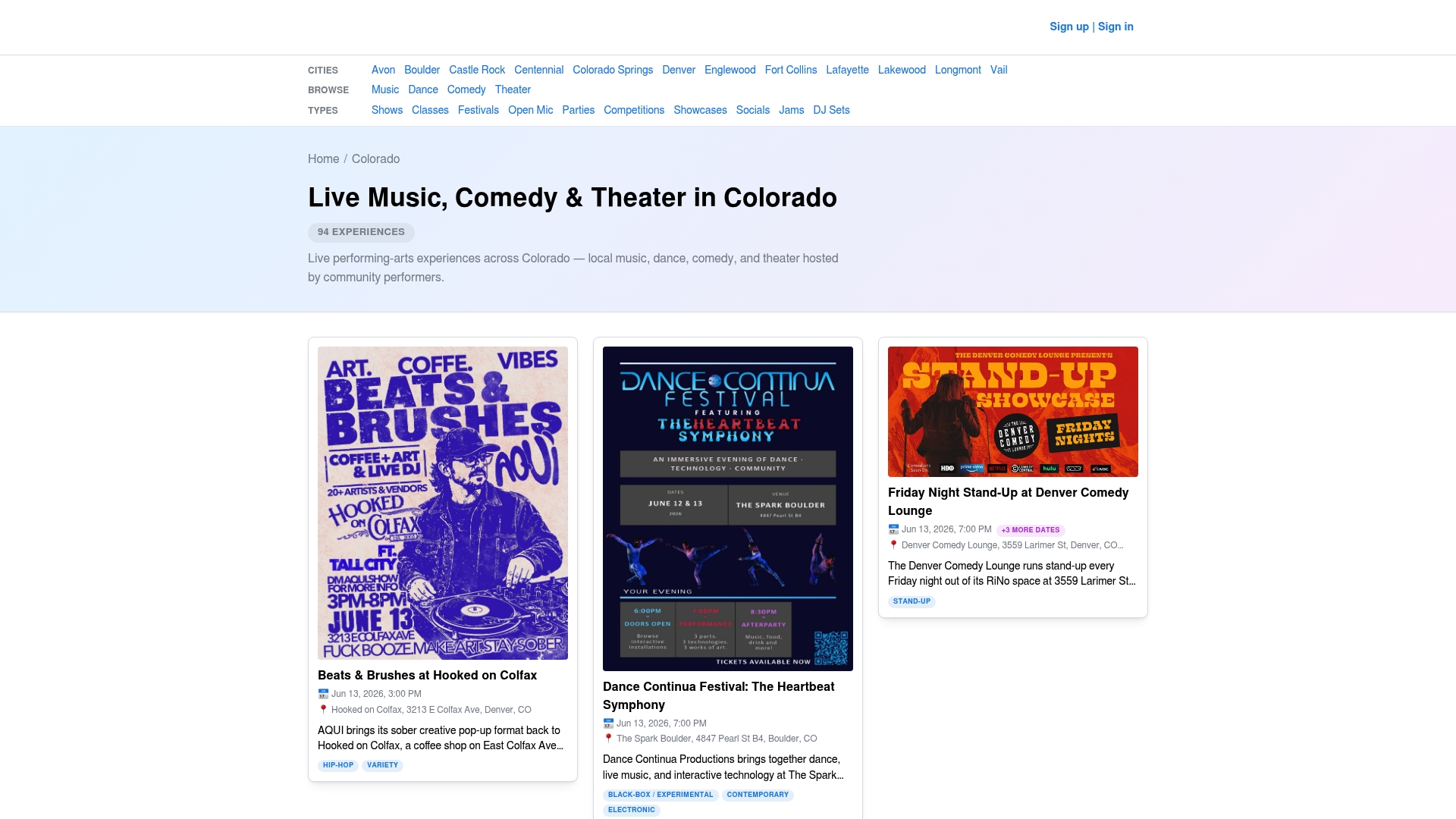
Browsing live music events in Colorado surface exactly the kind of grassroots shows that larger platforms bury, and booking directly through the platform routes support straight to the artists and organizers running them. If comedy's more your speed, the Denver comedy listings cover the same community-first spirit as rooms like Denver Comedy Underground.
Set up a filtered search on the Denver events page, save it, and check back weekly. That's the whole workflow. Start browsing now and book your next underground night before it fills up.
Sources
- Denvernorthstar
- Hidden Frequencies: Denver’s Sante Fe Art District Edition | HappeningNext
- Step Into the Portal | Partiful
- FREQFIEND: Dual Signal Takeover | The Black Box