
Why Locals-Only Venues Feel Different From the First Note
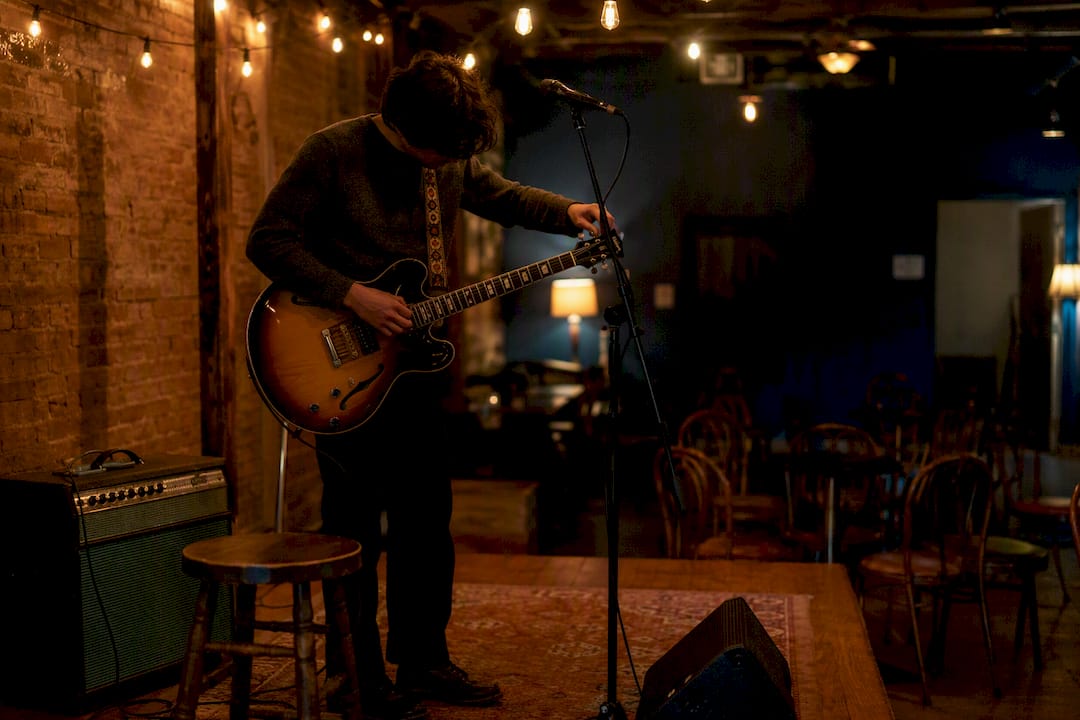
Locals-only venues feel different because three things stack together: you're physically closer to the performers, the people running the show usually own a piece of it, and nobody's booking based on what sells the most merch to tourists. That combination changes the room. You'll spot it fast once you know what to look for:
- Capacity under a few hundred seats, sometimes closer to fifty
- Volunteers or the artists themselves working the door, the bar, and the sound board
- Ticket prices that flex, sometimes pay-what-you-can, rarely a fixed premium
- A crowd that lingers after the show to talk with the performers
- Programming that takes real chances instead of playing it safe
We built Experience By Locals because Colorado has hundreds of rooms like this, and most of them never show up in a standard search.
Key Takeaways
Locals-only venues feel different because intimacy, community ownership, and programming freedom combine to create a direct bond between performers and audiences that commercial venues can't replicate.
| Point | Details |
|---|---|
| Small scale drives connection | Rooms under a few hundred seats let performers read and respond to the crowd in real time. |
| Ownership shapes the vibe | Volunteer-run and nonprofit structures free booking decisions from commercial pressure. |
| Community theaters are widespread | Over 6,000 community theaters operate nationwide, showing this is a real, accessible infrastructure. |
| Support goes beyond tickets | Volunteering, tipping, buying merch, and referrals keep these venues running between shows. |
| Experience By Locals curates the real thing | The platform filters listings by host bio, ownership, and flexible pricing to surface Colorado's genuine community-run shows. |
Table of Contents
- How These Differences Actually Work in Practice
- Five Factors That Actually Change the Vibe
- How to Find and Support Locals-Only Venues
- What Experience By Locals Sees on the Ground in Colorado
- The Gap Between What People Say They Want and What They Actually Book
- Book Your Next Show With Experience By Locals
- Frequently Asked Questions
- Sources
How These Differences Actually Work in Practice
The feeling isn't accidental. It comes from three mechanisms working at once, and each one has research behind it.
Start with proximity. In a room built for 80 to 300 people, performers can see faces, read reactions in real time, and adjust. A comedian bombing a joke in an arena keeps moving. A comedian bombing in a 60-seat back room feels it immediately and often pivots into something better, riskier, funnier. Smaller venues offer more intimate experiences precisely because that feedback loop runs both directions, artist to crowd and crowd to artist, in a way arena acoustics and sightlines simply can't replicate.
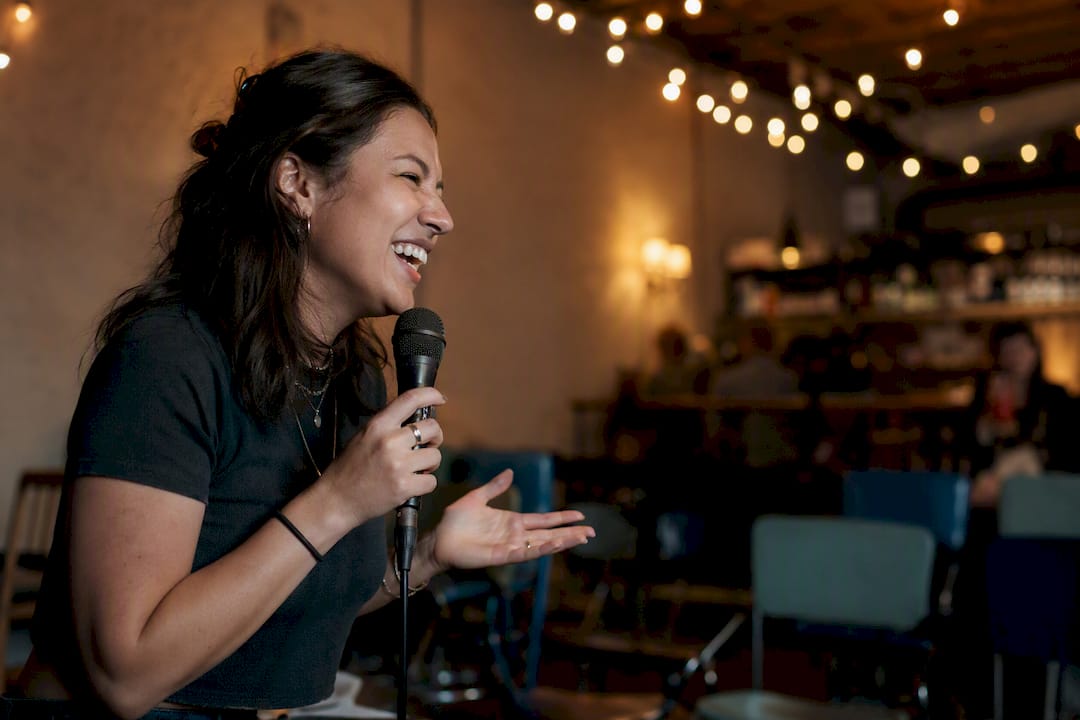
Then there's ownership. Many small venues run on volunteer labor, cooperative boards, or nonprofit structures rather than a corporate booking calendar, and regional venue research shows capacity, staffing, and ticketing arrangements vary enormously from one room to the next. That variation matters because it means decisions get made locally, not by a regional promoter chasing a quarterly number.
That independence is also what makes room for creative risk. Academic work on live music ecologies concludes that small venues function as incubators, spaces where social capital and public identity get built through experimentation that bigger venues can't afford to try.
Small venues are essential for experimentation and talent development because they carry less financial risk per show, which frees artists to test unfinished material in front of a forgiving crowd.
A large number of community theaters operate across the country right now, according to the American Association of Community Theatre. That number alone tells you this isn't a fringe scene. It's a parallel infrastructure for live performance that most tourists never notice and most locals take for granted.
Five Factors That Actually Change the Vibe
Once you know what to check for, spotting a genuinely local venue takes about thirty seconds. Here's what separates the real thing from a commercial venue dressed up to look grassroots.
-
Physical scale. A room holding 50 to 300 people forces a different kind of attention. You're not watching a screen relay the action from three sections back. You're close enough to see a guitarist's hands or a dancer's breathing.
-
Programming freedom. Independent bookers take chances on unfinished work, new comedians, experimental choreography, because they answer to a community mission rather than a shareholder. That's the same freedom DIY and independent venues build their whole identity around.
-
Accessible pricing. Sliding-scale tickets, pay-what-you-can nights, and free open mics show up constantly in community-run spaces, lowering the barrier for anyone curious enough to walk in.
-
Participation, not spectatorship. Volunteers run the lights. Local actors fill the cast. Audiences stick around after curtain to talk with the people who just performed for them, a pattern documented in reporting on local theater's civic role.
-
Economic ripple. Show nights fill the diner next door and the bar down the block. Smaller venues generate measurable local economic activity that a touring arena show, parked outside town, never touches. You can see the same effect documented in local business coverage from Southern California's business directory, where foot traffic on event nights shows up in nearby storefronts, not just at the box office.
Pro Tip: Check a venue's ticketing page before you check its lineup. If prices flex by night or by income, or if there's a "pay what you can" option, you're almost always looking at a community-run room rather than a commercial one.
How to Find and Support Locals-Only Venues
Finding these rooms takes a little more effort than typing "things to do" into a search bar, but not much more.
Where to look:
- Community bulletin boards at coffee shops, libraries, and co-ops
- Venue email newsletters, which often list shows weeks before they hit any listing site
- Curated platforms like Experience By Locals, built specifically to surface community-run shows instead of commercial ones
- Local arts blogs and neighborhood association pages
- Word of mouth from bartenders, baristas, and other performers
A fast authenticity check before you buy a ticket:
- Does the venue name an artist-run board or nonprofit status anywhere on its site?
- Are ticket prices flexible or capped low?
- Does the lineup include unfamiliar local names, not just touring acts?
- Is there a volunteer sign-up or donation link on the page?
Once you're in the door, you can support artists locally well beyond the ticket price. Buy the merch table directly. Tip the door person. Donate if there's a jar. Volunteer for a shift if the venue takes them. And bring a friend, since referrals are how these rooms survive between grant cycles.
On etiquette: arrive on time, since small rooms often start close to the listed hour. Ask before photographing performers up close. Tip bartenders even at pay-what-you-can shows. And stay for a few minutes after the show. That's often when the real connection happens, and our complete guide to attending community theater walks through the specifics room by room.
What Experience By Locals Sees on the Ground in Colorado
Experience By Locals was built around one observation: Colorado has an enormous amount of genuine local talent, and almost none of it surfaces in a standard tourist search. We list K-pop choreography nights hosted at artist-run dance sanctuaries, community comedy shows booked by the comedians themselves, and theater runs staffed entirely by volunteers, from Fort Collins to Colorado Springs.
We filter for authenticity the same way an experienced local would:
- We verify host bios and venue ownership before listing a show
- We flag community-run and nonprofit spaces distinctly from commercial venues
- We surface pricing transparently, including sliding-scale and pay-what-you-can options
- We prioritize recurring local programming over one-off tourist packages
A platform is only as authentic as its filtering. If you can't tell who's running a show or why, you're probably looking at a commercial listing dressed up as a local one.
The Gap Between What People Say They Want and What They Actually Book
Here's what the research keeps confirming and what most travel advice keeps ignoring: people say they want authentic local culture, then default to whatever ranks first in a search. That's not a character flaw. It's a discovery problem. Community-run venues don't spend money on search engine optimization, because volunteers running a 60-seat black box theater have better things to do than compete for keywords against a national ticketing company.
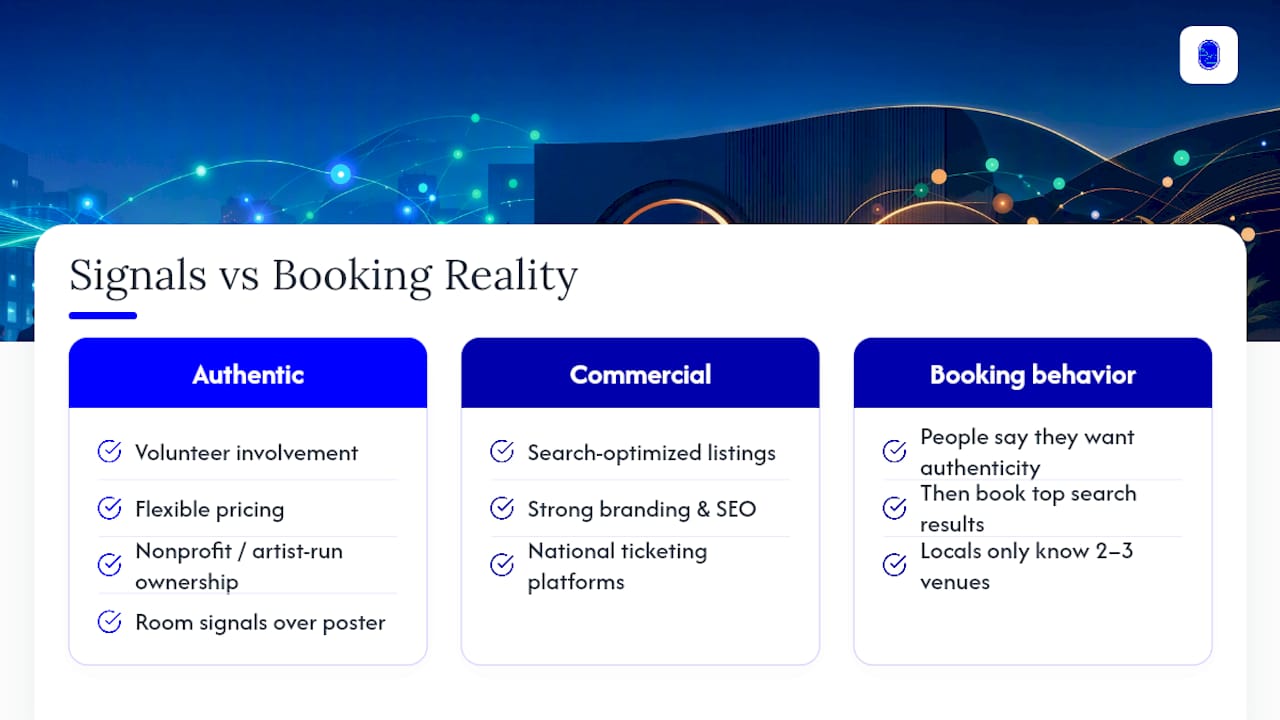
The conventional advice, "ask a local," sounds nice but doesn't scale. Locals themselves often only know two or three venues by word of mouth, because nobody's built a comprehensive map of a scene that's intentionally low-profile by design.
What actually works is prioritizing structural signals over vibes: check for volunteer involvement, flexible pricing, and nonprofit or artist-run ownership before you check the lineup. The room usually tells you more than the poster does. If you get that filtering right once, you'll spot the pattern everywhere, and you'll stop mistaking a well-branded commercial venue for a genuine one.
Book Your Next Show With Experience By Locals
Experience By Locals is the alternative to scrolling five different ticketing sites hoping one of them lists something real: it's a single curated marketplace built around Colorado's community-run venues, artist-run spaces, and volunteer-staffed theaters, so you're not stuck guessing which listing is genuine.
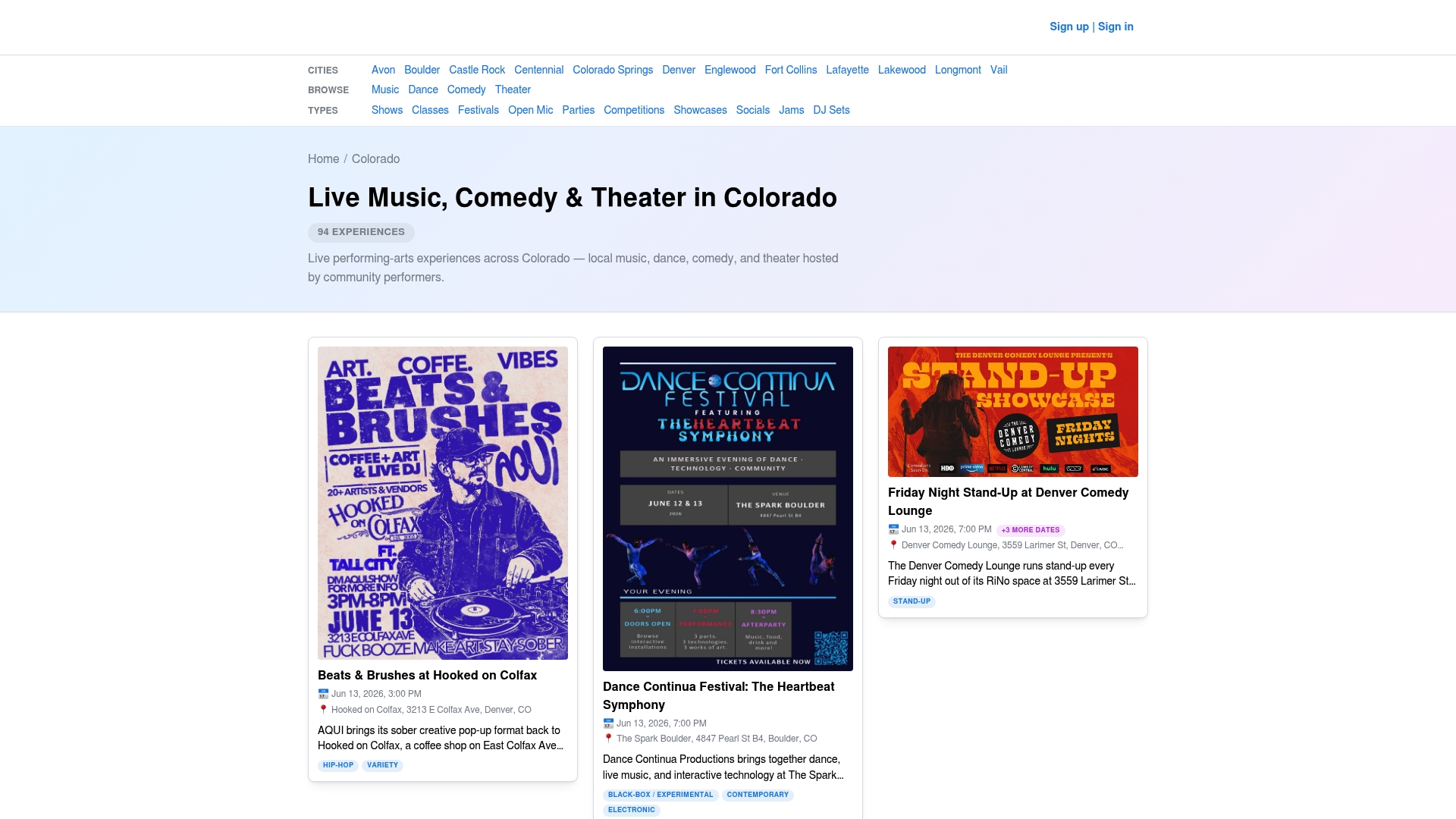
Search filters let you sort by genre, price, and neighborhood. Every listing includes a host bio, so you know who's actually running the show before you buy. Booking happens directly through the platform, and community reviews from past attendees help you judge the room before you walk in.
If you're ready to see what's playing near you, browse live music in Colorado and book your next show directly with the people hosting it.
Frequently Asked Questions
Why do locals-only venues feel different from commercial entertainment? They combine physical intimacy, community or volunteer ownership, and programming freedom, which together create a direct, unscripted connection between performers and the crowd that larger commercial venues rarely produce.
How can I tell if a venue is genuinely community-run? Check for a stated nonprofit or artist-run structure, flexible or sliding-scale ticket pricing, and a lineup that features unfamiliar local names rather than exclusively touring acts.
Are locals-only venues more affordable than mainstream shows? Often, yes. Many operate on pay-what-you-can or sliding-scale pricing, and smaller venues tend to cost noticeably less than arena-scale productions.
What's the best way to support a local venue besides buying a ticket? Volunteer for a shift, donate if there's a jar or fund, buy merchandise directly from performers, and refer friends. These venues often depend on word of mouth more than advertising.
Where can I find community-run shows near me? Check community bulletin boards, venue newsletters, local arts blogs, and curated platforms like Experience By Locals, which lists live music, comedy, dance, and theater by host and neighborhood.
Sources
- American Association of Community Theatre — community theatres impact
- Arts Commentary: When it comes to concerts, go small — The Arts Fuse
- The social and cultural values of live music: Sustaining urban live music ecologies — ScienceDirect
- Australian regional music venues research (regional venues, diversity of operating models) — Taylor & Francis