
Why Independent Comedy Venues Thrive in Their Own Neighborhoods
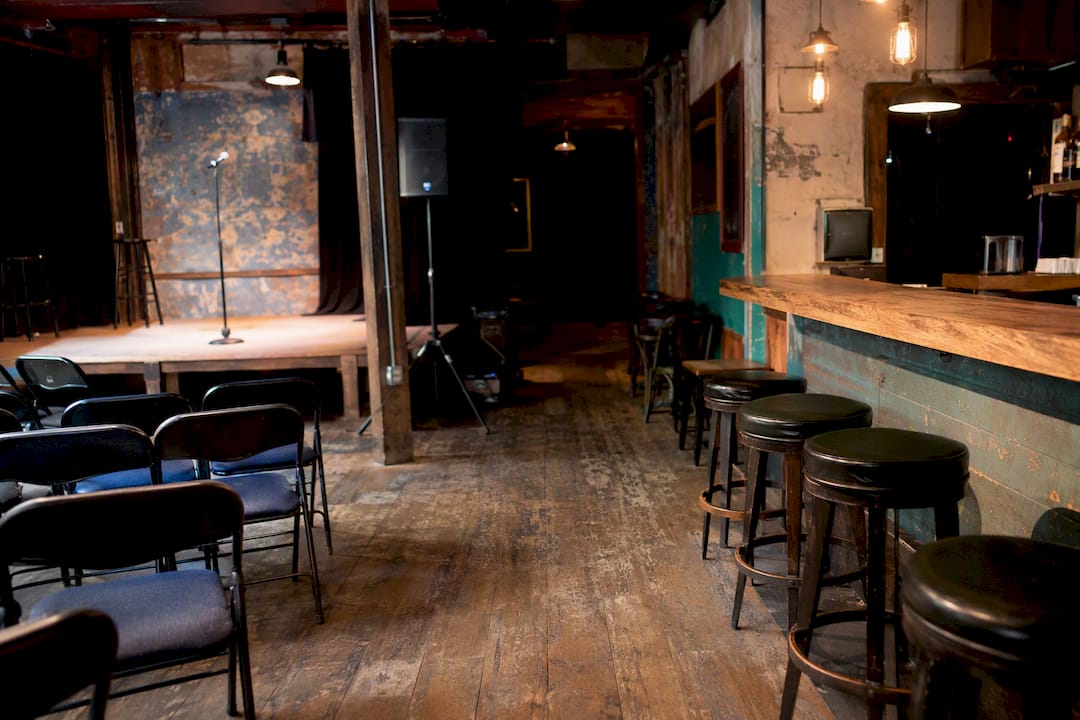
Independent comedy venues thrive because they sell something a big chain simply can't replicate: intimacy, community ownership, and a business model light enough to bend when the market shifts. A 50-seat room with a bar and a stage doesn't need a packed Saturday to survive. It needs a loyal crowd, a comedian it treats like a partner, and a few extra revenue streams to fill in the gaps.
That combination shows up directly in the numbers. Rooms that diversify income and build real relationships with performers keep their seats filled even as larger, standardized clubs struggle with the same market pressures.
The primary drivers behind that resilience:
- Intimacy that audiences can't get from a streaming special or an arena show
- Community ownership, where the venue feels like it belongs to the neighborhood
- Lower overhead and the flexibility to change programming overnight
- A steady pipeline of local talent testing new material
- Multiple revenue streams that don't rely on one sold-out night
Key Takeaways
Independent comedy venues thrive because intimacy, community loyalty, and diversified revenue let them outlast the cost pressures that sink standardized chains.
| Point | Details |
|---|---|
| Intimacy drives loyalty | Small rooms create a closeness with performers that keeps audiences coming back weekly. |
| Diversify revenue early | Ticket sales alone rarely cover costs; bar, merch, workshops, and recordings fill the gaps. |
| Scarcity is a pricing tool | Small capacity lets operators sell out consistently instead of chasing volume. |
| Advocacy and festivals help | Coordinated efforts like Independent Venue Week mobilize funding and public support. |
| Use local listings to support venues | Experiencebylocals lets readers find and book Colorado comedy shows directly with hosts. |
Table of Contents
- Why Independent Comedy Venues Thrive: Five Core Drivers
- How Do Independent Comedy Venues Make Money?
- What Programming Formats Build Repeat Comedy Audiences?
- What Threatens Independent Comedy Venues, and What Helps Them Survive?
- What Can Audiences, Artists, and Operators Do to Support Local Comedy?
- Sources
Why Independent Comedy Venues Thrive: Five Core Drivers
Ask any comedian who's worked both a corporate club circuit and a scrappy local room, and they'll tell you the smaller room usually wins on connection, even when it loses on production value. Five forces explain why.
- Intimacy. A room where the front row can touch the stage creates a different kind of laugh, one built on eye contact and shared risk. Performers during Independent Venue Week describe small rooms as essential to artistic growth, calling them the best environment for testing new material without the pressure of a theater crowd.
- Community ownership. Regulars treat the venue like a local institution, not a transaction. That loyalty shows up in repeat ticket sales and in merch tables that outperform what you'd expect from a room that size.
- Talent pipeline. Open mics and showcase nights function as a farm system, letting comedians fail safely in front of forgiving crowds before they take bigger stages.
- Programming diversity. A room that mixes stand-up with podcast tapings, music nights, and themed showcases spreads its risk across formats instead of betting everything on one lineup.
- Agility. Owner-operated venues can flip a Tuesday night lineup in a day. A regional chain needs approval from three layers of management to do the same thing.
"It's the best way to evolve and improve in your craft," one performer said of small venues during Independent Venue Week, describing the bond between artist and audience that only forms in a room built for closeness.
Mainstream coverage backs this up. Reporters and venue operators quoted during Independent Venue Week consistently point to the same live-room feeling as the thing streaming can't touch. If you're a promoter, this is your leverage: the smaller the room, the bigger the story you can tell about what happens inside it.
How Do Independent Comedy Venues Make Money?
The economics of a small comedy room look nothing like a 300-seat chain club, and that's the point. Diversified income lets a venue survive a slow month without panicking.
Primary revenue streams for a healthy independent room:
- Ticket sales, often tiered by night and lineup strength
- Bar and food sales, which typically outearn the door on a good night
- Merch, from performer T-shirts to house-brand drinkware
- Workshops and classes taught by working comedians
- Private rentals for corporate events or birthday shows
- Recorded content, including podcast tapings and streamed sets
- Grants and crowdfunding campaigns tied to renovations or emergencies
Rent and staffing are where indie venues win the cost battle. A 50-seat room can run with a skeleton crew and a modest lease, then treat its small capacity as a selling point rather than a limitation. Scarcity sells tickets faster than volume does.
Pro Tip: Record your best nights and release clips online. Analysis of comedy-club economics shows recorded content acts as a discovery funnel, pulling in new faces rather than replacing the people already buying tickets.
The pressure is real, though. Grassroots venues generate outsized local economic impact relative to their size, yet many still operate on thin margins that one bad month can wipe out.
What Programming Formats Build Repeat Comedy Audiences?
Consistency beats novelty when you're trying to build a crowd that shows up every week. A Denver room hosting a weekly showcase, listed through Friday Night Stand-Up at Denver Comedy Lounge, demonstrates how a recurring slot trains an audience to treat a specific night as theirs. That kind of habit formation is worth more than any single sold-out special.
Formats that reliably build loyalty:
- Weekly open mics that double as a talent farm
- A signature showcase night with a consistent host
- Themed nights (roast battles, storytelling, improv crossovers)
- Combo nights pairing comedy with music or podcast tapings
- Residency series that let a local comedian build a following over months
Coverage of the current comedy boom notes that independent clubs are opening across cities largely because social media surfaces new talent faster than any traditional booking process ever did.
Pro Tip: Cross-promote with the venue two blocks over. Sharing a mailing list or trading a guest set costs nothing and doubles your reach into an audience that already trusts live comedy in the neighborhood.
What Threatens Independent Comedy Venues, and What Helps Them Survive?
No venue thrives in a vacuum, and the same forces that make small rooms special also make them fragile. Rising rent tops the list, especially in cities where landlords see more profit in a condo conversion than a comedy club. Post pandemic recovery costs, shrinking discretionary spending, and noise complaints from new neighbors round out the pressure list.
Each threat has a workable countermeasure:
- Rent and landlord pressure — advocacy campaigns and rent protection efforts tied to grassroots-venue coalitions
- Post-Covid financial strain — crowdfunding and targeted grants aimed at renovation or reopening costs
- Shrinking discretionary spending — flexible pricing and loyalty programs that reward repeat attendance
- Noise and zoning conflicts — proactive community engagement before complaints escalate into legal fights
Coordinated efforts like Independent Venue Week mobilize both funding and public attention at a scale individual venues can't reach alone. The simplest thing you can do this week: buy a ticket, grab a T-shirt, or tell a friend about a room you love.
What Can Audiences, Artists, and Operators Do to Support Local Comedy?
Everyone touching the scene has a role, and none of them require a big budget.
Audiences:
- Buy tickets directly through the venue, not a resale markup
- Grab merch, since it often carries better margins than the ticket itself
- Show up early and bring a friend, since a fuller room feeds better energy
Artists:
- Take local gigs seriously, not just as a stepping stone
- Promote your own sets across social channels
- Record content when the venue allows it, and share the clips
Operators:
- Book a consistent weekly night before chasing one-off events
- Record and publish highlights to build discovery on top of ticket sales
- Diversify revenue with workshops, rentals, and merch
Pro Tip: Track three numbers monthly: attendance percentage against capacity, the ratio of repeat customers, and net revenue per show. Those three tell you more about health than gross ticket sales ever will.
Author perspective: why small venues matter
I've spent enough time watching local listings to notice a pattern: the rooms that last are the ones that treat every seat as a relationship, not a transaction. A weekly comedy night listed through Experiencebylocals in Denver saw its regulars grow month over month, not because the lineup changed dramatically, but because people knew exactly where to find it. That's the whole game. If you want a venue to still be there next year, use the listing that already exists to show up this week.
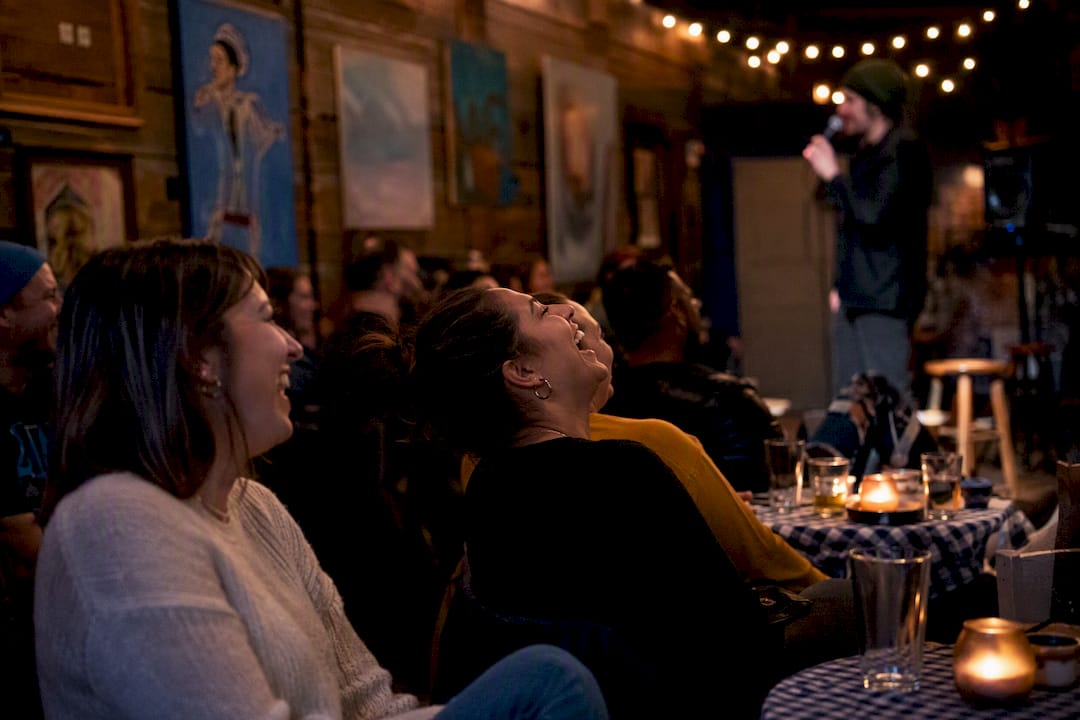
Find and Support Local Comedy Shows Near You
Experiencebylocals works because it skips the layers a traditional booking agency or ticket reseller adds between you and the room itself. It's a searchable platform where you find local comedy, music, dance, and theater events across Colorado and book directly with the people hosting them, no scalped tickets, no markup middlemen.
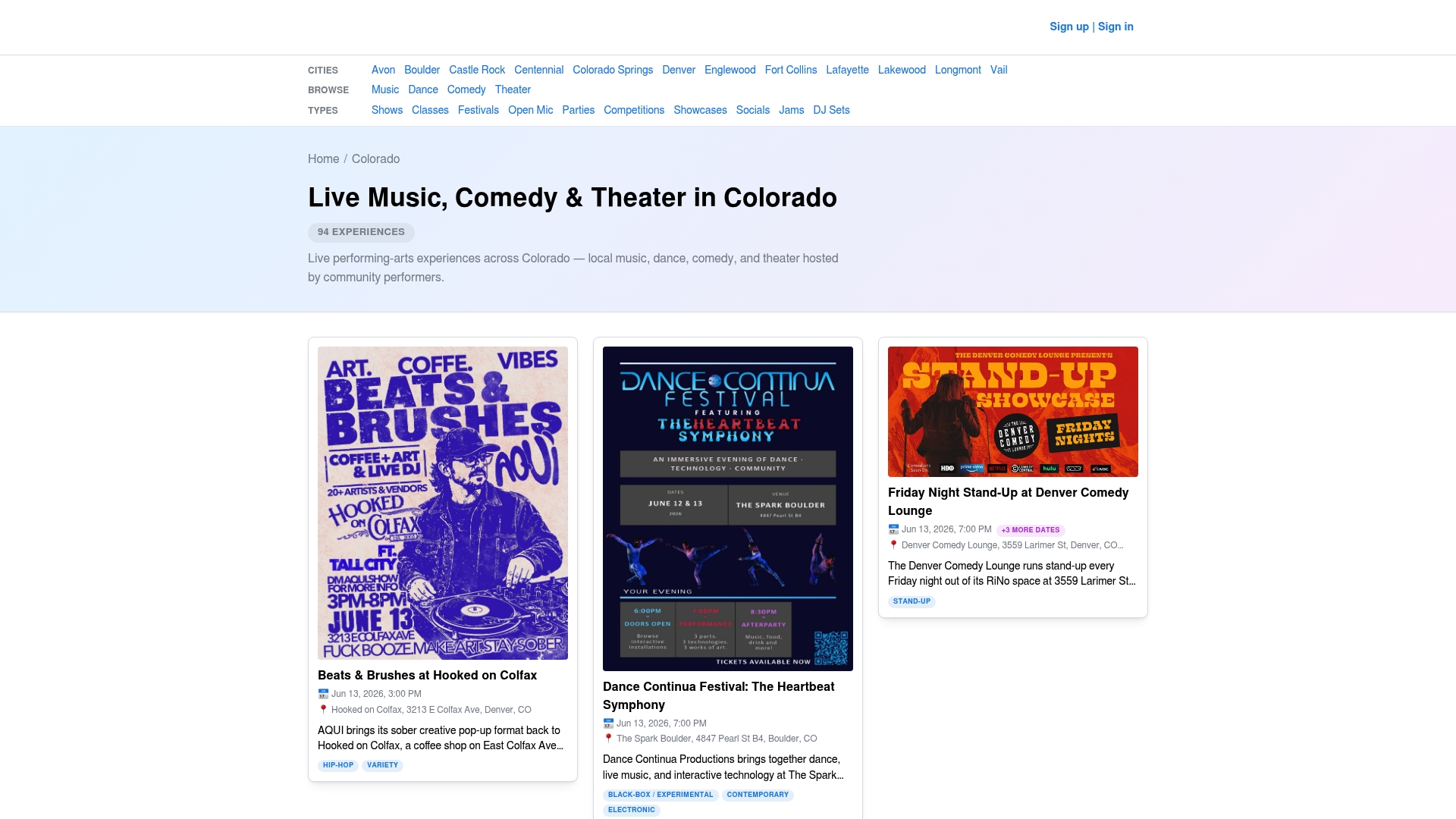
If you're in Denver, Boulder, Fort Collins, or anywhere along the Front Range, start with comedy shows in Colorado to see what's running this week. Choosing venue-listed tickets over resale sites means more of your money actually reaches the room and the comedian on stage, which is the whole point of supporting a local scene in the first place. Browse listings, pick a night, and book directly.
Sources
- Independent Venue Week 2026: artist interviews on why small venues matter
- Indie comedy venues thrive while chains consolidate in 2026
- Why does a small independent venue matter?
- Small music venues and grassroots spaces coverage during Independent Venue Week
Recommended
- How to Spot Rising Local Comedy Talent Near You | ExperienceByLocals
- Common Theater Genres at Local Venues: What to Expect | ExperienceByLocals
- Colorado's Comedy Scene: A 2026 Guide to the Local Laughs | ExperienceByLocals
- Types of Grassroots Performance Venues: A Complete Guide | ExperienceByLocals