
How to Find Local Art Events Near You
Finding local art events near you is the process of using targeted resources and community channels to discover authentic gallery openings, art fairs, festivals, and performances in your area. These events are not just entertainment. They are doorways into the cultural identity of your neighborhood, connecting you directly with the creators who shape it. Local exhibitions are often designed as "love letters" to neighborhoods, reinterpreting community histories and promoting cultural awareness in ways that major museums rarely attempt. Whether you are looking for art exhibitions in your area, upcoming art festivals, or a quiet gallery opening on a Friday night, this guide gives you the practical tools to find them and enjoy them fully.
What types of local art events can you find near you?
Local art events fall into several distinct categories, and knowing the difference helps you search more effectively. Each type has its own schedule, price point, and social vibe.
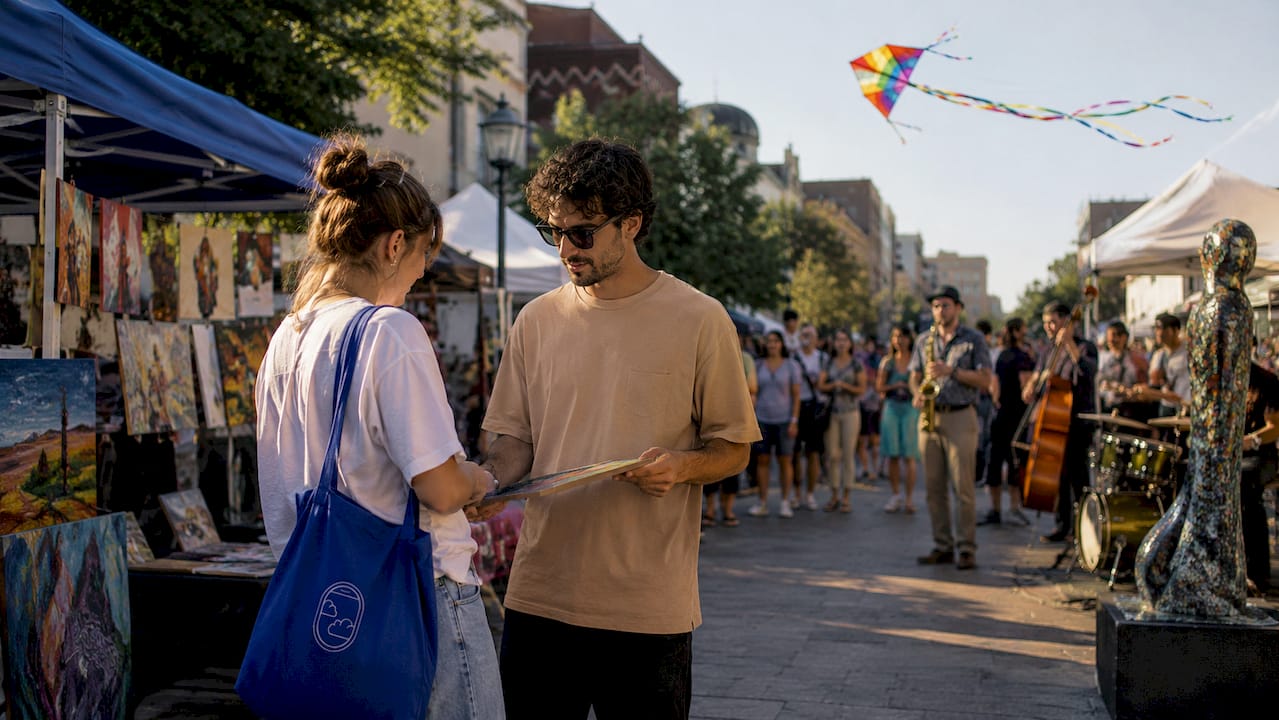
- Street fairs and art festivals are the most visible format. Large festivals like the 2026 Festival of the Arts in Gresham typically run 2–3 days, with peak attendance days drawing around 30,000 visitors. That scale means crowds, energy, and a wide mix of media and vendors all in one place.
- Gallery openings and art strolls are free or low-cost events where multiple galleries open their doors on the same evening. Evening Art Stroll events like YS Art Stroll typically run from 5:00 PM to 9:00 PM, giving you enough time to visit several venues in one outing.
- Immersive installations are ticketed, capacity-limited experiences. Premium installations often require $17 timed-entry tickets reserved in advance, with some limiting entry to just 2 visitors at a time. Think Yayoi Kusama's mirror rooms or large-scale multimedia environments.
- Art workshops are hands-on sessions where you create alongside local artists. These range from free community drop-ins to paid multi-session classes in ceramics, printmaking, or illustration.
- Community showcases and open mics blend visual art with performance. Events like BIPOC Open Mic Night at Curios Nature combine spoken word, music, and visual art in a single communal space.
Public events like art strolls and street fairs require no reservation and no budget. Ticketed events like immersive installations and curated showcases ask for advance planning. Knowing which category you are walking into sets the right expectations before you arrive.
The best tools and resources to find local art events near you
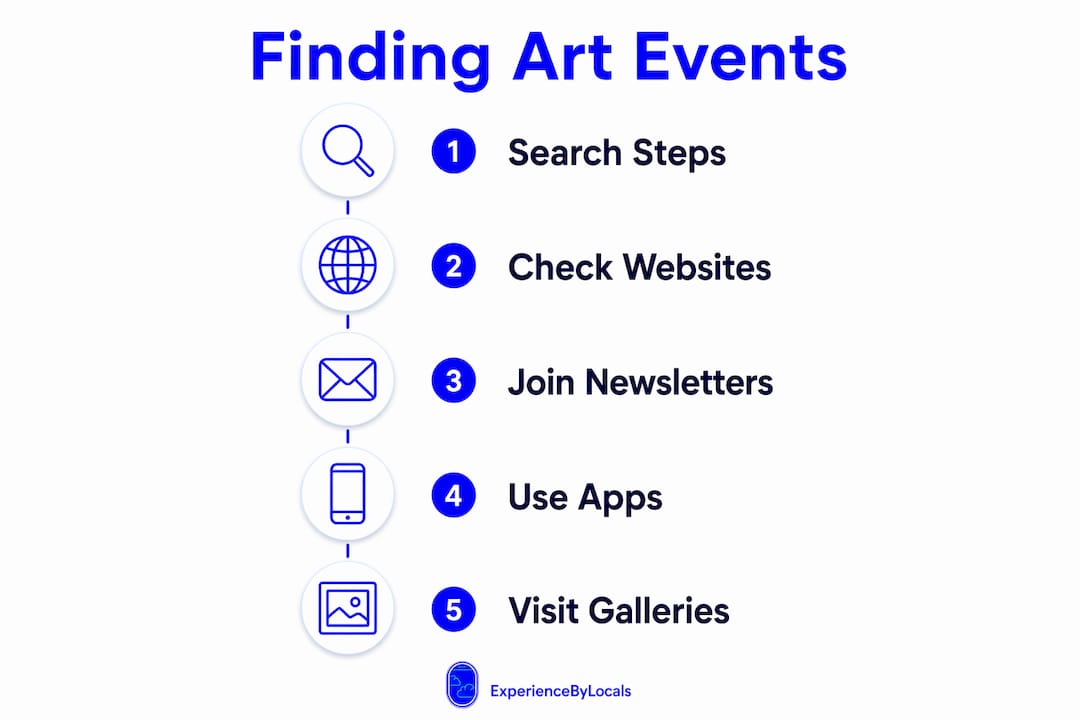
The most reliable way to find community art events is to use multiple sources at once. No single platform captures everything.
- Local arts organization websites publish the most complete calendars for their region. State arts councils, city cultural affairs offices, and nonprofit arts alliances maintain event listings that commercial platforms often miss. Search for "[your city] arts council events" to find the official source.
- Event discovery platforms let you filter by date, location, and category. Use the event type filter to narrow results to "art," "gallery," or "cultural" events. Set your radius to 10–25 miles for a realistic local scope.
- Social media and community groups surface real-time announcements. Facebook Groups organized around local art scenes, Instagram accounts run by galleries, and neighborhood apps like Nextdoor all post events days or hours before they appear on formal calendars. Follow 5–10 local galleries directly for the most current updates.
- Local government and tourism sites are underused but trustworthy. City tourism boards and parks and recreation departments list free public art events, outdoor festivals, and cultural programming that private platforms overlook.
- Dedicated local platforms like Experiencebylocals curate authentic, grassroots events that tourist-facing sites ignore. Experiencebylocals lists art festivals in Colorado, local showcases, and live performances hosted by community artists, all in one place.
The table below shows how each resource type performs across the most common search needs.
| Resource type | Best for | Cost to use | Update frequency |
|---|---|---|---|
| Local arts council site | Complete regional calendar | Free | Weekly |
| Social media (galleries) | Real-time announcements | Free | Daily |
| City tourism board | Free public events | Free | Monthly |
| Event discovery platforms | Broad search with filters | Free or freemium | Daily |
| Experiencebylocals | Grassroots local performances | Free to browse | Ongoing |
Pro Tip: Set a weekly calendar reminder to check your local arts council's event page every Monday. Most galleries and festivals publish their upcoming week's programming on Sunday night or Monday morning.
How to prepare for local art events and get more from them
Showing up prepared turns a casual visit into a genuinely memorable experience. The logistics matter as much as the art itself.
Gallery openings carry unspoken social codes that most first-timers do not expect. Some galleries, like Lilienthal Gallery, suggest specific attire for their openings and require an RSVP. Gallery Talks, which typically begin 30–90 minutes after the opening starts, give you direct access to the artist or curator. These talks decode the themes behind the work in ways that reading a wall label never can.
Participating in gallery talks provides context that transforms complex art narratives from confusing to compelling. Curators often reveal the personal or political intent behind a piece, which changes how you see everything else in the room.
For large festivals, logistics planning is the difference between a great day and a frustrating one. The 2026 Festival of the Arts in Gresham uses shuttle pickup locations to reduce parking congestion, and parking searches at peak times can stretch 20–30 minutes. Use the shuttle. Arrive 30 minutes before your timed entry if you have one.
Here is a quick preparation checklist for any art event:
- ✅ Check the event website for RSVP or ticket requirements at least 48 hours ahead
- ✅ Confirm the hours. Gallery strolls often end at 8:00 PM or 9:00 PM sharp
- ✅ Review the dress code if the event listing mentions one
- ✅ Look up parking or transit options before you leave home
- ✅ Check whether the event has a Gallery Talk or artist reception and note the time
- ✅ Bring cash for art markets and street fairs where vendors may not accept cards
Immersive art environments improve neuroaesthetic wellbeing and reward slow, meditative visits. Plan to spend more time than you think you need. Rushing through an immersive installation misses the entire point of the format.
Common mistakes that cause you to miss out on art events
The most common reason people miss great local art events is not lack of interest. It is poor planning around logistics and policies.
- Skipping the advance reservation. Premium immersive exhibits sell out days or weeks ahead. Waiting until the day of the event almost always means no entry.
- Ignoring photography policies. High-profile installations like Yayoi Kusama's mirror rooms restrict photography equipment, banning tripods, selfie sticks, monopods, and flash. Arriving with gear that gets turned away at the door is avoidable with one quick check of the event page.
- Missing the RSVP window. Gallery openings with limited capacity fill up fast. An RSVP is not a formality. It is your confirmed seat at the table.
- Arriving at the wrong time. Art strolls end at a fixed hour. Showing up at 8:30 PM for a 9:00 PM close leaves you with 30 minutes in a venue that is already winding down.
"Understanding the deeper intent of local exhibitions transforms casual browsing into meaningful community reflection. When you know what an artist is trying to say, you stop looking at the work and start listening to it."
The fix for all of these mistakes is the same: spend five minutes on the event page before you go. Check the hours, the ticket link, the photography rules, and the RSVP status. That five minutes protects hours of your time and keeps the experience intact.
Key Takeaways
Finding local art events near you requires combining multiple discovery sources, understanding event formats, and preparing for logistics before you arrive.
| Point | Details |
|---|---|
| Know your event type | Festivals, gallery strolls, immersive installs, and workshops each have different costs and scheduling norms. |
| Use multiple discovery sources | Combine arts council sites, social media, and platforms like Experiencebylocals for the fullest picture. |
| Reserve tickets early | Premium immersive events sell out fast and often limit entry to just a few visitors at a time. |
| Attend gallery talks | Curator-led talks provide context that transforms how you experience the entire exhibition. |
| Check policies before you go | Photography rules, RSVP requirements, and parking logistics are all on the event page. Read them. |
Why the best local art events are the ones you almost missed
Here is something I have noticed after years of attending local art events: the ones that stick with you are rarely the ones you planned months in advance. They are the gallery opening you found on a neighborhood Facebook group three days before. The community showcase in a space that used to be a hardware store. The art market tucked into a parking lot on a Saturday morning.
Major festivals are wonderful, and I am not dismissing them. But the cultural gems that actually change how you see your city tend to live in the smaller, less-advertised corners of the local art scene. A multimedia exhibition that reinterprets a neighborhood's history. A comedy night where the performers are also the neighbors. A dance showcase in an artist-run studio where the choreographer greets you at the door.
The mistake most people make is waiting for a "big" event to justify the effort of going out. Local art does not work that way. The connection with local dance communities and creative communities builds over time, through repeated small visits, not one annual festival. Show up consistently, talk to the artists, and the scene opens up in ways that no event calendar can predict.
My honest advice: pick one format you have never tried, whether that is a gallery talk, an open mic, or an art market, and commit to attending one this month. The community you find there will lead you to the next event, and the one after that.
— DJ
Live performances and art events worth attending in Colorado
Colorado's local art scene goes well beyond gallery walls. Experiencebylocals curates authentic live performances hosted by community artists across the state, from music and comedy to dance and theater.
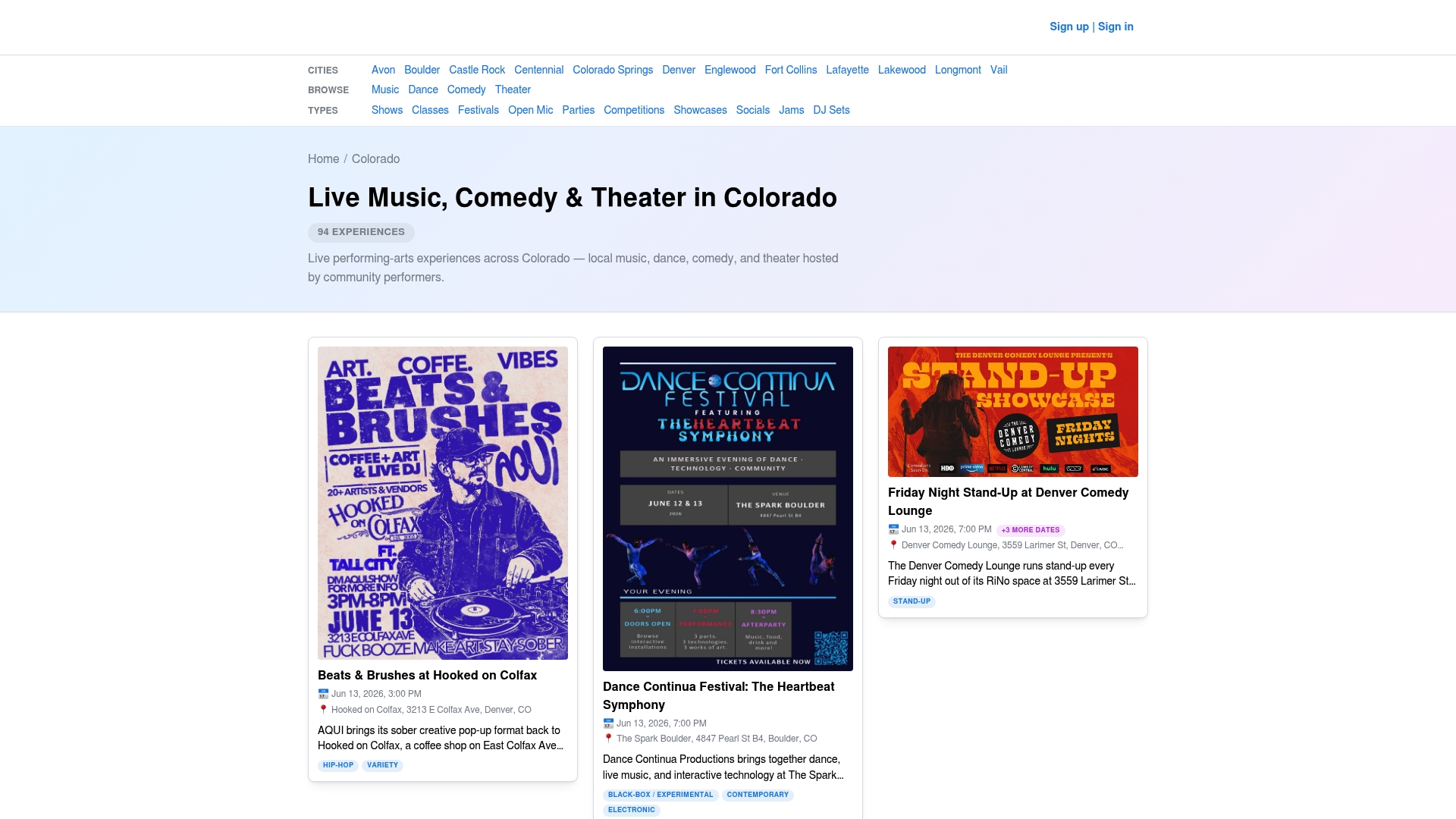
Whether you are looking for live music in Colorado, a theater night in Boulder, or a community showcase you would never find on a tourist site, Experiencebylocals connects you directly with the creators behind the events. The platform lists experiences like the Broadway Art Market at The Goldfinch and grassroots performances that reflect the real cultural heartbeat of Colorado communities. Browse the full calendar at Experiencebylocals and find your next genuine local experience.
FAQ
What are the most common types of local art events?
The most common formats are gallery openings, art strolls, street fairs, immersive installations, art workshops, and community showcases. Each varies in cost, schedule, and how much advance planning you need.
How far in advance should I book tickets for art events?
Book tickets for premium immersive installations at least one to two weeks ahead. Some high-demand exhibits, like Yayoi Kusama's mirror rooms, sell out days in advance and limit entry to just a few visitors at a time.
What time do gallery art strolls usually start and end?
Most evening art strolls run from 5:00 PM to 9:00 PM, giving visitors a four-hour window to move between multiple galleries and venues in one outing.
Are local art events free to attend?
Many community art events, including gallery openings and art strolls, are free. Ticketed events like immersive installations or curated showcases typically charge an entry fee, often in the range of $15–$20 per person.
How do I find art workshops near me?
Check your local arts council website, community center program listings, and platforms like Experiencebylocals for hands-on workshop listings. Social media accounts run by local studios and galleries also announce workshops, often with short registration windows.