
Hear Hundreds at UMS: Find and Book Denver Underground Music
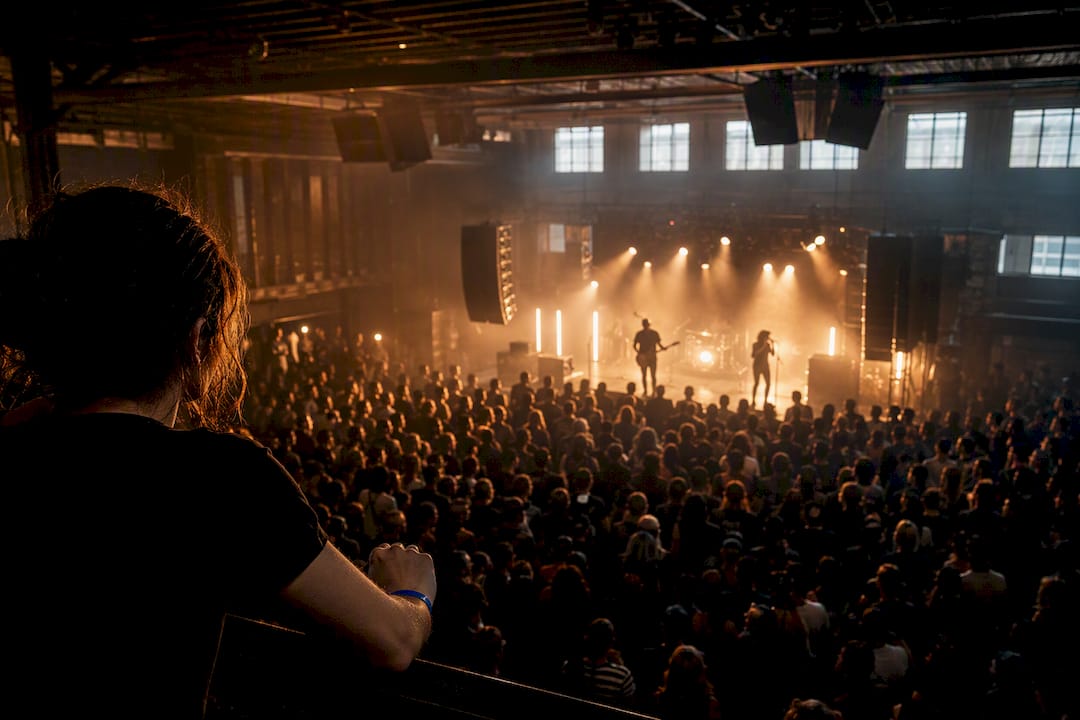
The fastest way into Denver's underground music scene right now is the Underground Music Showcase (UMS), the city's flagship multi-venue festival in RiNo. Beyond that, your best year-round move is stacking curated local listings with artist-run venue calendars. We built our own platform for exactly this reason, so guests can browse and book grassroots shows without wading through tourist-trap listings first.
TL;DR:
- The Denver underground scene is highly dispersed and constantly evolving, with no single neighborhood or genre dominating, which encourages experimental local acts.
- Building a routine that includes local listings, venue calendars, and scene networks increases the chances of discovering shows that are not publicly advertised.
- Venues range from formal concert halls to DIY house spaces, with many integrating electronic, bass, and live music genres in overlapping lineups.
- The scene's vitality relies on small, artist-run spaces and community-organized events that operate mostly outside mainstream promotion channels.
- The Underground Music Showcase in RiNo is a key entry point for newcomers but only captures a fraction of the ongoing underground activity beyond festival weekends.
Table of Contents
- What Denver's Underground Music Scene Actually Looks Like
- How Do You Actually Find Underground Shows in Denver?
- Which Venues Define Denver's Underground Sound?
- Why Denver's Underground Feels Alive Right Now
- The Truth About Denver's Underground That Most Guides Miss
- Book Your Next Denver Underground Show Through Experiencebylocals
- Sources
- FAQ
What Denver's Underground Music Scene Actually Looks Like
Denver's underground doesn't live in one neighborhood or one genre. It's scattered across warehouse spaces, mid-size clubs, and living rooms, and it shifts constantly as venues open, close, and reinvent themselves. That churn is actually a feature, not a bug. Bandcamp Daily's reporting on the Denver DIY scene points to the city's relative geographic isolation as part of why local acts here experiment more freely, without the pressure of chasing coastal trends.
UMS is the clearest entry point if you're new to this. It's a multi-venue festival concentrated in the RiNo Art District that packs hundreds of local and national performances into a few days, and it functions less like a single concert and more like a sampler platter of everything happening in Denver right now. Checking the official RiNo Art District UMS page for current lineups and ticket details is a smarter first step than guessing at dates from memory, since festival scheduling shifts year to year.
Why does a festival matter for finding underground music specifically? Density. In one weekend, you can walk between stages and hear a dozen acts you'd otherwise need months of scattered show-going to discover.
That same DIY energy shows up outside festival season too. Westword's coverage of community-organized events like Blucifer's First Rodeo shows local organizers building their own festival moments from scratch, independent of any big-name backer. A few things that signal a healthy grassroots ecosystem here:
- Artist-run showcases that pop up between major festivals, often announced with little lead time
- Independent promoters booking eclectic, genre-blending lineups instead of single-genre bills
- Venues that double as community hubs, hosting art shows and open mics alongside concerts
- Cross-scene collaborations where electronic producers and live bands share the same bill
How Do You Actually Find Underground Shows in Denver?
Finding a show that isn't advertised on a billboard takes a little more legwork, but it's not complicated once you know where to look.
- Start with curated local listings. Our guide on how locals get RSVP access fast breaks down three practical ways to skip the guesswork, and pairing that with our roundup of artist-run venues in Denver gives you a solid baseline before you even leave the house.
- Follow venue calendars and local reporting. Bandcamp Daily, Westword, and 303 Magazine regularly cover pop-ups and emergent lineups that never make it onto mainstream event apps.
- Tap into scene networks. Venue mailing lists, local subreddits, Discord and Telegram servers run by promoters, and even direct messages to artists you like are where a lot of late-breaking house shows get announced.
- RSVP early, arrive early. Many DIY spaces cap attendance for fire-code or noise reasons, and doors close once capacity hits.
- Run through a quick logistics check before you go: age limits, whether it's a free RSVP or a paid ticket, house rules about photography or alcohol, and how you're getting home if the venue is in a spot with limited parking or late-night transit.
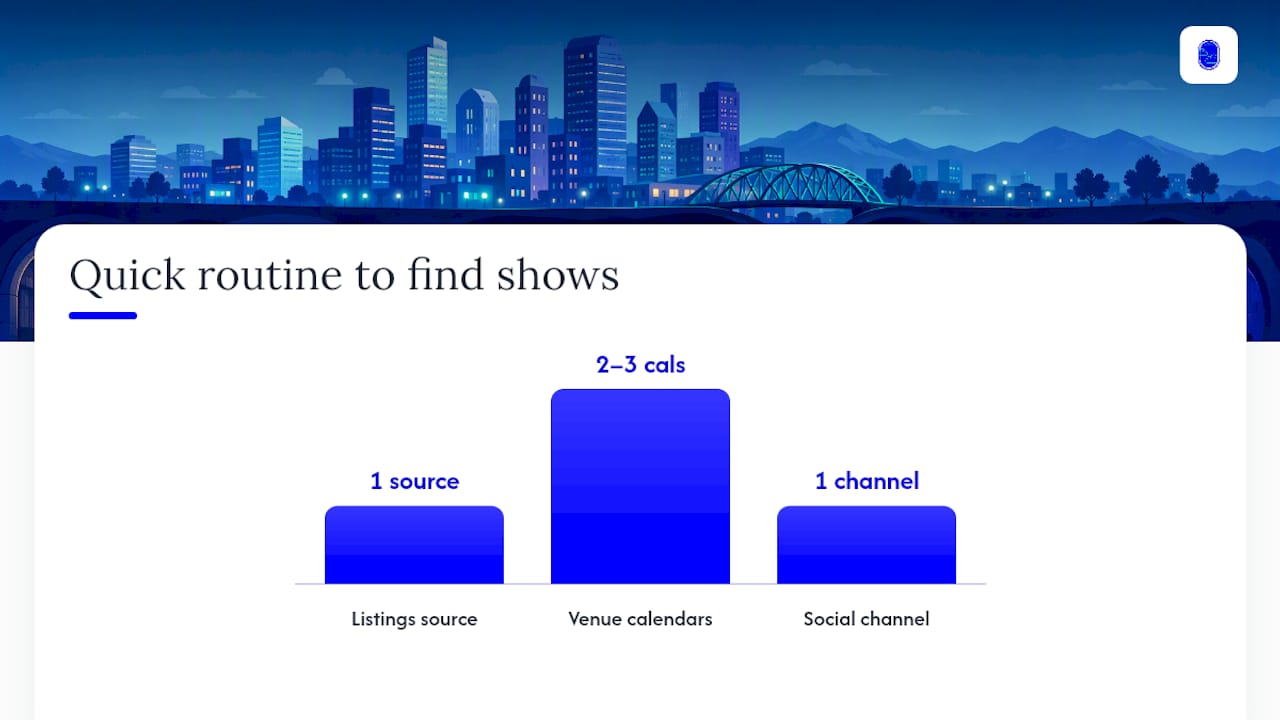
Pro Tip: Building a small, repeatable routine works better than chasing every lead. Pick one trusted listings source, follow two or three venue calendars, and join one social channel where promoters post last-minute announcements. That combination catches most of what matters.
Safety and etiquette matter just as much as access. DIY and house shows run on trust: respect the host's space, don't wander into areas that aren't part of the show, and tip touring artists when there's a donation jar. These aren't ticketed arenas with security staff, so the informal rules carry real weight.
Which Venues Define Denver's Underground Sound?
Denver's underground splits across a few distinct venue types, and knowing the difference helps you set expectations before you show up.
- Concert halls with underground programming, like The Soiled Dove Underground, book touring and local acts in a proper venue setting with sound systems built for the job.
- Festival showcase stages, including the UMS Showcase Stage and UMS Underground Stage, function as temporary hubs during festival weekends and are often where you'll catch an act right before they break out.
- Mid-size independent clubs absorb a lot of DIY energy when smaller spaces close. Bandcamp Daily's reporting notes venues like the Hi-Dive as examples of clubs that have picked up slack left by shuttered warehouse spaces.
- DIY and house-show spaces are the least formal and most volatile, often lasting only as long as a lease or a friendly landlord allows.
The sound running through all of it is harder to pin down than the venues themselves. 303 Magazine's reporting on who owns Denver's music scene describes a city that's become a genuine hub for experimental electronic and bass music, while jam bands and live acts keep their own strong following. Increasingly, the two worlds share bills instead of competing for the same crowd. If you're only looking for one genre, you're missing half the picture. Our grassroots venue shortlist breaks down more spaces worth putting on your radar.
Why Denver's Underground Feels Alive Right Now
Many platforms claim to showcase "local entertainment," but much of it in Denver is built for tourists first. Some platforms curate grassroots events across Colorado, including house shows, artist-run spaces, and festival-side showcases, which rarely appear on mainstream event calendars.
The strongest signal of a healthy scene isn't a single big festival. It's the number of small, artist-run rooms that keep hosting shows month after month, often with no marketing budget and no outside investors. That's where you find out what a city actually sounds like.
Some of our most memorable listings prove the point: K-pop choreography nights hosted at artist-run sanctuaries, or comedy nights built entirely around community talent rather than touring headliners. Those formats point to a deeper current running through Denver's grassroots programming. If you're browsing our site for underground shows specifically, filter by Denver, look for tags like "artist-run" or "showcase," and check our Colorado showcase listings alongside our main Denver page for the freshest additions.
The Truth About Denver's Underground That Most Guides Miss
Most guides to Denver's music scene treat UMS as the whole story, then wrap up. That's a mistake. UMS is a fantastic once-a-year sampler, but it's also a snapshot of a scene that keeps moving the other 51 weeks of the year, and the guides that stop at festival season leave readers with nowhere to go once the tents come down.
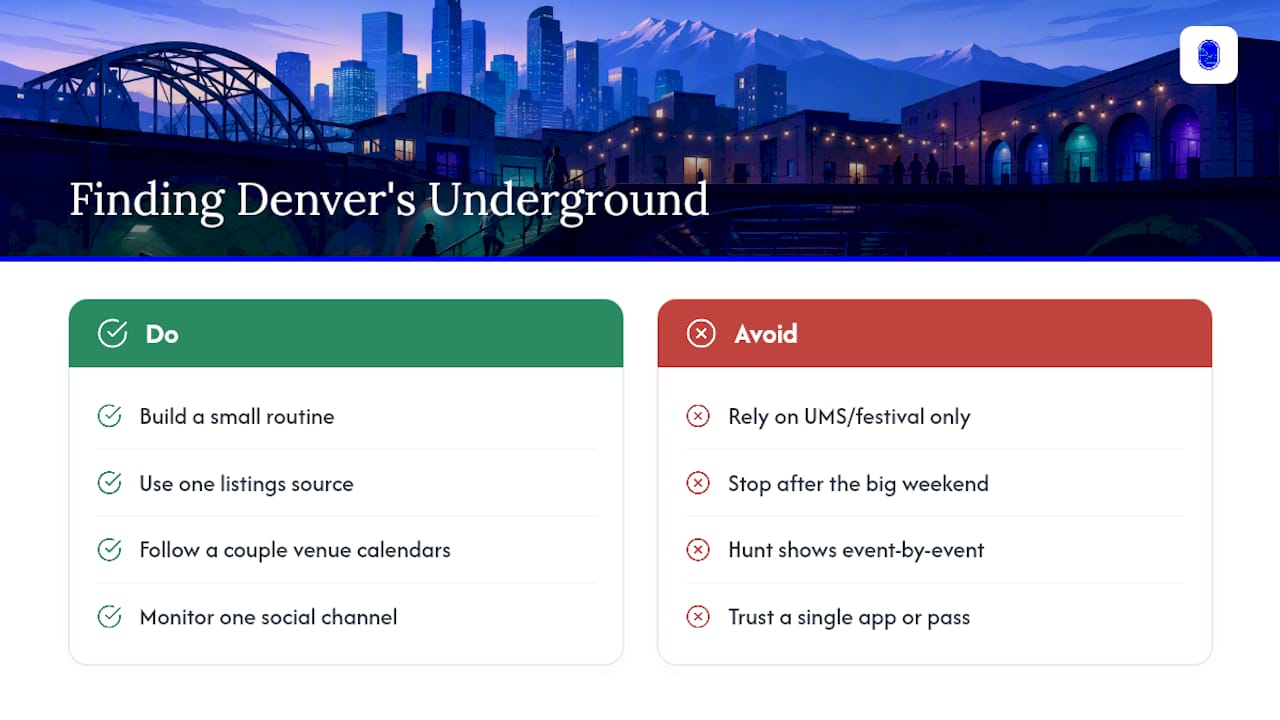
The conventional advice, check a big event calendar and call it a day, misses how much of the real action moves through informal channels: a promoter's Instagram story, a friend's group chat, a flyer taped to a venue door. If there's one thing worth prioritizing, it's building a small routine rather than hunting event by event. One listings source, a couple of venue calendars, one social channel where announcements land late. That combination beats any single app or festival pass, because it catches the shows that never get formally advertised at all. Denver's underground rewards people who show up consistently, not people who show up once for the big weekend and disappear.
— DJ
Book Your Next Denver Underground Show Through Experiencebylocals
There are platforms intended as direct routes to Denver's grassroots scene, aiming to consolidate local, artist-hosted shows across Colorado into a searchable format where users can book directly with hosts.
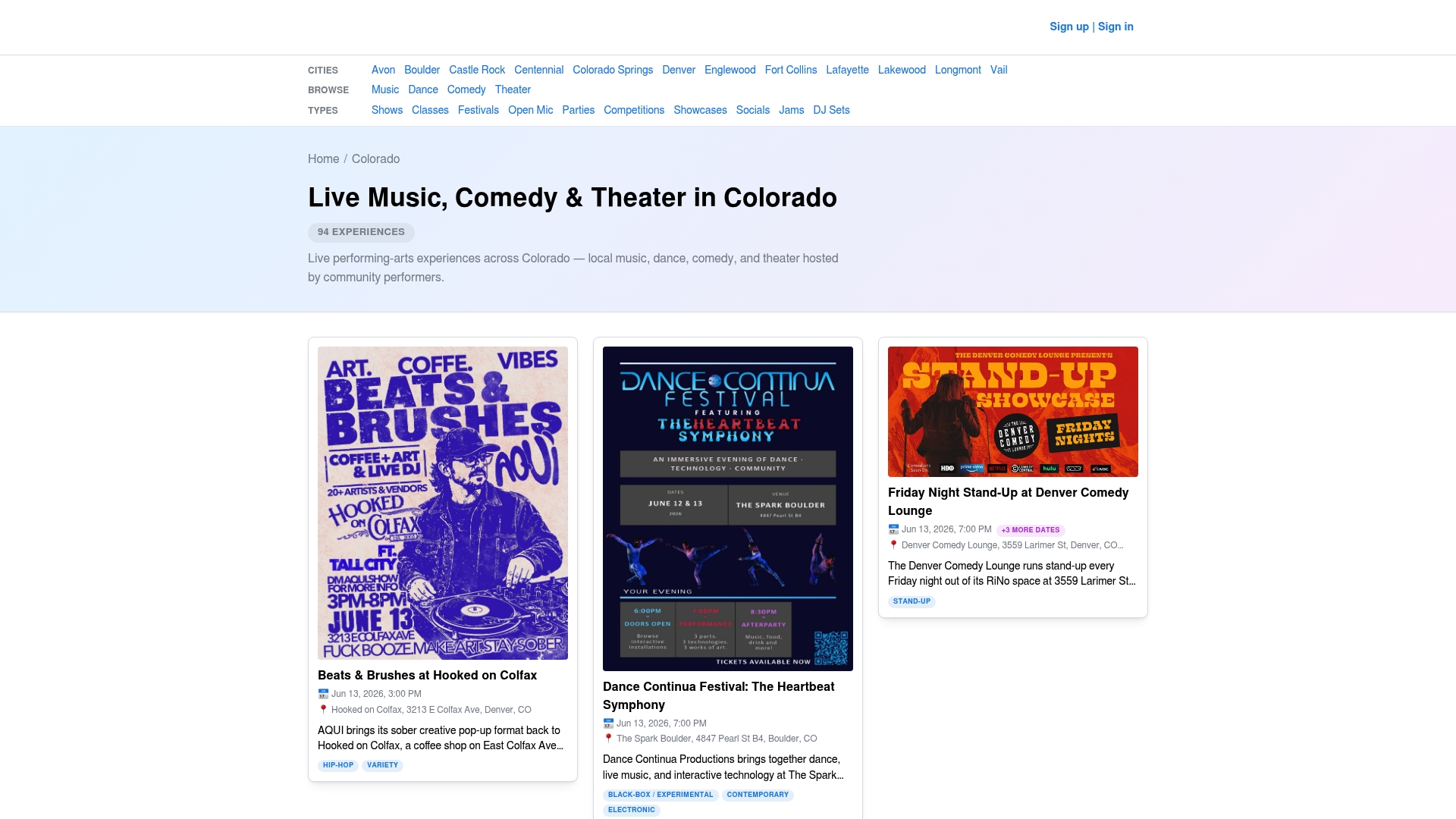
Getting started takes minutes. Head to our Live Music in Colorado page and filter by Denver, then narrow by tags like DIY, house show, all-ages, or free RSVP depending on what fits your night. Before you book, run a quick checklist: confirm the venue's age policy, note whether tickets are RSVP-only or paid, and double-check start times since DIY shows often run on their own schedule. Once you find a listing that fits, book it directly through the event page and skip the back-and-forth of chasing down promoters on social media. Start browsing tonight and see what's on this week.
Sources
Keep these bookmarked once you've found your first few shows:
- Proximity City: Denver Music Now | Bandcamp Daily
- Who Owns Denver’s Music Scene? DJs vs. Live Bands - 303 Magazine
- Review: Blucifer’s First Rodeo showed strength of Denver music
FAQ
How Do You Find Underground Music in Denver?
Combine curated local listings, artist-run venue calendars, and scene networks like promoter Discords or local subreddits. Checking a platform built for grassroots events, alongside following venues directly on social media, catches shows that never hit mainstream calendars.
Are There Raves Happening in Denver in 2026?
Denver's electronic and bass music scene stays active year-round, with 303 Magazine noting the city's strong national reputation in that space. Specific rave dates change constantly, so check venue calendars and local listings close to the date rather than relying on old event pages.
What Is the Current EDM Scene Like in Denver?
Denver's electronic scene is a legitimate national hub for experimental bass and dubstep, and it increasingly overlaps with the city's jam-band and live-music communities rather than staying separate. Genre-blending bills are common, so don't assume an "EDM night" won't also feature live instrumentation.
Is There a Good Music Scene in Denver?
Yes. Denver supports a dense mix of DIY venues, mid-size independent clubs, and a flagship festival in UMS, all backed by consistent local reporting from outlets like Westword and Bandcamp Daily. The scene's strength comes from its grassroots organizing as much as any single venue or event.