
Use Experiencebylocals to Host Invite Only Denver House Concerts
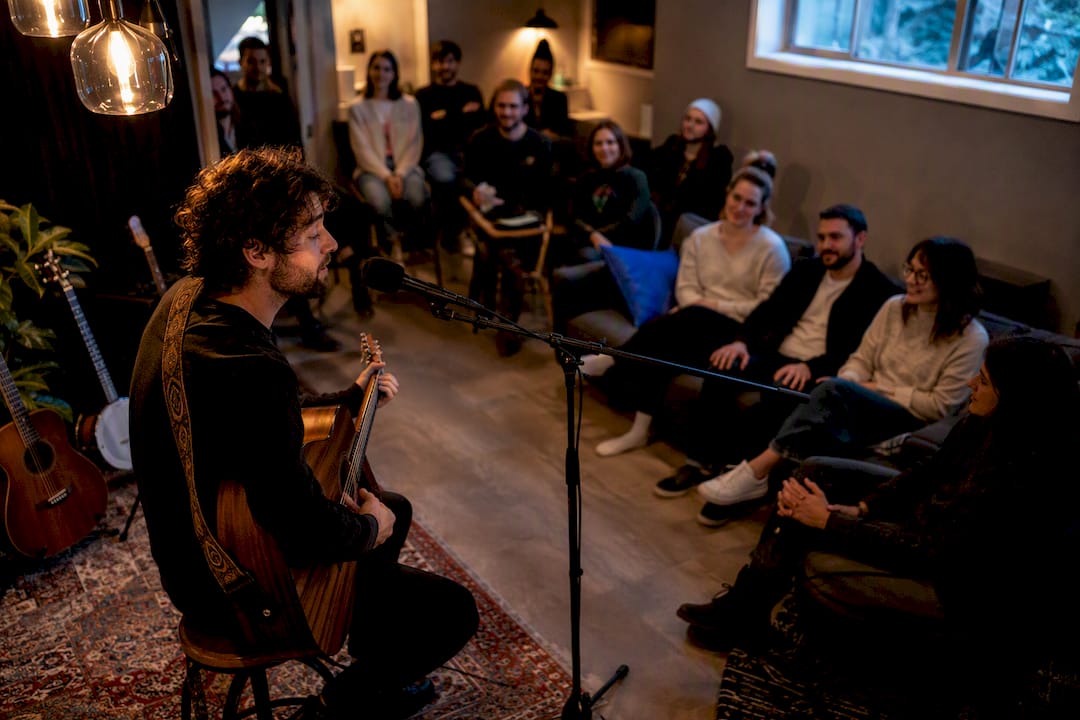
Yes, Denver has a thriving house-concert scene, and finding or hosting one is genuinely doable if you follow a few practical rules. Intimate, invite-based shows running 20 to 60 guests happen across the metro area every month. The keys are simple: check your lease, HOA, or noise ordinance first, keep guest counts reasonable, and use private invite lists or a community listings platform like Experiencebylocals to connect artists with the right audience.
TL;DR:
- House concerts in Denver typically host 20 to 60 guests, emphasizing attentive listening rather than socializing or partying.
- Keeping events private, donation-based, and within local noise and zoning regulations prevents them from becoming classified as public or commercial activities.
- Artists usually earn more per show through donations or tip jars, with minimal gear requirements and flexible setlists tailored to room size.
- Promotion should focus on personal outreach and neighborhood-specific channels, avoiding broad public advertising to maintain event privacy.
- Weather considerations influence outdoor versus indoor planning, with indoor spaces favored during winter or unpredictable weather conditions.
Table of Contents
- What house concerts in Denver actually look like
- What are the legal and neighborhood rules for house concerts in Denver?
- What should artists expect from a Denver house concert?
- Who actually shows up to Denver house concerts?
- How should you behave as a guest at an intimate house show?
- How do you find emerging local artists through house concerts?
- How does Denver's weather affect house concerts?
- How do you promote a house concert within Denver's neighborhoods?
- A host's take on what actually makes these nights work
- List, find, and manage house concerts through Experiencebylocals
- Sources
What house concerts in Denver actually look like
A house concert isn't a party with music playing in the background. It's a listening room, whether that room happens to be a living room, a finished basement, a backyard, or an artist-run sanctuary space. The performer plays to an audience that came specifically to listen, not to mingle over a keg in the corner.
That distinction matters for anyone searching "house concerts denver" expecting club listings or festival lineups. This is the opposite end of the spectrum from arena shows or bar gigs, closer in spirit to a folk coffeehouse than a rock club.
Most Denver house concerts run on a predictable rhythm:
- Guest count typically ranges from a few dozen depending on the space
- Doors open a short time before the music starts, giving people time to settle in and chat
- Sets usually last around an hour to an hour and a half, sometimes with a short intermission
Locals gravitate toward these shows for reasons that have little to do with convenience. You get to talk to the artist after the set. You pay what you can afford rather than a marked-up ticket price. And in a city where touring acts often skip smaller rooms entirely, house concerts fill a real gap for anyone who wants live music without the noise of a packed venue.
What are the legal and neighborhood rules for house concerts in Denver?
Private, invite-only house concerts are generally legal in Denver, and that's true across most U.S. jurisdictions according to legal analysis on the subject. The moment a show starts looking public, though, the rules shift.
Three things tend to trigger scrutiny: advertising the event to strangers, selling fixed-price tickets in advance, and hosting the same large crowd on a recurring basis. A federal court case examining a recurring house-concert series found that frequency, promotion, parking impact, and fixed admission fees pushed the event into commercial territory, which brought zoning rules into play. That's the exception, not the norm, but it's worth knowing before you plan a monthly series.
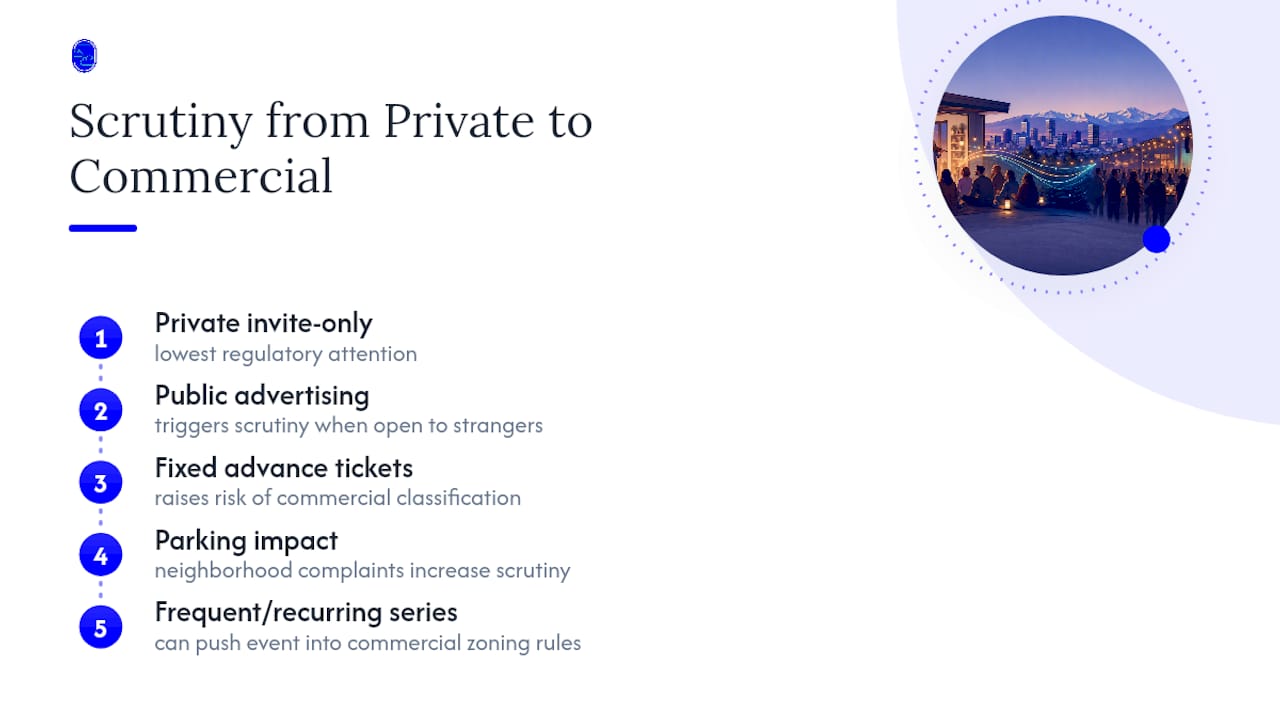
Noise ordinances vary by neighborhood, and HOA covenants can be stricter than city code, so Denver Post's practical guide recommends checking both before you set a date. Ticketing versus donations matters too: keeping collection informal, a suggested donation at the door rather than a pre-sold ticket, helps preserve the private-event classification that keeps permitting simple.
Copyright and performance licensing rarely apply to a private living-room show, but that changes once you start charging admission or selling alcohol without a license, according to legal guidance on live event music licensing. Keep it invite-only, keep it donation-based, and keep the guest list to people you actually know or who came through a trusted network, and you're operating well inside the safe zone that house-concert legal FAQs describe.
What should artists expect from a Denver house concert?
Pay at house concerts almost always runs on a donation model rather than a guaranteed fee. Hosts typically pass a hat, set a suggested donation per guest, or split ticket-adjacent proceeds directly with the artist. There's no booking agent taking a cut, and no venue minimum bar tab to hit before you see a dollar.
That trade-off comes with real upside. Artists keep a much larger share of what the room generates, and the audience is there specifically for the music, not as a backdrop to a Friday night out.
Gear expectations run lean. Most Denver house concerts don't need a full PA. A single powered speaker, a vocal mic, and a DI box for acoustic instruments cover the majority of living-room and backyard setups, according to a DIY house-show staging guide. Load-in is usually through a front door, not a loading dock, so lighter rigs travel better.
Artists should also ask the host about:
- Available power outlets near the performance area
- Whether the space has stairs or tight doorways that limit gear size
- How the host plans to seat the audience, since sightlines change everything about how a set feels
Coming with a flexible set list helps too. A room of 30 people reacts differently than a bar crowd, and the best house-concert performers read that energy and adjust rather than running a fixed setlist built for a stage.
Who actually shows up to Denver house concerts?
The audience skews toward people in their late 20s through 60s who've grown tired of standing in crowded bars straining to hear an opening act. Many are former or current musicians themselves, along with neighbors, coworkers, and friends of friends who got looped in through a personal invite chain rather than a public ad.
What sets the culture apart is the expectation of attention. Nobody's there to talk over the performance, and that unspoken agreement is exactly what draws people back. Regulars often follow specific hosts or specific artists across multiple shows, building something closer to a standing community than a one-off audience.
Neighborhoods matter here more than most people expect. A house concert in a Highlands bungalow feels different from one in a Capitol Hill loft or a Lakewood backyard, and the crowd shifts slightly with the setting: more families in some pockets, more twenty-something musicians in others. Denver's geography spreads these shows across a wide range of settings, which is part of why the scene feels less like a scene and more like a patchwork of overlapping circles.
Diversity of format is part of the draw too. Some nights lean acoustic singer-songwriter, others lean toward small ensemble jazz or spoken word paired with music, and a handful of artist-run sanctuary spaces mix genres entirely, hosting everything from folk sets to community dance nights in the same room on different weekends.
How should you behave as a guest at an intimate house show?
The single biggest etiquette rule is silence during the set. This isn't a bar where background chatter is expected. If you want to talk, step outside or wait for a break between songs.
A few other habits separate a welcome guest from one who doesn't get invited back:
- Arrive on time, since a late knock during a quiet acoustic passage disrupts the whole room
- Bring cash for the donation, since hosts rarely have a card reader set up
- Turn your phone to silent, and skip video unless the artist explicitly says it's fine
- Thank the host directly before you leave, since they took on real risk and effort to make the night happen
Parking deserves its own mention. Denver streets fill up fast in neighborhoods like Sunnyside or Baker, and a line of unfamiliar cars is one of the fastest ways to trigger a neighbor complaint. Park a block or two out if the host asks, and don't block driveways.
Tipping the artist beyond the suggested donation is always welcome and rarely happens enough. Most touring or local musicians playing these rooms are covering their own gas money and gear wear, and a few extra dollars in the jar makes a real difference over a full season of shows.
How do you find emerging local artists through house concerts?
House concerts are one of the few remaining ways to hear an artist before they're playing 500-cap rooms, and Denver's circuit is full of names most people haven't heard yet. The trick is knowing where the invite chains actually start.
Private networks remain the backbone of the scene: friends of friends, email lists run by longtime hosts, and word of mouth through open mics. But that model has a ceiling, since it only reaches people already inside the loop. Community listings platforms solve that specific problem by giving hosts and artists a public front door without turning the event itself into a public, ticketed show.
Experiencebylocals lists exactly this kind of grassroots talent across Colorado, from artist-run spaces hosting genre-crossing nights to small acoustic sets in community rooms. Browsing live music listings across Colorado surfaces the kind of show that never makes it onto a traditional venue calendar. Open mic nights are another reliable discovery channel. Artists testing new material at open mic events often end up booked for their first house show within a few months, once a host in the crowd likes what they hear.
Larger community events like Denver PorchFest, where neighborhoods turn front porches into a rotating multi-stage lineup for a single afternoon, work as a lower-commitment entry point too. It's a public, organized event rather than a private house concert, but it functions as a discovery engine, letting you sample a dozen artists in an afternoon and follow the ones you like into their smaller, invite-only shows later.
How does Denver's weather affect house concerts?
Denver's climate shapes house-concert planning more than most hosts expect going in. Roughly 300 days of sunshine a year make backyard and porch shows viable for a surprisingly long stretch, from late April through early October, but the swings within that window can be sharp.
Afternoon thunderstorms roll in fast during summer, especially July and August, so any outdoor show needs a backup indoor plan ready to activate with an hour's notice. Hosts who run backyard series often keep the living room furniture pre-arranged for exactly this reason.
Winter pushes everything indoors, which actually plays to the format's strength. A living room or finished basement holds heat well, and the tighter quarters intensify the listening-room atmosphere that makes house concerts distinct in the first place. Snow can still complicate things on the guest side: unpredictable road conditions on show nights lead to more last-minute cancellations between November and March, so hosts in this window benefit from building a slightly larger invite list than their target headcount to account for no-shows.
Altitude plays a smaller but real role too. Denver's elevation means outdoor evening shows cool off faster than guests expect, so a September porch show that feels warm at 6 PM can turn chilly by 8. Suggesting guests bring a layer is a small note that saves a lot of shivering.
How do you promote a house concert within Denver's neighborhoods?
Promotion for a house concert works best when it stays deliberately narrow. The goal isn't maximum reach, it's reaching the right 40 people who'll actually show up, listen, and come back next time.
Word of mouth through a personal invite list remains the foundation, and text or email chains still outperform public social posts for turnout. Neighbor outreach deserves special attention here: a short note or a small preview invite to the houses closest to yours does more to prevent complaints than any permit ever could, according to Denver Westword's reporting on the local scene. It also tends to turn a skeptical neighbor into a future guest.
Beyond your own network, community listings platforms let you reach people outside your existing circle without turning the event fully public. Creating a listing on Experiencebylocals' Denver page puts your show in front of locals actively searching for exactly this kind of experience, while keeping RSVP and address details gated behind an approval step. That balance, visible enough to grow your audience, private enough to stay a private event, is the whole game.
Pro Tip: Post your show on neighborhood-specific channels (a local Nextdoor thread, a neighborhood association email list) rather than broad city-wide social media. It reaches the exact geographic pool most likely to actually attend, and it doubles as informal neighbor notice.
A host's take on what actually makes these nights work
The best house concert I ever watched come together wasn't won by better gear or a bigger email list. It was won by a host who walked her block two weeks ahead of the show, knocked on six doors, and personally invited the neighbors most likely to notice cars on the street. Every one of them showed up, and not a single complaint got filed.
That's the part most guides underplay. The technical stuff, seating, sound, staging, matters, but it's solvable with a weekend of prep. Neighbor trust takes longer to build and pays off longer too. Artists who play these rooms consistently earn more per guest than they would splitting a bar tab three ways with two other acts, and audiences walk away remembering the artist's name instead of just the headline act they came to see.
— DJ
List, find, and manage house concerts through Experiencebylocals
Experiencebylocals gives Denver hosts and artists a way to reach real audiences without turning a private living-room show into a public event you can't control. Instead of relying entirely on a personal contact list or hoping a flyer gets seen, you get a searchable listing that reaches locals actively looking for exactly this kind of experience.
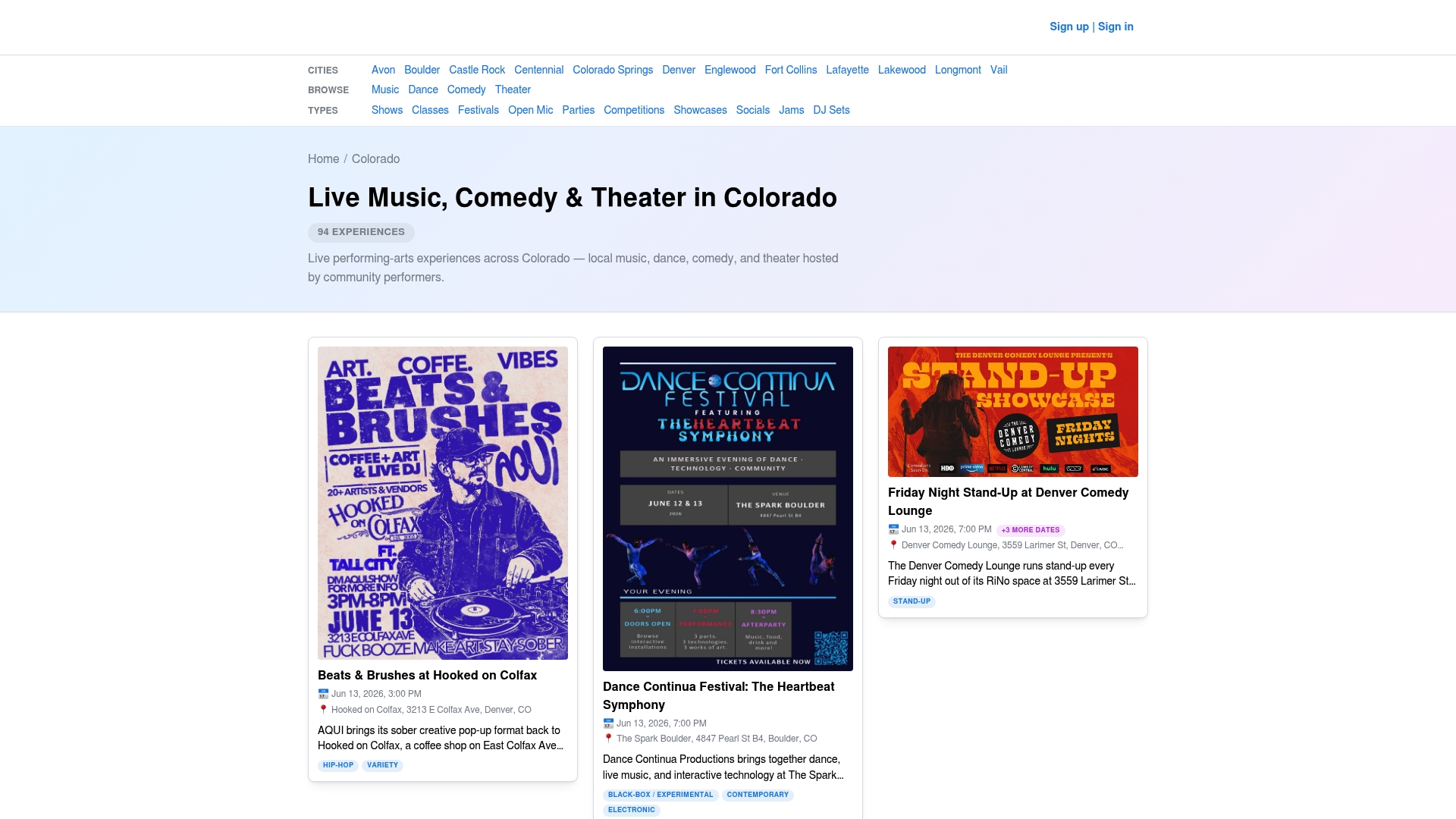
Setting up a listing takes a few minutes: describe the space, set the date, and choose privacy settings that keep the exact address gated behind RSVP approval, which preserves the invite-only structure that keeps things simple legally. You can collect RSVPs directly through the platform and set up donation-based payment options instead of fixed ticket pricing, matching how most Denver house concerts already operate. Artists browsing for their next booking and hosts looking for their next act can find each other through the same Denver live music and cultural events page, whether you're planning your first show or your fiftieth.
Sources
- How to throw a house show event in Denver
- How to Throw a House Concert | Denver Westword
- Are house concerts legal? A look at the law
- Live event music licensing