
What Does Dramatic Performance Include: A Colorado Guide
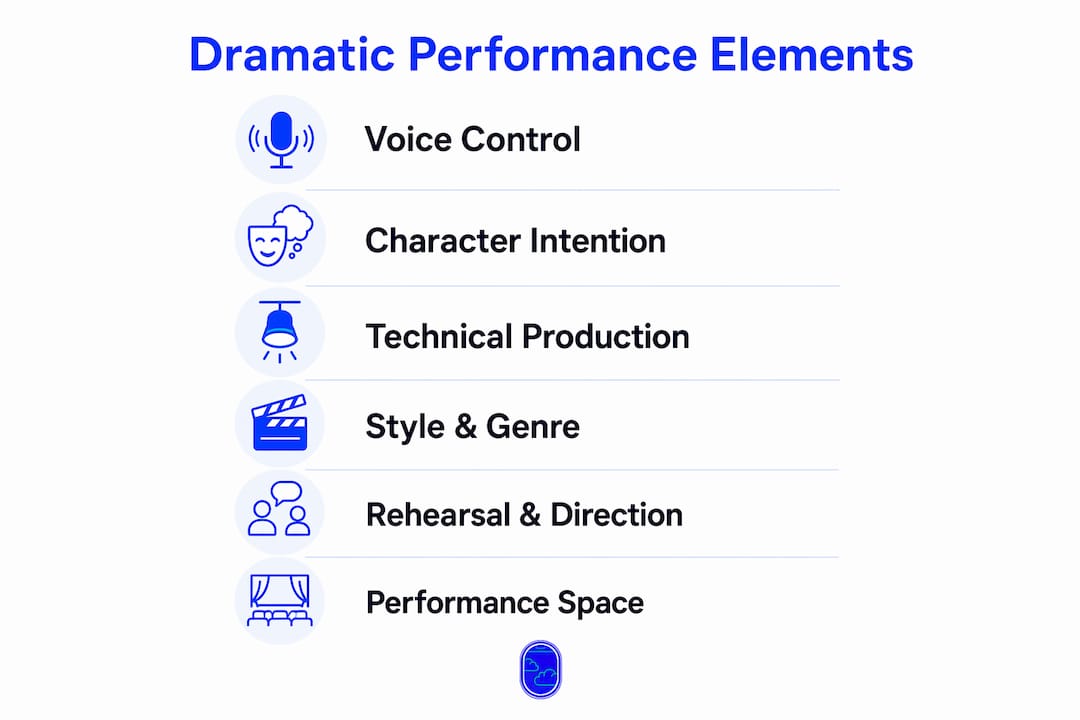
A dramatic performance includes six coordinated layers: performer tools (voice, movement, and physical dynamics), text and narrative (script, character, plot, theme, and intention), production and technical elements (sound, lighting, costumes, props, and stage business), style and genre (the conventional rules that tell audiences how to engage), the performance space and audience relationship, and rehearsal and direction that pulls everything together. Whether you're watching a grassroots comedy night or a small-stage Shakespeare in Denver, these components are always at work. Experiencebylocals, drawing on frameworks from the University of Saskatchewan and Encyclopedia Britannica, curates Colorado shows where every one of these layers shows up in the work of local creators.
Quick checklist:
- Performer tools: voice, movement, embodiment
- Text and narrative: character, plot, theme, intention
- Production layers: sound, lighting, costume, props
- Style and genre: realism, stylization, conventions
- ️ Space and audience relationship
- Rehearsal and direction
Table of Contents
- 1. How voice and movement carry meaning on stage
- 2. How script, character, and intention shape a performance
- 3. What production and technical elements do for a show
- 4. Why style and genre tell audiences how to watch
- 5. How rehearsal and direction make everything cohere
- 6. How the performance space shapes what you deliver
- 7. What audiences should notice and what artists can do right now
- Key Takeaways
- Why these elements matter most in community shows
- Find grassroots performances in Colorado on Experiencebylocals
- Useful sources for deeper study
1. How voice and movement carry meaning on stage
Performance delivery relies on a performer's expressive control over voice and movement to communicate narrative and emotional intent. Voice covers everything from spoken dialogue and song to deliberate silence. Movement includes gesture, facial expression, posture, blocking (where you stand and how you travel), and proxemics (how close or far you are from other performers and the audience).
In small Colorado venues, these tools do even more heavy lifting because the audience is close. A whispered line lands differently in a 60-seat black box than in a 600-seat house. Gesture scale matters too: broad, sweeping arm movements read as theatrical in a large space but can feel cartoonish three feet from the front row.
Pre-show performer checklist:
- Breath and vocal warm-up (lip trills, resonance exercises)
- Diction check: speak a tongue twister at full projection
- Physical warm-up: shake out tension, set your posture
- Eye focus: practice landing your gaze on specific points in the room
Pro Tip: Use deliberate pauses and a shift of eye focus instead of raising your volume to create tension. Timing and silence sustain engagement more reliably than loud dialogue.
2. How script, character, and intention shape a performance
Live performance shifts emphasis to spectacle and music as tools for maintaining audience connection, which means text is a starting point, not the whole show. A script gives structure; intention gives it life.
Think of it this way: two performers can deliver the same line with opposite objectives and produce completely different scenes. In a short community play, a character who wants to comfort a friend but fears rejection will play the scene differently than one who wants to confess guilt. That gap between objective and obstacle is where dramatic action lives.
Core narrative components:
- Character: who the performer embodies and what they want
- Objective: the specific goal driving each moment
- Obstacle: what stands in the way
- Plot beats: the sequence of events that shift the story's direction
- Theme: the central idea the story explores
Pro Tip: Before any performance, write your character's objective in one sentence using the format "I want to ___." Then identify the single biggest obstacle. That clarity will shape every choice you make on stage.
Practical note for local artists: a small shift in emphasis can flip audience interpretation entirely. Stress "I love you" versus "I love you" and watch the meaning change. These micro-choices are free, require no budget, and are available to every creator on the Experiencebylocals platform.
3. What production and technical elements do for a show
Complex dramatic performances coordinate text, decor, projection, and technical crew so that sound, lighting, costume, and stage business support the narrative arc. Even at the grassroots level, these layers shape how an audience feels before a single word is spoken.
| Production Role | Primary Function | Small-Venue Practice |
|---|---|---|
| Sound operator | Balance vocals and music | Use a single monitor mix; test at full cast volume |
| Lighting designer | Shape focus and mood | Two-color wash plus a spot covers most needs |
| Costume/makeup | Signal character and period | Consistent color palette per character group |
| Props coordinator | Ground action in physical reality | Rehearse with real props, not substitutes |
| Stage manager | Coordinate cues and timing | Call cues from a printed script with timestamps |
Mixed-arts events, like the interdisciplinary shows featured on Experiencebylocals, demonstrate how coordinated technical cues create narrative continuity even when genres blend.
Pro Tip: Prioritize clear sound balance above everything else in grassroots venues. Audiences will forgive a bare set or simple lighting, but they will not forgive inaudible text or a vocalist buried under the band.
4. Why style and genre tell audiences how to watch
Style determines the mood, spirit, and degree of realism or fantasy in a production. Without clear style signals, the audience cannot play the "conventional game" of the drama. They need to know whether they're watching naturalism, physical theater, cabaret, or something experimental before they can fully engage.
The same line, "I'm leaving," reads as devastating in a realistic kitchen-sink drama and absurdly funny in a stylized farce. The difference is not the words; it's the tempo, gesture scale, costume, and lighting that frame the moment.
| Style | Gesture Scale | Speech Pace | Lighting Cue | Audience Role |
|---|---|---|---|---|
| Realism | Small, contained | Conversational | Naturalistic | Observe quietly |
| Physical theater | Large, abstract | Rhythmic | High contrast | Witness and feel |
| Cabaret | Broad, presentational | Variable | Warm, direct | Participate, react |
| Experimental | Unpredictable | Fragmented | Conceptual | Co-create meaning |
Style-signaling devices for local artists:
- Costume choices that immediately communicate period or archetype
- Opening tempo: slow and deliberate signals weight; fast and light signals comedy
- Lighting color temperature (warm amber vs. cool blue)
- The performers' relationship to the audience in the first 30 seconds
Cultural context shapes these conventions too. A K-pop choreography showcase at an artist-run sanctuary in Colorado carries its own stylistic grammar that audiences read through movement vocabulary, not just costume.
5. How rehearsal and direction make everything cohere
A performance without coordinated rehearsal is a collection of good intentions. The director, stage manager, and rehearsal leader align timing, focus, and transitions so that all the elements in sections 1–4 land as a single experience.
Rehearsal run order (numbered for clarity):
- Table work: read the script, discuss objectives and theme
- Blocking rehearsals: set movement and spatial relationships
- Off-book run-through: full scene work without scripts
- Cue-to-cue: technical team walks through every lighting and sound cue
- Tech run: performers and crew run the show at full pace with all cues
- Dress rehearsal: full performance conditions, no stopping
For community casts with limited rehearsal time, prioritize blocking the opening and closing of each scene first. Audiences remember beginnings and endings most. Guided drama practices like improvisation and process drama can fill gaps when scripts are not fully memorized, keeping energy alive even in rough run-throughs.
Pro Tip: Run your cue-to-cue before your first full tech run, not during it. Stopping mid-scene to fix a lighting cue kills performer momentum and costs you twice the time.
6. How the performance space shapes what you deliver
The performance space includes both the literal stage and the emotional space between performer and audience. That second kind of space is invisible but just as real. A performer who makes direct eye contact with a front-row guest in a 40-seat room creates a different kind of intimacy than one who projects to the back wall of a 200-seat theater.
Common staging configurations and what they demand:
- Proscenium: audience faces the stage; project forward, use depth for focus
- Thrust: audience on three sides; rotate focus, avoid upstaging yourself
- In-the-round: audience surrounds the stage; move through the space, never plant
- Site-specific: the environment is the set; use the architecture as a scene partner
Audience presence and response actively shape pacing and energy. Some styles invite participation; others ask for quiet reflection. Knowing which you're in determines how you calibrate your delivery.
Space adjustment checklist:
- Test your mic or projection level from the back row before the audience arrives
- Scale your gestures to the room size, not the script's emotional intensity
- Identify your sightlines: every seat should see your face at least once per scene
- In outdoor or site-specific settings, account for ambient noise and natural light shifts
Pro Tip: If you're performing at an open mic or informal venue, walk the space before the audience enters. Stand at the back. Sit in the front row. You'll make better choices once you've experienced the room from both sides.
7. What audiences should notice and what artists can do right now
Watching a show with craft awareness makes the experience richer. Here's what to tune into as a guest, and three moves local artists can make before their next show.
Audience observation checklist:
- Where does the performer's focus go during key moments?
- When does silence appear, and what does it do to the room's energy?
- How do costume or lighting changes signal a shift in the story?
- Watch for the moment when the performer-audience connection clicks
Three artist tweaks you can apply immediately:
- Run a full sound check at performance volume. Not a quiet walk-through. Bring your whole cast, play your actual music cues, and listen from the back of the room.
- Mark your pacing shifts. Identify two moments in your show where you deliberately slow down. Audiences read pace changes as meaning.
- Signal your style in the first 60 seconds. Your opening image, tempo, and costume tell the audience what game they're playing. Make that signal unmistakable.
At a typical Experiencebylocals community show, whether it's a comedy night in Denver or a dance showcase, the most memorable moments usually come from a performer who commits fully to one of these three moves. Encourage specific, kind feedback after shows: "The pause before the final line was the most powerful moment" is more useful to a creator than "great job."
Key Takeaways
A dramatic performance works when all six layers, from performer tools to production design, are coordinated into a single, intentional experience that connects creators and audiences.
| Point | Details |
|---|---|
| Performer tools are foundational | Voice control and deliberate movement communicate emotion before a word is spoken. |
| Intention drives narrative | A clear character objective, obstacle, and tactic create dramatic action in any genre. |
| Technical layers shape atmosphere | Sound balance, lighting, and costume signal mood and support the story's arc. |
| Style signals the audience's role | Clear genre cues tell guests how to engage, from quiet observation to active participation. |
| Experiencebylocals connects it all | The platform showcases Colorado creators who bring these elements together in authentic, grassroots shows. |
Why these elements matter most in community shows
Most articles about dramatic performance treat these components as a checklist for drama students. I think that misses the point entirely for grassroots artists and local audiences.
The real value of understanding what a dramatic performance includes is that it gives creators a shared language. When a director can say "your objective in this scene is unclear" and a performer understands exactly what that means, the rehearsal room becomes more productive and less frustrating. When an audience member knows to watch for focus and silence, they stop being passive consumers and start being active participants in the experience.
Community theater and local performance spaces in Colorado are doing something that larger, commercial venues often can't: they're building genuine connection between creators and guests in the same room. A show like The Comedy of Errors in the Wild works not because it has a big budget, but because the performers understand how voice, movement, and space work together in an outdoor setting. That knowledge is accessible to every local artist, regardless of resources.
The elements in this guide are not gatekeeping tools. They're a shared vocabulary for making shows that matter.
Find grassroots performances in Colorado on Experiencebylocals
Colorado's local arts scene is full of creators who bring every one of these elements to life on small stages, in community spaces, and outdoors. Experiencebylocals is where you find them, without sorting through tourist-trap venues or generic event listings.
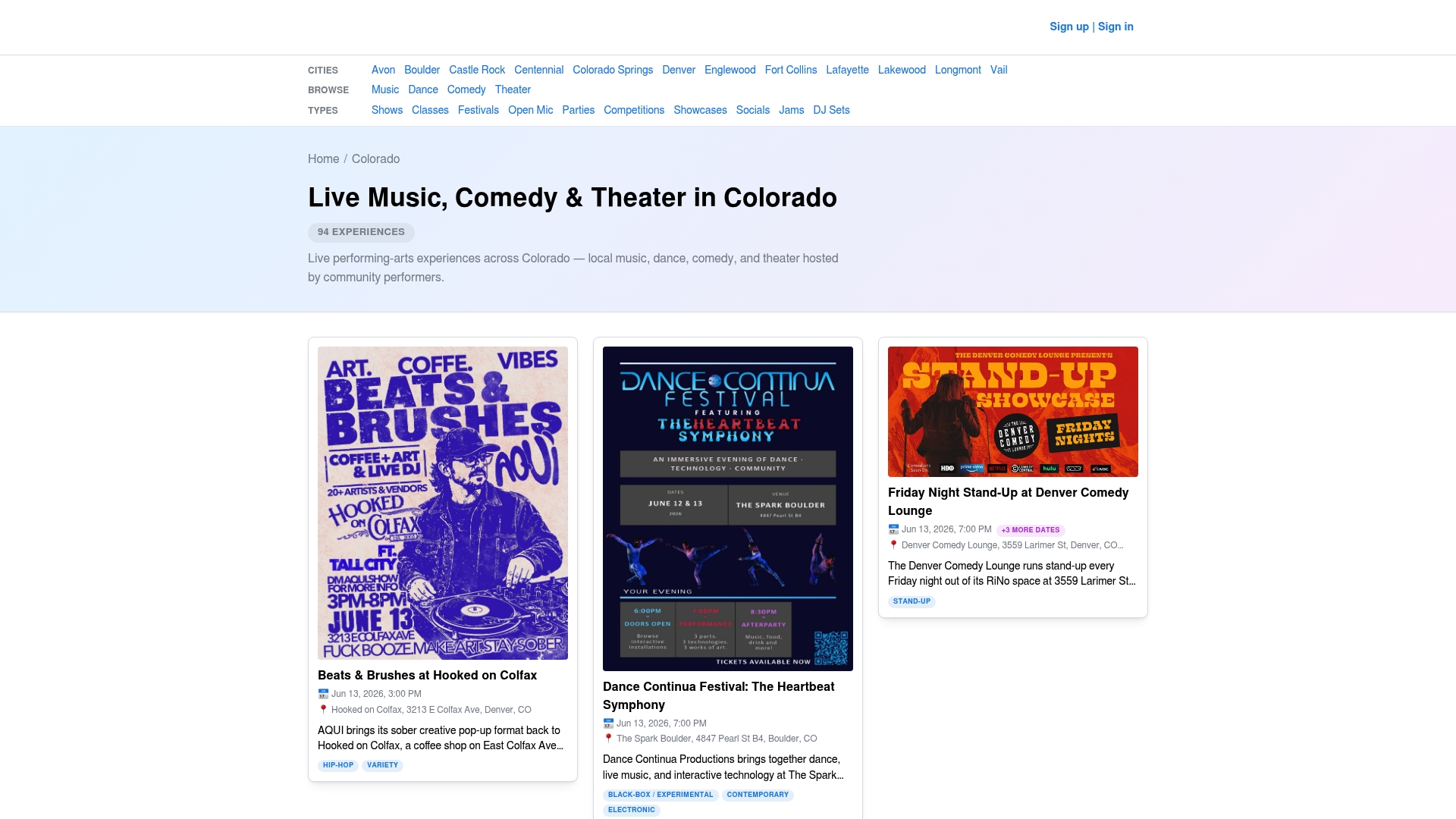
Whether you're looking for live music in Colorado, a dance performance, or a community theater night, the platform puts authentic, creator-led shows front and center. Organizers can list their events directly, giving grassroots artists the visibility they deserve. Browse what's happening near you at Experiencebylocals and book your next real local experience today.
Useful sources for deeper study
These are the core references behind this guide. Each one is worth bookmarking if you're teaching drama, directing a community show, or just want to go deeper.
- NSW Department of Education, Dramatic Elements Posters: Clear, visual breakdowns of voice, movement, dynamics, and expression for performance contexts.
- University of Saskatchewan, Major Elements of Performance Analysis: Explains how live staging shifts emphasis from text analysis to spectacle, music, and kinesthetic experience.
- Encyclopedia Britannica, Common Elements of Drama: Covers style, genre, and the conventional "game" between performers and audiences.
- Encyclopedia Britannica, Musical Performance and Technical Layers: Details how sound, lighting, costume, and crew coordinate to support a narrative arc.
- Windmill Education, Elements of Drama: Practical breakdown of tension, timing, and movement as expressive tools.
- The Drama Teacher, 37 Elements of Drama: Broad reference covering Aristotle's classical elements alongside contemporary performance practices.
- BYU Arts Partnership, Guided Classroom Drama: Useful models for community-based performance, including improvisation and process drama.