
Neighborhood Arts Event Checklist for Community Organizers
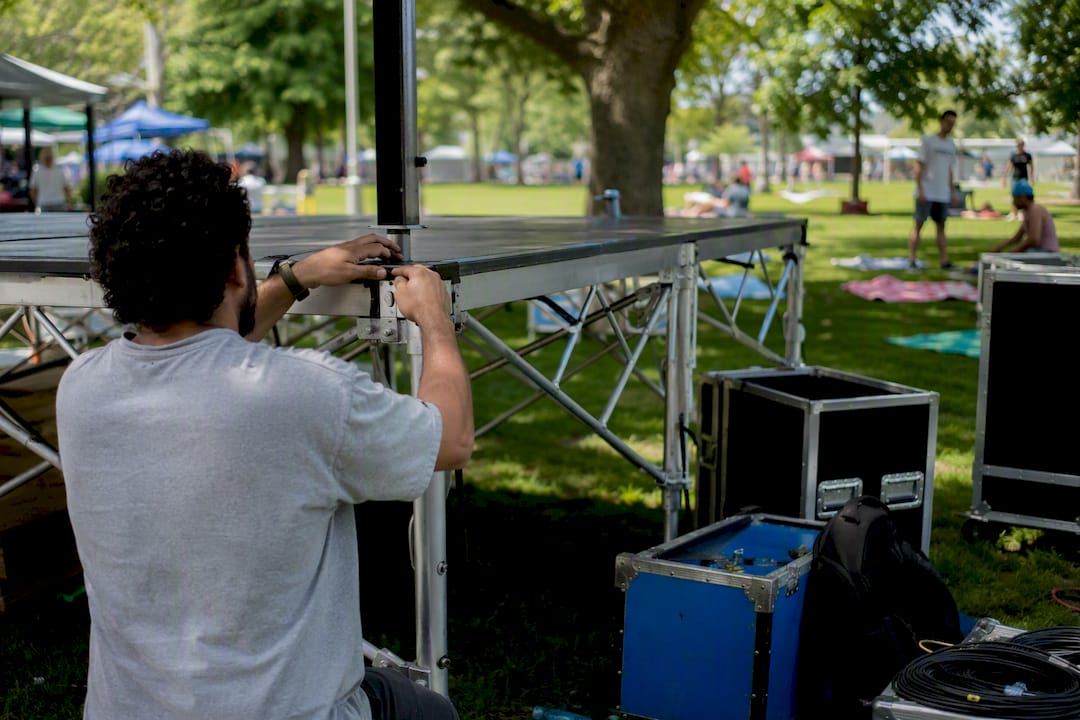
Use this prioritized, stage-based checklist to plan a safe, accessible neighborhood arts event on a community budget. Before anything else, lock in five things: date and venue, permits and insurance, a core budget, your volunteer leads, and your accessibility and safety plan. Permit offices in many cities want applications 30 days or more before your event, so this timeline matters as much as the art itself.
- Confirm date, venue, and rain plan
- File permits, insurance, and any noise variance
- Draft a bare-bones budget with a contingency line
- Name a volunteer coordinator and three role leads.
- Map accessibility and safety needs into the site plan
Pro Tip: Print this checklist and start eight weeks out: venue and permits first, volunteer roles second, promotion third. Everything else builds on those three.
Key Takeaways
A stage-based checklist that assigns owners, deadlines, and contingency budgets to each planning phase is what turns a neighborhood arts idea into a safe, well-run event.
| Point | Details |
|---|---|
| Start 6 to 10 weeks out | Lock venue and permits first since permit offices often need 30 days or more to process. |
| Assign one owner per role | Volunteer coordinator, vendor manager, and safety lead should never overlap on the same person if you can avoid it. |
| Budget a contingency line | Set aside at least 10% of your budget for last-minute fixes like weather or equipment failure. |
| Write down your rain plan | Decide your backup venue and cancellation authority before announcing a date, not the morning of. |
| Recruit performers through a directory | Experiencebylocals lets organizers filter local music, dance, comedy, and theater acts by city to speed up booking. |
Table of Contents
- Neighborhood Arts Event Checklist: The Stage-By-Stage Timeline
- Who You Need: Roles and Volunteer Assignments
- Budget Line Items, Funding, and Contract Red Flags
- Site Logistics, Accessibility, and Safety Planning
- Event Day: The Hour-By-Hour Run Sheet
- Closing Out: Cleanup, Thank-Yous, and Evaluation
- Finding Local Artists and Neighborhood Partners
- Contingency Plans for Weather and Unforeseen Issues
- Legal Considerations Beyond Permits
- What Organizers Learn After the First One
- How Experience By Locals Speeds Up Your Next Event
- Sources
Neighborhood Arts Event Checklist: The Stage-By-Stage Timeline
Small community festivals generally need 3 to 6 months of runway, while a tighter pop-up style event, a single-day block party or lantern walk, can come together in 6 to 8 weeks if you move fast on permits. Work backward from your event date and treat each stage below as a checkpoint, not a suggestion.
| Stage | Core tasks |
|---|---|
| 6 to 10 weeks out | Lock venue, file permits, book anchor talent, open sponsor outreach |
| 4 to 6 weeks out | Confirm vendors, recruit volunteers, finalize budget, launch promotion |
| 1 to 2 weeks out | Confirm headcounts, print signage, brief volunteers, walk the site |
| Event day | Setup, check-in, run-of-show, teardown |
6 to 10 weeks out
- Reserve the venue in writing and confirm rain or backup dates
- Submit your special event permit application
- Book your featured artists or performers
- Start sponsor and local business outreach
- Open a shared budget spreadsheet with an owner assigned per line item
- Begin building your email and social promotion calendar
4 to 6 weeks out
- Sign vendor agreements, including food vendors needing temporary permits
- Recruit volunteers and assign shift leads
- Order rentals: tables, tents, restrooms, power
- Send save-the-dates to community newsletters and calendar listings
- Confirm insurance certificate is on file
- Draft your day-of run sheet
1 to 2 weeks out
- Finalize RSVP and attendance estimates
- Print signage, wayfinding maps, and volunteer badges
- Hold a volunteer briefing and walk the actual site
- Confirm final vendor and artist arrival times
A small neighborhood arts fair with a mural unveiling and three musical acts might set venue and permits by week eight, lock vendors and volunteers by week five, and finalize signage the Tuesday before a Saturday event. The venue lead should own the permit and site walk; the volunteer coordinator owns shift scheduling; the vendor lead owns contracts and load-in timing.
Who You Need: Roles and Volunteer Assignments
A neighborhood arts event runs on five roles: lead organizer, volunteer coordinator, stage or AV manager, vendor manager, and safety lead, plus greeters for wayfinding. Assign one owner per role, even if that person wears two hats on a small budget.
- Lead organizer: owns the master timeline and final decisions
- Volunteer coordinator: builds shift schedules and handles no-shows
- Stage/AV manager: runs sound checks and keeps performers on time
- Vendor manager: confirms load-in windows and payment terms
- Safety lead: manages first aid, emergency contacts, and crowd flow
- Greeters: direct foot traffic and answer accessibility questions
For volunteer shifts, plan blocks of three to four hours with a 15-minute overlap for handoffs, and keep a "floater" volunteer on hand per group of stationed helpers to cover breaks. Each shift lead should get a one-page task list and know the escalation contact if plans change mid-event.
- Brief every volunteer the week before, not the morning of
- Give each role lead a printed contact sheet
- Confirm who covers a no-show before doors open
Budget Line Items, Funding, and Contract Red Flags
Track these standard costs: venue fee, liability insurance, portable restrooms, equipment rentals, artist stipends, printing and publicity, and a contingency line worth a modest portion of your total budget. Organizers running multi-site community art projects often underestimate prep time and hidden costs, so pad your budget before you commit to vendors.
- Local business sponsorships (cash or in-kind materials)
- Small neighborhood or municipal arts grants
- Community crowdfunding tied to a specific goal
- Special event permit, temporary food permits, and noise variance if needed
Pro Tip: Read every vendor contract for vague deliverables, missing cancellation clauses, and unclear payment timing before you sign. A one-page rider that spells out load-in time and power needs prevents day-of surprises.
Site Logistics, Accessibility, and Safety Planning
Your site map needs marked entrances and exits, an accessible route, a first-aid station, restrooms, water, waste zones, and a vendor load-in path separate from foot traffic.
- ADA-compliant paths, seating, and clear directional signage
- A designated sensory-friendly or quiet space
- Emergency contact list posted at the first-aid station and volunteer check-in
- Sound levels planned around your city's noise curfew, not around it
Pro Tip: Treat your sound curfew as a hard constraint, not a target. Assign one person as the on-site sound manager whose only job is watching the clock and the neighbors.
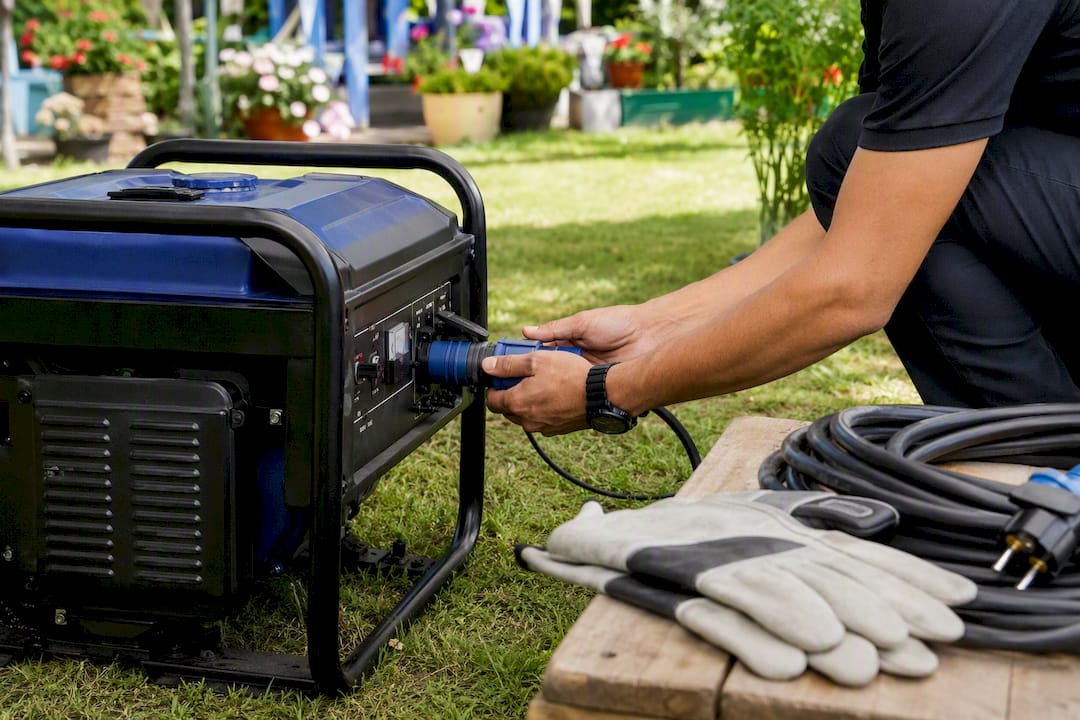
Plan power needs early: generators for outdoor stages, extension cords rated for outdoor use, and one restroom unit per rough attendance tier your rental company recommends.
Event Day: The Hour-By-Hour Run Sheet
A two-column run-of-show, one column for time, one for the owner, keeps your day from sliding. Build in 10 to 15 minute buffers between performances so a late soundcheck does not cascade into everything after it.
- Setup and load-in: vendors and artists arrive, tables and signage go up
- Soundcheck: stage manager confirms every act, front to back
- Doors open: greeters begin check-in and wayfinding
- Program runs: stage manager tracks timing against buffers
- Vendor and safety checks: safety lead does a walk-through each hour
- Teardown: staged by zone, waste sorted before hauling out
- Know who to call for a power outage before you need the number
- Assign one person to lost and found
- Post the first-aid kit location on your run sheet, not just the site map
Closing Out: Cleanup, Thank-Yous, and Evaluation
Reconcile vendor payments, return rentals, and restore the site within 48 hours while details are fresh.
- Send thank-you notes to volunteers, sponsors, and funders within a week
- Collect attendance counts, revenue, vendor feedback, and social reach
- Ask a short survey question: "What would make you come back next year?"
- Report outcomes to sponsors with real numbers, not just photos
- File a one-page lessons-learned note for next year's organizer
Finding Local Artists and Neighborhood Partners
Recruit through channels where your audience already gathers: local arts organization newsletters, community centers, neighborhood social groups, and public libraries. Each reaches a slightly different crowd, and libraries in particular tend to have built-in audiences for family-friendly programming.
- Send a short outreach email: what you're planning, what you're offering (stipend, exposure, table space), and your deadline
- Ask partners directly what they need from you: power, promotion, insurance proof
- Prepare digital assets, flyers, tutorial clips, social posts, before you launch outreach
Case studies of successful community art projects consistently show that flexibility, low-barrier materials, and multiple skill-level workshops increase participation and long-term buy-in.
Pro Tip: A single email to a local school or small business can turn into free promotion, a donated table, or a co-hosted workshop. Partnerships multiply your reach without multiplying your budget. Building your own artist network starts with networking with local artists well before you need them for a specific date.
Contingency Plans for Weather and Unforeseen Issues
Every outdoor neighborhood arts event needs a written rain plan, decided before you ever announce a date, not improvised the morning skies turn gray. Pick a backup: a covered pavilion, a partner's indoor space, or a firm postponement policy, and put that decision in your venue contract from the start.
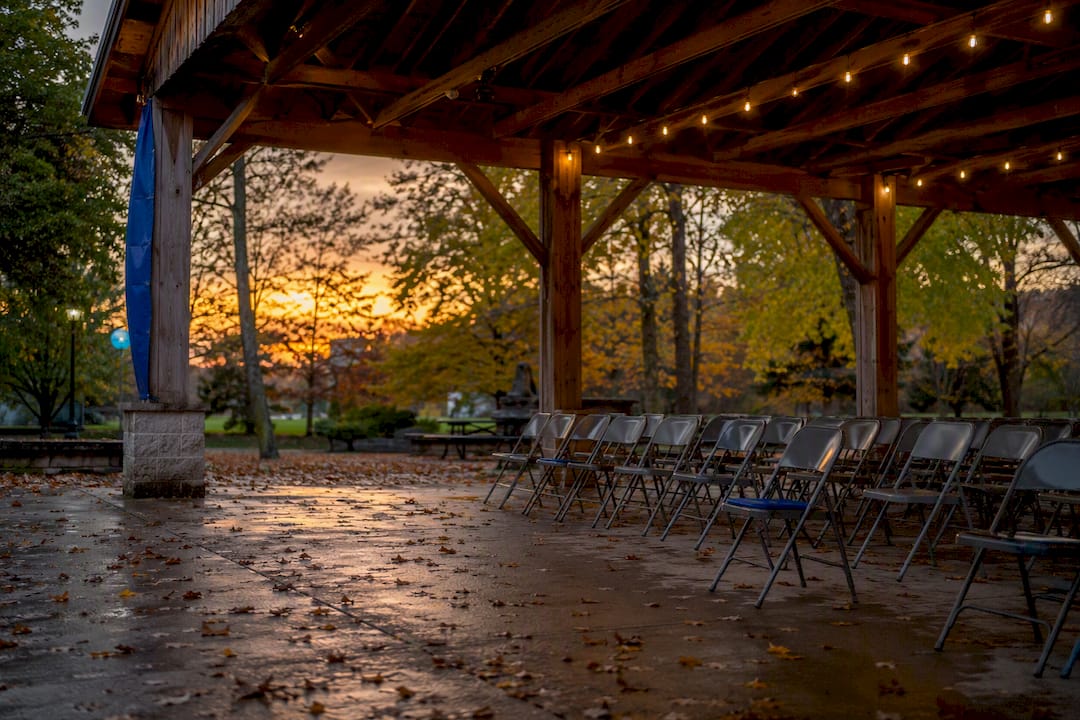
Set a weather decision deadline, ideally the morning of for a same-day call, and name one person with authority to make it. That person should have a phone tree or group text ready to reach volunteers and vendors within the hour, because a scattered cancellation announcement causes more frustration than the weather itself.
Beyond weather, build a short list of other likely disruptions: a headline performer cancels, a vendor's truck breaks down, a permit gets flagged at the last minute. For each, name a backup contact or fallback plan in advance. A standby local artist willing to fill a slot on short notice is worth more than a longer lineup you can't guarantee.
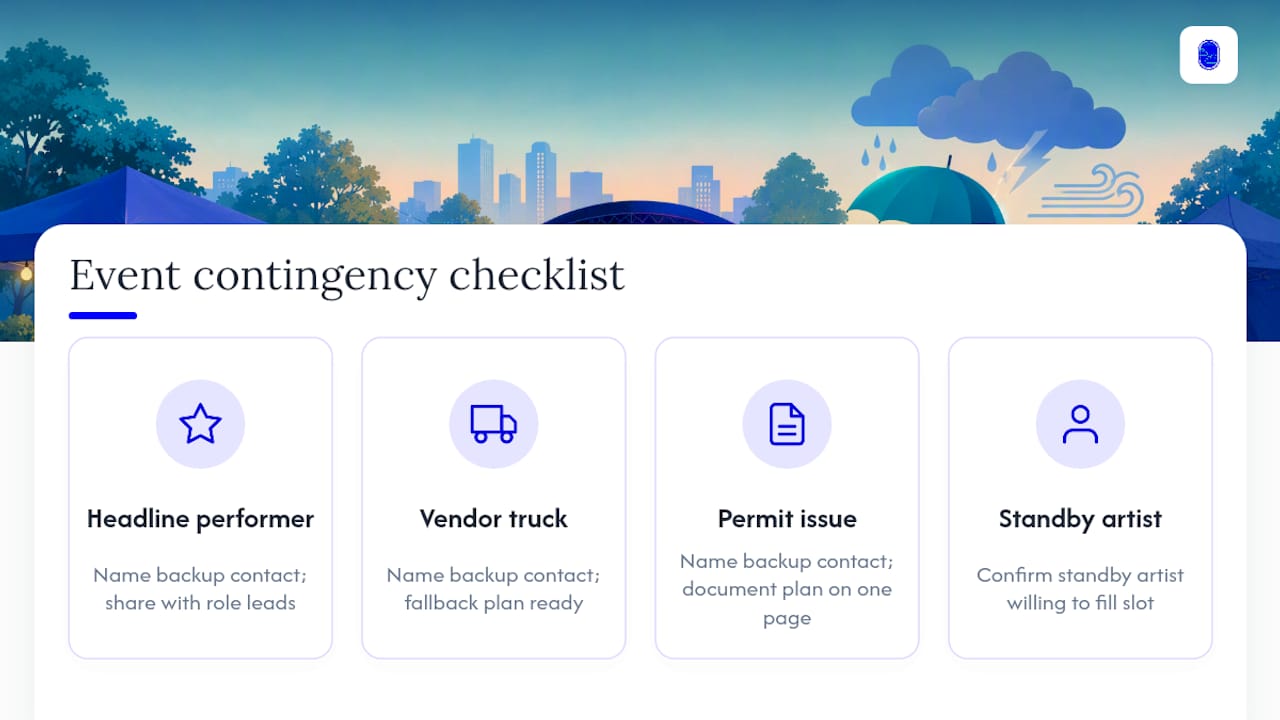
Document the whole contingency plan on one page and share it with every role lead during your final briefing, so nobody is improvising alone when something goes wrong.
Legal Considerations Beyond Permits
Permits cover your right to hold the event. They don't cover who owns the art, who's liable if someone gets hurt, or what happens if a performer's set runs into copyrighted material.
Get a simple written agreement with every artist or performer, even a one-page document, that spells out what they're performing, what stipend or exposure you're offering, and who owns any resulting photos, murals, or recordings. Public murals in particular raise ownership questions: does the artist retain rights to reproduce the image commercially later, or does the community group that funded it? Decide this before paint goes on the wall, not after.
Liability waivers matter most for participatory elements: hands-on workshops, interactive installations, anything where an attendee is doing rather than just watching. A basic waiver, reviewed once by someone with contract experience, protects your organizing group if a minor injury happens during a workshop.
If you're using recorded music or covering copyrighted material, check whether your venue already holds a performance license, many do, but don't assume. And if you're working with a fiscal sponsor or nonprofit partner for funding, get their reporting requirements in writing early, since standardized vendor agreements and clear sponsor reporting make recurring events far easier to manage year over year.
What Organizers Learn After the First One
Preparation always takes longer than you expect. Budget more prep time than feels reasonable, and pad your cost estimates too, because multi-site setups and last-minute rentals add up fast.
Test workshop components with friends before the real event; a craft table that seems simple on paper sometimes confuses first-time participants. Aim for steady improvement over perfection, and keep every activity genuinely open to newcomers.
How Experience By Locals Speeds Up Your Next Event
Finding the right performers is usually the slowest part of planning, not the venue or the permits. Experiencebylocals gives organizers a searchable directory of local musicians, dancers, comedians, and theater artists, so instead of cold-calling five arts groups, you filter by category and city and message hosts directly.
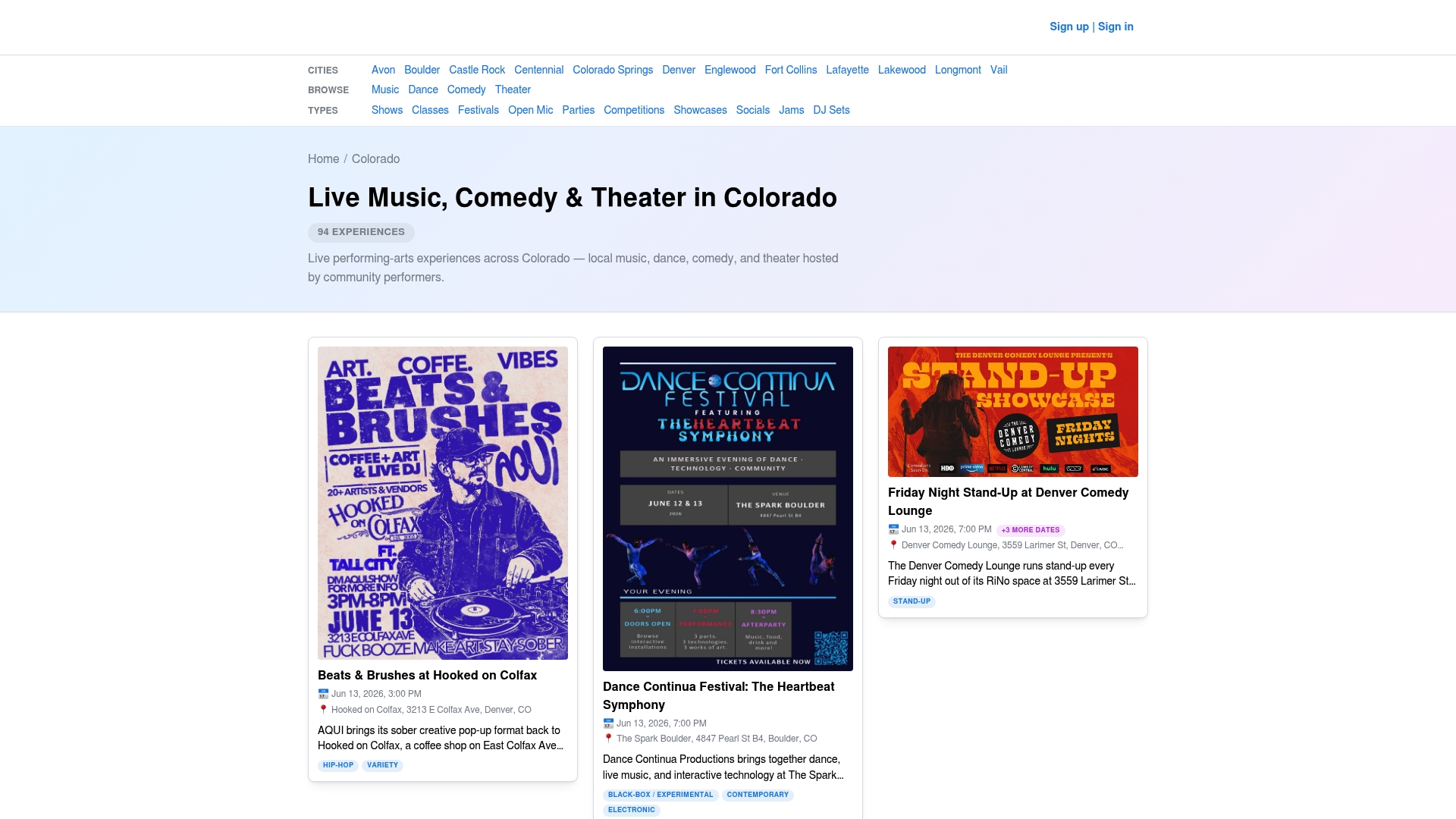
Browsing live music acts in Colorado shows you who's already performing locally, what their sets look like, and how to reach them without a middleman. Organizers building a mixed program can also scan dance performances or comedy shows in the same directory to round out a lineup in a single afternoon instead of a week of scattered outreach. If your event is ready for performers now, start browsing the Colorado listings and reach out to a few acts today.
Sources
For a step-by-step model on choosing your event and coordinating volunteers, see this community partner event checklist. For printable logistics timelines covering restrooms, supplies, and entertainment, check this event planning timeline kit. For outreach and recruiting artists, read how artists get discovered locally.
- How to Organize a Community Art Project - Craft Industry Alliance
- Art Pop-Ups & Local Economies: A Practical Playbook
- How to Plan a Festival: The Complete Guide to Festival Event Management