
What Does an Inclusive Arts Experience Mean?
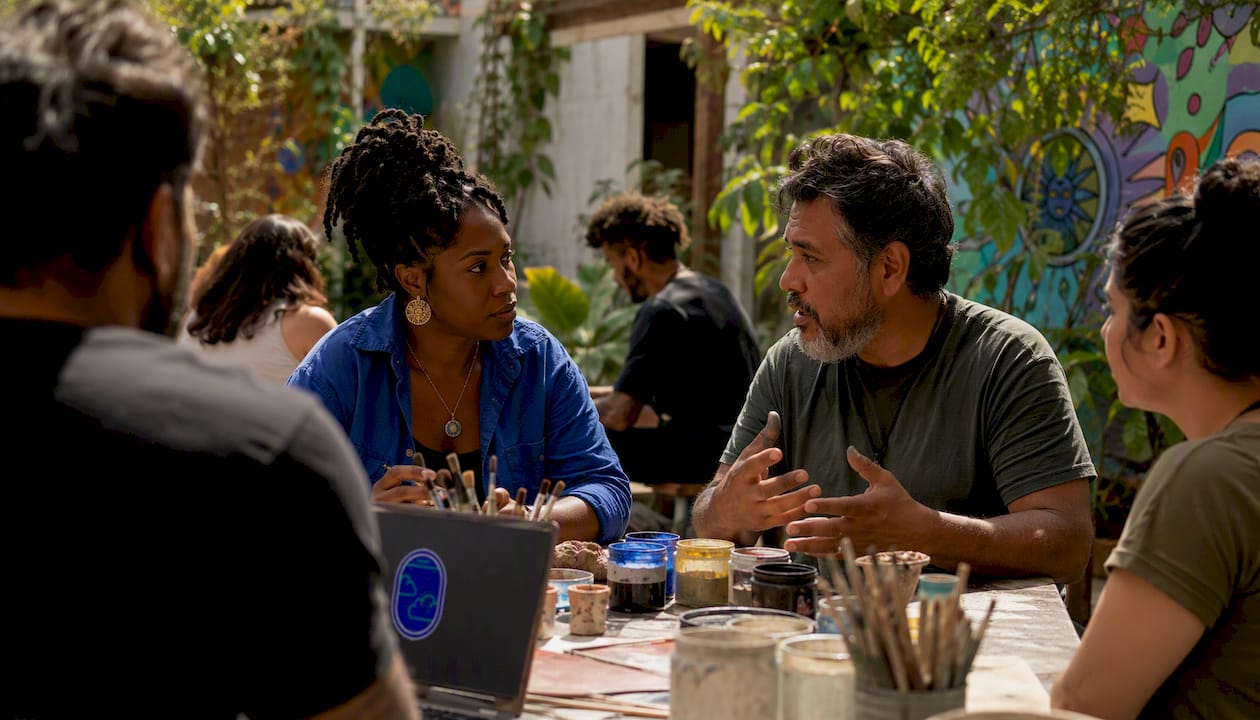
An inclusive arts experience is a creative event or program designed so that people of all abilities, backgrounds, and communication styles can participate fully, not just attend. Inclusive arts practice centers marginalized groups, including people with disabilities, Deaf people, and those with mental health challenges, as artists, participants, and audiences rather than passive recipients of someone else's vision. The phrase captures three things at once: equitable access to the space and the work, genuine co-creation where participants shape outcomes, and communication access that goes beyond verbal exchange.
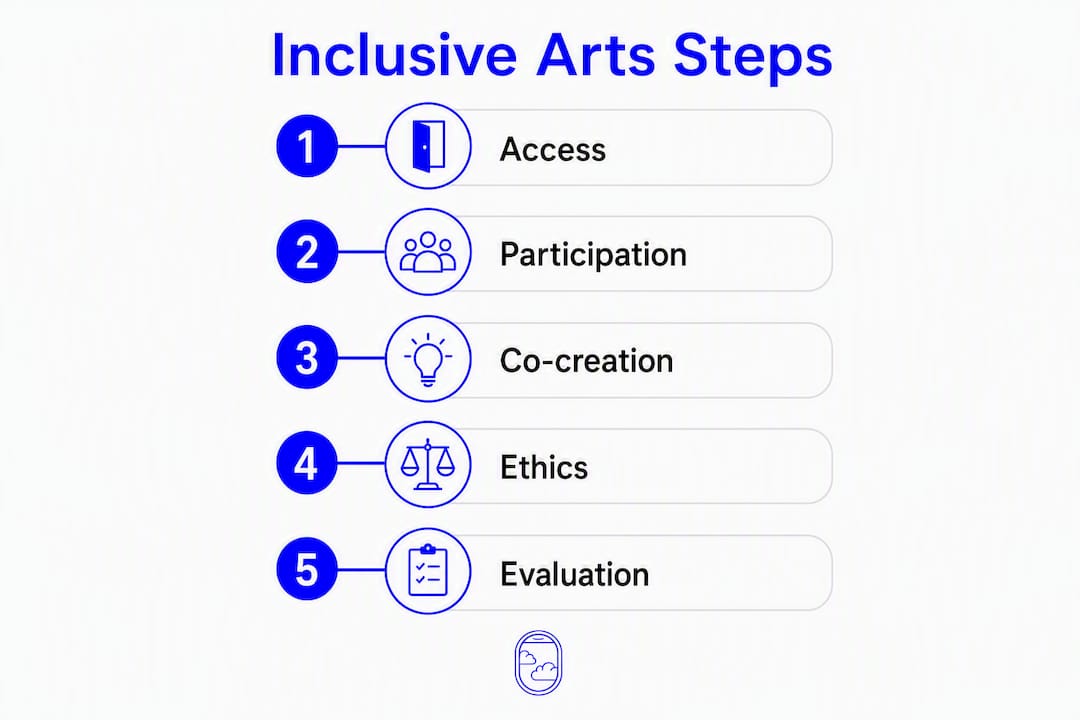
Here are the five features that define a truly inclusive arts experience:
- ✅ Equitable access to venue, materials, and information from day one
- ✅ Co-creation and shared authorship, where participants help shape the work
- ✅ Communication access through multiple modes (visual, tactile, verbal, embodied)
- ✅ Disability-centered design that treats difference as an asset, not a problem to fix
- ✅ Power-aware facilitation that actively neutralizes imbalances between organizers and participants
Table of Contents
- Why the phrase matters: from access-only to participatory practice
- Core principles that define an inclusive arts experience
- How inclusive arts experiences actually run: facilitation in practice
- Real examples that show inclusive practice in action
- What inclusive arts experiences achieve for everyone involved
- Ethical practice: what organizers owe participants
- How to tell if an arts experience is truly inclusive: evaluation indicators
- Common barriers and how to address them
- A research-backed planning checklist for designing inclusive arts experiences
- The core meaning, and where to go from here
- Key Takeaways
- Why inclusive arts is more than a trend
- Find inclusive arts events near you with Experiencebylocals
- Useful sources and further reading
Why the phrase matters: from access-only to participatory practice
For most of the 20th century, "inclusion" in the arts meant physical access: a ramp, a captioned performance, a reserved seat. That framing treated disabled people as audience members who needed help getting through the door. The shift to participatory, disability-centered practice happened gradually through the 1990s and 2000s, driven by disability rights movements, academic research, and organizations that refused to separate access from authorship.
Scholar and practitioner Alice Fox, co-author of Inclusive Arts Practice and Research: A Critical Manifesto, reframed the conversation entirely. Fox and her colleagues argue that inclusive practice is not a service model but an aesthetic one: collaboration between learning-disabled and non-learning-disabled artists changes what art looks like, what authorship means, and who gets to define quality. Their work presents interviews, essays, and case studies that treat inclusive practice as both aesthetic and political.
The Zero Project has documented this shift at an international scale, highlighting innovations like accessible grant processes, personal assistance models for artists, and curatorial practices that value disabled artists' work on its own terms. Meanwhile, the Cultural Learning Alliance argues that real inclusion in arts education requires changing institutions, recruitment pipelines, and curriculum, not just making existing structures slightly more accessible. That distinction matters in practice: retrofitting access is cheaper and faster, but it leaves the power structure intact.
Core principles that define an inclusive arts experience
Understanding what inclusive arts concepts actually look like in practice means going beyond a checklist. These principles work together; pull one out and the others weaken.
- Equitable access by design. Physical, sensory, and informational access is built into the project from the start, not added after the fact. This includes venue layout, lighting, sound levels, and the format of written materials.
- Co-creation and participant agency. Participants help set the direction of the work. They are not subjects of someone else's artistic vision; they are co-authors. This shifts the organizer's role from director to facilitator.
- Authorship and credit. Participants' contributions are named, credited, and protected. Work produced in collaborative settings belongs to the people who made it, not just the organization that hosted the project.
- Accessibility-by-design. Embedding inclusive design from the project outset and consulting disability communities before finalizing formats produces better outcomes than retrofitting. Sensory features, tactile elements, and flexible formats are planned, not improvised.
- Flexible formats. No single format works for everyone. Offering multiple ways to engage, contribute, and respond respects the range of communication styles and physical needs in any group.
- Representation and cultural relevance. The art itself reflects the lives, histories, and aesthetics of the people making it. Tokenistic inclusion, where one disabled artist is added to an otherwise unchanged program, is not representation.
- Neutralizing power imbalances. Research shows that 'inclusive' in arts contexts aims to neutralize the gap between disabled and non-disabled participants and reframes difference as an asset that enriches creative output. Recognizing tokenism, naming it, and redesigning around it is part of the ongoing work.
Pro Tip: Ask participants to help write the project brief before you finalize it. Even a 30-minute consultation call with two or three potential participants will surface access needs and creative preferences that no amount of internal planning will catch.
How inclusive arts experiences actually run: facilitation in practice
Knowing the principles is one thing. Seeing how they translate into a room, a rehearsal, or a gallery opening is another. Here are the concrete methods organizers and facilitators use.
- Tactile exhibits and 3D models — Zero Project highlights tactile street-art models as a concrete example of accessibility-by-design: 3D-printed replicas of murals allow blind visitors to experience public art that is otherwise entirely visual.
Real examples that show inclusive practice in action
Definitions and methods only go so far. Here is what they look like when they land in actual projects.
-
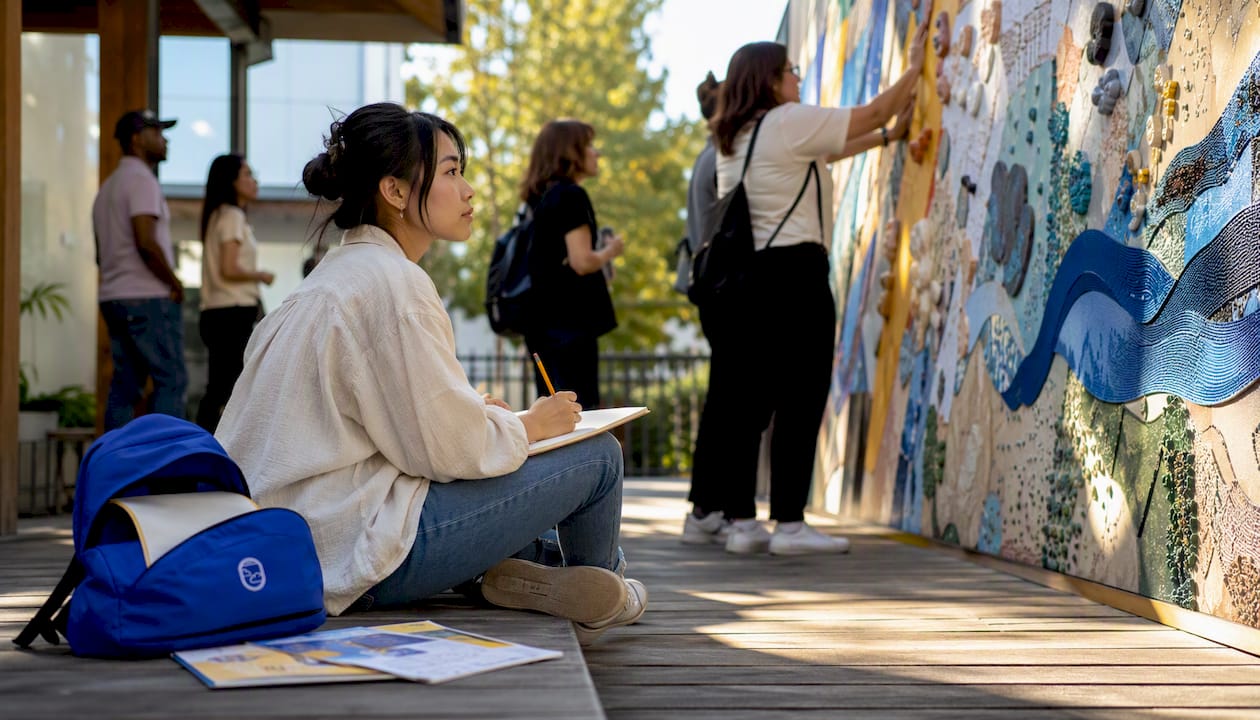
Tactile street art, Zero Project. The Zero Project documented a community program that created 3D-printed tactile models of public murals, allowing blind and low-vision community members to experience street art that had previously been entirely inaccessible to them. The outcome: disabled participants reported increased autonomy and visibility as both audiences and contributors to public culture.
-
Inclusive theatre ensembles. Community theater programs that cast disabled and non-disabled performers together in equal creative roles have produced work that critics and audiences describe as formally distinct from conventional productions. The role of the audience in these events shifts too: spectators become witnesses to a genuinely collaborative aesthetic, not just a diversity showcase.
-
Accessible museum programs. Major U.S. museums including the Museum of Modern Art (MoMA) in New York have run sensory-friendly hours, touch tours, and audio-described gallery experiences for years. These programs demonstrate that accessibility adaptations improve the experience for a broader audience than their original target group.
-
Inclusive dance experiences. Dance programs designed for participants with varied physical abilities use floor-based movement, seated choreography, and partner work that does not require any particular body type or mobility level. Inclusive dance experiences show that when the form itself adapts, the creative range actually expands rather than contracts.
-
Community visual arts with co-curation. Programs where participants with intellectual disabilities co-curate exhibitions alongside professional artists have produced shows that challenge conventional gallery aesthetics. Alice Fox's documented collaborations are a primary academic reference here: her case studies show how shared authorship changes what ends up on the wall and who feels ownership over it.
-
Mixed-arts community events. Mixed-art live events that combine music, spoken word, and visual art in a single accessible venue create multiple entry points for participation. When formats overlap, participants who struggle with one mode often find a natural way in through another.
What inclusive arts experiences achieve for everyone involved
The benefits of inclusive arts extend well beyond the individual participant, though those individual outcomes are real and well-documented.
For participants:
- Increased agency and self-determination in creative decisions
- Improved wellbeing and social connection, particularly for people who experience isolation
- Skills development across artistic, communication, and collaborative domains
- Visibility as artists and cultural contributors, not just recipients of programming
For organizations:
- Broader audience engagement that reflects the actual diversity of the community
- Program innovation driven by participants who bring perspectives the organization would not generate internally
- Stronger alignment with funders and grant-making bodies that prioritize equity and access
- Reputational credibility that comes from genuine, not performative, inclusion
For communities:
- Greater cultural pluralism in what gets made and shown publicly
- Shifts in aesthetic norms when disabled artists' work enters mainstream venues
- Increased visibility for communities that are routinely underrepresented in cultural programming
Creative arts therapies research shows that when formats are adapted to meet participants where they are, social inclusion becomes a measurable outcome, not just an aspiration. Therapists and facilitators who match the art form, the individual, and the context consistently report stronger participation and wellbeing results.
Live theater is one of the most direct contexts for these outcomes: the shared physical presence of performers and audience creates a social experience that recorded or digital art cannot replicate. When that experience is designed to include everyone, the community benefit compounds.
Ethical practice: what organizers owe participants
Ethics in inclusive arts is not a compliance checklist. It is the difference between a program that genuinely serves participants and one that uses them to serve the organization's narrative.
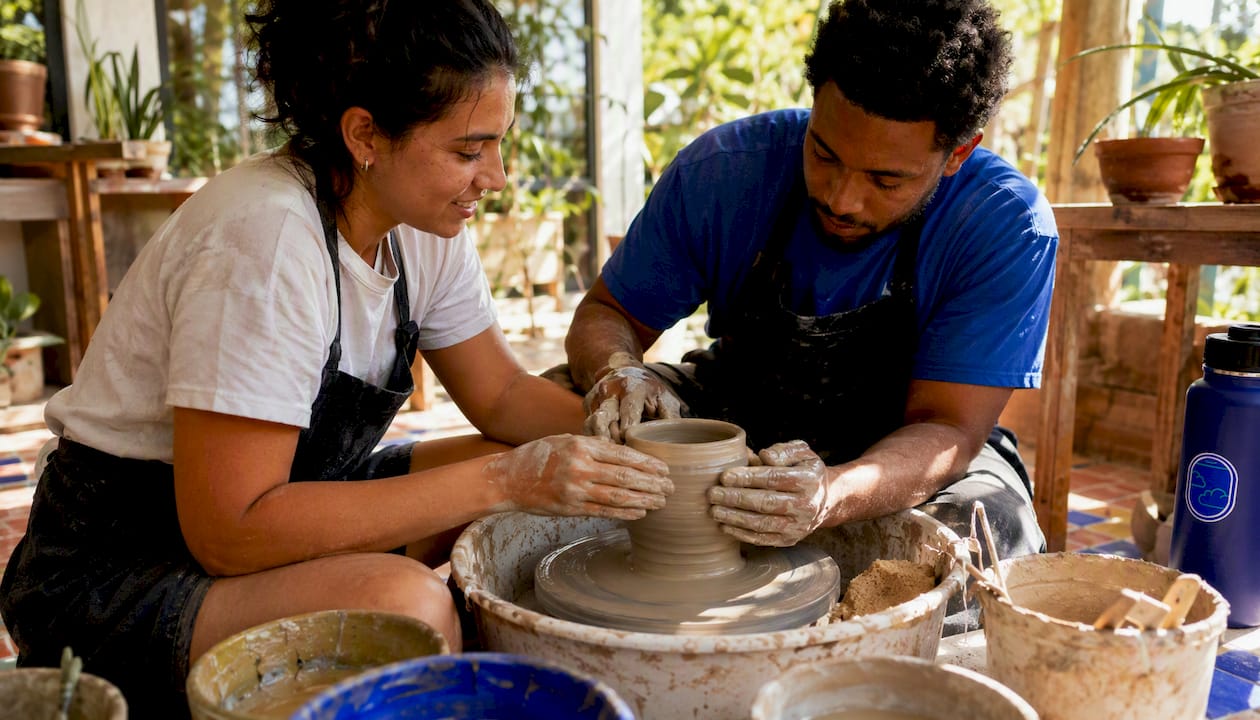
That framing, sometimes called "inspiration porn," appears whenever an organization promotes a program by emphasizing how moving it is that disabled people participated, rather than what the participants actually made. It is a subtle but corrosive pattern.
What organizers should do:
- Obtain informed consent for documentation, photography, and promotion before the project begins, not after
- Credit participants by name in all public-facing materials, including social media, grant reports, and press releases
- Give participants meaningful input into how their work is displayed, described, and shared
- Pay disabled artists and facilitators at the same rate as non-disabled colleagues
- Build co-curation into exhibition and performance planning so participants shape the final presentation
What organizers should avoid:
- Using participant images or stories in fundraising without explicit, renewed consent
- Describing participants' work as "brave" or "inspiring" in ways that center the non-disabled observer's emotional response
- Treating access accommodations as favors rather than rights
- Claiming co-creation when participants were consulted but not empowered to change outcomes
- Attributing collaborative work solely to the lead artist or organization
Research on inclusive arts practice consistently identifies 'joyful learning' and whole-participant engagement as markers of genuine inclusion. When participants describe their experience as joyful, that is a signal the power balance is working. When they describe it as tolerated or managed, something has gone wrong at the design level.
How to tell if an arts experience is truly inclusive: evaluation indicators
Evaluation is where many inclusive programs fall short. Counting attendance is easy. Measuring whether participants had genuine agency is harder, but it is the measure that actually matters.
| Indicator | Measurement method | Collection frequency |
|---|---|---|
| Participant agency in creative decisions | Structured reflection, participant survey | Each session |
| Attendance diversity (disability, age, background) | Self-reported demographic data | Per event |
| Accessibility accommodations used | Facilitator log, participant feedback | Per event |
| Reported wellbeing and social connection | Validated short-form wellbeing scale or arts-based response | Start and end of program |
| Paid opportunities created for participants | Financial records, contracts | Per program cycle |
| Retention across sessions | Attendance tracking | Ongoing |
Mixing qualitative and quantitative methods produces the most honest picture. Narrative feedback, participant-created artwork as evidence, and video documentation (with consent) capture what numbers cannot. A participant who returns for every session and brings a friend is telling you something a survey cannot fully express.
Arts-based evidence, where participants create a response piece that reflects their experience, is increasingly recognized as a legitimate evaluation tool in disability-centered practice. It respects the fact that not everyone communicates most fluently through written or verbal feedback.
Common barriers and how to address them
Every organizer who has tried to run a genuinely inclusive program has hit at least one of these walls. Knowing they are coming makes them easier to navigate.
-
Resource limits. Access costs money: interpreters, audio describers, accessible transport, and sensory adaptations all have line items. Solution: Budget for access from the first draft of the project plan, not as an afterthought. Many funders now require an access budget as part of the application, which is a useful lever.
-
Attitudinal resistance. Some colleagues, venues, or funders believe that inclusive programming is a niche concern or that it will lower artistic standards. Solution: Lead with evidence. Programs that center disabled artists consistently produce formally interesting work that attracts critical attention and broader audiences.
-
Inaccessible venues. A beautiful historic theater with no elevator, no accessible restroom, and poor acoustics is not a neutral choice. Solution: Make venue accessibility a non-negotiable criterion in site selection, not a factor to weigh against aesthetics or cost.
-
Poor communication access. Events that rely entirely on verbal instruction and printed text exclude a significant portion of potential participants before the creative work begins. Solution: Offer visual schedules, easy-read versions of all materials, and multiple ways to ask questions and give feedback.
-
Tokenistic outreach. Sending one email to one disability organization two weeks before an event is not community consultation. Solution: Build relationships with disability-led organizations before you have a project to announce. Consultation at the design stage, not the promotion stage, is what produces genuine participation.
-
Lack of trained facilitation staff. Expanded listening and co-creation facilitation are skills, not instincts. Solution: Invest in facilitator training and, where possible, hire disabled facilitators who bring lived experience to the role.
Pro Tip: When you hit a budget barrier, contact your state arts council. Most U.S. state arts councils, including the Colorado Creative Industries office, offer accessibility grants or can point you to national programs through the National Endowment for the Arts that fund access costs specifically.
A research-backed planning checklist for designing inclusive arts experiences
Use this as a working document, not a one-time review. Inclusive design is an ongoing process, not a box to check before opening night.
-
Start with community consultation. Before you finalize any format, talk to potential participants and disability-led organizations. Ask what they want to make, not just what access they need.
-
Conduct a needs assessment. Map the specific access requirements of your likely participant group: mobility, sensory, communication, cognitive, and psychosocial needs all require different design responses.
-
Budget for access costs from the start. Include interpreter fees, audio description, accessible materials production, and sensory adaptations in your first budget draft. Inclusive projects often need contingency budgets for access costs that emerge during development.
-
Build longer development timelines. Co-creation takes more time than top-down programming. Allow for it explicitly in your project plan.
-
Design co-creation structures. Decide how participants will contribute to creative decisions: open sessions, structured workshops, peer review, co-curation. Write these into the program design, not the facilitation notes.
-
Create a communication access plan. List every communication mode you will offer: ASL interpretation, audio description, visual schedules, easy-read materials, tactile elements. Assign a team member to own each one.
-
Audit the venue for sensory and spatial design. Check lighting levels, acoustic quality, quiet spaces, accessible restrooms, and wayfinding. Do this visit with a disabled consultant if possible.
-
Assign clear access support roles. Every team member should know their access responsibilities. Access support is not one person's side job; it is a shared team function.
-
Plan documentation with consent. Decide before the project begins how you will document the work, who owns it, and how participants will consent to its use. Build consent into the onboarding process.
-
Build participant feedback loops into every session. Short, low-barrier check-ins at the end of each session let you adjust in real time rather than discovering problems in a post-project survey.
-
Evaluate against your indicators. Use the indicator table above. Collect data at the frequency you planned. Review it with participants, not just with your team.
-
Share outcomes with participants first. Before you publish a report or post on social media, share findings with the people who made the work. Give them the chance to correct, add to, or decline to be included in public-facing materials.
The core meaning, and where to go from here
An inclusive arts experience is one where access, co-creation, and communication are designed in from the beginning, and where participants are treated as cultural innovators rather than beneficiaries. The definition of inclusive arts has moved decisively away from access-only models toward participatory, disability-centered practice that reframes difference as creative fuel. Alice Fox's "aesthetic of exchange" is the clearest articulation of where the field now stands: genuine inclusion changes the art itself, not just who gets to watch it.
Three next steps, depending on where you are:
- If you are exploring the field: — Start with Alice Fox's Critical Manifesto and the Zero Project's inclusive arts documentation. Both give you theory and practice in the same place.
Key Takeaways
Inclusive arts experience means designing creative programs where disabled and diverse participants are co-creators, not just attendees, with access, authorship, and communication built in from the start.
| Point | Details |
|---|---|
| Co-creation is the core | Participants shape the work, not just attend it; shared authorship is what separates inclusive from access-only models. |
| Design in, don't retrofit | Embedding access from the project outset produces better outcomes than adding accommodations after the format is set. |
| Expanded listening enables participation | Attending to non-verbal and embodied communication allows artists who communicate differently to shape creative outcomes. |
| Ethics means credit and consent | Participants must be named, paid equitably, and given control over how their work is documented and shared. |
| Experiencebylocals connects you | The platform lists community-led arts events in Colorado where you can find and attend accessible, locally rooted experiences. |
Why inclusive arts is more than a trend
Here is something the standard explainers tend to skip: the hardest part of inclusive arts practice is not the logistics. It is the willingness to let go of the outcome.
Most arts organizations are built around a vision: a director, a curator, an artistic lead who knows what the work should be. Inclusive practice asks that person to hold their vision loosely enough that participants can genuinely change it. That is uncomfortable. It requires a kind of institutional humility that does not come naturally to organizations that have built their reputations on a particular aesthetic.
What Alice Fox's work makes clear, and what the research consistently confirms, is that this discomfort is generative. The work that comes out of genuine co-creation is formally different, often more interesting, and sometimes more challenging than what a single vision would have produced. The "aesthetic of exchange" is not a compromise; it is a different kind of ambition.
The other thing worth saying plainly: inclusive arts is not charity. The framing that positions disabled participants as recipients of an organization's generosity is the framing that produces the worst outcomes, for the art and for the people making it. Programs that treat participants as cultural innovators, pay them accordingly, and credit their contributions publicly produce work that stands on its own. That is the standard worth holding.
At Experiencebylocals, we believe the most authentic local arts experiences are the ones where the community shapes what gets made and who gets to make it. That is not a policy position; it is what makes the work worth attending.
Find inclusive arts events near you with Experiencebylocals
Colorado's local arts scene includes community-led events, open mics, theater productions, and festivals where accessibility and authentic participation are part of the design, not an afterthought. Experiencebylocals makes it easier to find those experiences without wading through tourist-facing venues that prioritize spectacle over community.
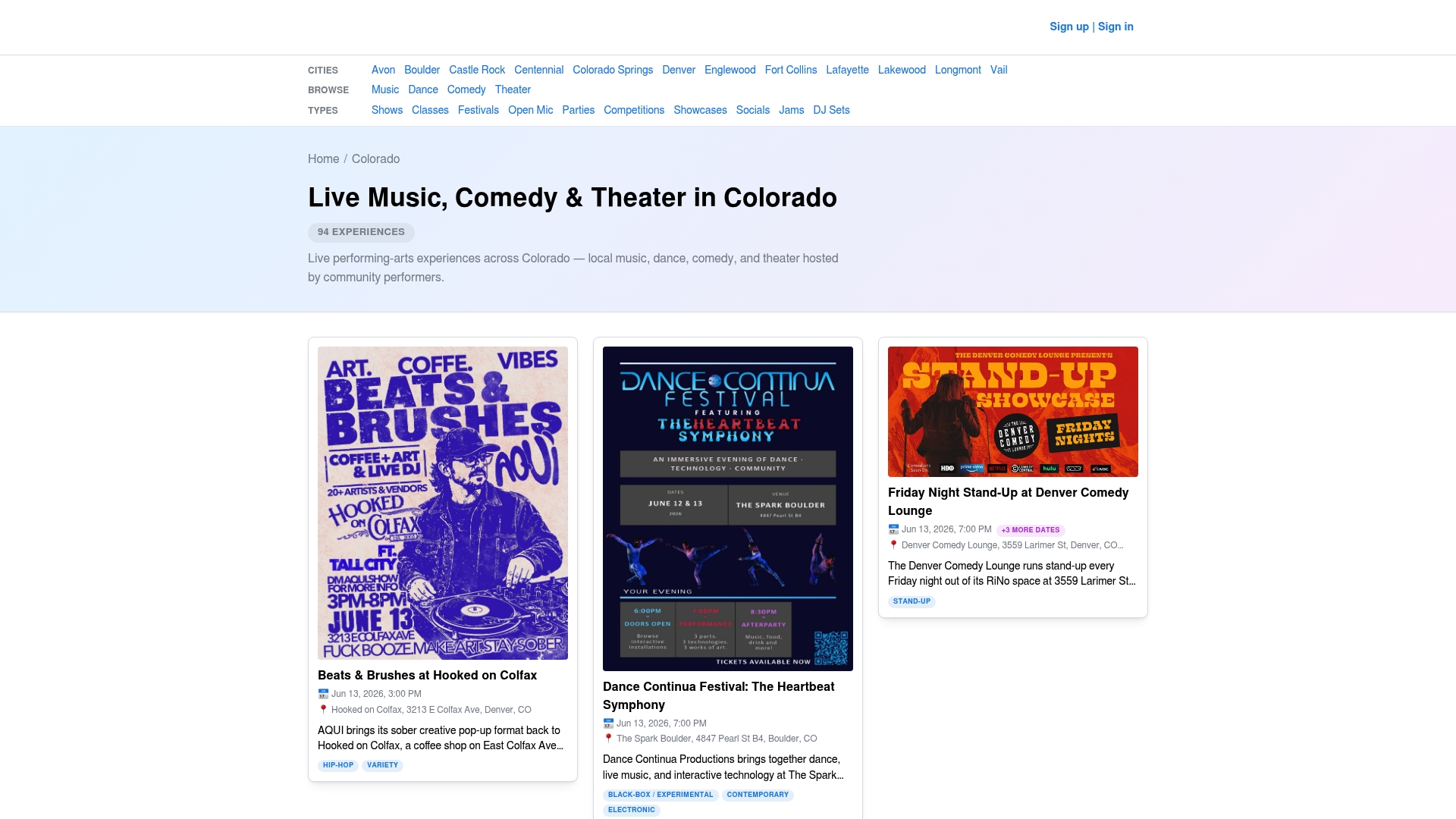
You can browse live music, comedy, and theater events in Colorado by category, filter by location, and contact hosts directly to ask about accessibility features before you book. Hosts list their own events and are responsible for on-site access arrangements; Experiencebylocals provides the platform and the connection. When you find an event that looks right, reach out to the organizer early. The best inclusive experiences are the ones where participants and organizers have talked before the doors open.
Organizers who want to list accessible, community-led events can do so through the Experiencebylocals promoter page. Including clear accessibility information in your listing, such as ASL interpretation availability, sensory-friendly timing, and physical access details, helps the right guests find you.
Note: Experiencebylocals lists third-party events. Individual organizers are responsible for on-site accessibility provisions. Contact the event host directly to confirm specific accommodations.
Useful sources and further reading
These are the primary sources cited in this article. Each one offers something specific for readers who want to go deeper.
-
Inclusive Arts Practice and Research: A Critical Manifesto (Fox & Macpherson) — The foundational academic text on disability-centered, collaborative arts practice. Offers theory, case studies, and the "aesthetic of exchange" framework. Start here for the conceptual grounding.
-
Zero Project Inclusive Arts Initiative — International documentation of innovative inclusive arts solutions, including accessible grant processes, tactile street art models, and autonomous artist support. Good for case studies and sector-level benchmarks.
-
The Slate Space, Rhode Island — A community-driven creative space that models grassroots, inclusive venue practice. A real-world example of how physical spaces can be designed to support the principles described in this article.