
What Does a Performance Arts Platform Mean?
A performance arts platform is defined as any venue, system, or digital tool that enables artists to present, collaborate on, and promote live performances. The term covers a wide spectrum: physical theater spaces, digital booking marketplaces, technical infrastructure for remote shows, and artist-led organizational hubs. Understanding what does performance arts platform mean matters because these systems directly shape who gets seen, who gets booked, and how communities connect with live art. Experiencebylocals is one example of this model in action, connecting Colorado audiences with grassroots local creators across music, dance, comedy, and theater. Whether you are an artist seeking exposure or a guest looking for real cultural experiences, knowing how these platforms work puts you in a stronger position to participate.
What does a performance arts platform mean and how is it defined?
A performance arts platform is any structured system that supports the creation, presentation, and promotion of live artistic performance. The industry uses this term broadly, covering everything from physical stages to digital networks that link artists with bookers, audiences, and collaborators. The word "platform" here borrows from technology, where it describes a base layer that others build on. In the performing arts, that base layer might be a booking marketplace, a technical tool for synchronized remote performance, or a community organization that curates events and develops artists.
Performance art itself is a distinct category within this space. Performance art involves live, ephemeral expression with the artist's body as the primary medium, often resisting scripted narrative and emphasizing unique moments of presence. That definition matters because it separates performance art from theater or dance as disciplines, even though all three rely on platforms to reach audiences. A platform built for experimental performance art in a gallery setting serves a different function than one built for ticketed theatrical productions.
The meaning of performance arts platforms also extends to the role they play in cultural memory. Digital platforms maintain the continuity and visibility of performance arts despite the ephemeral nature of live events. That function is not just logistical. It is cultural. When a platform archives a performance, documents a collaboration, or helps an artist build a following, it preserves something that would otherwise disappear the moment the curtain falls.
What types of performance arts platforms exist and how do they function?
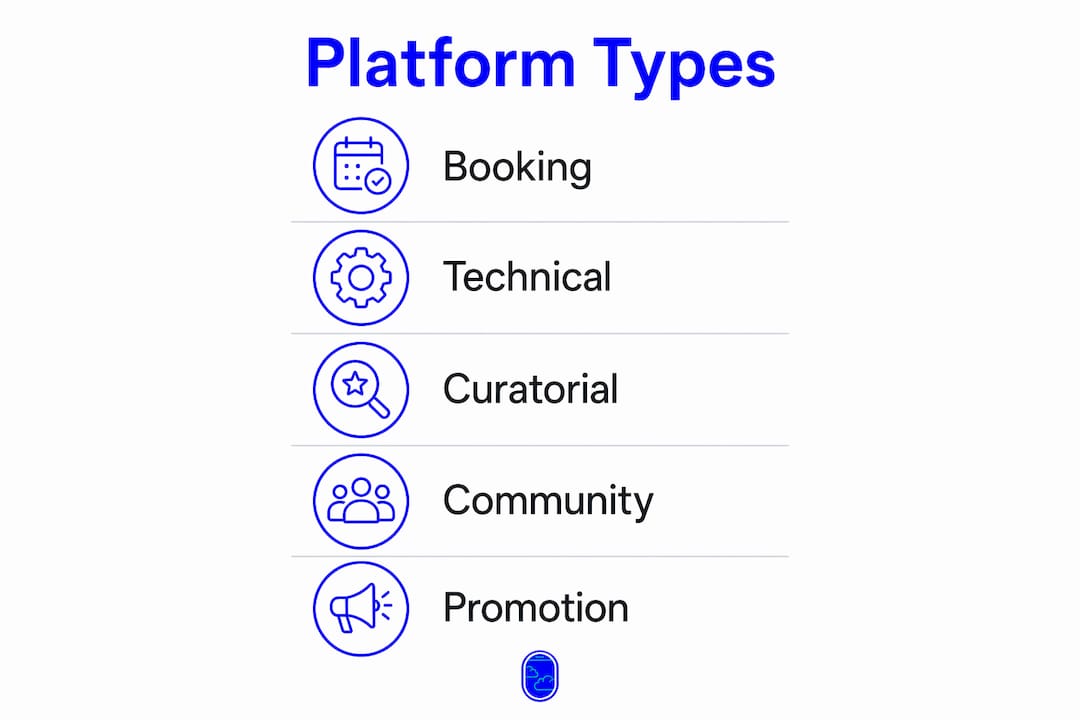
Performance arts platforms fall into three main categories: digital networking and booking marketplaces, technical infrastructure tools for live remote performance, and organizational hubs focused on artist development and community building. Each type solves a different problem, and many artists use more than one.
Digital networking and booking marketplaces
These platforms connect artists directly with venues, promoters, and audiences. Booking marketplaces like GigXchange operate on peer-to-peer models with service fees under 5%, making them accessible to independent artists who cannot afford traditional agency representation. The Perform Europe Matchmaking Platform hosts over 2,300 profiles and uses "collaboration badges" to signal active project opportunities. That badge system lets organizers filter partners by availability and project type, cutting through the noise of a fragmented international network.
Technical platforms for remote and hybrid performance
These tools exist to solve a problem that standard video streaming cannot: synchronized, real-time performance across distances. Latency in remote performance is mitigated by specialized data protocols like TEMPO for MIDI, rather than conventional video streaming. Telemidi uses this approach to enable real-time ensemble play with minimal lag. UpStage takes a different angle, offering avatar-based digital theater that requires specific technological setup but opens entirely new modes of audience interaction.
Organizational and curatorial platforms
These are often artist-led organizations that function as community nodes rather than commercial tools. Performance Platform supports over 800 artists and emphasizes inclusive practice, peer learning, and shared artistic risk. It showcases live experimental work in London while maintaining international networking connections. Experiencebylocals operates in a similar spirit at the local level, curating authentic performances across Colorado and giving grassroots creators a visible home.
| Platform type | Primary function | Example |
|---|---|---|
| Booking marketplace | Connect artists with venues and gigs | Perform Europe Matchmaking Platform |
| Technical infrastructure | Enable synchronized remote performance | Telemidi, UpStage |
| Organizational hub | Artist development, curation, community | Performance Platform, Experiencebylocals |
Pro Tip: If you are an artist choosing a platform, start by identifying your core need. Booking visibility, remote collaboration, and community development each point to a different platform type.
How do performance arts platforms address challenges in the live arts sector?
The live arts sector has always struggled with fragmentation. Artists in one city rarely know about opportunities in another. Venues fill their calendars through personal networks. Audiences default to the most advertised options, which tend to be the most commercial ones. Performance arts platforms exist to break those patterns.
Digital networking platforms unify regional and international artist networks that would otherwise remain siloed. The Perform Europe Matchmaking Platform's cross-border collaboration model is a direct response to this problem. Booking, funding, and audience building all become more manageable when artists can filter opportunities by badge, art form, or geography rather than relying on cold outreach.
Artist-led platforms like Performance Platform actively address intersectional barriers by prioritizing collective growth and inclusion over commercial competition. That distinction matters. A commercial booking platform optimizes for transaction volume. An artist-led platform optimizes for who gets to participate. The two goals are not always the same, and communities that have historically been excluded from mainstream venues benefit most from the second model. Experiencebylocals reflects this value by featuring events like BIPOC open mic nights and K-pop choreography sessions at artist-run spaces, where inclusive dance experiences are the point, not the exception.
"Platforms are not just tools. They are community nodes that hold space for shared artistic risk, pragmatic inclusion, and the kind of grounded, collective growth that commercial logic alone cannot produce." — Performance Platform
The tension between "liveness" and digital access is real but manageable. Digital platforms serve as evolving infrastructures that support cultural memory and reduce logistical friction without replacing the live experience. A recorded performance is not the same as being in the room. But a platform that makes that recording available extends the reach of the work and keeps it alive for audiences who could not attend.
Pro Tip: When evaluating a platform for community impact, ask whether it has an explicit inclusion policy and whether its leadership reflects the artists it serves.
What distinguishes performance art platforms from traditional theatrical or gallery venues?
Traditional venues are physical spaces with fixed capacities, technical rigs, and booking calendars controlled by programmers or venue managers. A performance arts platform is a system that can include venues but is not limited to them. The distinction is structural, not just semantic.
Here is how the two differ in practice:
- Control over programming. Traditional venues program based on commercial viability and audience demand. Artist-led platforms program based on artistic development, community need, and inclusion criteria.
- Access to participation. A venue requires an artist to be booked. A digital platform allows an artist to create a profile, signal availability, and be discovered by organizers anywhere in the world.
- Mode of presentation. Conventional venues present work in fixed formats: proscenium stages, black box theaters, gallery walls. Platforms like UpStage enable avatar-based digital theater, and hybrid platforms support simultaneous in-person and remote audiences.
- Relationship to experimentation. Performance art is often presented in galleries or unconventional spaces to generate reactive experiences. Platforms built for experimental work actively support that non-commercial, conceptual practice in ways that traditional venues rarely do.
| Feature | Traditional venue | Performance arts platform |
|---|---|---|
| Programming control | Venue manager or programmer | Artist, community, or algorithm |
| Geographic reach | Local or regional | National or international |
| Audience interaction | Passive attendance | Active discovery, streaming, participation |
| Inclusion focus | Commercially driven | Community or mission driven |
The role of artist-run studios in dance communities illustrates this difference clearly. These spaces function as platforms in the organizational sense, holding community, developing artists, and programming work that commercial venues would not take on.
How can artists and audiences best engage with performance arts platforms?
Getting value from a performance arts platform requires more than signing up. Both artists and audiences need to engage actively to make the most of what these systems offer.
For artists:
- Identify your platform type first. If you need bookings, start with a marketplace. If you need community and development, find an organizational hub. If you perform remotely or in hybrid formats, research technical platforms built for low-latency synchronization.
- Build a complete, active profile. Artist profiles with active collaboration badges get prioritized by organizers. Static profiles without updated status risk missing timely partnership and funding opportunities.
- Use filters and categories strategically. Most platforms allow artists to tag their work by art form, geography, and availability. Accurate tagging increases the chance of appearing in relevant searches.
- Engage with the community, not just the listings. Platforms like Performance Platform are built around peer learning. Attending events, joining forums, and connecting with other artists builds the kind of trust that leads to real collaboration. The role of performance in dance learning shows how community engagement accelerates artistic growth.
- Update your profile regularly. Dynamic collaboration badges permit efficient matching in time-sensitive funding and project calls. An outdated profile signals unavailability even when you are actively seeking work.
For audiences:
Discovering live and hybrid performances through a platform starts with knowing what kind of experience you want. Browse by art form, location, or event type. Many platforms offer streaming options for audiences who cannot attend in person. Hybrid events let you participate in real time from anywhere, though the in-room experience of live performance remains distinct. Experiencebylocals makes this easy for Colorado audiences by listing authentic local events across music, dance, comedy, and theater in one place.
Pro Tip: For the richest experience, attend at least one live event before relying on streams. The role of audience in dance events is active, not passive. Your presence shapes the performance.
Key Takeaways
A performance arts platform is defined by the system it creates, not the space it occupies, and the most effective platforms combine booking access, technical capability, and community inclusion.
| Point | Details |
|---|---|
| Three platform types | Digital marketplaces, technical tools, and organizational hubs each solve different artist needs. |
| Inclusion is structural | Artist-led platforms prioritize collective growth and intersectional access over commercial logic. |
| Active profiles win | Profiles with updated collaboration badges get prioritized in time-sensitive funding and booking calls. |
| Liveness is preserved | Digital platforms extend reach and cultural memory without replacing the live performance experience. |
| Platform vs. venue | Platforms offer programming control, geographic reach, and experimental support that traditional venues do not. |
Why the best platforms feel like communities, not catalogs
I have spent enough time around live performance to know that the platforms artists remember are not the ones with the most listings. They are the ones where something actually happened. A connection was made. A show got booked that would not have happened otherwise. An artist found their people.
The technical infrastructure matters, and the booking tools matter. But the platforms that genuinely move the needle for artists are the ones built around trust and shared purpose. Performance Platform's emphasis on human fallibility and collective risk is not a soft value. It is the reason artists keep coming back. When a platform treats inclusion as a feature rather than a mission, it shows. The events feel different. The community feels different.
What I find most interesting about this moment is that the definition of a performance arts platform is still being written. Digital tools are expanding what "live" means. Hybrid formats are changing who can attend. Artist-led organizations are proving that community-driven curation produces work that commercial venues miss entirely. The platforms worth paying attention to are the ones asking hard questions about who gets to perform, who gets to watch, and what counts as a stage.
— DJ
Live performances worth finding on Experiencebylocals
Experiencebylocals is a platform built exactly for what this article describes: connecting real audiences with real artists in Colorado.
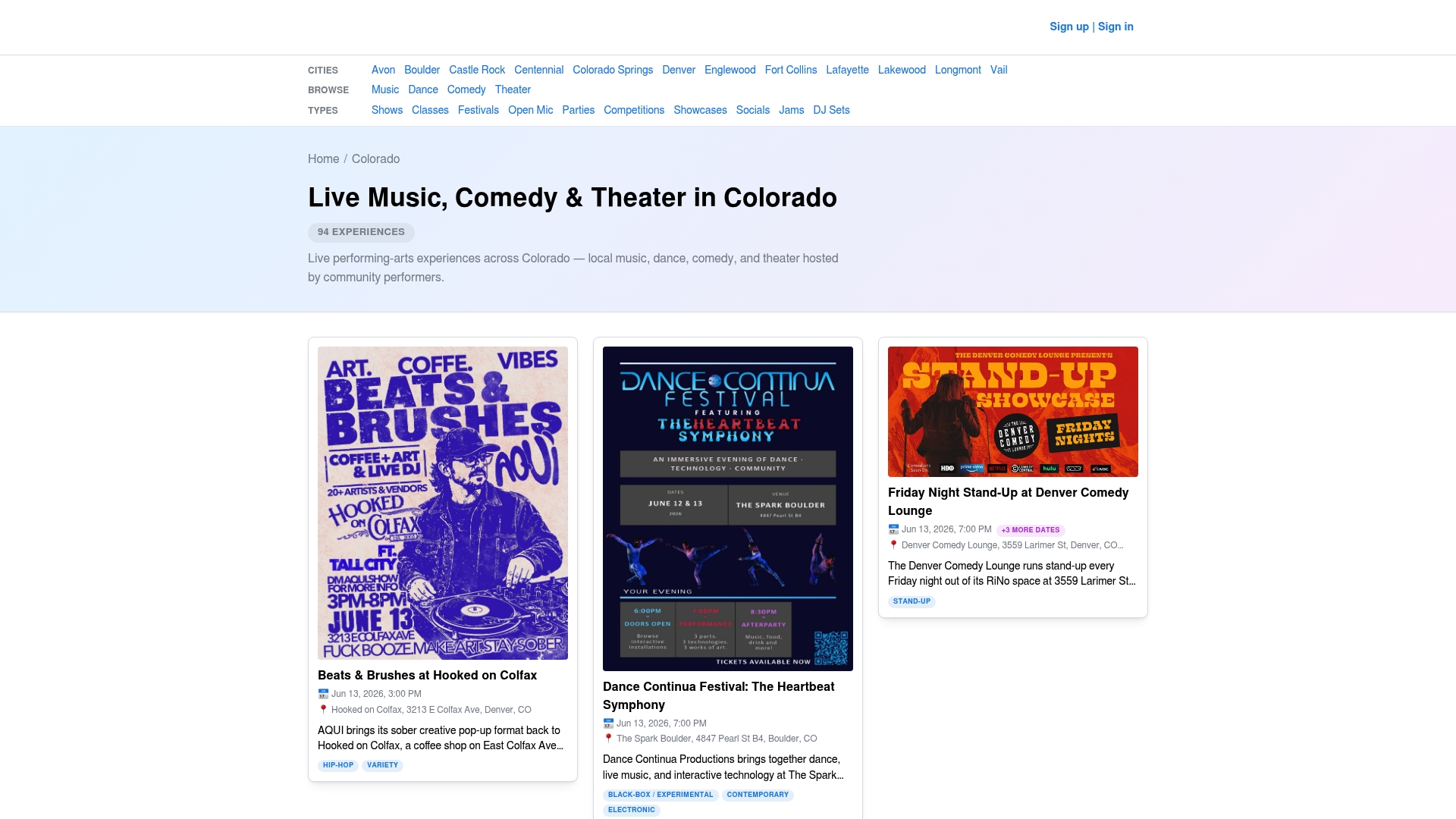
Whether you are looking for live music, comedy, and theater across the state or a specific night out in Boulder or Longmont, Experiencebylocals curates events that reflect the actual cultural heartbeat of the community. You will find grassroots creators, artist-run spaces, and performances that go well beyond the tourist circuit. Artists get visibility. Guests get genuine experiences. That is the platform working the way it should.
FAQ
What does a performance arts platform mean?
A performance arts platform is any venue, digital system, or organization that enables artists to present, collaborate on, and promote live performances. It includes booking marketplaces, technical tools for remote performance, and artist-led community hubs.
What are the main types of performance arts platforms?
The three main types are digital networking and booking marketplaces, technical infrastructure tools for synchronized remote performance, and organizational hubs focused on artist development and community building.
How is performance art different from performing arts?
Performance art uses the artist's body as the primary medium in live, ephemeral expressions that resist scripted narrative, often presented in galleries or unconventional spaces. Performing arts is a broader category that includes theater, dance, and music in more structured formats.
Why are performance arts platforms important for artists?
Platforms reduce logistical friction around booking, funding, and audience building while expanding geographic reach beyond local networks. Artist-led platforms also address inclusion barriers that commercial venues often overlook.
How do I find the right performance arts platform as an artist?
Start by identifying your primary need: booking visibility, remote collaboration, or community development. Each need maps to a different platform type, and maintaining an active, updated profile with collaboration badges significantly increases your chances of being discovered by organizers.