
The Role of Performance in Dance Learning
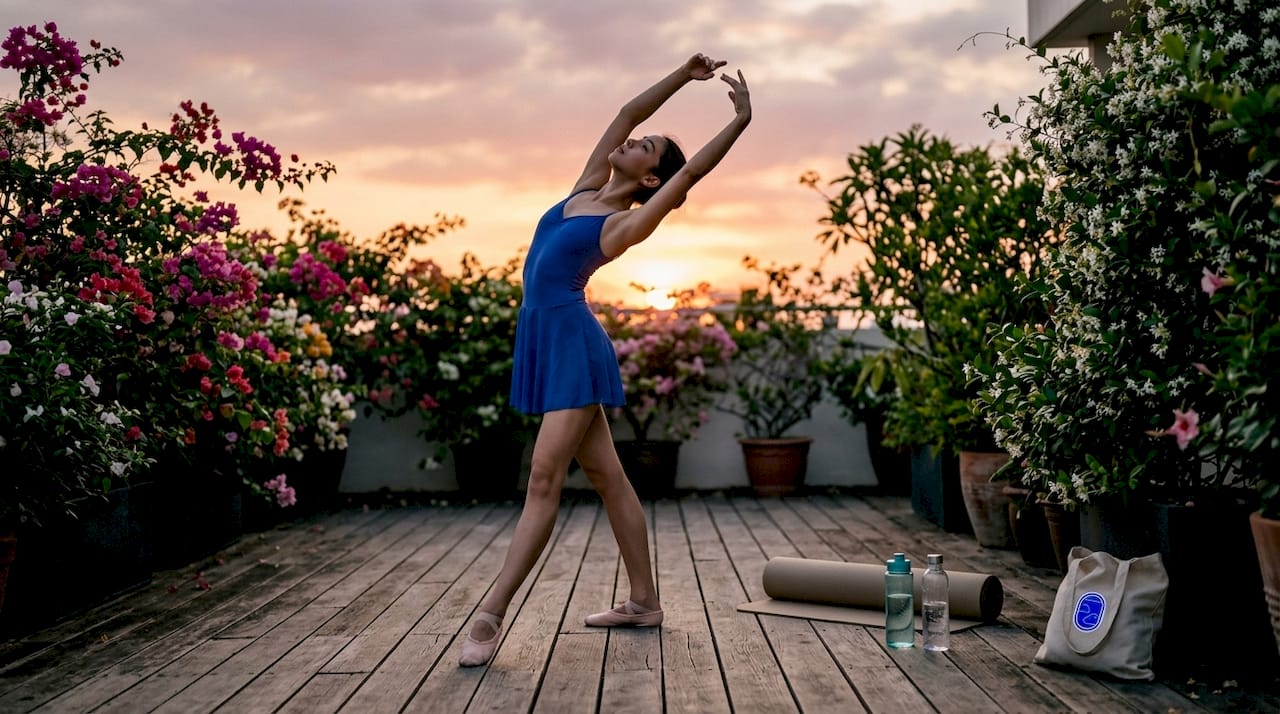
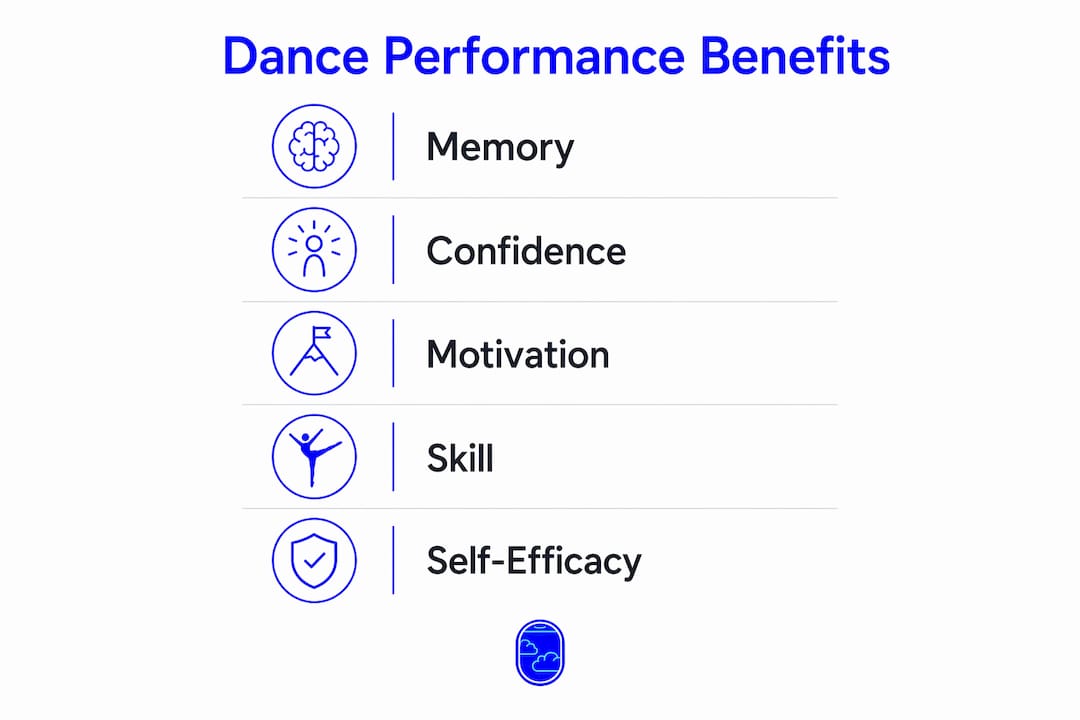
Performance in dance education is defined as the integrative event where technical skill, memory, and emotional expression converge into a single, high-stakes execution. The role of performance in dance learning goes far beyond recital day. Research from 2026 shows that self-efficacy predicts performance outcomes far more than movement competency alone, which means how confident a learner feels shapes results more than raw physical ability. Educators and dance teachers who understand this shift their entire approach, building programs where performance is not the finish line but the engine driving growth at every stage.
How does performance enhance technical and cognitive dance skills?
Performance consolidates procedural memory in ways that studio practice cannot replicate. When a dancer moves from rehearsal to a live stage, the spatial layout, audience energy, and emotional stakes all change. Stage experience anchors motor pathways under conditions that no mirror-lined studio can simulate. That gap between studio execution and stage delivery is exactly why performance must be built into the learning cycle, not added at the end.
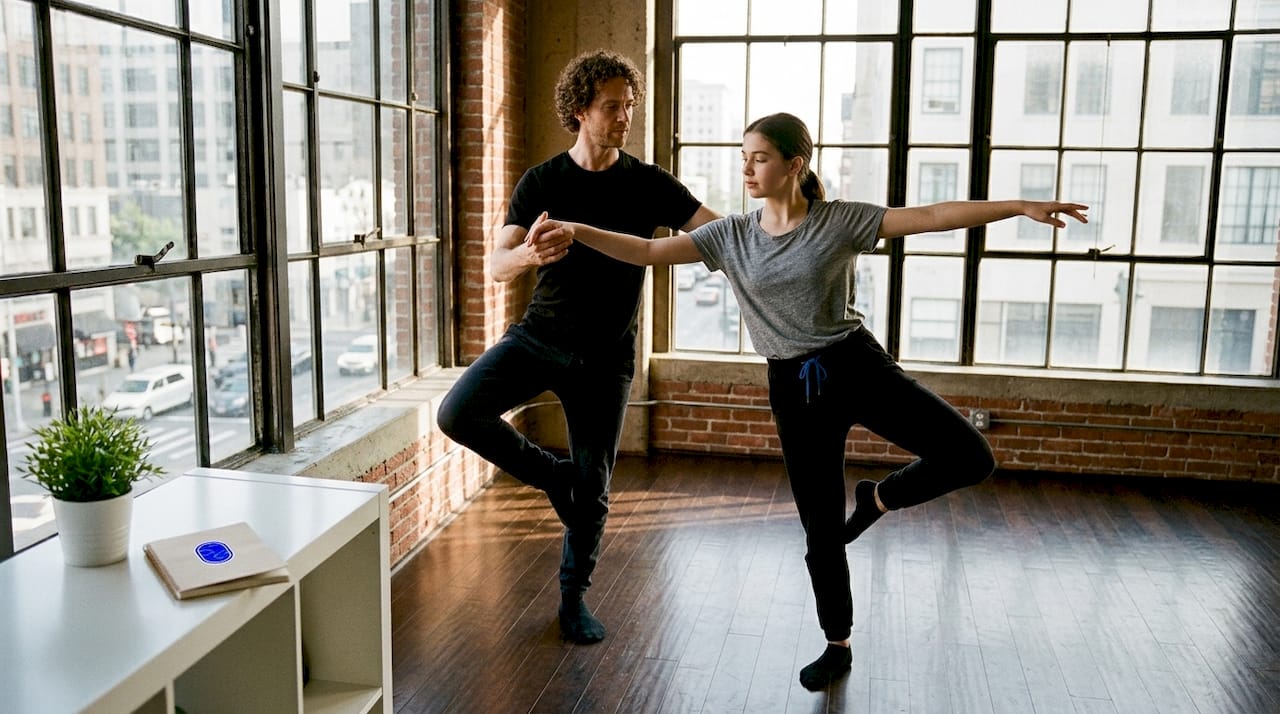
Dance improvisation adds another layer of cognitive demand. A 2026 ethnographic study found that improvisation requires a cognitive shift from rule-bound execution to embodied, real-time adaptation. That shift does not happen automatically. It develops through repeated performance exposure, where learners learn to read the room, adjust timing, and trust their kinesthetic memory simultaneously.
Pedagogy shapes how well these skills transfer to the stage. A 2026 systematic review confirmed that blended pedagogy supports skill transfer better than either teacher-led or learner-centered instruction alone. The combination gives learners both the technical accuracy they need and the expressive freedom they must develop to perform authentically.
Key cognitive and technical benefits of performance include:
- Memory consolidation: Live performance forces the brain to retrieve and execute movement sequences without the safety net of stopping and restarting.
- Rhythmic navigation: Performing to live music or varied tempos trains real-time rhythmic adjustment that studio drills rarely demand.
- Spatial awareness: Stage dimensions, lighting, and audience positioning require dancers to recalibrate movement quality and projection.
- Error recovery: Mistakes in performance teach learners to continue rather than freeze, building resilience that transfers back to studio work.
Pro Tip: Schedule at least one informal in-class performance every four to six weeks. Even a short showing in front of peers activates the cognitive and emotional demands of a real stage, accelerating skill consolidation far faster than additional repetition drills.
What are the psychological and motivational benefits of dance performance?
Performance milestones give learners a concrete goal that regulates their practice and prevents burnout. Recital season serves a motivational role by creating a visible finish line that makes weeks of repetitive training feel purposeful. Without that milestone, practice can feel endless and disconnected from any real outcome. With it, learners self-regulate more effectively and push through plateaus they might otherwise abandon.
The confidence gains from performance are measurable and lasting. Educational consensus from 2026 confirms that performance milestones build self-confidence and improve student retention in dance programs. Learners who perform regularly develop a stronger sense of identity as dancers, which feeds back into their commitment to training. That cycle of performance and renewed motivation is one of the most underused tools in dance education.
Emotional expression is also a skill that only performance can fully develop. Technical precision alone does not create memorable dance. Technique must merge with emotional storytelling for a performance to connect with an audience. Teaching learners to access and communicate emotion on stage is a distinct skill, and it grows through practice in front of real audiences, not just in front of mirrors.
Here is a practical sequence for building psychological readiness through performance:
- Set a performance date early. Announce it at the start of a training cycle so learners can orient their effort toward a real deadline.
- Use dress rehearsals as full performances. Treat every run-through with full costume, lighting, and audience presence to reduce opening-night anxiety.
- Debrief after every showing. Ask learners what they felt, not just what went wrong. Emotional processing after performance deepens artistic growth.
- Celebrate effort alongside execution. Recognizing courage on stage builds the intrinsic motivation that keeps learners enrolled and engaged long-term.
"Performance is not the reward for learning dance. It is the condition under which the deepest learning actually happens. The stage teaches what the studio cannot."
You can see this principle at work in inclusive dance showcases, where learners of all abilities report confidence gains that outlast the event itself.
How to integrate performance into dance teaching effectively
The most effective teaching approach blends direct instruction with learner-centered rehearsal. An optimal pedagogy balances teacher guidance for technical accuracy with learner-centered feedback cycles that build expressive ownership. Teachers who dictate every movement detail produce technically clean but emotionally flat performers. Teachers who give learners too much freedom without correction produce expressive but technically inconsistent results.
Rehearsal intent matters as much as rehearsal frequency. Many learners "mark" choreography during rehearsal, running through movements at reduced intensity to save energy. This habit creates a performance gap because the body never fully rehearses the real demands of the stage. Educators who require full-out execution in rehearsal, even occasionally, close that gap significantly. Performance analysis deepens this process by giving learners a structured way to review their own work and identify where technique and expression diverge.
| Teaching approach | Best used for | Performance outcome |
|---|---|---|
| Teacher-led instruction | Technical accuracy, foundational skills | Consistent execution, reduced errors |
| Learner-centered rehearsal | Expressive development, artistic choices | Authentic stage presence, emotional connection |
| Blended pedagogy | Full performance readiness | Strongest skill transfer to live performance |
| Performance analysis review | Post-show improvement cycles | Accelerated artistic and technical growth |
Recitals and showcases function as integrative learning events, not just celebrations. They compress weeks of isolated skill work into a single unified expression. Structuring a curriculum around two or three performance milestones per year gives learners repeated cycles of goal-setting, preparation, execution, and reflection. That cycle is where dance skills transfer to performance settings most reliably.
Pro Tip: Record every performance, even informal ones. Video review lets learners see the gap between how a movement feels and how it actually looks, which is one of the fastest ways to accelerate both technical and artistic development.
What are the common barriers to performance in dance learning?
Performance anxiety is the most common barrier, and it is also the most misunderstood. Most educators treat it as a problem to eliminate. The more productive frame is to treat it as energy to redirect. Learners who learn to channel pre-show nerves into focus and presence perform better than those who try to suppress the feeling entirely.
The performance gap, the difference between what a dancer can do in the studio and what they deliver on stage, is a structural problem, not a talent problem. Intentional stage-presence training during rehearsals is the most direct solution. This means rehearsing with full projection, eye contact with an imaginary audience, and deliberate emotional commitment, not just running the steps.
Common barriers and their solutions:
- Performance anxiety: Introduce low-stakes performances early and often. Familiarity with the performance state reduces fear over time.
- Movement competency versus self-efficacy mismatch: A 2026 study found that self-efficacy predicts outcomes far more than technical skill level. Build confidence through achievable performance goals before raising technical demands.
- Marking in rehearsal: Require at least one full-out run per rehearsal session to close the gap between practice intensity and performance intensity.
- Lack of peer feedback: Structured peer observation during rehearsals builds both the observer's analytical skills and the performer's comfort with being watched.
Group learning environments accelerate these solutions. Learning dance in group settings creates natural peer support, shared accountability, and low-stakes audience experience that prepares learners for real performance conditions.
Key Takeaways
Performance is the single most effective tool in dance education because it consolidates memory, builds self-efficacy, and develops emotional expression in ways that studio practice alone cannot achieve.
| Point | Details |
|---|---|
| Self-efficacy drives outcomes | Confidence predicts performance results more reliably than technical skill level alone. |
| Performance consolidates memory | Stage conditions anchor motor pathways that studio repetition cannot fully establish. |
| Blended pedagogy works best | Combining teacher-led instruction with learner-centered rehearsal produces the strongest skill transfer. |
| Milestones prevent burnout | Scheduled performance dates give learners concrete goals that regulate practice and sustain motivation. |
| Stage presence is teachable | Intentional rehearsal habits, including full-out execution and emotional commitment, close the performance gap. |
Why I think we underestimate what the stage actually teaches
Most dance curricula treat performance as the product of learning. I think that framing gets it backwards. The stage is where the real learning happens, and everything before it is preparation for that moment of synthesis.
What I have seen consistently is that learners who perform regularly develop a kind of artistic confidence that no amount of studio correction can produce. The stage demands full commitment. You cannot half-execute in front of an audience and feel good about it. That demand creates a standard that learners internalize and carry back into every rehearsal.
The uncomfortable truth is that many educators avoid frequent performance because it feels risky. What if a student makes a mistake in public? That fear protects no one. Mistakes in low-stakes performances are the safest, most productive learning events in a dancer's development. They teach recovery, resilience, and the understanding that a single error does not define a performance.
My practical suggestion: embed a performance mindset from the first class. Treat every combination across the floor as a performance. Ask learners to project, commit, and finish. That habit, built early and consistently, means the stage never feels like a foreign environment. It feels like the natural extension of what they already do every day.
Artist-run studios that prioritize community showcases over competitive rankings tend to produce dancers with exactly this quality. The culture of frequent, low-pressure performance builds the kind of artistry that technique classes alone never will.
— DJ
Live dance experiences that bring these principles to life
Dance education does not stop at the studio door. Watching and participating in live performances is one of the fastest ways to internalize what great stage presence actually looks and feels like.
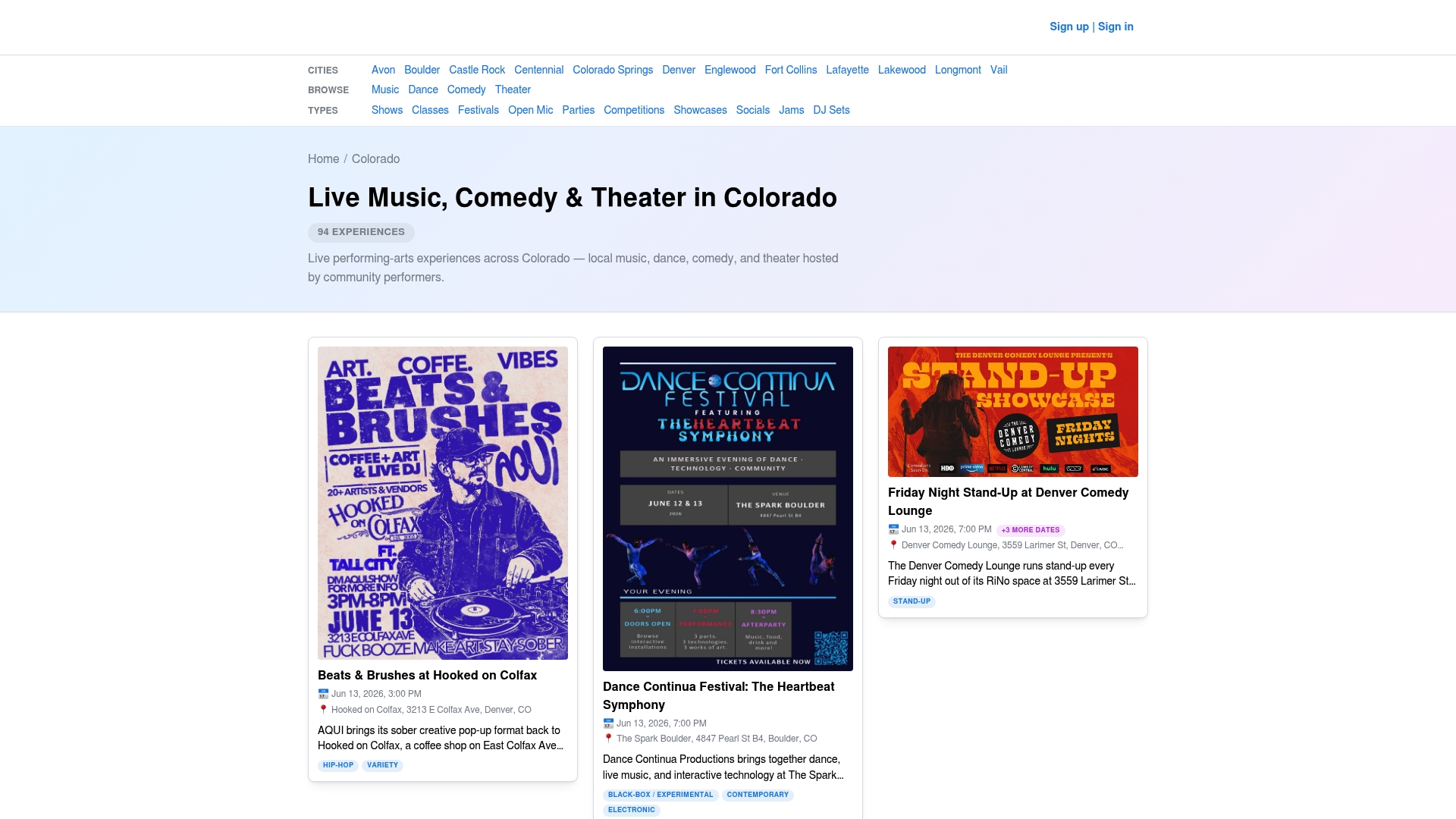
Experiencebylocals curates dance performances in Colorado that connect learners and educators with real, community-rooted performances hosted by local artists. These are not tourist-facing productions. They are grassroots events where you can see the principles of technique, expression, and stage presence working together in authentic settings. Events like Modern Dance with Kaycee Jannino at Streetside Dance offer exactly the kind of immersive, community-connected experience that deepens understanding for both learners and educators. If you are building a dance curriculum or looking to grow as a performer, attending live local performances is one of the most direct investments you can make.
FAQ
How does performance improve dance skill acquisition?
Performance consolidates procedural memory under real conditions that studio practice cannot replicate, including spatial variables, audience presence, and emotional stakes. Repeated performance exposure accelerates both technical and expressive skill development.
Why does self-efficacy matter more than technical skill in performance?
A 2026 study of 110 Grade 7 students found that self-efficacy significantly predicted performance outcomes while movement competency showed negligible correlation. Confidence shapes how fully a learner commits to execution, which directly affects the quality of the result.
What is the performance gap in dance education?
The performance gap is the difference between how a dancer executes movement in the studio and how they deliver it on stage. Intentional stage-presence training during rehearsals, including full projection and emotional commitment, is the most direct way to close it.
How often should dance learners perform?
Learners benefit from performance opportunities every four to six weeks, including informal in-class showings, peer observations, and structured recitals. Frequency reduces anxiety and builds the performance mindset that transfers back into daily practice.
What teaching approach best prepares learners for performance?
A blended pedagogy that combines teacher-led technical instruction with learner-centered rehearsal produces the strongest skill transfer to live performance, according to a 2026 systematic review of dance pedagogy outcomes.