
What Does Curated Performance Mean? A Clear Guide

Curated performance is the intentional selection, framing, and sequencing of live artistic works to create a cohesive experience that carries meaning beyond any single act. Merriam-Webster defines "curated" as "carefully chosen and thoughtfully organized or presented" — and in live performance, that care is the whole point. Philip Bither, longtime performing arts curator at the Walker Art Center in Minneapolis, frames it even more directly: curation means "to care for" — caring for artists, their work, and how that work reaches an audience. For artists, programmers, venues, and audiences alike, understanding this distinction changes how you plan, attend, and talk about live events.
Table of Contents
- What does "curated performance" actually mean?
- How does a curator differ from a presenter, programmer, or dramaturg?
- What do curators aim to achieve for artists and audiences?
- A brief history: how performance curation evolved 🔎
- How to recognize curated performance and work with it 🤝
- What curated performance looks like at the community level
- Key Takeaways
- Why curated performance matters more than ever
- Useful sources and further reading
What does "curated performance" actually mean?
The word "curated" carries more weight than "chosen." When a curator assembles a performance program, they are not simply filling a calendar slot or booking whoever is available. They are making an argument — about theme, about community, about what an audience should feel or think by the time they leave.
In performing-arts contexts, curation is the intentional, creative framing of artistic works to create a cohesive narrative or community experience that transcends individual performances. That framing is what separates curation from logistics. A presenter books a band for a Friday night. A curator asks: what does this band say in conversation with the spoken-word artist who opens for them, in this particular room, for this particular community?
Selection as logistics means filling a slot. Selection as intentional framing means every choice — artist, order, venue, lighting, program notes — mediates between the artist's vision and the audience's experience. The curator stands in that gap, not as a gatekeeper but as a translator and guide.
How does a curator differ from a presenter, programmer, or dramaturg?
These roles overlap constantly in real-world practice, which is exactly why the confusion persists. Here is how they break down:
- Dramaturg: — Works closely with a single production or artist to develop the intellectual and narrative architecture of a specific work. Scope is usually one project, not a full program.
Scholars draw a clear distinction between presenters and programmers who manage logistics and curators who construct thematic and discursive frameworks that shape audience interpretation. That said, a single person at a small venue often wears all three hats — and that is fine, as long as they are conscious of which hat they are wearing at any given moment.
| Role | Primary Focus | Scope | Key Accountability |
|---|---|---|---|
| Curator | Thematic framing and meaning | Full program or series | Audience interpretation and artistic discourse |
| Presenter/Programmer | Logistics and operations | Individual bookings | What gets on stage and when |
| Dramaturg | Narrative and intellectual development | Single production | The work itself |
Where roles blur most visibly: a festival artistic director who both books acts and writes the thematic rationale is functioning as curator and programmer simultaneously. The distinction matters because it clarifies who is responsible for why a program feels the way it does.
What do curators aim to achieve for artists and audiences?
Curated programs require additional investment — research, commissioning, contextual materials — compared with simple booking. That investment is justified by specific outcomes curators are trying to produce:
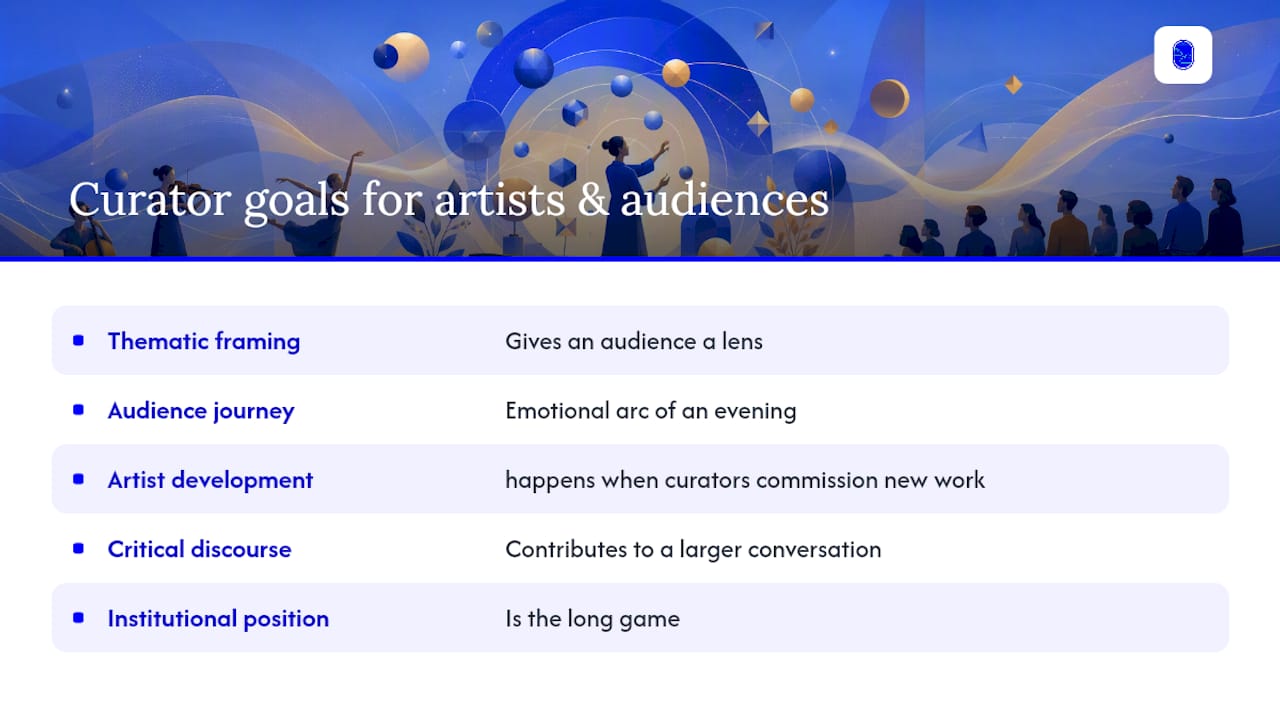
Thematic framing gives an audience a lens. A series on grief and ritual means each individual performance lands differently than it would in isolation. The frame does interpretive work before the first performer walks on stage.
Audience journey is the emotional arc of an evening or a season. A curator who opens with something accessible and closes with something challenging is managing risk and reward — building trust before asking for a leap. Pacing, sequencing, and spatial choices all contribute to that arc.
Artist development happens when curators commission new work or pair emerging artists with established ones. The program becomes a development environment, not just a showcase.
Critical discourse means the program contributes to a larger conversation in the field. Walker Art Center's performance programming, for example, consistently contextualizes experimental work so it enters public dialogue rather than staying inside a specialist bubble.
Institutional positioning is the long game. A venue known for thoughtful curation attracts artists who want that context and audiences who trust the frame.
A brief history: how performance curation evolved 🔎
The emergence of the performance curator as a distinct role grew from the experimental ferment of the 1960s, when artists began treating the event itself — not just the object — as the primary artistic medium.
| Era | Key Figures / Events | What Changed |
|---|---|---|
| 1960s | Kenneth Dewey, Allan Kaprow | Happenings and events blurred performer/audience boundaries; context became content |
| — | Rise of Live Art and interdisciplinary festivals | Institutions began programming work that crossed disciplines and resisted categorization |
| — | Walker Art Center (Philip Bither), Performa | Museums and dedicated organizations built curatorial infrastructure for performance |
| — | Forest Fringe, community microfestivals | Low-cost, community-driven models democratized curatorial practice |
Kenneth Dewey's At the time of (1963) and Allan Kaprow's Happenings were not just performances — they were arguments about what performance could be. The curator's job, in that context, was to frame those arguments for audiences who had no existing vocabulary for them.
"Curation in performance is not about taste — it is about creating the conditions under which an audience can encounter work that might otherwise remain inaccessible or misunderstood. The frame is as much a part of the art as the work itself."
— From Content to Context: The Emergence of the Performance Curator
Performa, founded in New York by RoseLee Goldberg, became one of the most influential contemporary models — commissioning new performance works from visual artists and creating a biennial that treats the city itself as a venue. Forest Fringe, the Edinburgh-based microfestival, took a different approach: low cost, high community engagement, built on volunteer labor and artist exchange rather than institutional budgets. Both models show that curation is scalable in both directions.
Philip Bither's work at Walker Art Center remains a touchstone for how a major institution can hold space for experimental performance without domesticating it. His framing of curation as "caring for" artists is not sentimental — it is a practical commitment to contextualization that makes challenging work accessible rather than intimidating.
How to recognize curated performance and work with it 🤝
Whether you are an artist approaching a curator or an audience member trying to get more from a program, a few signals tell you when curation is genuinely at work.
For audiences, look for:
- Program notes that explain why these works appear together, not just what they are
- A thematic title or framing statement for the evening or series
- Commissioned work listed alongside selected work
- Post-show discussions or pre-show materials that invite deeper engagement
- A run order that feels intentional — not just alphabetical or by availability
For artists, ask these questions before agreeing to participate:
- What is the curatorial frame for this program, and where does my work fit?
- Who else is on the bill, and have you thought about how our work speaks to each other?
- What technical support and documentation will you provide?
- What is the fee, and is it negotiable based on the program's budget?
- How will you contextualize my work for an audience that may not know it?
Audiences can support curated performance by attending post-show discussions, reading program notes before the work begins, and paying for tickets rather than expecting free access. The role of the audience in a curated program is not passive — attentive, informed attendance is part of what makes the curatorial frame work.
What curated performance looks like at the community level
You do not need an institutional budget or a biennial to practice curation. Some of the most meaningful curated performance happens at the neighborhood level, where a local organizer makes deliberate choices about which artists share a stage and why.
Consider a community arts night in Colorado where an organizer brings together a spoken-word poet, a K-pop dance crew, and a local folk duo — not because they were all available on the same Saturday, but because each act speaks to a different thread of the neighborhood's cultural identity. The organizer writes a short program note connecting those threads. They sequence the evening so the most participatory act closes, leaving the audience energized rather than contemplative. They make sure the venue is accessible and that every artist is paid.
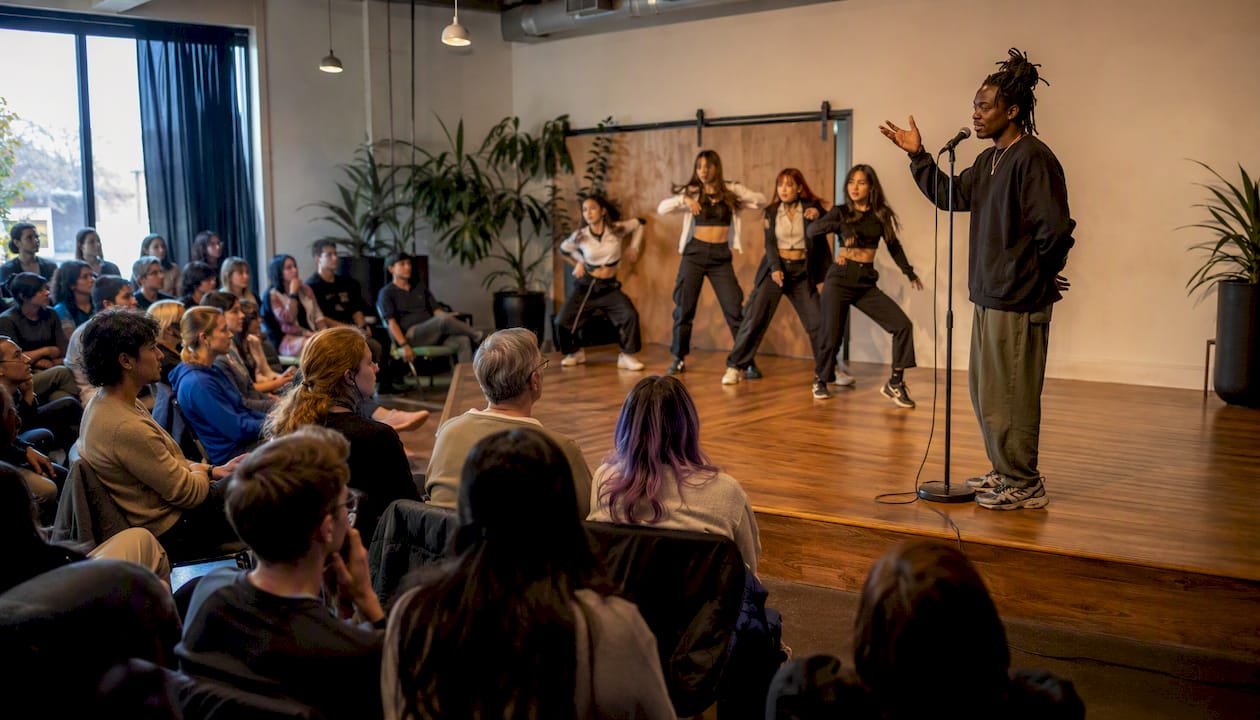
That is curated performance. The scale is small; the intention is not.
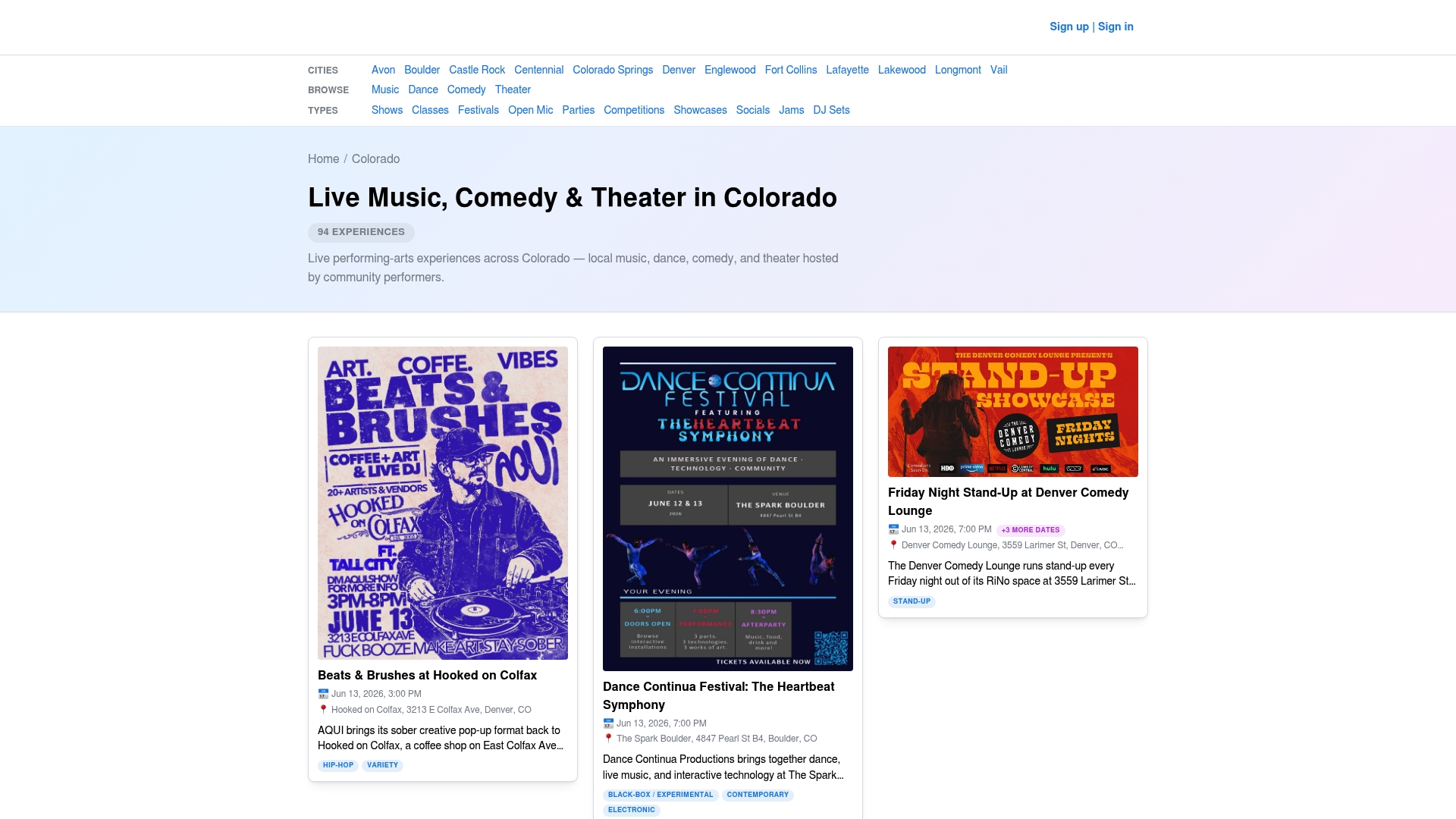
Experiencebylocals makes this kind of intentional programming visible and discoverable. Local organizers can list curated events across Colorado — from open mics to arts festivals — and reach audiences who are actively looking for experiences that go deeper than a standard night out. For artists, the platform offers exposure to audiences who already value authentic, community-rooted work. You can explore live music, comedy, dance, and theater listings or list your own curated event directly.
Key Takeaways
Curated performance is defined by intentional framing, not just selection — the curator's job is to create meaning through the relationships between works, not simply to fill a program with strong individual acts.
| Point | Details |
|---|---|
| Curation vs. booking | A curator frames meaning across a program; a presenter manages logistics for individual acts. |
| Core curatorial methods | Research, selection, sequencing, spatial framing, audience engagement, and documentation all shape the audience's experience. |
| Historical roots | Kenneth Dewey, Allan Kaprow, Performa, and Forest Fringe each advanced what performance curation can look like and who it serves. |
| Ethical priorities | Fair pay, genuine inclusion, ADA accessibility, and transparent selection criteria are non-negotiable in responsible curation. |
| Finding curated work | Experiencebylocals lists community-curated live events in Colorado for audiences and artists alike. |
Why curated performance matters more than ever
There is a version of this conversation that stays safely academic — definitions, historical timelines, institutional case studies. That version misses the point.
What I find genuinely exciting about the concept of curated performance is what it asks of everyone in the room. It asks the organizer to have a reason, not just a roster. It asks the artist to trust that their work will be framed with care. It asks the audience to show up with a little more attention than they might bring to a random night out.
At the community level, that shift in expectation changes what live performance can do. A mixed-art event that is thoughtfully sequenced and clearly framed does not just entertain — it builds the kind of shared reference points that make a community feel like one. That is not a small thing, especially in places where local artists are competing for attention against algorithmically optimized content.
The institutions that shaped performance curation — Walker Art Center, Performa, Forest Fringe — did so by insisting that the frame matters as much as the work. That principle scales down to a 50-seat venue in Longmont just as well as it does to a biennial in New York. The tools are the same: intention, context, care.
Useful sources and further reading
These are the primary sources behind this article. Each one is worth following up if you want to go deeper.
- CURATED Definition & Meaning - Merriam-Webster
- What Is a Curator in the Performing Arts? - ONCURATING
- 'Curation' takes on new meaning
- From Content to Context: The Emergence of the Performance Curator
- From Content to Context: The Emergence of the Performance Curator (De Gruyter Brill chapter)
- Curating Performance/Performing Curation
- Performance and visual art 101: curating performance
- Curatorial Techniques for Live Performances