
What Is a Swing Dancer? A Beginner's Guide
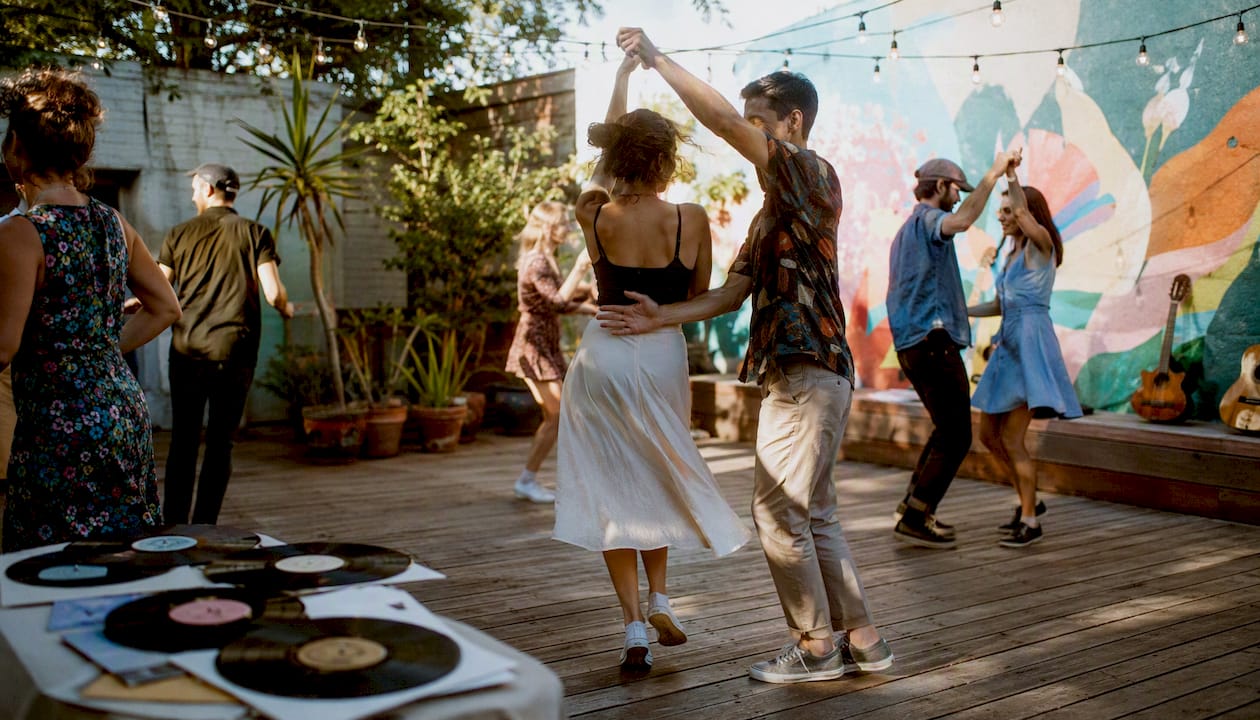
A swing dancer is someone who dances one or more social partner styles to swing music, moving through improvised patterns instead of fixed choreography. That single trait, spontaneous give-and-take between partners set to a bouncy jazz rhythm, is what separates a swing dancer from someone doing a rehearsed stage routine. You lead, you follow, you feel the beat, and you make it up as you go.
Swing dance is really a family of related styles, not one dance. According to the Kennedy Center's dance resources, the family grew out of earlier partnered and solo movements and expanded into the signature moves swing dancers still use today. Before we get into any of that, here's what belongs in your starting vocabulary:
- Lindy Hop: the original, most widely danced swing style
- West Coast Swing: a smoother, slotted style built for modern music
- Charleston: a fast, playful solo-or-partnered style with roots predating swing itself
- Balboa: a close-embrace style built for tight floors and fast tempos
- East Coast Swing (also called Jitterbug): a simplified 6-count style often taught first
- Collegiate Shag: a bouncy, upbeat style for fast, driving music
Each has its own personality, but they all share the same DNA: connection, rhythm, and room for you to add your own voice on the floor.
Key Takeaways
A swing dancer is defined by improvised, partner-based movement to swing music, and East Coast Swing is typically the easiest entry point for beginners.
| Point | Details |
|---|---|
| Core definition | A swing dancer moves through improvised, lead-and-follow patterns to swing music rather than fixed choreography. |
| Best starter style | East Coast Swing (Jitterbug) uses a simplified 6-count pattern, which is why most beginner classes teach it first. |
| Foundational style | Lindy Hop, born in 1920s–30s Harlem, underlies most other swing styles and teaches transferable connection skills. |
| Next step | Attend a beginner class or weekly social within your first month of interest to build skills through repetition. |
| Where to find events | Experiencebylocals lists local dance classes, socials, and performances across Colorado for readers ready to try swing in person. |
Table of Contents
- What Makes Someone a Swing Dancer?
- What Are the Main Types of Swing Dancers?
- Where Did Swing Dancing Come From?
- What Music Do Swing Dancers Dance To?
- How Do People Learn to Swing Dance?
- What Moves Should a New Swing Dancer Know?
- Is Swing Dancing Still Popular Today?
- Why Swing Dancing Still Matters
- What Learning to Swing Dance Actually Feels Like
- Find Local Swing Classes and Socials Near You
- Frequently Asked Questions
- Sources
What Makes Someone a Swing Dancer?
The clearest sign of a swing dancer is how they respond to music in real time, not how well they've memorized a routine. Watch a social dance floor for five minutes and you'll notice couples doing completely different things to the same song. That's the point. Swing dancing is built around lead-and-follow connection, where one partner suggests a movement through subtle physical cues and the other partner interprets it, often within a fraction of a second.
This is genuinely different from a lot of partner dancing you might picture. There's no set routine playing out identically every time. As one guide to swing dance history and technique puts it, swing dance is built on improvisational connection, rhythmic bounce, and a social focus rather than choreography practiced to look the same every performance.
A few characteristics you'll notice right away:
- Rhythmic "bounce": a slight up-and-down pulse in the knees and body that stays with the beat, not a flat, gliding walk.
- Rotating partners at socials: most swing dancers dance with many different people over a night, not just one fixed partner.
- Count structures: many styles run on 6-count or 8-count patterns, and switching between them mid-song is common once you get comfortable.
- Floor patterns: some styles travel in a straight "slot," others circle around a shared center point.
- Playful energy: swing dancing tends to feel upbeat and social, sometimes flirtatious, but it's rarely about romantic pairing off. Most people are there for the dance and the music, not a date.
Pro Tip: Don't try to memorize every move before your first class. Swing dancers improvise far more than they choreograph, so the fastest way to improve is dancing with different partners and letting your ear catch up to the beat.
Swing dancing also rewards personal styling. Classes teach the underlying patterns, but you're encouraged to add your own flair once you know the basics, which is part of why no two dancers ever look quite the same doing the "same" move.
What Are the Main Types of Swing Dancers?
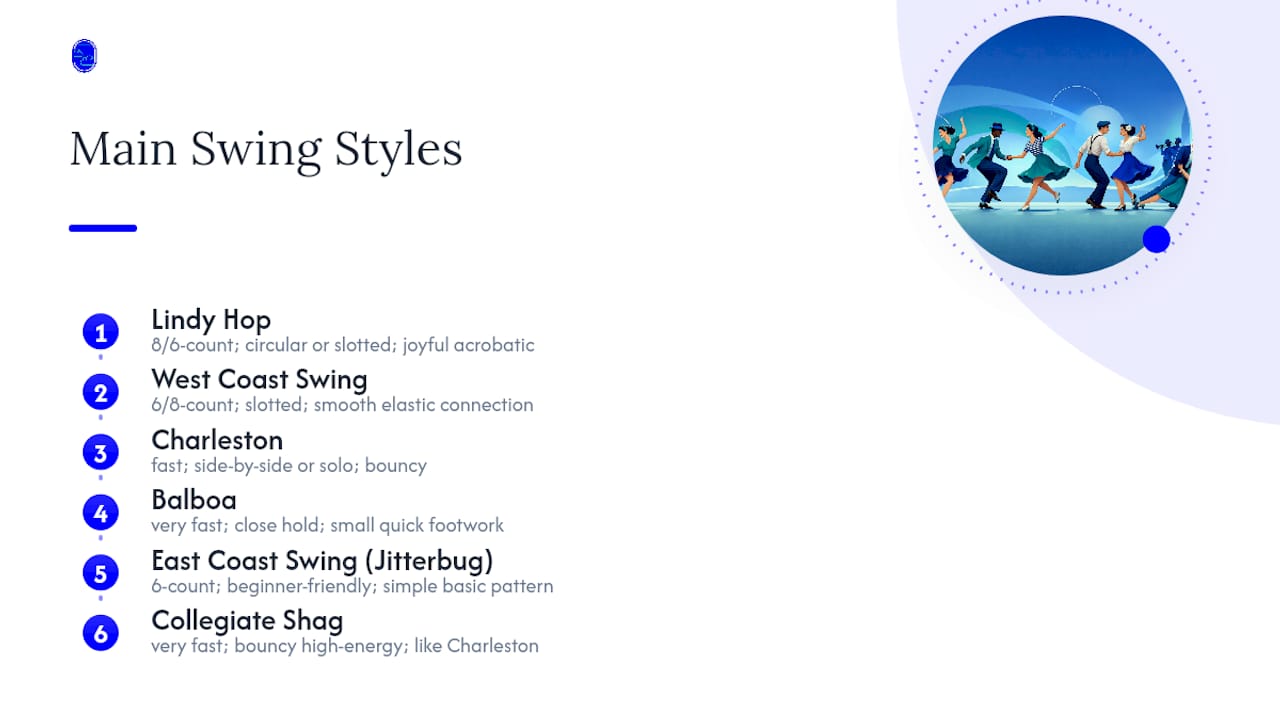
Every swing style shares that improvisational core, but each one has its own tempo range, floor pattern, and feel. Here's what separates them.
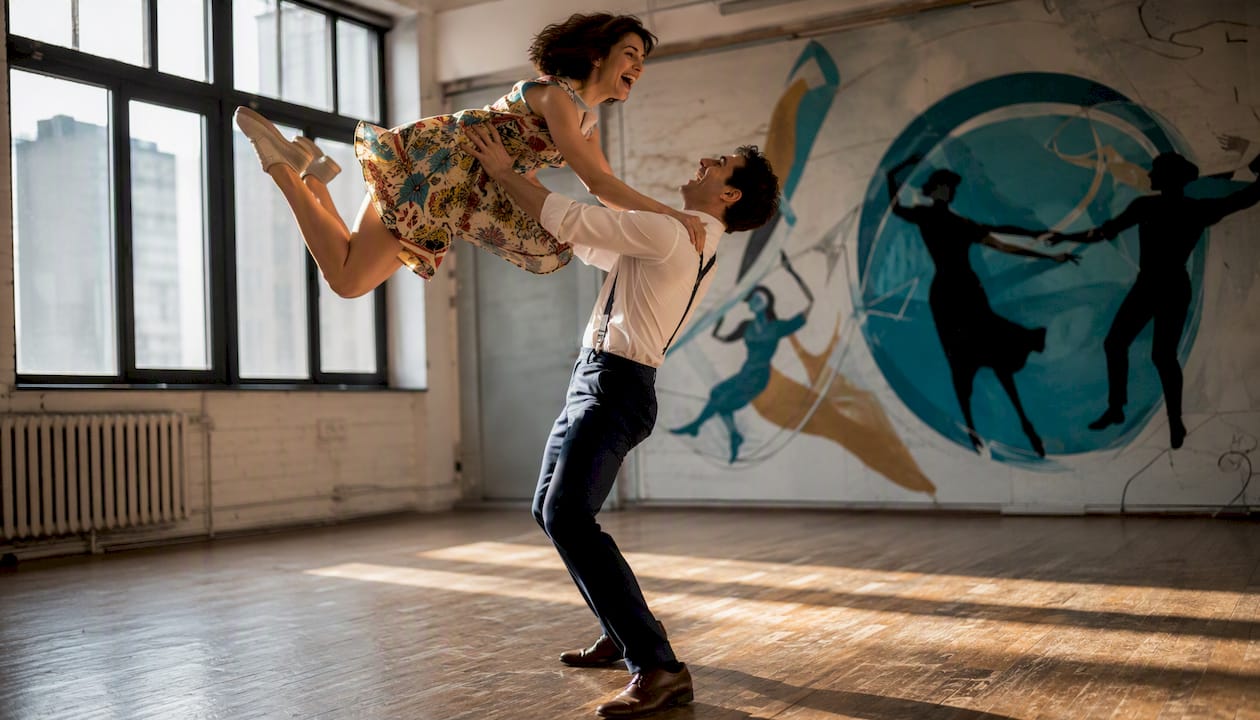
Lindy Hop is the foundation everything else grew from. It originated in Harlem in the late 1920s and early 1930s and blends partnered movement with solo jazz steps, giving it a loose, joyful, sometimes acrobatic energy. It runs on an 8-count base but borrows 6-count patterns constantly, and its floor pattern can shift between circular and slotted depending on the song and the room. If you only learn one style, most instructors will tell you to start here, because it teaches the musicality and connection skills that transfer to nearly every other swing style.
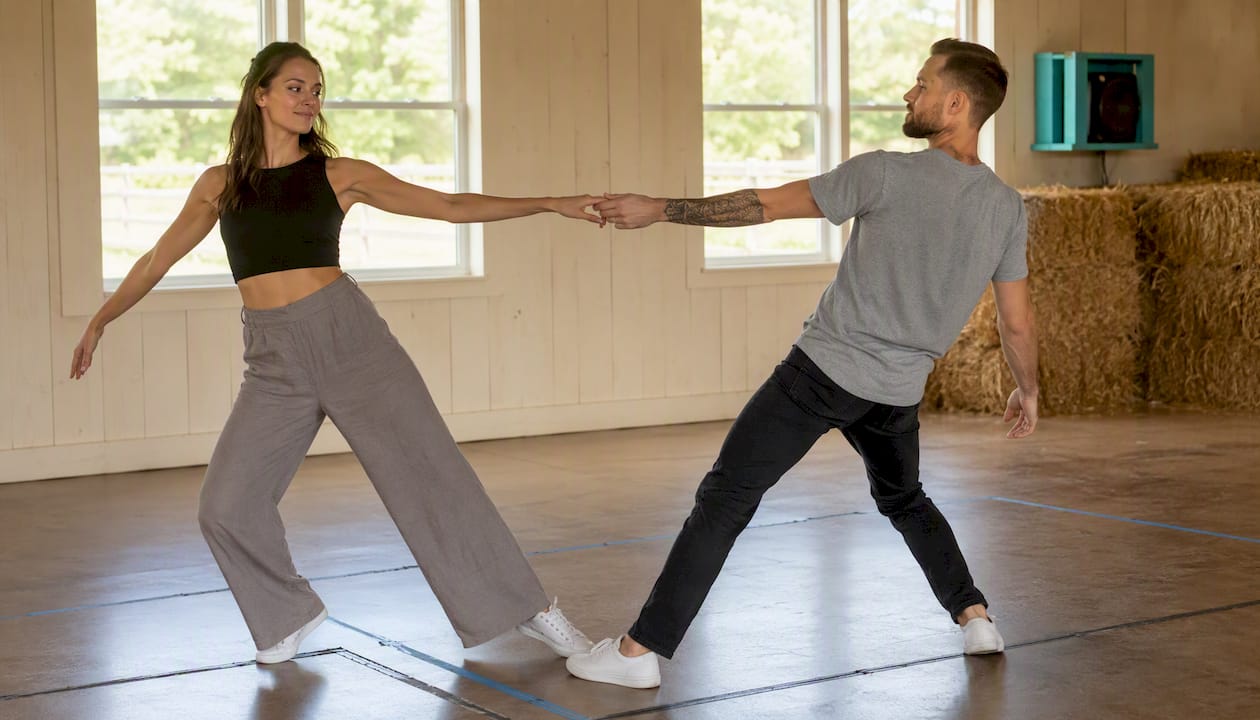
West Coast Swing feels smoother and more contained. Dancers move within a "slot," a shared lane on the floor, using an elastic stretch-and-release connection rather than the bouncier feel of Lindy Hop. Its basic figures include the sugar push and the whip, and it's danced in both 6- and 8-count patterns depending on the phrase of music. West Coast Swing shows up constantly in competitive circuits and adapts unusually well to slower, contemporary pop and R&B, which makes it popular with dancers who don't want to be limited to big band recordings.
Charleston predates swing music itself but got folded into the family early on. It's fast, bouncy, and can be danced solo or with a partner in an open, side-by-side position instead of a closed embrace.
Balboa is the style built for crowded rooms and blistering tempos. Partners dance in close contact with small, quick footwork, which is exactly why it works when the floor is packed and the band is playing fast.
East Coast Swing (Jitterbug) is the simplified, 6-count style most beginner classes teach first, because its basic pattern is easy to grasp before you tackle Lindy Hop's more complex timing.
Collegiate Shag brings a bouncy, high-energy feel suited to driving, uptempo music, closer in spirit to Charleston than to the smoother West Coast Swing.
Where Did Swing Dancing Come From?
Swing dance grew directly out of African-American vernacular dance traditions and the big-band jazz that defined the era. The style didn't appear all at once. It built up over roughly two decades, absorbing earlier social dances before crystallizing into the forms we now recognize.
- 1920s: Vernacular dances like the Charleston and the Black Bottom spread through Black communities and ballrooms, laying the groundwork for what came next.
- Late 1920s to early 1930s: Lindy Hop emerges in Harlem, largely at the Savoy Ballroom, fusing partnered movement with solo jazz steps.
- 1930s–1940s: The swing era hits its peak alongside big-band jazz, and Lindy Hop spreads nationally and internationally.
- 1980s onward: A revival movement reintroduces Lindy Hop and its relatives to new generations, sparking the modern global scene.
Swing dancers borrowed heavily from what came before them, then invented new signature moves along the way. Dancers combined partnered and solo movement and created new vocabulary like the swingout and airsteps, moves that still anchor Lindy Hop today.
Swing dance as a category developed alongside swing-style jazz music in the 1920s through the 1940s, and its surviving branches, Charleston, Balboa, Lindy Hop, West Coast Swing, and Collegiate Shag, all trace back to that same musical moment, according to a detailed history of the dance.
If you want to go deeper than a beginner overview, that history is well documented, and it's worth reading directly rather than relying on secondhand summaries.
What Music Do Swing Dancers Dance To?
Classic swing dancing runs on big-band jazz from the 1930s and 1940s, full horn sections, driving rhythm sections, and vocalists riding on top. That's still the reference sound most instructors use to teach timing and musicality, because the phrasing is clean and the beat is easy to feel.
Tempo shapes which style fits a song. Fast tracks tend to favor Balboa or Collegiate Shag, where compact footwork and high energy can keep pace without dancers running out of floor. Medium tempos are Lindy Hop's home turf. Slower, more contemporary songs, including current pop and R&B, suit West Coast Swing especially well, since its stretch-and-release connection was built for exactly that kind of music.
Modern swing socials mix eras constantly. You'll hear a 1940s big-band recording followed by a recent pop remix, and dancers simply adjust their footwork and energy to match. That flexibility is part of what keeps the scene from feeling like a museum piece.
How Do People Learn to Swing Dance?
Nearly every swing dancer starts the same way: a beginner group class, usually a four-to-six-week series that covers basic footwork, connection, and one or two signature moves. From there, most people move on to weekly socials, informal practice parties where you dance with rotating partners and put your new skills to use.
Getting started, step by step:
- Find a local beginner series (studios often run them on a rolling monthly basis).
- Attend a few classes before you judge whether you like the style. Connection skills take a couple of sessions to click.
- Go to a social once you know a handful of basic moves. Don't wait until you feel "ready."
- Ask for dances with a range of partners. This is normal and expected, not awkward.
- Consider a weekend workshop or festival once you're comfortable with the basics, since that's where you'll see advanced dancers and pick up new patterns fast.
A few practical notes for your first social: wear shoes with a smooth sole (sneakers can grip too much and strain your knees), expect a brief warmup or lesson before open dancing starts, and know that asking someone to dance, and politely declining, are both completely normal parts of the etiquette. Swing scenes are generally described as welcoming to newcomers and open to personal styling once you know the basics, so don't worry about looking polished on night one.
If you're not sure how a swing social differs from other partner dance events, it helps to look at how social dance formats generally work before you walk in the door.
What Moves Should a New Swing Dancer Know?
Every swing scene shares a common vocabulary. Knowing these terms before your first class will save you from feeling lost when an instructor rattles them off.
- Triple step: a quick step-step-step pattern that fills out counts and gives swing its bouncy rhythm.
- Rock step: a back-and-forward weight shift used to reset timing between patterns.
- Swing out: the signature Lindy Hop move where partners rotate out from closed position into open position and back.
- Sugar push: a foundational West Coast Swing figure built on the stretch-and-release connection between partners.
- Whip: a more advanced West Coast Swing pattern that builds directly on the sugar push.
- Charleston kicks: the basic kicking step pattern that gives Charleston its bouncy, playful look.
- Airsteps (or "aerials"): lifts and jumps performed by more advanced Lindy Hop dancers, usually saved for performance rather than crowded social floors.
- Slot: the shared lane West Coast Swing dancers travel within instead of circling the floor.
Short instructional videos from established studios are a good way to see these moves in motion before you try them with a partner. Watching a swing out or sugar push broken down frame by frame will make far more sense than reading a text description.
Is Swing Dancing Still Popular Today?
Yes, and not in a nostalgic, museum-exhibit way. Swing dancing runs on an active global calendar of festivals, weekly socials, and competitive events, with scenes ranging from small local meetups to massive annual gatherings that draw dancers internationally.
The scene owes a lot to a revival that started in the 1980s, when dancers began deliberately reviving Lindy Hop and reconnecting with its Harlem roots after decades of decline. Periodic media exposure, films, ads, and viral clips, has given the scene fresh bursts of interest ever since, but the backbone has always been the local weekly social, the kind of low-key gathering where regulars show up week after week regardless of what's trending.
- Local scenes: most cities of reasonable size have at least one regular swing social, often weekly or biweekly.
- Festivals: weekend and multi-day events draw traveling dancers for workshops, competitions, and late-night social dancing.
- Competitive circuits: West Coast Swing in particular has a well-developed competition scene with judged divisions by skill level.
- Scene size varies widely by city: some communities are a tight-knit group of a few dozen regulars; others fill ballrooms with hundreds of dancers.
Local communities also define "swing" a little differently depending on which styles took hold in that region, so what one scene emphasizes may differ from another, even though the underlying vocabulary stays consistent.
Why Swing Dancing Still Matters
Swing dance carries real cultural weight, and that weight is worth taking seriously rather than treating swing as a retro novelty. Its roots run through African-American vernacular dance traditions, and preserving that history, who created these moves, in what neighborhoods, under what circumstances, is part of what keeps the art form honest.
Pro Tip: If you want your first swing experience to feel authentic rather than sanitized, look for events run by dancers connected to the scene's history, not just polished studio showcases. The energy is different, and so is what you'll learn.
Practitioners who work to keep swing's Black origins visible describe it as more than preservation for its own sake. It's about making sure the communities who created this dance form see themselves reflected in it today.
Local scenes that emphasize cultural continuity often frame their work as making swing's Black origins visible again, both to the broader public and to the Black communities the dance came from in the first place.
Beyond the history, social swing dancing offers something simpler: a low-cost, low-pressure way to get exercise, hear live or recorded jazz you might not otherwise seek out, and build a community that meets face to face on a regular schedule. That's rarer than it used to be, and it's worth protecting. Platforms like Experiencebylocals make it easier to find authentic dance events hosted by the artists and organizers actually keeping these scenes alive, rather than a polished tourist version of the same thing.
What Learning to Swing Dance Actually Feels Like
The first time a swing out actually works, when your partner's momentum and yours line up without either of you forcing it, it's a genuinely surprising feeling. Most of the learning curve isn't about memorizing steps. It's about learning to listen, both to your partner's body and to the music underneath you.
The fastest improvement comes from doing exactly what the pool of swing dancers before you already figured out: dance with as many different partners as you can and pay closer attention to the music than to your feet. Technique matters eventually. But in the first few months, social mileage and musical ear will carry you further than any drill.
Find Local Swing Classes and Socials Near You
Once you know what a swing dancer actually does, the next question is simple: where do you go to try it? Experiencebylocals is built for exactly this kind of search, a way to find real, community-run dance events in Colorado without wading through generic tourist listings or guessing which studio actually runs a beginner-friendly night.
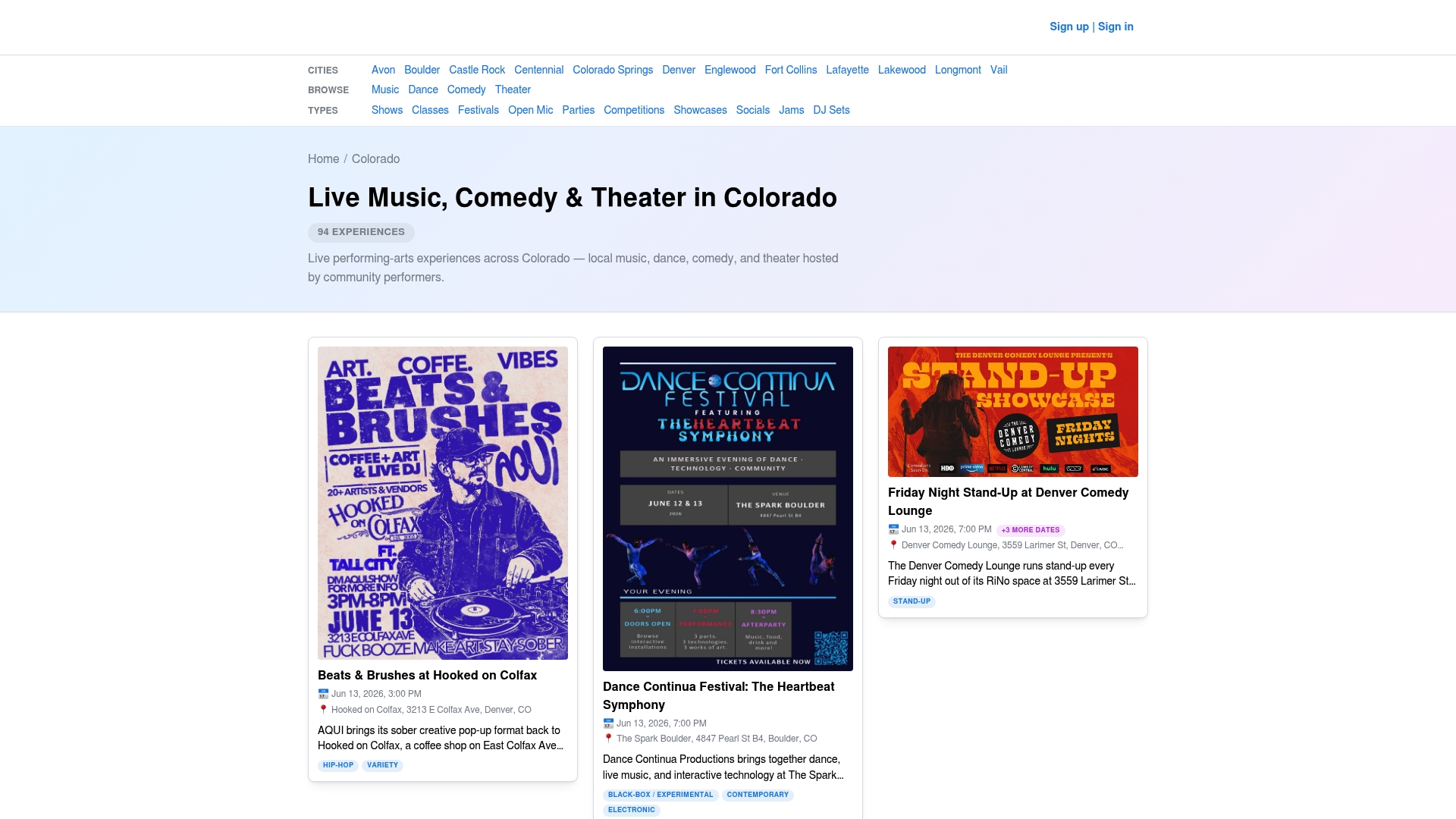
Search "dance" on the platform and filter by location to surface dance performances and classes across Colorado, including beginner series, weekly socials, and workshops hosted by local instructors rather than big commercial chains. If you're curious what a listing actually looks like, browse an example like the modern dance class at Streetside Dance, hosted at the Streetside Dance Studio venue page, to see how classes and their details show up before you commit. Start with a beginner class or an upcoming social, RSVP directly through the listing, and show up ready to dance with a few strangers. That's genuinely how every swing dancer starts.
Frequently Asked Questions
What is a swing dancer, in the simplest terms? A swing dancer is a person who dances one or more social swing styles, like Lindy Hop, West Coast Swing, or Charleston, using improvised movement and lead-and-follow connection rather than memorized choreography.
Is swing dancing still a thing today? Yes. Active local socials, international festivals, and competitive circuits run year-round, supported by a revival movement that took off in the 1980s and never really stopped.
What is the most popular swing dance style? Lindy Hop is generally considered the most widely danced and taught style worldwide, while West Coast Swing dominates competitive circuits, especially in North America.
Do you need a partner to start swing dancing? No. Most beginner classes rotate partners throughout the session, and many styles, including Charleston, have solo variations you can practice alone.
How long does it take to learn basic swing dancing? Most people feel comfortable with foundational steps and simple patterns after a four-to-six-week beginner series, though comfort with improvisation and musicality develops over months of social dancing.
Sources
- What Is Swing Dance? A Clear Guide to History, Styles, Music, and Basic Steps - SFCOfDance
- Swing dance (Kennedy Center resource)
- Lindy Hop