
What Is Social Dance Experience? A Beginner's Guide
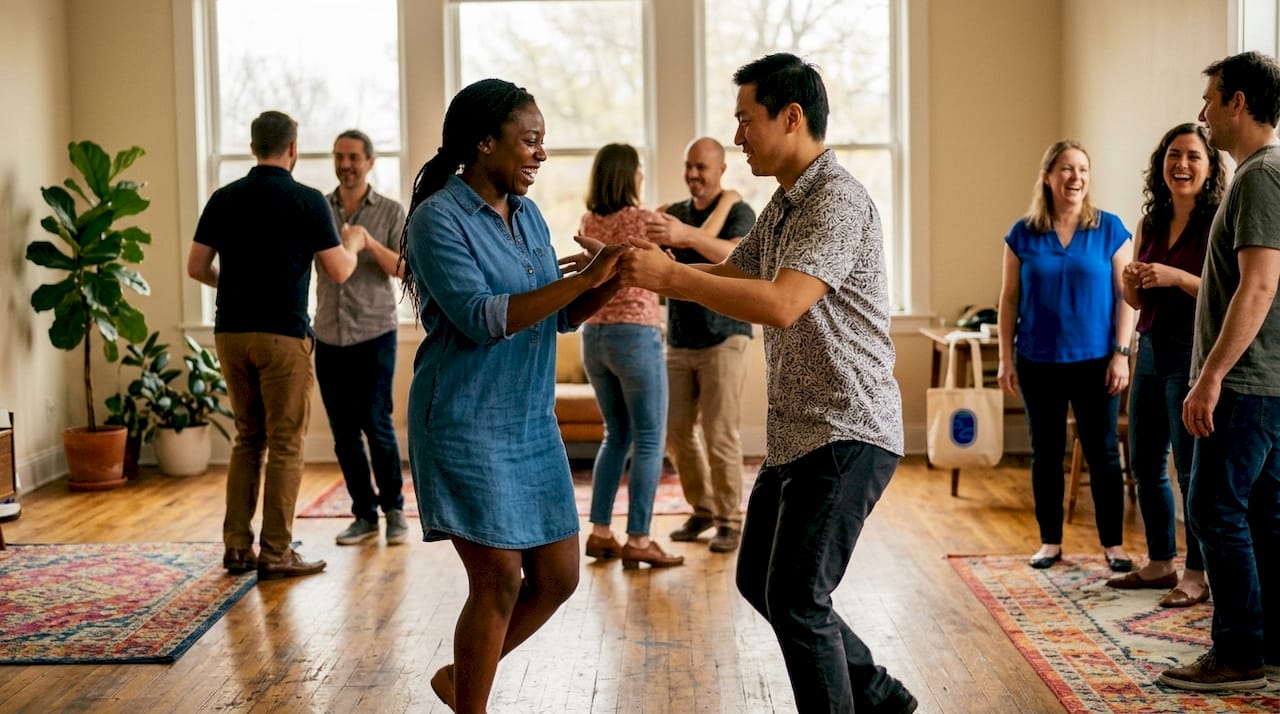
Social dance experience is defined as the active, joyful participation in non-competitive partner or group dancing focused on connection, enjoyment, and cultural expression rather than performance. Unlike stage or competitive dance, social dancing is a recreational, community-centered hobby where the goal is genuine human connection. Styles like the Waltz, East Coast Swing, Salsa, and Square Dance all fall under this umbrella. The psychological and cultural benefits of social dance are now backed by serious science, including a landmark meta-analysis of 218 clinical trials and research published in Frontiers in Public Health. Whether you are a first-timer or a seasoned enthusiast, understanding what social dance truly means opens a door to one of the most rewarding community experiences available.
What is social dance experience, and why does it matter?
Social dance experience is participation in informal, partner-based or group dance forms designed for everyday people in everyday settings. Fred Astaire Dance Studios defines it as non-competitive partner dance centered on connection and enjoyment rather than technique or scoring. That distinction matters because it removes the pressure that keeps most beginners off the floor.
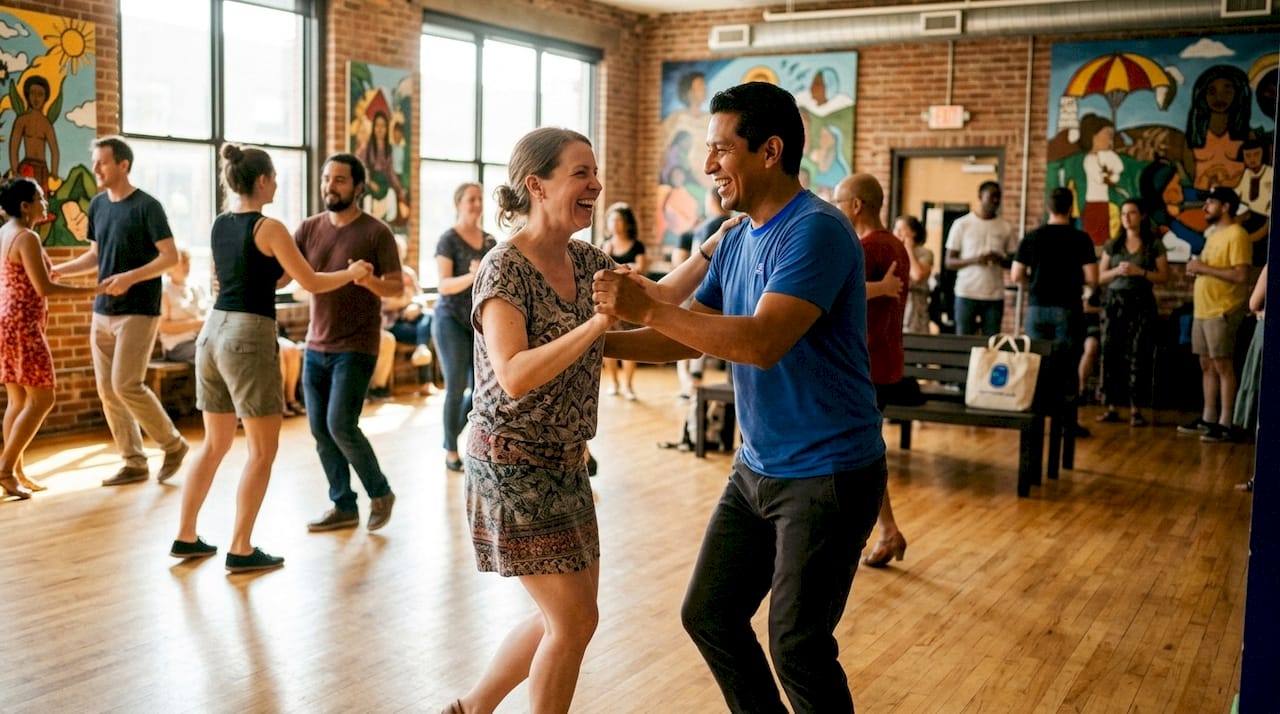
The standard industry term is "social dance," and it covers a wide spectrum of styles, settings, and cultures. You will find it at weddings, community centers, festivals, and neighborhood parties. The experience itself is the combination of music, movement, and human contact that makes social dance feel different from any other group activity.
Social dance also carries real cultural weight. Across history, group dances have marked celebrations, harvests, courtships, and community gatherings. That tradition is alive today in everything from Texas Two-Step nights to Salsa socials in urban dance studios.
What are the psychological and social benefits of participating in social dance?
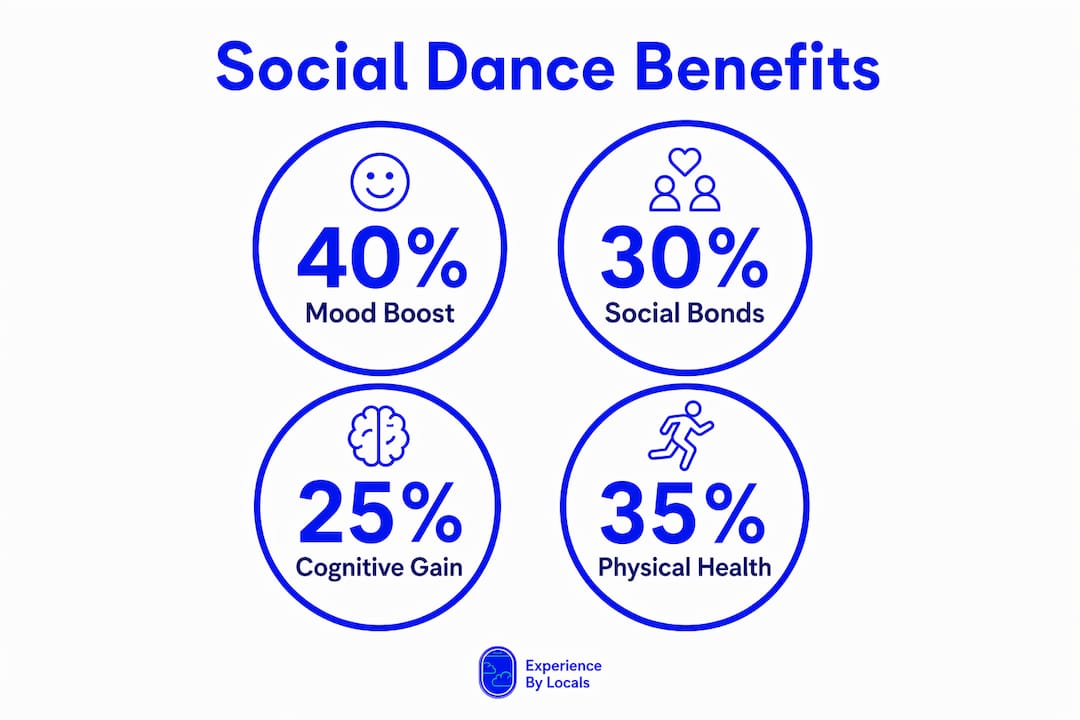
The mental health case for social dance is stronger than most people realize. A meta-analysis of 218 clinical trials involving more than 14,000 participants found that dance reduces symptoms of depression more effectively than walking, yoga, or antidepressants. That is not a minor finding. It means that showing up to a social dance night may do more for your mood than a prescription.
"Dance therapy programs that emphasize musicality and individual agency help restore control and self-expression for those with depression. Different dance styles and rhythms allow participants to find personally meaningful expression, increasing mental health adherence." — Frontiers in Psychology, 2025
The benefits extend well beyond mood. A 2026 randomized controlled trial on square dance groups found that older adult participants gained a +5.73 increase in well-being and a 3.85-point decrease in depressive symptoms, with results significant at p < 0.001. Those numbers reflect real, measurable change in people's daily lives.
For younger adults, the picture is equally compelling. A study on college students found that dance participation links to well-being at β=0.32, with social support explaining 38% of that association. Social dance does not just make you feel better. It builds the relationships that sustain that feeling over time.
The neurological explanation comes from neuroscientist Julia F. Christensen at the Max Planck Institute. She describes a process called co-representation in social dance, where your brain begins to overlap its perception of yourself with its perception of your partner. The result is a measurable boost in empathy and trust. You are not just moving together. Your brains are briefly synchronized.
What social dance styles exist and where do they happen?
Social dance styles span centuries and continents. Each one carries its own rhythm, cultural origin, and social context. The table below covers the most common styles you will encounter.
| Style | Origin | Rhythm | Common setting |
|---|---|---|---|
| Waltz | Austria/Germany | 3/4 time, flowing | Weddings, ballrooms |
| East Coast Swing | United States | 4/4 time, upbeat | Clubs, parties |
| Tango | Argentina | Syncopated, dramatic | Milongas, festivals |
| Rumba | Cuba | Slow-quick-quick | Ballrooms, socials |
| Foxtrot | United States | 4/4 time, smooth | Formal events |
| Cha Cha | Cuba | Syncopated, playful | Parties, studios |
| Square Dance | United States | Caller-directed | Community centers |
| Salsa | Caribbean/Latin America | 4/4 time, energetic | Clubs, outdoor events |
Social dance happens wherever people gather with music. The most common venues include:
- Weddings and receptions
- Community centers and recreation halls
- Dance studios hosting open social nights
- Outdoor festivals and cultural events
- Nightclubs with live bands or DJs
- Cultural celebrations and neighborhood parties
The key difference between social dance and competitive or exhibition dance is intent. Competitive dance is judged, rehearsed, and performed for an audience. Social dance is spontaneous, improvised, and performed for each other. That shift in purpose changes everything about how it feels to participate. You can read more about cultural expression through dance and how different styles carry community meaning across generations.
How does social dance create connection and community?
Social dance is a physical language. Every step, weight shift, and turn communicates something between partners without a single word spoken. The lead and follow roles in partner dancing create a non-verbal cooperative interaction where one person proposes movement and the other responds. That exchange, repeated across an entire song, builds a kind of trust that is hard to replicate in any other setting.
The community dimension of social dance goes beyond individual partnerships. Group dances like Square Dance and line dances require collective coordination, shared timing, and mutual awareness. Research on square dance as a cultural practice shows that participation in culturally embedded group dances generates trust, reciprocity, and collective identity. These are the building blocks of real community.
One skill that beginners rarely expect to need is floor craft. Floor craft is the ability to navigate shared dance space without colliding with other couples, which requires constant awareness of everyone around you, not just your own footwork. It is an advanced skill that develops naturally over time, and learning it makes you a more considerate and capable dancer.
Social dance events, from casual house parties to organized community dances, serve as recurring gathering points that sustain relationships over time. People return week after week not just for the dancing but for the familiar faces, the shared ritual, and the sense of belonging. Learning about community dance nights can help you understand what to expect before you walk through the door.
Pro Tip: If you feel nervous about your skill level, remember that social dancing is a conversation, not a performance. Beginners who focus on listening to their partner and the music connect far more genuinely than those who focus on executing perfect steps.
How can beginners participate safely and enjoyably in social dance?
Getting started in social dance is simpler than most beginners expect. The right approach removes friction and gets you on the floor faster.
- Choose a beginner-friendly style first. East Coast Swing, Foxtrot, and Salsa all have simple foundational patterns that you can learn in a single class. Tango and Viennese Waltz have steeper learning curves and are better saved for later.
- Find a local class or social. Community centers, recreation departments, and local dance studios regularly host beginner nights. Local dance workshops in 2026 are increasingly accessible and often free or low-cost.
- Dress for comfort and movement. Wear smooth-soled shoes that allow you to pivot without gripping the floor. Avoid sneakers with thick rubber soles. Clothing should let you move freely without restriction.
- Learn basic etiquette. Ask partners politely, accept "no" graciously, and thank your partner after each dance. Leads should keep movements clear and gentle. Follows should stay responsive without anticipating.
- Practice floor craft from day one. Stay aware of the couples around you. Move with the line of dance in ballroom styles, which means counterclockwise around the floor.
- Listen to your body. Social dancing is physical activity. Rest when you need to, stay hydrated, and do not push through pain.
Pro Tip: Attend a social dance event as an observer before you dance. Watch how experienced dancers navigate the floor, invite partners, and recover from mistakes. You will learn more in one hour of watching than in several hours of reading.
The benefits of group dance settings go beyond skill-building. Group classes create instant social networks of people at the same stage of learning, which makes the experience far less intimidating and far more fun.
Key Takeaways
Social dance experience is the most accessible form of community-building through movement, with proven mental health benefits and no competitive pressure required.
| Point | Details |
|---|---|
| Core definition | Social dance is non-competitive partner or group dancing focused on connection, not performance. |
| Mental health impact | A meta-analysis of 218 trials found dance reduces depression more effectively than antidepressants. |
| Neurological connection | Co-representation in social dance synchronizes brain activity between partners, building empathy and trust. |
| Style variety | Styles like Waltz, Salsa, Swing, and Square Dance each carry distinct cultural roots and social settings. |
| Beginner entry point | Start with East Coast Swing or Foxtrot, focus on connection over technique, and prioritize floor craft early. |
Why social dance changed how I think about community
I have watched a lot of people walk into their first social dance event with their arms crossed and their eyes scanning for the exit. Within twenty minutes, most of them are smiling. That shift is not magic. It is the result of what social dance is designed to do: put two people in a shared physical conversation where judgment takes a back seat to presence.
What surprised me most, after years of attending and observing social dance events, is how quickly technique becomes secondary. The dancers people most want to dance with are not always the most technically skilled. They are the ones who make their partners feel safe, heard, and genuinely engaged. That is a social skill, not a dance skill.
The balance between technique and improvisation is where social dance gets interesting. Too much focus on steps and you stop listening. Too little structure and the conversation collapses. The best social dancers hold both at once. They know enough to lead or follow clearly, and they are free enough to respond to what the music and their partner actually offer in the moment.
For beginners, my honest advice is this: stop waiting until you are "good enough" to go. You will never feel ready. The floor is the only classroom that matters, and every experienced dancer in the room was once exactly where you are now.
— DJ
Find your next social dance experience with Experiencebylocals
Ready to move from reading about social dance to actually doing it? Experiencebylocals connects you with authentic, community-rooted dance events, live music nights, and cultural performances hosted by local artists across Colorado.
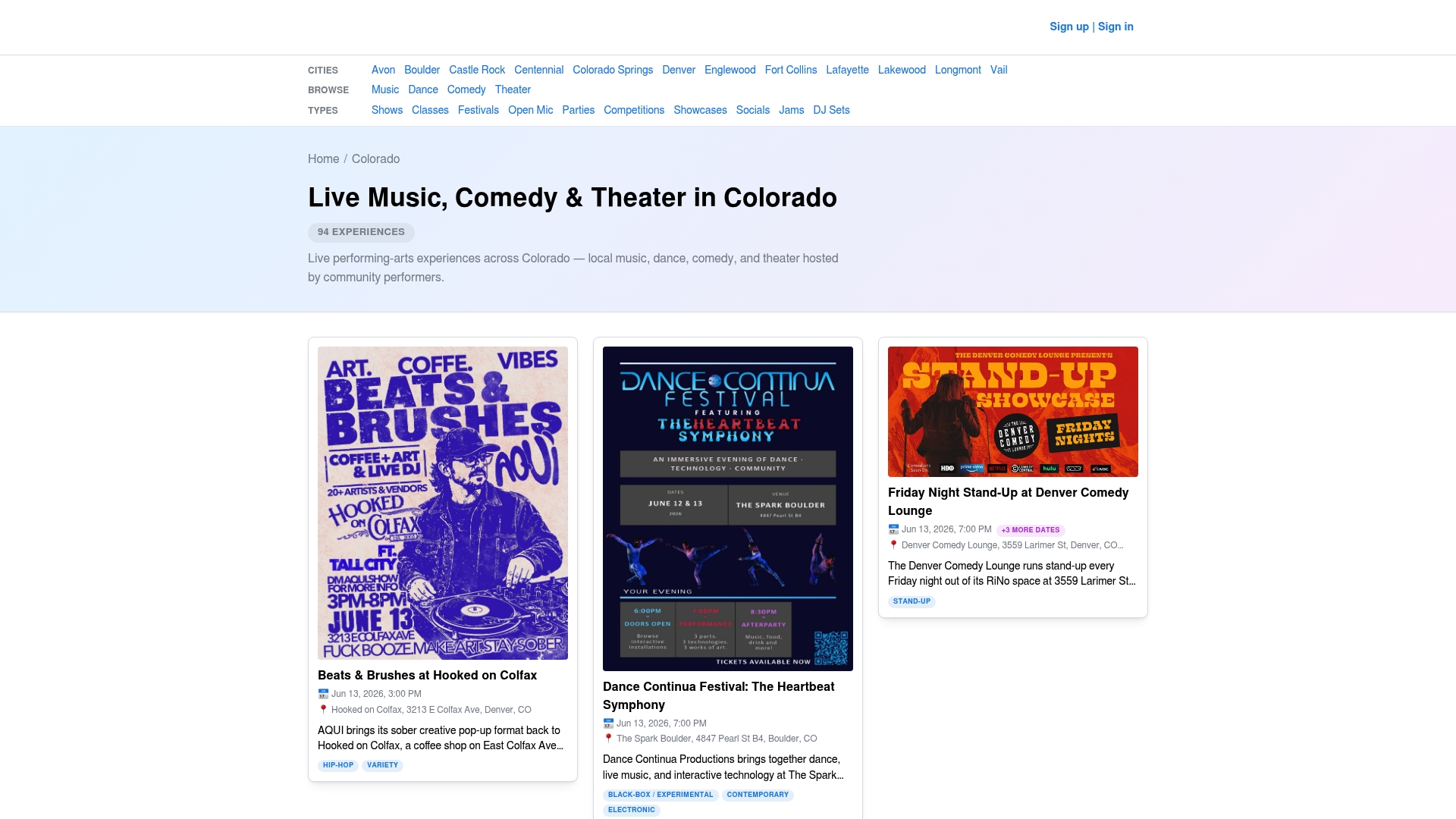
Whether you are looking for your first beginner-friendly dance night or a vibrant community event to attend with friends, Experiencebylocals makes it easy to find something real. Browse dance performances in Colorado to see what is happening near you, or explore the full calendar of live music and events across the state. These are not tourist traps. They are the genuine cultural gatherings that locals actually attend, built by artists who care about their communities.
FAQ
What is the definition of social dance?
Social dance is defined as non-competitive partner or group dancing in informal settings, focused on connection and enjoyment rather than performance or scoring.
What are the main social dance benefits?
Social dance reduces depression, builds social bonds, and improves well-being. A meta-analysis of 218 clinical trials found it outperforms walking, yoga, and antidepressants for reducing depressive symptoms.
What should beginners expect at a social dance event?
Beginners can expect a welcoming atmosphere, a mix of skill levels on the floor, and short dances with multiple partners. Most events welcome newcomers and do not require prior experience.
What are the most popular social dance styles for beginners?
East Coast Swing, Foxtrot, and Salsa are the most beginner-friendly styles. Each has simple foundational patterns that can be learned in one or two classes.
How does social dancing differ from competitive dance?
Social dancing is improvised, informal, and focused on the experience between partners. Competitive dance is rehearsed, judged, and performed for an audience, which creates an entirely different dynamic and purpose.