
K-pop Choreography Explained: A Colorado Event Guide
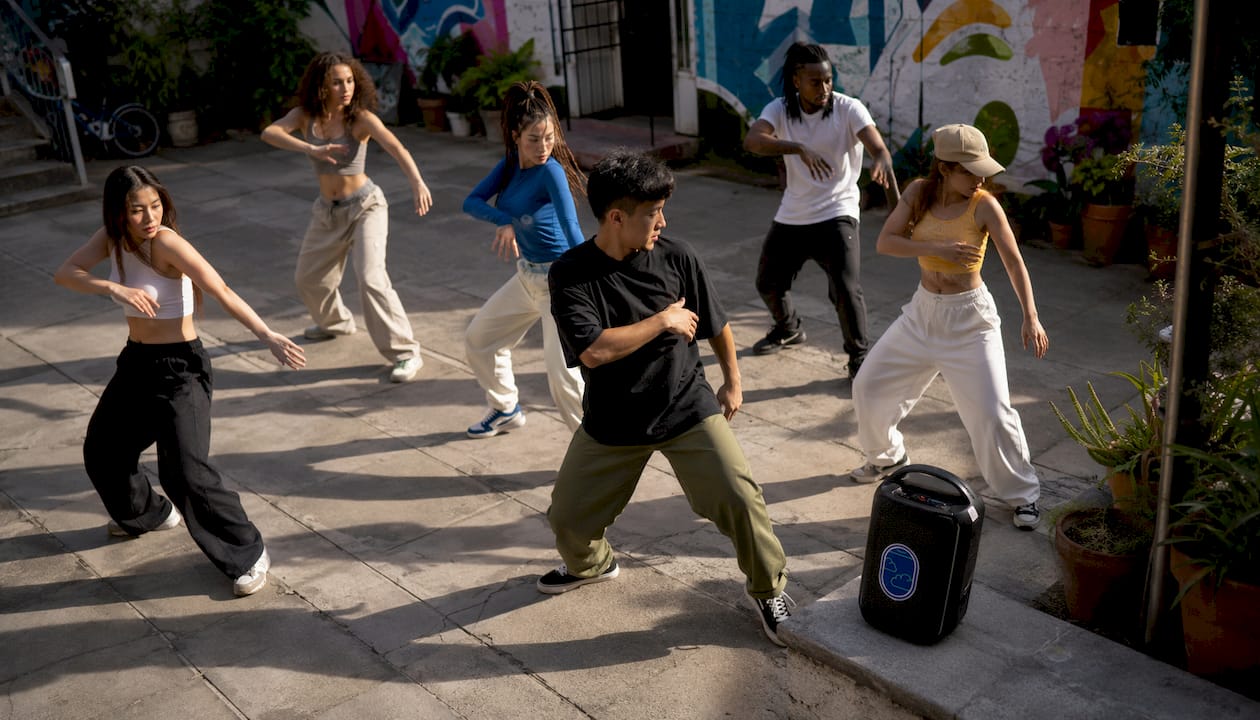
K-pop choreography is a performance-driven, hybrid dance form built around synchronized group movement, dynamic formations, and fan-friendly signature moves. Choreographer Supple Nam describes the style as shorthand for precision, synchronicity, formations, and a certain performance "zing" — a phrase that captures exactly what you see when a group hits every count together. Stanford researchers add another layer, describing K-pop choreography as a "typography of poses" — a visual grammar where tightness and alignment can be read and evaluated even without knowing the music.
Three features make it instantly recognizable:
- Kalgunmu — knife-sharp group synchronization where every angle and height matches
- Point choreography — a signature chorus move designed for fans to learn and mirror
- Dynamic formations — planned spatial patterns that shift throughout a performance
Table of Contents
- What is K-pop choreography, and what makes it unique?
- How does K-pop choreography show up at Colorado community venues?
- What does a typical K-pop choreography workshop look like?
- Practical tips for getting the most from a class or show
- How do you find authentic K-pop classes and performances in Colorado?
- Key Takeaways
- Why live K-pop workshops matter more than you might think
- Useful sources
What is K-pop choreography, and what makes it unique?
K-pop dance blends hip-hop, jazz-funk, contemporary, and popping into a repeatable, camera-ready format. That hybrid origin is why a single routine can shift from fluid body rolls to sharp, stop-motion arm locks within eight counts. The style was designed for both stage and screen, so every angle, height, and transition is crafted to read clearly on camera.
The term kalgunmu (칼군무) comes from the Korean word for "knife" and describes the sharp, unified group movement that creates a single, cohesive visual shape rather than a collection of individuals. Achieving it requires matching angles precisely — arms at the same degree, heads at the same height, transitions landing on the same count.
Point choreography is the signature move tied to a song's hook or chorus. Choreography is often created alongside the song to highlight those musical peaks, which is why the point move lands exactly when the beat drops. It is intentionally simple enough for fans to replicate — that accessibility is a design choice, not a shortcut.
Sharpness comes from active muscle engagement, not just limb placement. The "stop-motion" effect audiences notice is produced by tensing core and limb muscles to place a move and halt it instantly, with no wobble or drift.
Pro Tip: Practice your hits by engaging your core first. A strong center is what stops a move cleanly — without it, arms and legs tend to drift past the intended position.
How does K-pop choreography show up at Colorado community venues?
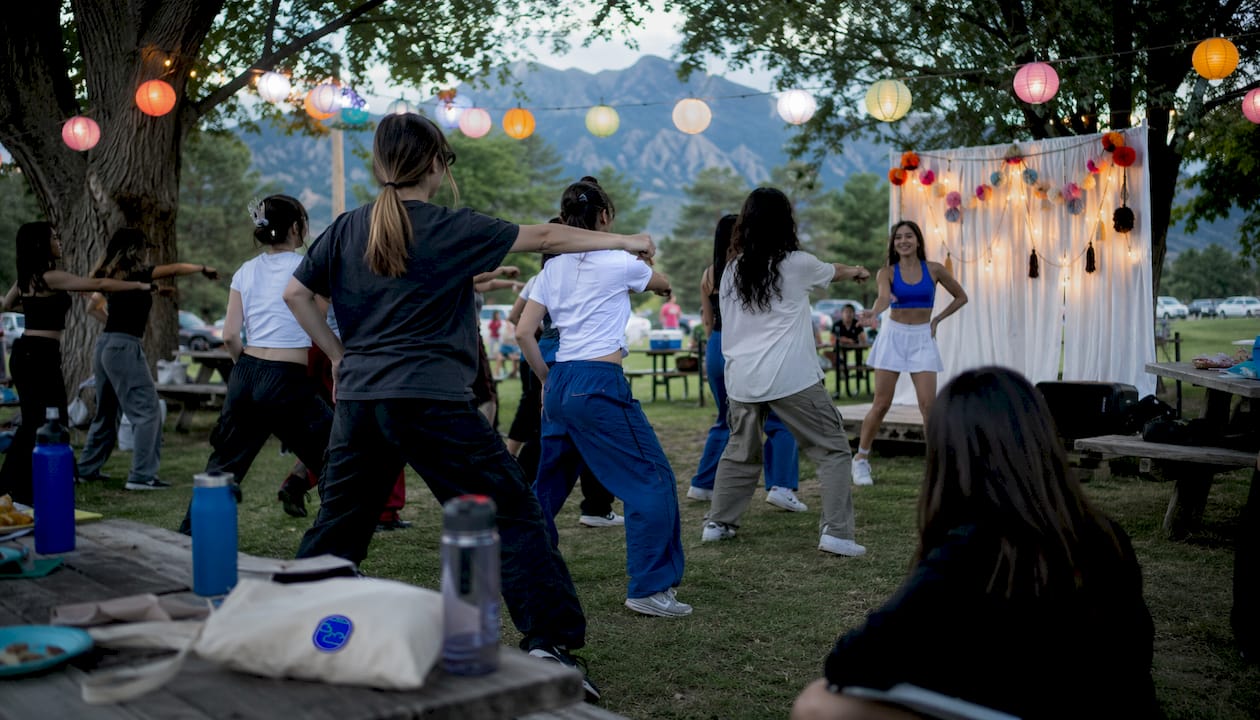
Live K-pop performance in Colorado tends to happen in smaller, community-rooted settings rather than arena stages. That intimacy actually makes the experience richer for first-time guests.
Here is what you will typically find:
- Small theater or studio showcases — groups perform full routines on a proper stage with lighting; formations are visible and the audience is close enough to see facial cues
- Pop-up community stages and festival slots — choreography is often condensed for tighter spaces, with formations simplified and transitions adjusted for smaller footprints
- Cover-dance nights — fan groups perform official choreography from their favorite artists; these events tend to be welcoming and celebratory rather than competitive
- Fan-participation segments — many hosts teach a simple point move to the audience before or during the show, collapsing the line between performer and guest
Community dance nights like these are where K-pop's social function becomes obvious. Simple, repeatable point moves are intentionally designed to invite fan participation, turning a performance into a shared moment rather than a one-way show.
To spot a beginner-friendly event, look for advertised skill levels, host bios that mention choreography or cover-dance experience, and event descriptions that reference step-breakdowns or repetition structure.
What does a typical K-pop choreography workshop look like?
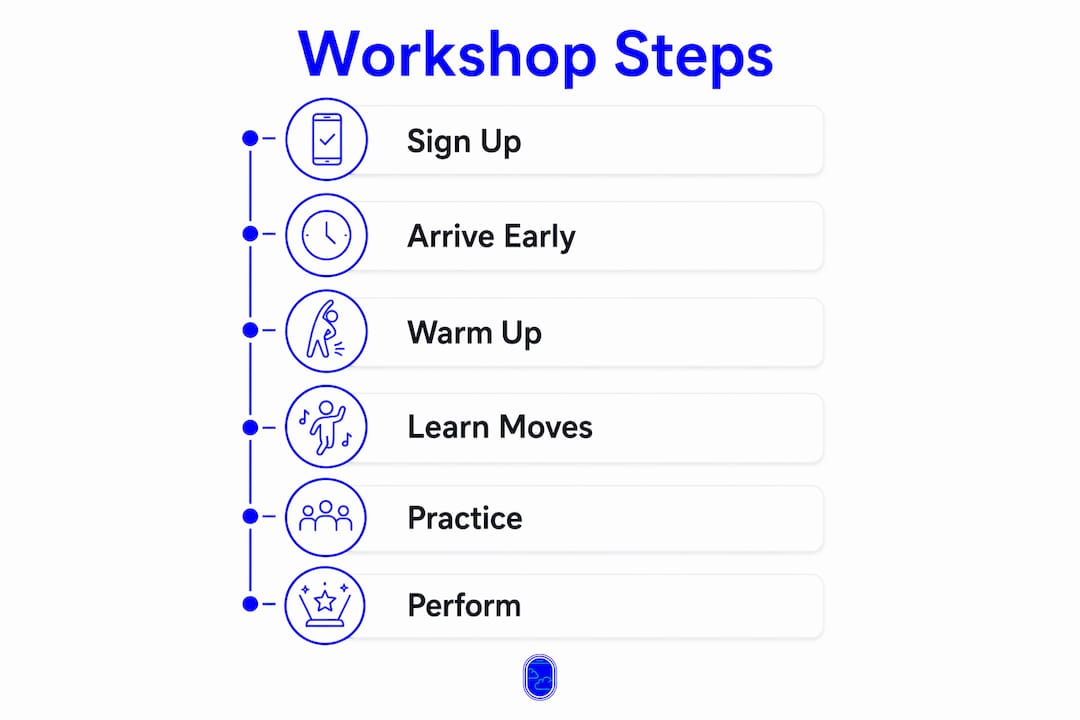
Most beginner workshops follow a clear arc that keeps the experience manageable and fun, even if you have never danced before.
- Warm-up — light cardio, joint mobility, and basic groove to get your body ready and your timing calibrated
- Technique breakdown — the instructor isolates key moves (chest pops, arm placements, footwork) and counts them in eights before adding music
- Point-move focus — the chorus signature move gets the most repetition; instructors teach it slowly, then progressively increase speed
- Formation and transition practice — participants learn spatial positions and how to move between them cleanly
- Full run-throughs — the routine is performed at full speed, usually two to three times
- Cool-down and Q&A — stretching, feedback, and open questions
| Format | Duration | Cost model | Best fit |
|---|---|---|---|
| Drop-in class | — | Pay per class | First-timers and casual participants |
| Multi-week course | — | Course fee upfront | Participants building a full routine |
| Open practice session | — | Free or low drop-in | Those who have taken a class and want reps |
Instructors typically signal modifications verbally or by demonstrating a lower-intensity version of each move. If a routine involves partnering, contact is always optional — most K-pop choreography is contact-free by design.
Practical tips for getting the most from a class or show
What to bring:
- Supportive sneakers with grip (no bare feet or socks on studio floors)
- A water bottle and a small towel
- Layered, comfortable clothing you can move freely in
Studio and event etiquette:
- Arrive 10 minutes early so you catch the full warm-up
- Follow the instructor's warm-up even if it feels basic — skipping it is how strains happen
- Ask before stepping into a formation during open practice
- Check the event's filming policy before recording; many hosts ask guests to keep phones down during performances
Practice shortcuts that actually work:
- Learn the point move first, before tackling the full routine
- Count music in eights and mark each section before adding full energy
- Use mirror practice or screen-reverse your tutorial video to correct left-right confusion
- Focus on transitions — the stop-motion clarity audiences notice comes from clean connections between moves, not just the poses themselves
Pro Tip: For fast, high-energy routines, pace yourself during the first run-through. Muscle fatigue in the shoulders and calves is common in K-pop choreography — build up speed gradually to avoid overuse strain.
How do you find authentic K-pop classes and performances in Colorado?
Start with specific search terms: "K-pop dance class Colorado," "cover dance night Denver," or "K-pop workshop [your city]." Then evaluate what you find using these criteria:
- Instructor credentials — look for bios that mention choreography training, cover-dance competition experience, or idol-style technique
- Class descriptions — quality listings mention point choreography, formations, and skill level; vague descriptions are a yellow flag
- Rehearsal clips or practice tracks — hosts who share short preview videos are showing you exactly what you are signing up for
- Clear level tags — beginner, intermediate, and open-level labels tell you whether the pace will work for you
- Refund or attendance policy — a clear policy signals a professionally run event
Experiencebylocals lists community-hosted K-pop dance events and workshops across Colorado, with filters for location, event type, and skill level. You can browse, read host bios, and book directly — all in one place. Events like K-pop Choreography with Iya at Mi Chantli are exactly the kind of grassroots, artist-run experience the platform was built to surface.
Key Takeaways
K-pop choreography is a precision-driven, hybrid dance form built around kalgunmu synchronization, point moves, and dynamic formations — and Colorado's community venues are a genuinely great place to experience it live.
| Point | Details |
|---|---|
| Core definition | K-pop choreography blends hip-hop, jazz-funk, and contemporary into synchronized group performance. |
| Kalgunmu is the standard | Sharp, unified group movement requires matching angles, heights, and timing across every member. |
| Point moves invite everyone | Signature chorus moves are designed to be simple enough for fans to learn and join in. |
| Workshops follow a clear arc | Expect warm-up, technique breakdown, point-move focus, run-throughs, and cool-down. |
| Find events on Experiencebylocals | Browse and book local K-pop classes and performances filtered by Colorado location and dance category. |
Why live K-pop workshops matter more than you might think
There is something that happens in a live K-pop workshop that no tutorial video can replicate. When you are in a room with other people all trying to land the same hit on the same count, the energy shifts. You stop watching and start feeling the choreography. That shared effort is not a side effect of the class — it is the whole point.
K-pop choreography has always been a community-building tool. The point move exists so fans can participate. The formations exist so a group feels like one body. When you attend a local workshop or showcase, you are stepping into that tradition at the community level — no idol training required.
What I find most underrated about these events is the skill transfer. Attending live dance performances and taking part in workshops builds stagecraft, timing, and spatial awareness that carries into every other dance style you try. K-pop is a training ground for versatility, and Colorado's local creators are making that accessible right now.
Useful sources
- Stanford / Digital Humanities Quarterly — "Typography of Poses" — academic framework for analyzing K-pop choreography as visual grammar
- SFCOfDance — What Is K-Pop Dance? — style overview, hybrid genre breakdown, and point choreography explanation
- SFCOfDance — How to Learn K-Pop Dance — practical beginner practice structure including counting, chunking, and speed progression
- Dance Magazine — Precision, Power, Performance — industry perspective including Supple Nam's choreographer insight
- The Korea Herald — Kalgunmu — definition and rehearsal techniques for knife-sharp group synchronization
- ANU School of Culture, History & Language — K-pop Dance: From Seoul to the World — cultural and historical context for K-pop dance as a global phenomenon