
How Dance Styles Vary by Culture Around the World
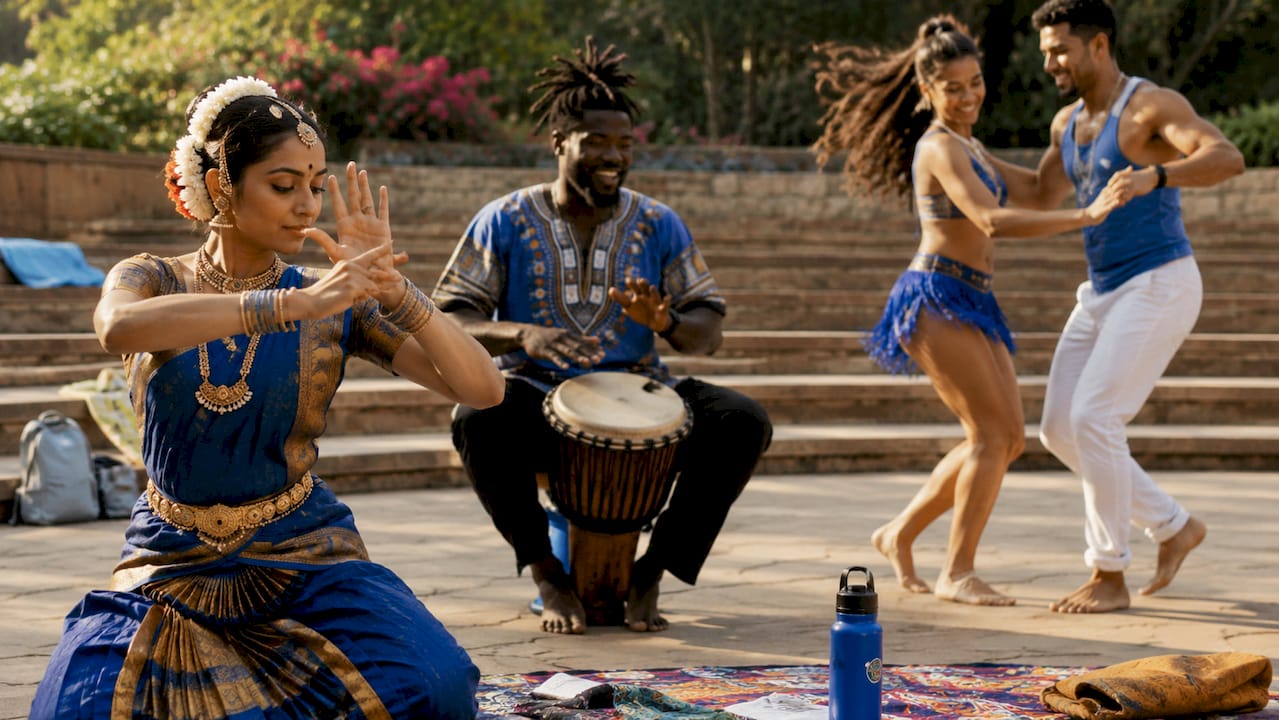
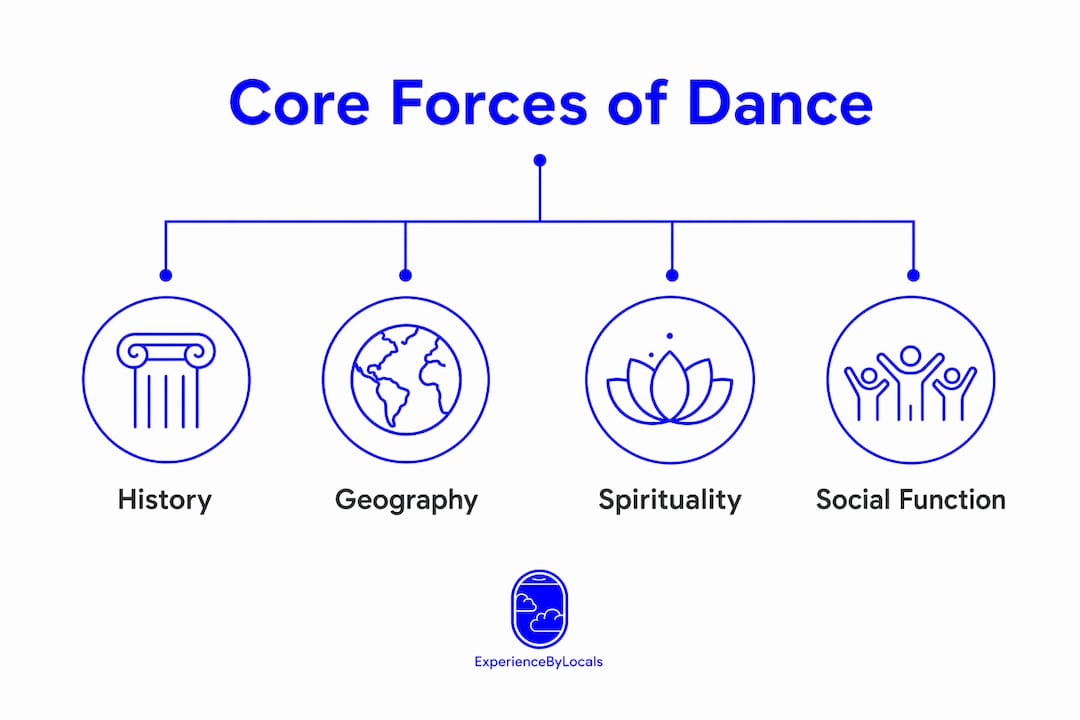
Dance is defined as a culturally embedded practice that encodes history, spirituality, and social identity through movement. More than 70% of adults globally participate in some form of dance. That number tells you something important: dance is not entertainment added on top of culture. It is culture, expressed through the body. How dance styles vary by culture comes down to four core forces: history, geography, spiritual tradition, and social function. Understanding those forces changes how you watch, learn, and appreciate any dance form you encounter.
How dance styles vary by culture: the four core forces
Dance acts as a social text, complex and evolving, linked to identity and meaning. It is not a passive mirror of history. Every time a community dances, it actively shapes what that culture becomes. Four forces drive how regional dance style differences emerge and persist.
History and migration
Dance evolves along the same routes that people travel. Enslaved West Africans carried polyrhythmic movement traditions to the Americas. Irish immigrants brought jig footwork to the same shores. Latin communities layered their own rhythms on top. American dance is a continuous innovation built from West African, Irish, and Latin cultural streams. That is not a blending accident. It is the direct result of forced and voluntary migration over centuries.
Geography and available sound
The instruments a region can build shape the music it makes, and the music shapes the dance. West African drumming traditions produced dances built on complex polyrhythm and grounded, low-center movement. Andean communities, working with wind instruments at high altitude, developed dances with slower, more sustained footwork. Geography is not just scenery. It is a constraint that generates creativity.
Spiritual and ritual tradition
Many of the world's most technically demanding dance forms exist primarily as devotional practice. Bharatanatyam, one of India's oldest classical forms, uses a codified vocabulary of hand gestures called mudras and precise facial expressions to narrate stories from Hindu scripture. Indian dance forms use mudras and facial expressions as a full storytelling language, not decoration. The spiritual function gives every gesture a specific meaning, which is why learning Bharatanatyam takes years of dedicated study.
Social function and community cohesion
Dance transmits moral values, marks life transitions, and reinforces group identity. West African griot traditions use dance alongside oral history to pass knowledge between generations. Many Indigenous communities in the Americas use ceremonial dance to mark seasonal cycles and community agreements. When a dance form serves a social function, its structure becomes conservative by design. Changes happen slowly because the form carries responsibility.
Pro Tip: When you watch an unfamiliar dance tradition, ask what social occasion it was originally created for. That single question unlocks more understanding than any technical analysis.
What are the best examples of cultural dance variation?
The clearest way to understand how culture shapes dance is to look at specific forms side by side. The table below compares four traditions across origin, core technique, and primary cultural function.
| Dance form | Origin | Core technique | Primary cultural function |
|---|---|---|---|
| Bharatanatyam | South India | Mudras, footwork, facial expression | Devotional storytelling |
| Samba | Brazil (African roots) | Syncopated footwork, hip movement | Community celebration, national identity |
| Zapin | Malay Archipelago | Footwork patterns, upper body restraint | Cultural synthesis, ceremonial gathering |
| Kathak | North India | Spinning, rhythmic footwork, narrative gesture | Court entertainment, spiritual narrative |
Bharatanatyam and Kathak both come from India but reflect entirely different cultural contexts. Bharatanatyam developed in South Indian Hindu temples as a form of worship. Kathak developed in North Indian royal courts, absorbing Persian and Mughal influences over centuries. Same country, radically different cultural forces, two distinct movement vocabularies.
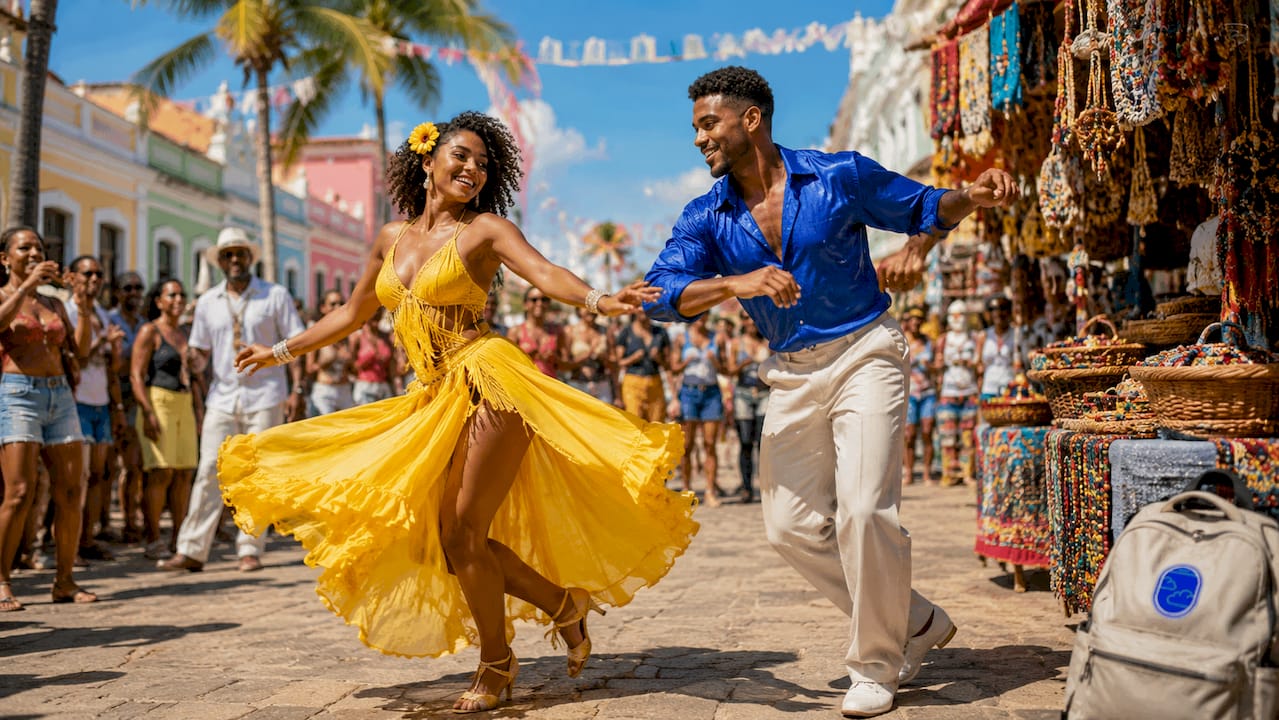
Brazilian Samba carries its African rhythmic roots visibly. The syncopated footwork and hip-driven movement come directly from West African dance traditions brought to Brazil through the slave trade. Samba became a symbol of Brazilian national identity in the 20th century, which is a remarkable transformation from a marginalized community practice to a state-celebrated art form.
Zapin dance reflects a synthesis of Arab rhythmic patterns, Malay aesthetics, and Javanese movement traditions, shaped by maritime trade routes across the Malay Archipelago. That synthesis happened over generations of contact, not in a single moment. Zapin is a living record of how trade routes function as cultural exchange corridors.
Pro Tip: If you want to understand a dance form quickly, study its footwork first. Footwork patterns carry the rhythmic DNA of the culture that created the music the dance was built on.
How does cultural background shape the way we perceive dance?
Cultural perception of dance is not neutral. Your background determines what you read as beautiful, expressive, or technically impressive. A study of 120 participants from Iranian, English, and Southeast Asian backgrounds found that continuous enculturation predicts aesthetic judgment of dance better than broad cultural categories. That finding matters enormously for anyone who teaches, performs, or studies dance across cultural lines.
What "continuous enculturation" means in practice is this: the longer and more deeply you are immersed in a cultural context, the more precisely you can read its dance. A person raised in a Bharatanatyam-rich environment will notice micro-variations in mudra execution that a casual Western observer will miss entirely. The same applies in reverse.
- Emotional expressive sensitivity varies by cultural group. Researchers found measurable differences in how participants from different backgrounds read emotional content in movement. What reads as grief in one tradition may read as reverence in another.
- Broad cultural labels are poor predictors. Grouping people as "Asian" or "Western" tells you less about their dance perception than understanding their specific, ongoing cultural engagement.
- Aesthetic appreciation is learned, not innate. This means anyone can develop deeper perception of an unfamiliar dance tradition through sustained, respectful engagement.
Recognizing dance as cultural heritage rather than entertainment reframes how you approach it. You stop asking "Is this good?" and start asking "What is this doing, and for whom?"
How does dance preserve culture and drive innovation?
Dance is one of the most effective tools a community has for resisting cultural erasure. Vernacular choreography acts as a modern shield for cultural preservation by integrating traditional movements into contemporary social spaces. This is not nostalgia. It is active resistance to homogenization.
The mechanism works in four stages:
- Ancestral knowledge gets encoded in movement. A community embeds its values, history, and spiritual beliefs into specific gestures, rhythms, and formations.
- Younger generations learn through participation. Unlike written texts, dance knowledge transfers through the body, which makes it harder to suppress or erase.
- Contemporary contexts carry traditional forms forward. Vernacular choreography on platforms like YouTube and in community dance nights keeps traditional movement alive in spaces younger people already inhabit.
- Hybrid forms emerge without erasing origins. When a dancer trained in West African tradition incorporates hip-hop vocabulary, both traditions remain legible in the result.
"Dance is not merely performance but a producer of meaning, shaping culture each time it is enacted within a social and historical context. Every performance is an act of cultural authorship."
Community-based dance events play a specific role in this process. They create the social occasions where vernacular choreography can happen organically. A community dance night is not just fun. It is a transmission event, whether the participants know it or not.
Key Takeaways
Dance styles reflect the specific cultural forces that created them, making every tradition a living record of history, geography, spirituality, and social identity.
| Point | Details |
|---|---|
| Four forces drive variation | History, geography, spiritual tradition, and social function shape every dance style worldwide. |
| Enculturation beats broad labels | Continuous cultural immersion predicts dance perception better than nationality or ethnic category. |
| Zapin shows trade route synthesis | Zapin dance blends Arab, Malay, and Javanese elements, proving dance evolves through cultural contact. |
| Vernacular choreography preserves culture | Contemporary social dance settings transmit ancestral knowledge and counter cultural homogenization. |
| Western categories can mislead | Art vs. non-art and religious vs. secular distinctions often fail to capture how non-Western dance functions. |
Why I think we misread global dance more than we realize
The field of ethnochoreology, which is the academic study of dance across cultures, has documented something that most casual dance enthusiasts never confront: Western categories like "art" vs. "non-art" often fail to capture the integrated role of dance in non-Western communities. I find this to be one of the most practically useful insights for anyone who loves dance seriously.
When I watch Bharatanatyam through a Western concert-dance lens, I am looking for virtuosity and aesthetic pleasure. When I watch it through its own cultural lens, I am witnessing a devotional act, a form of prayer, and a preservation of scripture. Those are not the same experience. The first reading is impoverished, even when it is appreciative.
The same problem shows up with Samba. Western audiences often read it as celebratory and sensual. That reading is not wrong, but it is incomplete. Samba carries the memory of African displacement and the assertion of community identity under conditions of oppression. Missing that layer means missing most of what the dance is actually doing.
My practical advice: before you learn a new dance style, spend time learning its social and spiritual context. Read about it. Talk to practitioners from that community. Connect with local dance communities that practice it authentically. You will move better and understand more. The body learns faster when the mind has context.
— DJ
See diverse dance styles live in Colorado
Colorado's local arts scene carries more cultural depth than most people expect.

Experiencebylocals curates live dance performances in Colorado that go well beyond standard stage shows. You can find hip-hop classes rooted in West African movement traditions, contemporary narrative work from Latin American choreographers, and community sessions where the cultural context is part of the experience. Events like Hip Hop Groove with Rico Changeux at Streetside Dance and Open Level Hip Hop with Sara Swain at Mi Chantli bring exactly the kind of culturally grounded movement this article describes into accessible, welcoming spaces. If you want to move from reading about cultural dance variation to actually feeling it, this is where to start.
FAQ
How do dance styles vary by culture?
Dance styles vary by culture because they are shaped by local history, geography, spiritual traditions, and social functions. Each of these forces produces distinct movement vocabularies, rhythms, and storytelling methods.
What is enculturation and why does it matter for dance?
Enculturation is the ongoing process of absorbing a culture's values and practices through lived experience. Research shows it predicts how accurately a person can read and appreciate a dance tradition better than broad cultural categories like nationality.
Why is Samba considered culturally significant?
Samba reflects African rhythmic traditions brought to Brazil through the slave trade and later became a symbol of Brazilian national identity. Its cultural significance lies in both its origins as a community practice and its transformation into a national art form.
What is vernacular choreography?
Vernacular choreography refers to informal, community-based dance that integrates traditional movements into everyday social spaces. It functions as a living tool for cultural preservation, transmitting ancestral knowledge to younger generations outside formal institutions.
Why do Western dance categories sometimes fail with non-Western traditions?
Western frameworks like "art vs. non-art" or "religious vs. secular" impose distinctions that many non-Western dance traditions do not recognize. In those traditions, spiritual, social, and aesthetic functions are integrated rather than separated.