
What Is a Collaborative Performance Space?
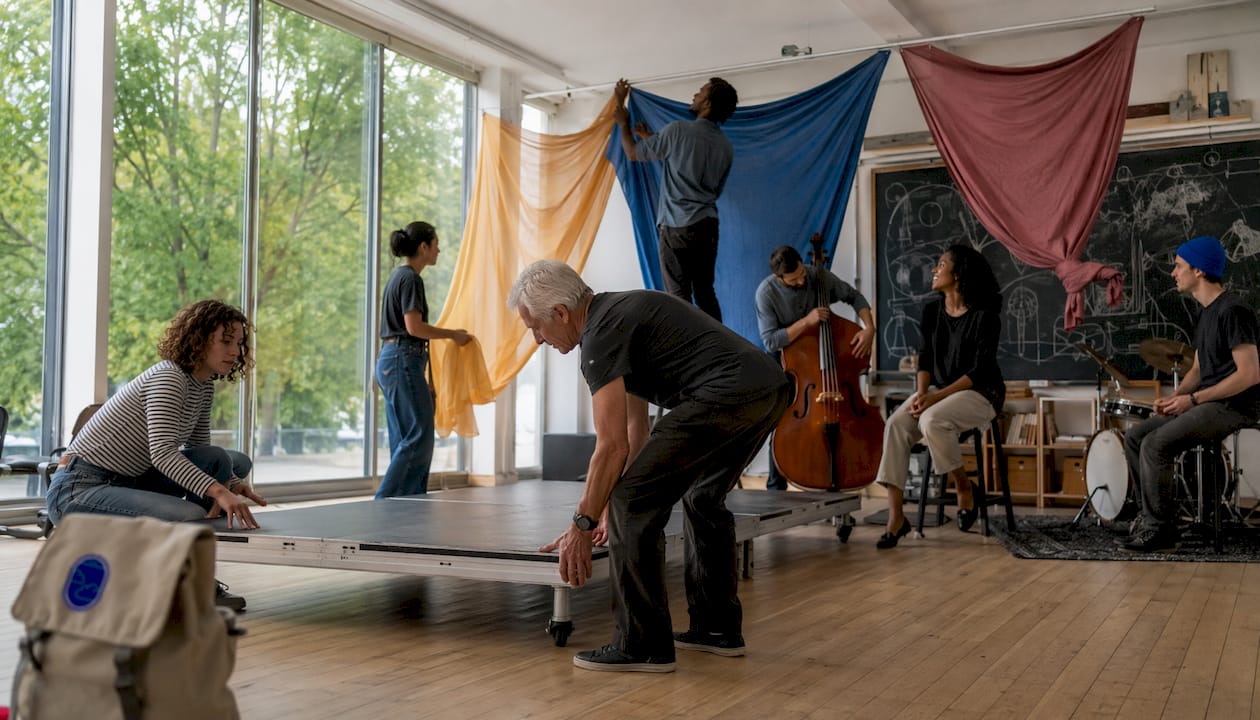
A collaborative performance space is a flexible venue where artists and audiences co-create live music, dance, theater, or comedy together, treating the room itself as an active part of the work. If you want to find and book these community-hosted shows right now, Experiencebylocals lists authentic local events across Colorado so you can browse, vet, and reserve in minutes.
Here is what makes these spaces different from a standard night out:
- The layout shifts to serve the work, not the other way around
- Performers and guests share the same creative energy, sometimes the same floor
- The event is shaped by who shows up, not just who is on the bill
- Architectural researcher Orhan Hacihasanoglu describes these venues as "third places" that blend living, working, and social leisure to free artistic expression from traditional proscenium constraints
Table of Contents
- What is a collaborative performance space, really?
- How does a collaborative space differ from a traditional theater?
- What should you expect as an audience member?
- How do you find and book collaborative performances near you?
- Why do collaborative performance spaces matter for artists and communities?
- What design and tech trends are shaping these spaces?
- Key Takeaways
- Why community-hosted performances deserve more of your attention
- Authentic local shows are one search away on Experiencebylocals
- Useful sources and further reading
What is a collaborative performance space, really?
A collaborative performance space is an environment optimized for live arts where the physical layout is intentionally flexible to facilitate high levels of interaction between performers and audience. The space is treated as a dynamic element of the work rather than a static stage. These venues prioritize experiential quality and often use modular components to support storytelling and communal engagement.
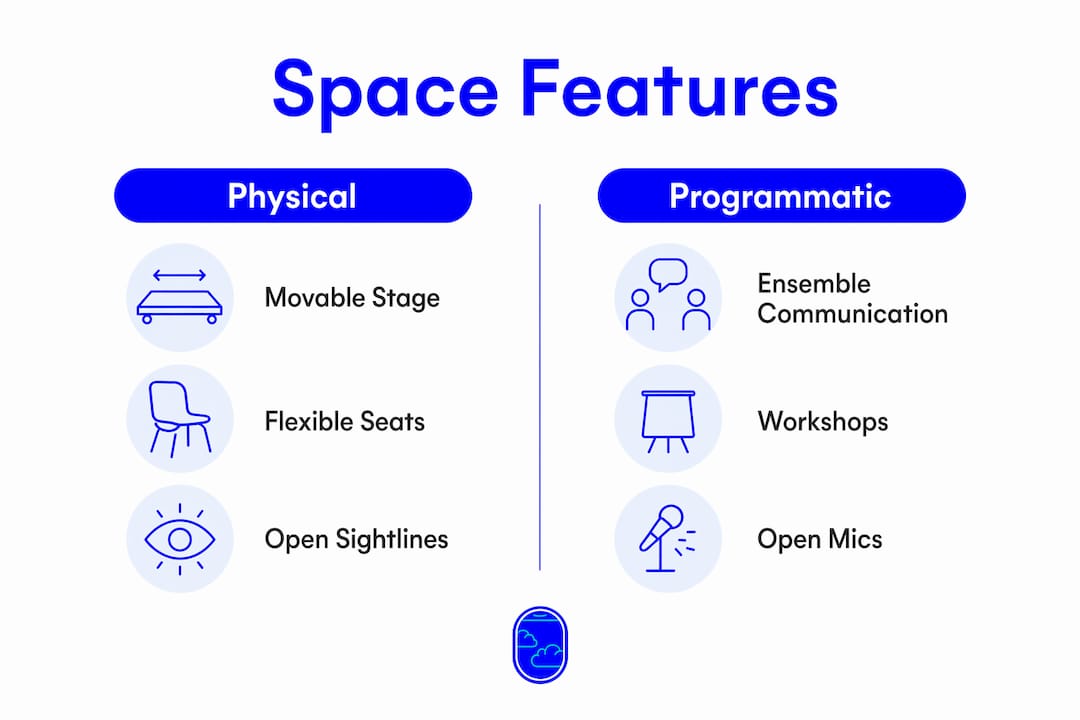
Three layers define every genuine collaborative space:
| Layer | What it looks like | Why it matters to you |
|---|---|---|
| Physical | Movable staging, reconfigurable seating, no fixed front row | You can be close to the action, or part of it |
| Programmatic | Workshops, ensemble-led shows, participatory formats | The event changes based on who attends |
| Social | Co-creation emphasis, artist–audience dialogue, open accessibility | You leave having contributed, not just watched |
Physical features include movable platforms, flexible sightlines, and permeable boundaries between the performance area and the audience. Think of a black-box theater where chairs circle the performers, or a community studio where a K-pop choreography class becomes a live showcase.
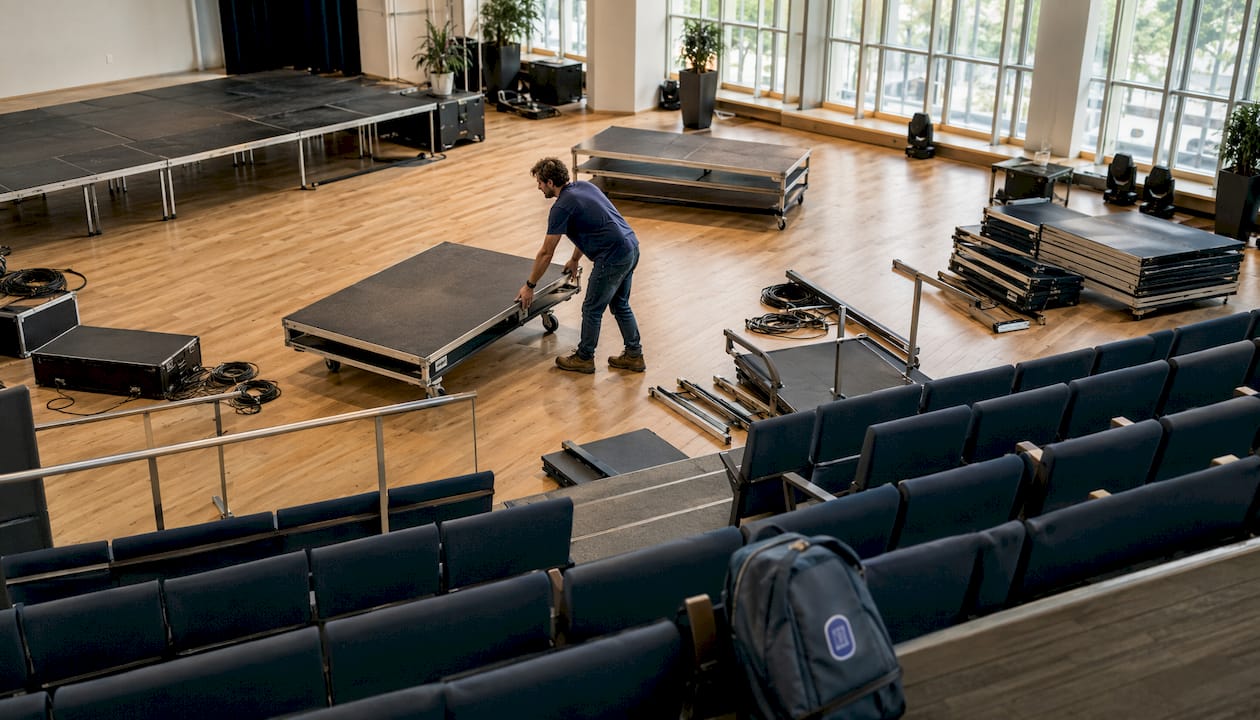
Programmatic features lean on ensemble communication, sight-reading, and diverse repertoire mastery. Workshops, open mics, and hybrid hosting formats all qualify.
Social features draw on what researchers call horizontal interactions — peer-level exchange, knowledge sharing, and the serendipitous encounters that spark creativity. An artist-run studio where the host takes questions mid-show is a textbook example.
How does a collaborative space differ from a traditional theater?
Traditional proscenium venues place a hard line between stage and seats. The hierarchy is clear: performers deliver, audiences receive. Collaborative performance areas dissolve that line on purpose.
- Hierarchy vs. permeability: A proscenium stage keeps the audience at a distance; a collaborative space invites them into the creative field.
- Fixed program vs. rehearsal-as-laboratory: Standard venues run polished, repeatable shows. Collaborative spaces treat each performance as an evolving experiment.
- Aggregate vs. integrated process: Theatre scholar Jimmy Bickerstaff draws a sharp distinction between aggregate performance (artists working side-by-side) and integrated collaborative performance, where the creative process and the resulting work are a single, synergistic entity.
For you as an audience member, this means unpredictability is a feature. The show you see on a Tuesday may feel genuinely different from the one on Saturday, because the room and the people in it are part of the composition.
What should you expect as an audience member?
Participation levels vary widely, and knowing the range helps you pick the right event.
- Passive observation: You watch, listen, and absorb. A seated jazz showcase or community theater production usually fits here.
- Light interaction: You respond to prompts, vote on story directions, or move between stations. Comedy nights and immersive theater often land here.
- Active co-creation: You contribute movement, sound, or ideas in real time. Dance workshops and open-mic formats go this far.
Etiquette and safety matter more in participatory settings than in traditional venues. Good hosts state consent norms at the top of the show and give guests a clear, low-pressure way to opt out of any activity. Look for that signal before you book.
Ticketing and cost shapes vary: donation-based, sliding-scale, and fixed-price tickets are all common. Plan to arrive 15–20 minutes early; collaborative shows often use that time for orientation or warm-up activities that set the tone. Run times tend to be typical event durations, though workshop-style events can run longer.
Accessibility deserves a direct question to the host before you book. Ask about seating options, mobility access, sightline flexibility, and any sensory accommodations. Many artist-run venues are working hard on inclusive experiences, but their policies differ by space.
Pro Tip: If it's your first participatory show, email the host ahead of time and say so. Most community artists genuinely appreciate the heads-up and will tell you exactly how much (or how little) participation to expect.
How do you find and book collaborative performances near you?
Start with targeted search phrases. Try combinations like "participatory theater [your city]," "open mic Colorado," or "community dance workshop near me." Social feeds, local arts council calendars, and performing-arts platforms surface listings that generic event sites often miss.
Before you book, run through this checklist:
- Does the listing describe the format clearly (workshop, showcase, open mic, immersive)?
- Is the host's name and background visible?
- Are accessibility and safety notes included?
- Is there a refund or exchange policy?
- Does the event page show a run time and arrival guidance?
On Experiencebylocals, each listing includes the event format, host profile, and direct booking. Filter by category (music, dance, theater, comedy) or by location to find collaborative events in Colorado. Once you reserve, the host typically sends pre-show instructions within 24–48 hours. Check those notes — they often include parking, dress code for participatory elements, and what to bring.
For a practical starting point, community theater guides walk you through what to expect step by step.
Why do collaborative performance spaces matter for artists and communities?
For artists, these spaces are development engines. Ensemble skills — sight-reading, real-time communication, adaptive repertoire — grow fastest in rehearsal-oriented, participatory settings. Direct audience feedback during a show is worth more than a dozen post-production notes. Artists also build local followings organically, which opens doors to direct revenue through ticket sales, workshops, and commissions.
For neighborhoods, the benefits run deeper. Collaborative venues activate underused spaces, draw foot traffic to local businesses, and create cultural touchpoints that residents actually identify with. Live theater in your community builds social capital in ways that streaming simply cannot replicate.
Experiencebylocals supports this ecosystem directly by giving Colorado creators a searchable platform to list events and reach audiences who are actively looking for authentic local work — not tourist-facing entertainment.
What design and tech trends are shaping these spaces?
Collaborative performance areas are evolving fast, and knowing what to look for on a listing helps you spot the most forward-thinking shows.
Responsive architecture uses gesture, position, and sound recognition as compositional tools. Rehearsal-oriented sensing systems let artists configure responsive environments quickly during workshops, connecting movement to light and sound through visible, no-code programming layers.
Hybrid hosting blends human performers with generative systems and digital scores. These setups demand extra rehearsal time because the space itself is being composed alongside the performance. Hybrid performance systems treat the venue as a laboratory for early-stage composition, not just a stage for final delivery.
Web-based co-creation tools like the Co-creation Stage enable multi-site, co-located, and remote participation, letting professionals and non-professionals perform together across locations.
| Trend | What to look for in a listing |
|---|---|
| Responsive architecture | Mentions of sensors, interactive lighting, or movement-triggered sound |
| Hybrid hosting | References to generative systems, digital scores, or extended setup/rehearsal time |
| Web co-creation | Language like "remote participants," "live streaming co-creation," or "multi-site" |
| Workshop integration | Pre-show workshop time listed as part of the event |
Key Takeaways
Collaborative performance spaces work because they treat the room, the artists, and the audience as a single creative system — and knowing that changes how you search, vet, and book.
| Point | Details |
|---|---|
| Recognize the space type | Look for flexible layouts, participatory formats, and host–audience interaction in any listing. |
| Distinguish from traditional venues | Collaborative spaces dissolve the performer–audience hierarchy; expect unpredictability and co-creation. |
| Vet before you book | Check for format description, host credentials, accessibility notes, and a clear refund policy. |
| Ask about participation level | Contact the host directly if you are unsure how much involvement is expected of you. |
| Discover on Experiencebylocals | Browse live music, dance, and theater in Colorado to find community-hosted collaborative shows and book directly. |
Why community-hosted performances deserve more of your attention
Most people underestimate how much the venue's architecture shapes what they feel during a live show. We have seen it repeatedly in Colorado's local arts scene: the same ensemble performing in a black-box studio versus a proscenium hall produces a fundamentally different emotional experience for the audience. The intimacy of a collaborative space is not just a nice aesthetic touch. It changes the chemistry between performer and guest in ways that polished, large-venue productions rarely achieve.
What gets overlooked in most conversations about collaborative performance is the rehearsal dimension. The best community-hosted shows are not just performed in flexible spaces — they are developed in them. Artists use the room as a compositional tool from day one, which means the work you see on opening night carries the fingerprints of that space throughout. That is a quality of authenticity that no amount of production budget can manufacture.
If you have been defaulting to mainstream venues because they feel "safer," I would encourage you to try one community-hosted show this month. The participation level is always your choice, and the payoff in genuine connection is hard to find anywhere else.
Authentic local shows are one search away on Experiencebylocals
Colorado's collaborative performance scene is genuinely rich, and Experiencebylocals is the fastest way to get inside it. Instead of scrolling through generic event aggregators, you get a curated feed of community-hosted shows — live music, dance performances, and theater — all listed by the local artists who run them.
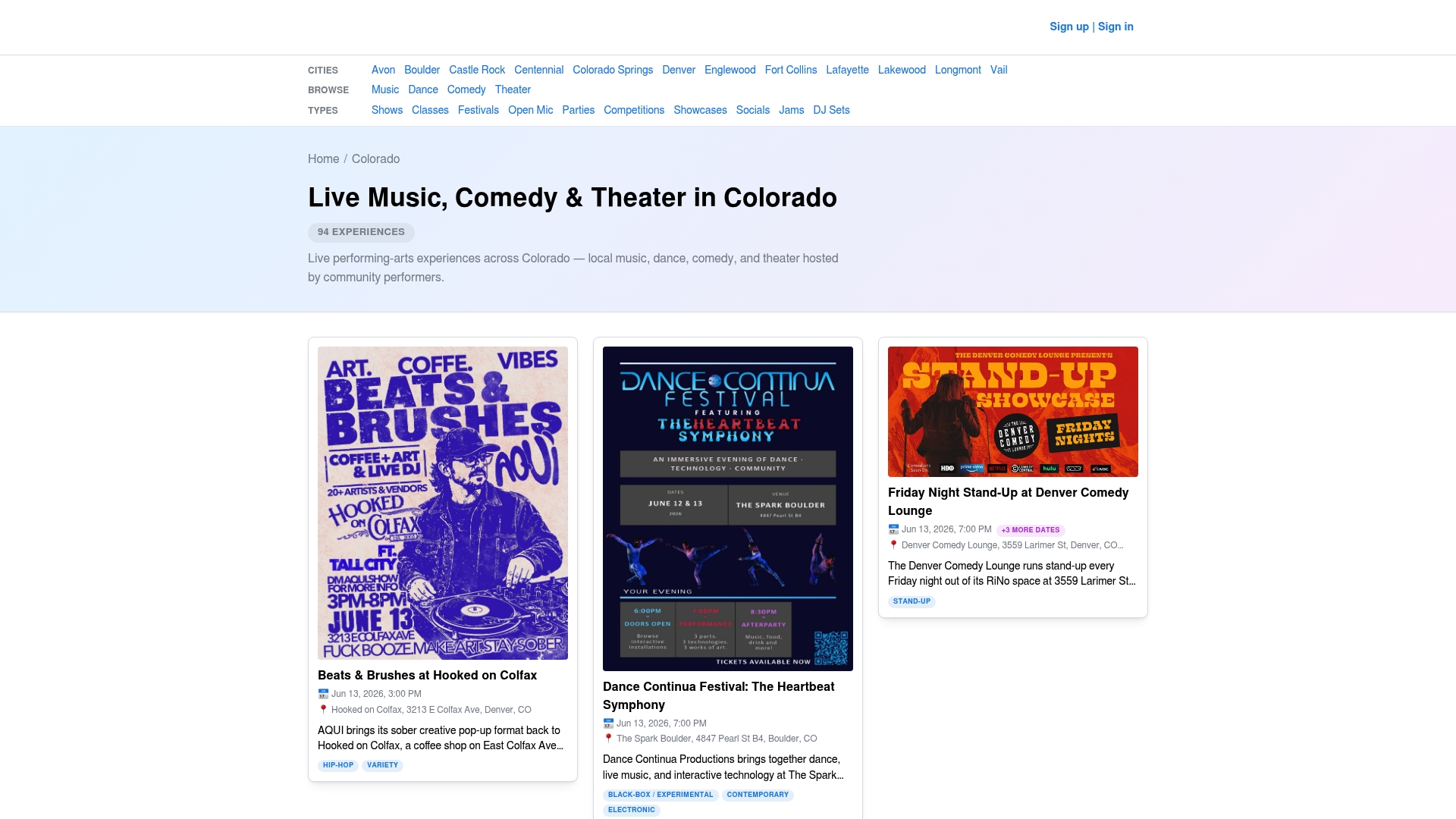
One live example: Summer Fest with The Copper Children at The Roots Collective is exactly the kind of community showcase you will find on the platform — an artist-run venue, a collaborative lineup, and a room designed for connection. Browse current listings, check the host profile and accessibility notes, and book directly. Most hosts respond within a day, so you will know what to expect well before you arrive.
Useful sources and further reading
- New Approaches to Performance Space Design — Orhan Hacihasanoglu et al.
- Collaborative Theatre and the Creative Process — Jimmy Bickerstaff
- Co-creation Stage: a web-based tool for collaborative and participatory co-located art performances — ACM
- Devising interactive spaces: a rehearsal-oriented tool for responsive environments — arXiv
- Hybrid performance systems — AAAI/AIIDE
- Collaborative Performance M.M. — Houghton University
- Collaborative spaces: organizational, spatial and relational crossover — IMRJ
- Mixed-Art Live Events: 8 Real Examples to Inspire You — Experiencebylocals
- The Role of Artist-Run Studios in Dance Communities — Experiencebylocals
For updates on new Colorado listings and community events, follow Experiencebylocals directly through the platform or reach out via the promoter page to list your own show.